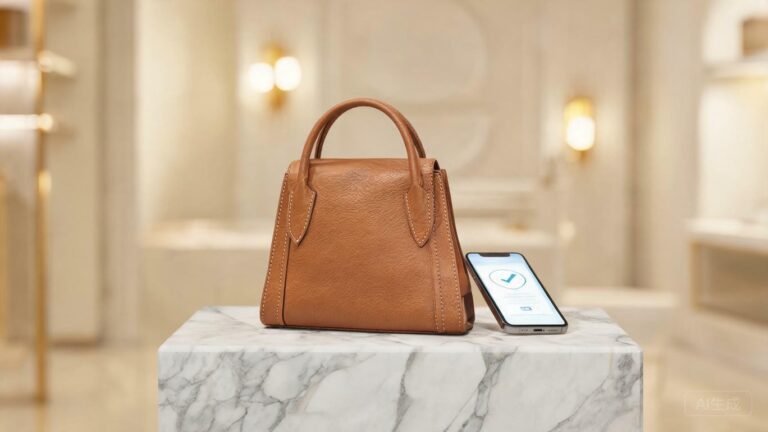
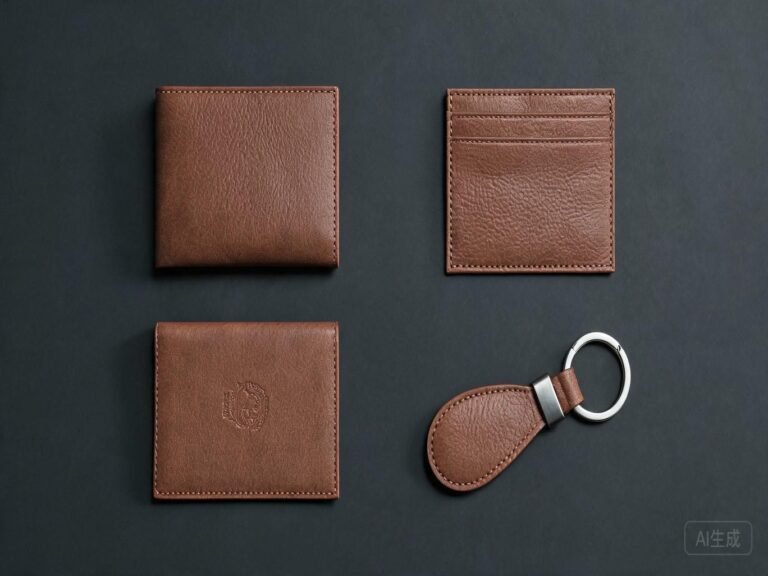
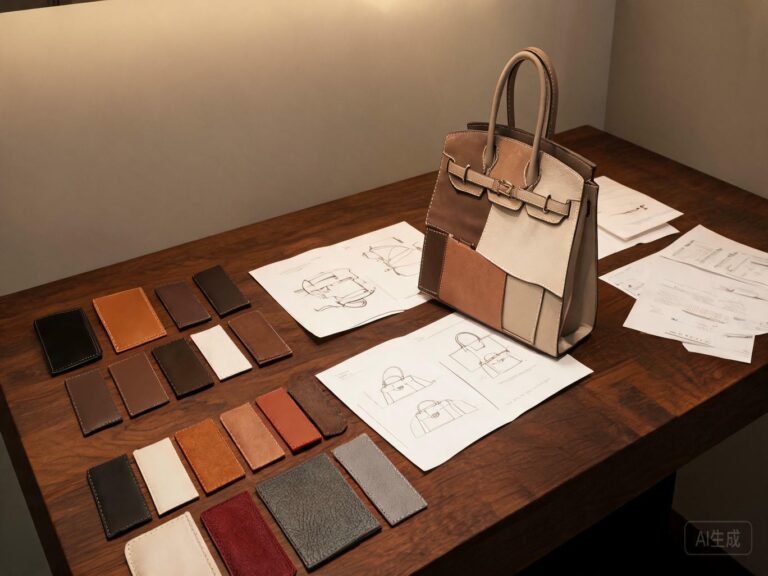
A wallet that costs $3 to make and sells for $45 looks like a dream margin — until returns eat it alive. That’s the story we hear from accessory brands sourcing small leather materials without understanding what actually drives product performance. The global leather goods market is projected to reach $538.2 billion by 2033, and small leather goods — wallets, cardholders, keychains, phone cases — represent one of its fastest-growing segments at $19.94 billion by 2034. But the brands that win in this space aren’t the ones using the cheapest material. They’re the ones who specify five critical parameters before placing a single order.
Request Small Leather Swatches
Small Leather Goods: Why Material Choice Decides Margin
In our experience developing leather materials for wallet and cardholder brands, the material decision is where 80% of the profit margin is won or lost. Here’s why: small leather goods are high-touch, daily-use products. A wallet gets folded 20+ times per day, a cardholder slides in and out of pockets 50+ times, a phone case is gripped for hours. The material doesn’t just need to look good on day one — it needs to survive 18–24 months of abuse without peeling, cracking, or fading at the fold lines.
The cost structure of small leather goods magnifies material decisions. A mass-produced wallet has $17.83 in total production cost, of which material is only $1.73–$3.50. Swap a $2 material for a $4 one, and the unit cost barely moves — but if that $2 material peels at 8 months, the return rate and brand damage wipe out the entire margin. Conversely, genuine leather wallets cost $25–$65 in material alone, which is why artisan-made pieces start at $75+. The sweet spot for most brands is a premium synthetic that performs like genuine leather at a fraction of the cost.
Designer’s perspective: The material specification sheet you write today determines your return rate, your review stars, and your brand reputation for the next two years. Get these five specs right and the rest follows.
The 5 Material Specs That Matter for Small Leather
When we evaluate small leather materials for accessory brands, we look at five specifications that directly predict field performance. Skip any one of these, and you’re gambling with your return rate.
- Thickness range. Wallets and cardholders need 0.5–0.8mm. Phone cases need 0.8–1.2mm. Go too thin and the material tears at stitch holes; too thick and it won’t fold cleanly. Silicone leather is available from 0.23mm for ultra-slim designs.
- Tear strength ≥ 15N. Measured per ISO 3376. Below 15N, the material splits at stress points — typically the card slot edges and fold crease. This is the #1 failure mode for budget wallets.
- Flex endurance ≥ 50,000 cycles. Per ISO 5402. This simulates the repeated folding a wallet undergoes. PU typically manages 20,000–30,000 before cracking. Silicone leather exceeds 100,000 cycles — meaning it survives years of daily folding without surface damage.
- Color fastness to rubbing: Grade 4–5. Per ISO 105-X12. Red and black dyes are the worst offenders for color transfer. A wallet that stains the inside of a pocket or a white phone case loses a customer instantly. Silicone’s non-porous surface inherently resists dye migration.
- Dimensional stability after humidity cycling. Small leather goods go from air-conditioned stores to humid pockets. Materials that absorb moisture warp, buckle, and change dimensions — causing card slots to loosen. Silicone is hydrophobic by nature; PU requires hydrolysis-resistant formulations.
Thickness, Tear Strength, and Fold Endurance
These three specs work together. A material at 0.4mm thickness with 25N tear strength might seem adequate — but if its flex endurance is only 15,000 cycles, it will crack at the fold line within months. The interaction matters. A material needs to be thin enough for a clean fold, strong enough not to tear at stitch holes, and flexible enough to survive thousands of folding cycles.

Tensile strength testing — critical for small leather goods where thin materials must resist tearing at stitch points
We’ve supplied silicone leather at 0.23mm thickness to accessory brands who needed ultra-slim cardholders that still passed 50,000+ flex cycles. The full silicone formulation is what makes this possible — the polymer’s inherent elasticity provides flex recovery without the plasticizers that evaporate over time in PU.

Softness and fold quality — leather must fold cleanly without cracking for wallet and cardholder applications
Genuine vs Synthetic vs Silicone for Small Goods
The material comparison for small leather goods comes down to three realistic options. Each has a place, but the performance gap is wider than most brands expect.
| Material | Thickness | Tear Strength | Cost/Unit | Best SLG Application |
|---|---|---|---|---|
| Genuine Full-Grain | 1.2–2.0mm | 25–40N | $3.50–$8.35 | Premium bifolds, luxury wallets |
| PU Faux Leather | 0.5–1.2mm | 10–18N | $0.80–$2.50 | Budget cardholders, promotional items |
| PVC Faux Leather | 0.6–1.0mm | 8–12N | $0.50–$1.50 | Disposable promotional goods |
| Silicone Leather | 0.23–2.0mm | 15–20N+ | $1.50–$4.00 | Mid-to-premium wallets, phone cases |
The data shows why silicone leather occupies a strategic position for small leather goods. It matches genuine leather’s tear strength at a fraction of the cost, offers thickness flexibility from ultra-thin (0.23mm) to standard (1.2mm), and its flex endurance far exceeds both PU and PVC. For brands targeting the $25–$60 retail price point — where PU feels cheap and genuine leather erodes margin — silicone is the material that bridges the gap. The wallet material comparison is where most brands start their evaluation.
Premium silicone leather for bags and small goods — see how the material performs in real accessory applications

Metallic and standard finish options — small leather goods demand precise color matching and finish consistency
How to Source Small Leather Materials That Scale
A material that works for a 500-unit prototype run might fail at 50,000 units. Scaling small leather goods production introduces three challenges that catch brands off guard: color consistency across batches, cutting yield from wider rolls, and lead time reliability. Here’s what to verify before committing to a supplier.
First, demand batch-to-batch color data with ΔE ≤ 1.0. A wallet and its packaging box made from different batches must match — customers notice. Second, confirm roll width: 1350–1800mm is standard, but narrower widths increase cutting waste by 8–12% on small goods where pattern nesting is tight. Third, validate that the supplier’s stated lead time holds under volume. A 7-day sample lead time means nothing if bulk orders take 30 days. Ask for the production schedule for a recent order at your target volume.
For brands targeting 3C electronic accessories alongside traditional small leather goods, the same material specs apply — phone cases and earbuds pouches face similar flex, tear, and color-fastness demands as wallets. The handbag material types and sourcing principles covered in our handbag material guide also translate directly to small leather goods procurement.

Vegan leather texture options for small leather goods — material must combine aesthetics with structural durability
Frequently Asked Questions
What thickness is best for small leather goods like wallets and cardholders?
For wallets and cardholders, 0.5–0.8mm provides the best balance of foldability and durability. Go below 0.4mm and the material tears at stitch holes; above 1.0mm and folds become bulky. Silicone leather is available from 0.23mm for ultra-slim designs where structural integrity is maintained by the polymer’s inherent elasticity rather than thickness.
Can silicone leather be used for RFID-blocking wallet exteriors?
Silicone leather works as the exterior material for RFID wallets. The RFID-blocking layer — typically a metallic foil or carbon fiber mesh — sits between the leather exterior and interior lining. Silicone’s non-porous surface and dimensional stability actually make it a better exterior choice than PU, which can warp and compromise the RFID layer’s coverage over time.
Choosing Small Leather Materials With Confidence
The small leather goods segment is growing because consumers carry fewer items but want each one to last longer. That puts material selection at the center of product strategy. A wallet made from budget PVC will be returned within 6 months. One made from genuine leather will be expensive and require maintenance. One made from silicone leather can hit the $30–$50 retail sweet spot while delivering genuine-leather-class tear strength, 100,000+ flex cycles, and color fastness that holds for years. The five specs — thickness, tear strength, flex endurance, color fastness, and dimensional stability — are the difference between a product that builds your brand and one that erodes it. Specify them, verify them with third-party data, and your small leather goods will have the margin to match the market opportunity.
About TOPSUN
TOPSUN supplies ultra-thin silicone leather starting at 0.23mm for small leather goods including wallets, cardholders, keychains, and phone case accessories, with production facilities across Dongguan, Yichang, and Xiangyang.
200K+ Martindale cycles verified by SGS · Tear strength ≥ 15–20N per ISO 3376 · Unlimited Pantone-matched colors with Delta E ≤ 1.0 · MOQ 500m with 7–15 day lead time