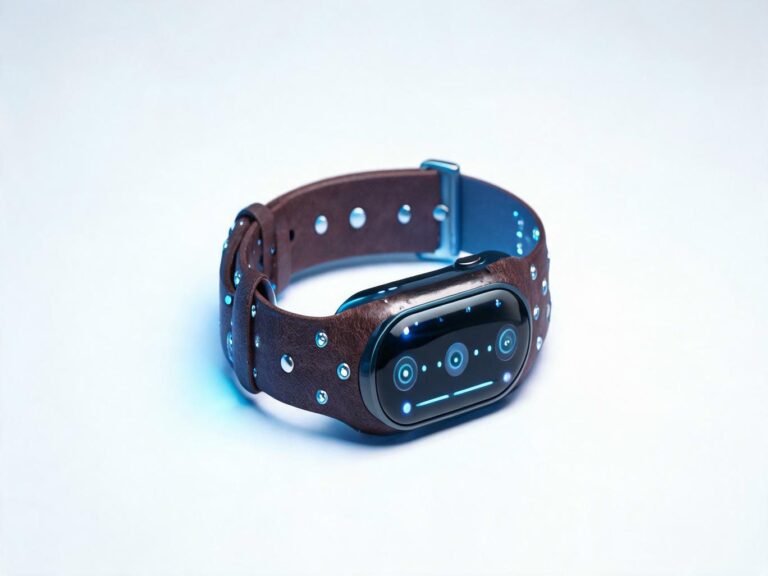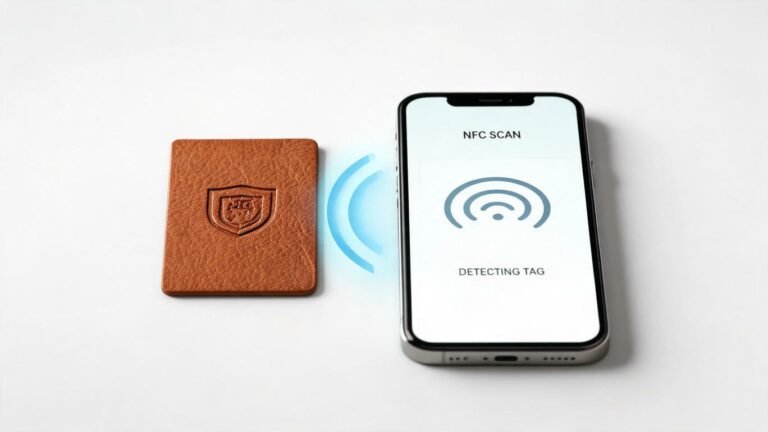
Walk into a luxury boutique in Milan, tap your phone against the leather handbag’s inner lining, and watch a verified digital certificate appear — origin, tannery, production batch, authenticity seal. This isn’t a concept demo. It’s shipping today. The leather goods industry is quietly embedding RFID and NFC chips into products at scale, and the material you choose determines whether the technology works reliably for 2 years or 10.
RFID-embedded leather sits at the intersection of traditional material craftsmanship and digital authentication. For B2B product teams, this means leather is no longer just a surface — it’s a platform. Anti-counterfeiting, supply chain traceability, access control, and consumer engagement all live inside the material itself. The question for procurement teams is no longer should we embed RFID — it’s which leather material preserves chip performance longest.
Why material choice matters: RFID chips embedded in leather need to survive flex cycles, moisture, temperature swings, and chemical cleaning. PVC leather’s plasticizer migration can interfere with chip antennas. PU leather’s hydrolysis can corrode thin-film antenna traces. Silicone leather’s chemical inertness and 10+ year durability preserve chip performance for the product’s entire lifespan.
5 B2B Use Cases Driving RFID-Embedded Leather Adoption
1. Luxury Brand Anti-Counterfeiting NFC
Counterfeit leather goods cost luxury brands an estimated $30 billion annually. Embedded NFC chips — particularly NTAG 424 DNA with AES-128 encrypted authentication — provide per-tap verification that cannot be cloned. The chip is hidden inside the leather lining, patch, or label, invisible to the consumer but accessible via smartphone tap. Each tap generates a unique MAC (Message Authentication Code) that verifies against the brand’s cloud database, creating an audit trail of authenticity checks.
B2B requirement: The leather material must not interfere with the NFC antenna’s 13.56 MHz signal. Silicone leather’s non-conductive, non-metallic composition preserves signal integrity without shielding effects.
2. Supply Chain Traceability UHF
UHF RFID tags (860–960 MHz) embedded in leather products enable end-to-end supply chain visibility — from raw material origin through tannery processing, production batch, quality test results, warehouse inventory, retail delivery, and post-sale lifecycle management. For leather goods manufacturers, this means real-time inventory counts (no barcode scanning), automated receiving verification, and consumer-facing provenance data.
B2B requirement: Tags must survive the production process — coating, embossing, curing at 150–200°C. Silicone leather’s curing temperature range is compatible with RFID chip survival, and the non-porous surface protects the antenna from moisture ingress.

Smart leather technology in automotive cabins — embedded RFID enables seat authentication, personalization, and warranty tracking.
3. Hotel & Corporate Access Control LF/NFC
RFID leather key fobs and badge holders are standard in hospitality and corporate security. Hotels deploy 13.56 MHz NFC or 125 kHz LF leather fobs for room access, loyalty program integration, and contactless payment. Corporate campuses use leather badge holders with embedded RFID for building access, time attendance, and secure printing. The leather exterior provides a premium tactile experience that plastic fobs cannot match.
B2B requirement: The leather must maintain flexibility and surface integrity through daily handling, pocket abrasion, and occasional washing. Silicone leather’s 200,000+ Martindale abrasion resistance and water-cleanable surface outlast PVC fobs (which crack at 25,000–100,000 cycles) by 2–8×.
4. Automotive Seat Authentication & Personalization NFC/UHF
Automotive OEMs are embedding RFID in leather seat surfaces to enable seat authentication (verifying that the correct OEM-grade leather is installed, not aftermarket substitutes), personalization (seat position and preference profiles linked to the leather’s embedded chip), and warranty tracking (production date and batch traceable through the seat’s lifecycle). For EV manufacturers, this also enables battery thermal management material verification — confirming that flame-retardant silicone leather is installed where specified.
B2B requirement: The chip must survive the automotive environment — temperature cycling from -40°C to 120°C, UV exposure through windows, and flex stress from seating. Silicone leather’s -40°C to 250°C range and 1,000+ hour UV resistance ensure the embedded chip environment remains stable.
5. Consumer Verification & Brand Engagement NFC
Beyond authentication, NFC-embedded leather creates a direct brand-to-consumer channel. A tap of the smartphone against the leather product can launch a brand page, product care instructions, warranty registration, resale authentication, or loyalty rewards. For furniture and automotive brands, this transforms the leather surface into a persistent touchpoint that extends the customer relationship beyond the point of sale.
B2B requirement: The NFC antenna must remain functional for the product’s entire warranty period — typically 5–10 years. Material failure that compromises the antenna (cracking, delamination, moisture ingress) breaks the digital link. Silicone leather’s 10+ year service life and hydrolysis-proof surface protect the embedded electronics for the product’s full lifespan.
Material Compatibility: Why Silicone Leather Preserves RFID Performance
The leather material surrounding an embedded RFID chip isn’t just packaging — it’s the antenna’s operating environment. Material properties directly affect signal integrity, chip lifespan, and read reliability:
| Material Property | PVC Vinyl | PU Faux Leather | Silicone Leather (TOPSUN) |
|---|---|---|---|
| RF signal interference | Moderate — plasticizer migration can detune antennas | Low — but degrades over time as material breaks down | None — non-conductive, non-metallic, stable |
| Moisture protection for chip | Moderate — surface cracks allow water ingress | Poor — hydrolysis creates micro-fissures | Excellent — non-porous, hydrolysis-proof |
| Flex survival (chip + antenna) | 25,000–100,000 Martindale cycles | 50,000–80,000 cycles | 200,000+ cycles (SGS verified) |
| Temperature stability for chip | -10°C to 60°C | -20°C to 80°C | -40°C to 250°C |
| Chemical cleaning compatibility | Degraded by solvents, alcohol | Degraded by solvents, bleach | Bleach-safe, alcohol-compatible, no degradation |
| Expected chip functional life | 2–3 years (material failure) | 3–5 years (material failure) | 10+ years (material outlasts chip) |

Silicone overmolding electronics — the material’s chemical inertness protects embedded components without signal interference.
Engineering insight: When you embed an RFID chip in PVC leather, you’re betting the chip’s 10-year rated lifespan against the material’s 2–3 year failure timeline. The chip doesn’t fail — the material around it does, cracking, delaminating, and exposing the antenna to moisture and flex stress. Silicone leather removes this variable entirely.
How RFID Chips Are Embedded in Leather: 3 Methods
1. Lamination Embedding
The RFID inlay (chip + antenna) is placed between the leather surface layer and the fabric backing during the lamination stage of coating. The silicone coating flows around the inlay, encapsulating it without air gaps. This is the most common method for flat surfaces like wallet linings, passport covers, and furniture panels. The key parameter: coating thickness must exceed the inlay thickness (typically 0.08–0.15mm for NTAG chips) by at least 0.1mm on each side to ensure full encapsulation.
2. Die-Cut Pocket Embedding
A precision die-cut pocket is created in the leather substrate during the finishing stage, the RFID inlay is inserted, and a thin silicone overlay seals the pocket. This method is used for thicker leather applications (1.0–2.0mm) where the chip needs to be removable or replaceable. It’s common in automotive seat authentication and high-value leather goods where the chip may need to be read at different depths.
3. Overmolding Integration
For small leather goods — key fobs, badge holders, luggage tags — the RFID chip is placed in the mold and silicone elastomer is molded around it in a single step. This creates a fully sealed, waterproof, and flex-resistant housing. The silicone’s addition-cure process (no byproducts, no shrinkage <0.1%) ensures the chip isn’t damaged by curing pressure or temperature.
Next-generation silicone leather — how advanced material properties enable smart technology integration.
The ROI of RFID-Embedded Silicone Leather
For B2B product teams evaluating the business case, here’s what the numbers look like when you combine RFID technology with a material that preserves it:
- Anti-counterfeiting ROI: Luxury brands using NTAG 424 DNA authentication report 60–80% reduction in counterfeit warranty claims within 18 months of deployment. The cost of embedded NFC chips ($0.15–0.50 per unit) is offset by a single prevented counterfeit claim.
- Supply chain ROI: UHF RFID-enabled inventory counts reduce warehouse labor by 70–90% (manual barcode scanning replaced by portal reads). Real-time inventory accuracy improves from 65–75% (manual) to 98–99% (RFID).
- Warranty ROI: Embedded RFID provides production batch and date traceability, enabling targeted recalls instead of blanket replacements. One automotive OEM reduced recall costs by 40% by tracing seat leather batches through RFID.
- Material longevity ROI: Embedding RFID in silicone leather (10+ year life) vs. PVC (2–3 year life) means the chip investment pays off over 4–5× longer — the digital functionality lasts as long as the physical product.

TOPSUN’s production facility — cleanroom-grade quality control ensures RFID embedding precision.
About TOPSUN
TOPSUN manufactures silicone leather at a 60,000+ m² facility across Dongguan, Yichang, and Xiangyang, China. We produce 500,000+ meters monthly across 10+ automated lines for 100+ brands in automotive, furniture, medical, marine, 3C electronics, fashion, and children’s product applications. Our silicone leather is engineered to integrate with embedded electronics — RFID, NFC, and sensor technologies — without signal interference or material degradation.
The material properties that make silicone leather ideal for RFID embedding: non-conductive and non-metallic composition (no signal shielding), -40°C to 250°C temperature range (chip-safe during curing and in-field use), 200,000+ Martindale abrasion cycles (antenna survives flex), non-porous hydrolysis-proof surface (moisture barrier for chip), and bleach-safe cleanability (no chemical degradation around the embedded area). Certifications: ISO 10993-5 biocompatibility, REACH, FDA 21 CFR 177.2600, EN 13733 Class 4 flame retardancy, PAHs — all SGS/Intertek verified.
We offer custom development for RFID-embedded leather products, including lamination, die-cut pocket, and overmolding integration methods. Free A4 swatch samples shipped worldwide. Explore applications | Factory production capabilities | Custom development
Frequently Asked Questions
Can RFID chips be embedded in silicone leather during the coating process?
Yes. During the lamination stage, RFID inlays (chip + antenna) are placed between the silicone surface layer and the fabric backing. The silicone coating flows around the inlay at 8,000–15,000 mPa·s viscosity, creating a fully encapsulated, air-gap-free housing. The curing temperature (150–200°C) is compatible with standard RFID chip survival ratings (typically rated to 250°C for 10 seconds). For heat-sensitive chips, we can adjust curing profiles or use post-cure embedding via die-cut pocket methods.
Does silicone leather interfere with RFID or NFC signal transmission?
No. Silicone is a non-conductive, non-metallic dielectric material with a low dielectric constant (≈2.7–3.0 at 1 MHz). This means it is essentially transparent to RF signals at NFC (13.56 MHz) and UHF (860–960 MHz) frequencies. Unlike PVC, which can experience plasticizer migration that detunes antennas over time, silicone’s chemical stability ensures signal performance remains constant for the material’s 10+ year service life.
What’s the minimum order quantity for RFID-embedded silicone leather products?
For standard silicone leather (without RFID), our MOQ is 500 meters. For custom RFID-embedded development — including chip selection (NTAG 213/215/424, UHF CODE tags), embedding method (lamination, die-cut, overmolding), and antenna design — the MOQ depends on complexity. Contact us with your application requirements and we’ll provide a development timeline and quotation. Free A4 samples of our standard silicone leather are available worldwide via DHL/FedEx for material evaluation.
Explore RFID-Embedded Silicone Leather
Get free material samples and discuss custom RFID integration with our engineering team — from chip selection to embedding method to production scaling.
Learn more about silicone leather for 3C electronics or explore our Ultra Thin Collection for wearable and electronics applications.