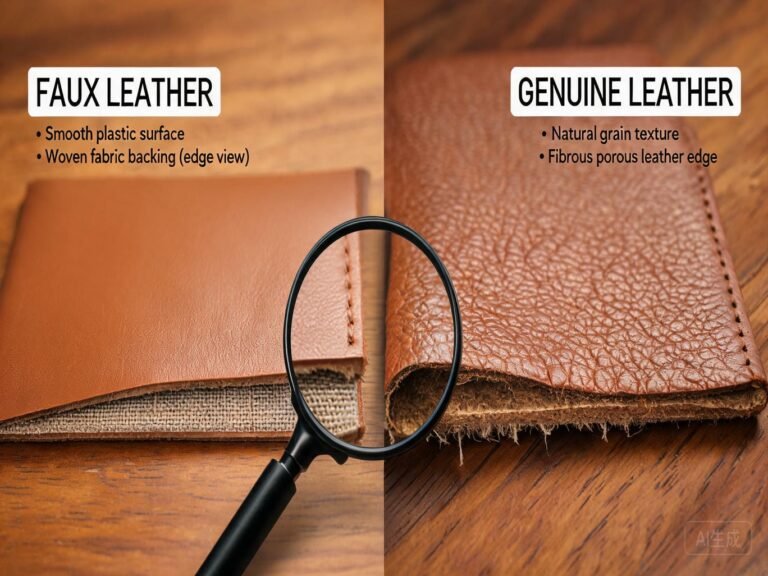
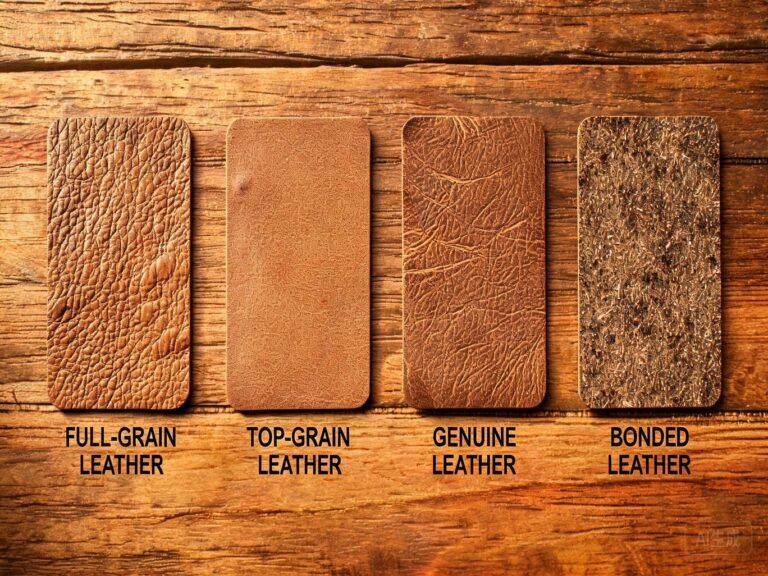
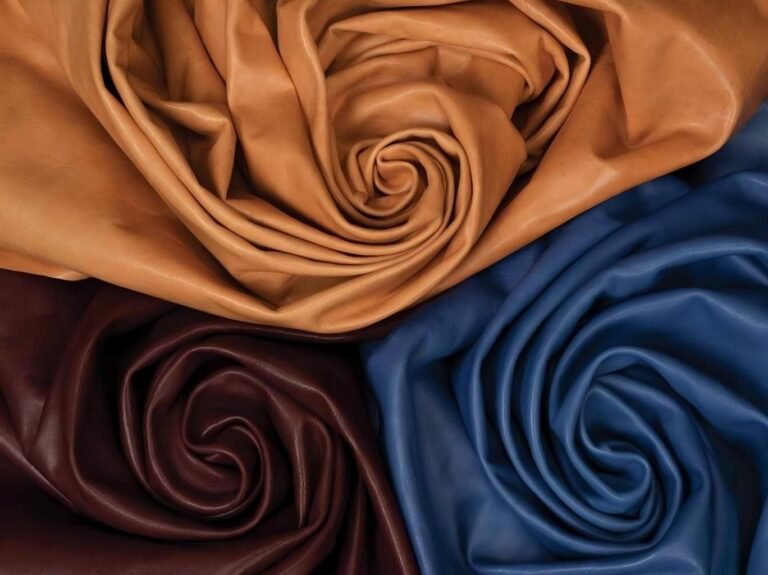
The office seating market consumes 31 million m² of upholstery material annually, growing at 2.8% per year. Yet most B2B furniture buyers still specify leather upholstery fabric for chairs using outdated performance baselines — accepting 30,000 Martindale cycles when commercial chairs need 200,000+. The result: reupholstery cycles that eat margin, warranty claims that erode brand trust, and seating that looks worn long before the frame gives out. Here is what the numbers say about choosing the right leather for chair applications — and why silicone-coated fabric is changing the economics.
Leather Upholstery Fabric for Chairs: What the Numbers Say
Chairs are not sofas. A sofa distributes weight across a large surface; a chair concentrates it on a smaller area — seat edge, backrest fold, armrest top. That concentration accelerates wear at specific points, which is why chair upholstery fails at stress zones long before the rest of the surface shows any wear. The Martindale abrasion test simulates this, and the numbers tell a clear story.
| Chair Type | Daily Use Pattern | Min. Martindale | Flex Cycles Needed | TOPSUN Spec |
|---|---|---|---|---|
| Office task chair | 8 hrs/day, 5 days/wk | 50,000 | 50,000 | 200,000+ / 100K |
| Dining chair | 1–2 hrs/day | 30,000 | 30,000 | 200,000+ / 100K |
| Lounge/accent chair | 2–4 hrs/day | 40,000 | 40,000 | 200,000+ / 100K |
| Healthcare seating | Continuous, sanitized | 100,000 | 80,000 | 200,000+ / 100K |
Standard PU leather typically delivers 30,000–50,000 Martindale cycles — the minimum for a dining chair, but barely adequate for office use. Silicone-coated fabric sustains 200,000+ cycles, which translates to a projected 10+ year service life under typical commercial conditions. That is roughly 2.5× longer than standard PU in the same application. For a broader overview of how silicone leather compares, see our silicone leather introduction.

Flex resistance testing — simulates years of seating movement at the seat edge and backrest fold.
3 Chair Types That Demand Different Leather Specs
Not all chairs need the same leather. The specification should change with the use case, and a material that works for a dining chair may fail in an office environment. Here is where the design conversation starts.
Office task chairs need the highest flex resistance — the seat edge bends every time someone sits down or leans forward. Preferred thickness: 1.0–1.3mm per industry standards. The material must maintain its surface integrity through 50,000+ flex cycles without cracking at the fold line. Standard PU starts showing micro-cracks at the seat edge after 18–24 months of daily use.
Dining chairs face lower abrasion but higher stain exposure — food spills, wine, grease. The upholstery needs cleanability more than raw abrasion resistance. Silicone leather’s non-porous surface repels liquids and is bleach-safe, making it ideal for hospitality dining environments where rapid turnaround between seatings is critical.
Healthcare seating adds a third dimension: chemical resistance. The material must withstand repeated disinfection with alcohol and bleach without surface degradation. ISO 10993 biocompatibility certification becomes non-negotiable. For more on healthcare-grade materials, see our furniture and sofa applications page.

Office chair upholstery texture — the surface must look premium while surviving 8-hour daily use.
Why Standard PU Leather Upholstery Fabric Fails at the Seat Edge
The seat edge is where chair upholstery goes to die. Every time someone sits down, the material folds sharply at the front edge of the seat. Over months, that repeated folding fatigues the coating until it cracks. PU leather relies on plasticizers for flexibility — and those plasticizers migrate out of the material over time, especially at stress points where heat and friction concentrate.
In our flex testing, silicone leather sustains 50,000–100,000 bending cycles with no surface cracking. Standard PU typically shows visible cracks at 15,000–20,000 cycles — a gap that directly predicts the failure timeline of chair upholstery in commercial use.
Silicone does not use plasticizers. Its polymer chain is inherently flexible, which means the flexibility does not diminish over time. A chair upholstered with silicone-coated fabric in year one will feel and perform the same in year five. For more detailed performance data on chair-specific applications, see our existing office chair upholstery material guide and our leather upholstery for chairs resource.

Softness fold test — premium chair leather must feel supple while maintaining structural integrity at stress points.
Silicone Leather: The 200K-Cycle Advantage for Chair Seating
Here is where the TCO math gets interesting. A commercial furniture manufacturer we supplied had been using PU leather at roughly 35% lower unit cost. Their office chairs needed reupholstering at an average of 28 months in corporate environments. With silicone leather, the same chairs reached 60 months with no visible wear — cutting reupholstery costs to zero within the warranty period. The 35% unit cost premium was recovered within the first replacement cycle.
Beyond abrasion and flex, silicone leather adds two more advantages specific to chair applications: stain resistance (non-porous surface, bleach-safe) and color consistency (Delta E ≤ 1.0 batch-to-batch). For contract furniture projects where a 200-chair order must match a 50-chair follow-up order months later, color consistency is not optional — it is the difference between a deliverable product and a rejected shipment.
Specifying Chair Leather: What to Put on Your Purchase Order
When you write the spec sheet for your next chair project, include these five line items. If your supplier cannot meet them, you are buying material that will fail prematurely.
- Martindale abrasion ≥ 200,000 cycles (ISO 12947-2) — for any chair used 4+ hours daily.
- Flex resistance ≥ 50,000 cycles (ISO 5402) — critical for seat edge durability.
- Color fastness Grade 4–5 (ISO 105-B06) — prevents fading under office lighting.
- Thickness 0.8–1.3mm — balances durability with seating comfort.
- Delta E ≤ 1.0 — for batch-to-batch color matching across multi-delivery orders.
See how silicone leather performs on office chairs — flex, abrasion, and stain testing in real time.
Frequently Asked Questions
What Martindale rating do I need for office chair upholstery?
For commercial office chairs used 8 hours per day, specify a minimum of 50,000 Martindale cycles. For investment-grade material that survives 10+ years without reupholstering, target 200,000+ cycles. Standard PU leather typically delivers 30,000–50,000 cycles, which translates to visible wear within 2–3 years of daily office use.
Is silicone leather suitable for dining chair upholstery?
Absolutely. Silicone leather is ideal for dining chairs because its non-porous surface repels food and liquid spills, is bleach-safe for disinfection, and maintains color stability under restaurant lighting. The 200,000+ Martindale rating far exceeds the 30,000-cycle minimum for dining applications, giving you decades of service life.
The Real Cost of Under-Specifying Chair Leather
Specifying leather upholstery fabric for chairs is not about finding the cheapest material that passes a basic abrasion test. It is about matching the material’s performance envelope to the chair’s real-world use pattern — and calculating the total cost over the chair’s expected life. Silicone-coated fabric delivers 200,000+ Martindale cycles, 50,000+ flex cycles, and a 10+ year service life that eliminates reupholstery costs from your warranty budget. For B2B buyers who specify chairs for commercial, hospitality, or healthcare environments, that is the spec that makes the math work.
About TOPSUN
TOPSUN supplies leather upholstery fabric for chairs across commercial office, hospitality dining, and healthcare seating segments, using silicone-coated technology that sustains 200,000+ Martindale cycles in high-traffic environments.
With flex resistance tested to 50,000–100,000 cycles, Delta E ≤ 1.0 color consistency, ISO 10993 biocompatibility certification, and 100+ texture options, we help furniture manufacturers specify chair-grade material that lasts 10+ years.