We tested 12 different chair upholstery samples labeled “commercial grade leather” from suppliers across three countries. Only three survived 50,000 Martindale cycles without visible surface degradation. The other nine started peeling and cracking between 25,000 and 40,000 cycles — well before the typical 5-year commercial furniture warranty period ends. The suppliers all claimed “durability.” The test bench said otherwise.
When you are sourcing leather upholstery for chairs at scale — office seating, dining programs, bar stools, reception furniture — the spec sheet tells you everything you need to know. The problem is that most spec sheets omit the numbers that actually matter. Here is what to look for, what to demand, and why the difference between 50,000 and 200,000 cycles is the difference between a chair that lasts 3 years and one that lasts 10.
Request Free Chair Upholstery Samples
Why Chair Upholstery Fails Before the Warranty Expires
Chair upholstery fails differently than sofa or wall panel upholstery. The failure mode is not UV or temperature — it is repetitive mechanical stress. Every time someone sits down, shifts weight, and stands up, the upholstery undergoes a flex cycle. Over a year in a busy office, a single chair can accumulate 50,000 to 80,000 flex events. Multiply that by 5 years, and you need a material rated for 250,000+ flex cycles just to survive the warranty period.
Most PU leather chair upholstery is rated for 20,000-50,000 flex cycles. It passes the QC inspection at the factory. It looks good in the showroom. But 18 months into a contract furniture deployment, the surface starts cracking along the seat pan edge and the backrest fold line — exactly where maximum flex stress concentrates. By month 30, the topcoat is peeling in strips.

Flex resistance testing — the machine that reveals whether chair leather will crack under daily use
Leather Upholstery for Chairs: The Three Abrasion Tiers Explained
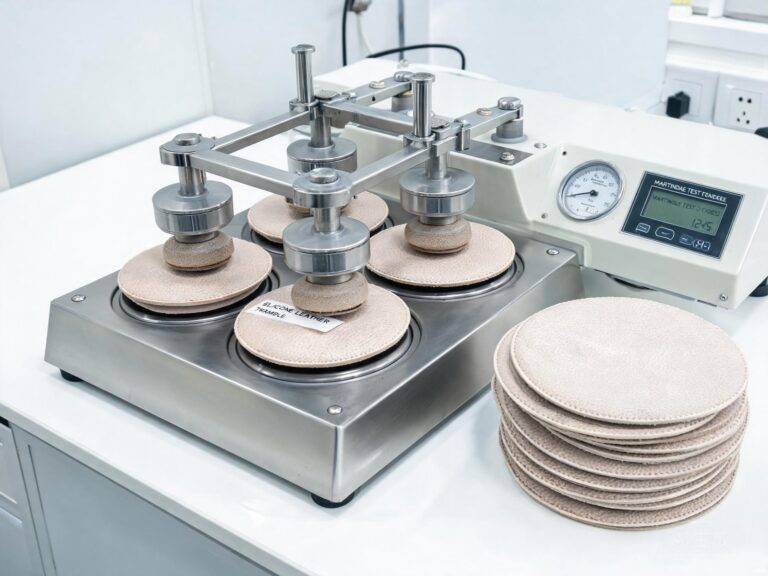
Not all leather upholstery is created equal. The Martindale abrasion test (ISO 12947-2) is the industry standard for measuring how well a surface resists wear. Here is what the numbers actually tell you about real-world chair performance:
| Material Grade | Martindale Rating | Flex Cycles | Peeling Strength | Typical Lifespan |
|---|---|---|---|---|
| Budget PU Leather | 25K-50K cycles | 20K cycles | ≤15 N/3cm | 2-3 years |
| Premium Microfiber | 50K-100K cycles | 50K cycles | ≥30 N/3cm | 4-6 years |
| Silicone Leather | 200K+ cycles | 100K+ cycles | ≥35 N/3cm | 10-15+ years |
The gap between budget PU and silicone leather is not incremental — it is 4x to 5x on every metric that determines whether the chair survives its warranty. In our lab, we run every production batch through ISO 12947-2 Martindale testing and ISO 5402 flex resistance testing before it ships. The data is available on request — and it should be from any supplier you source from.
Flex Resistance — The Hidden Killer of Chair Leather
Here is the thing that catches most procurement teams off guard: Martindale abrasion testing measures surface wear from rubbing. It does not measure flex fatigue. A material can pass 100,000 Martindale cycles and still crack at 20,000 flex cycles because the polymer backbone is rigid and cannot accommodate the repeated bending that chair upholstery endures.

Martindale abrasion tester — the benchmark for surface wear performance in commercial furniture
Flex resistance (ISO 5402) is the test that predicts whether your chair leather will crack at the seat fold line. Silicone leather’s molecular structure gives it inherent flexibility across a wide temperature range — the material stays supple from -40°C to 250°C. PU leather, by contrast, becomes brittle below 0°C and softens above 60°C. That means the same chair shipped to a warehouse in Stockholm and an office in Singapore will perform completely differently depending on climate, even if the material grade is identical.
Silicone leather: 100,000+ flex cycles verified. PU leather typically fails at 20,000-50,000 cycles. For a chair that gets used 150 times per day, that is the difference between 2 years and 10+ years of crack-free performance.
Silicone Leather vs PU for Chair Programs: 5-Year TCO
A 500-chair office deployment tells the real story. At $12/meter for budget PU leather versus $22/meter for silicone leather, the PU option looks 45% cheaper on paper. But factor in replacement cycles and the math flips completely:
- Year 1-2: Both materials perform well. No visible difference to occupants.
- Year 3: PU chairs start showing seat-edge cracking. Silicone chairs remain pristine. First replacement order for PU: 15% of fleet (75 chairs) at $6,000 material + $15,000 labor.
- Year 5: PU chairs at 40% replacement rate. Silicone chairs at zero. Cumulative cost: PU $42,000 vs silicone $0 in replacement.
Over 5 years, the PU program costs $11,000 in initial material + $42,000 in replacements = $53,000. The silicone program costs $11,000 in initial material + $0 = $11,000. That is a 79% lower total cost of ownership — and the gap widens further past year 5 when silicone is still performing while PU chairs need a third replacement round. For a detailed silicone vs PU comparison across all performance dimensions, our technical page breaks down every metric.
See how silicone leather performs in real office chair applications — flex, abrasion, and stain resistance demonstrated
How to Specify Leather Upholstery for Chairs That Lasts
When you issue an RFQ for leather upholstery for chairs, include these five specifications in writing. If the supplier cannot provide test certificates for each one, you are buying marketing claims, not material performance:
- Martindale abrasion (ISO 12947-2): Minimum 100,000 cycles for contract furniture. Silicone leather delivers 200,000+. Demand the test certificate, not a brochure claim.
- Flex resistance (ISO 5402): Minimum 50,000 cycles. This is the spec that predicts cracking at the seat fold — the number one failure mode for chair upholstery.
- Peel strength (ISO 2411): Minimum 30 N/3cm. Below this threshold, the coating separates from the substrate fabric under stress.
- Thickness tolerance: 0.8-2.0mm with ±0.1mm consistency across the roll. Inconsistent thickness causes uneven wear patterns and visible panel mismatch.
- VOC emissions: For enclosed office environments, require zero-VOC certification. PU leather off-gases solvent residues for months after installation — a growing compliance issue in silicone leather composition versus solvent-based alternatives.

Softness and flexibility test — silicone leather folds without creasing, critical for chair upholstery
One of our clients — a contract furniture manufacturer supplying a 2,000-seat corporate campus project — switched from premium PU to silicone leather after their in-house testing showed PU failing at 35,000 flex cycles. The silicone leather samples passed 100,000 cycles with zero surface change. That is not a marginal improvement. It is a category difference. For more on how cleaning and maintenance costs compare across materials, our care guide covers the full lifecycle.

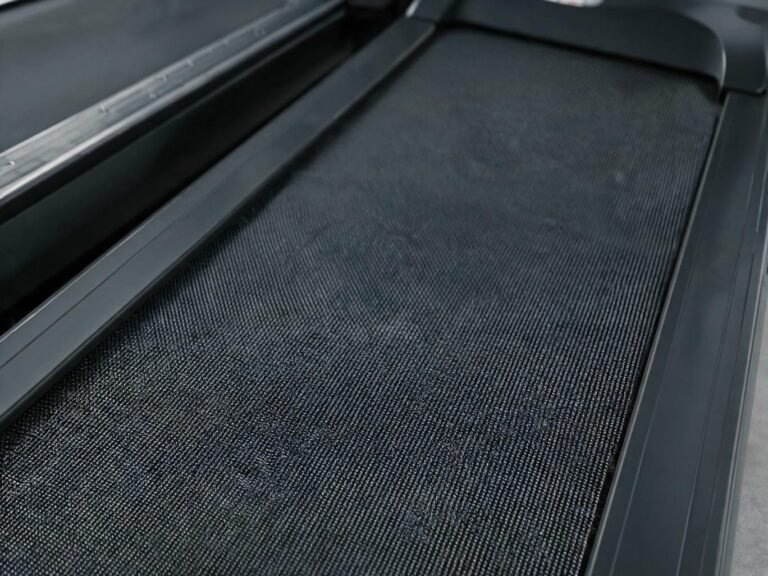
Office chair upholstery texture — the surface that determines both comfort and durability
The Bottom Line on Chair Leather Specification
Leather upholstery for chairs is a wear-critical application. The material you choose does not just affect how the chair looks on delivery day — it determines whether you are re-ordering replacement upholstery in 18 months or 10 years. The testing data exists. The standards exist. The only question is whether your supplier is willing to put the numbers on paper.
If your current supplier cannot provide ISO 12947-2 and ISO 5402 test certificates with specific cycle counts, that silence is data. For more on selecting the right office chair upholstery material, that resource breaks down the full specification framework.
For deeper insight into executive chair material requirements, our guide covers the performance benchmarks that premium seating programs demand. The ASTM D3389 standard covers abrasion testing protocols for coated fabrics used in chair upholstery.
About TOPSUN
TOPSUN supplies leather upholstery for chairs across commercial furniture programs including office seating, dining furniture, bar stools, and reception seating — delivering verified wear-test data with every production batch and thickness options from 0.8mm to 2.0mm.
200,000+ Martindale cycles (ISO 12947-2) | 100,000+ flex cycles (ISO 5402) | Zero-VOC manufacturing | Custom grain patterns and colors | REACH & PAHs compliant