“Genuine leather” sounds like a quality guarantee. It isn’t. In the leather grading hierarchy, “genuine” is the third tier — below full-grain and top-grain, and only one step above bonded leather scraps glued together with polyurethane. The term is a marketing convention that B2B buyers misread as a quality benchmark. When sourcing cowhide genuine leather for commercial applications, understanding the four-grade hierarchy is the difference between specifying a material that lasts a decade and one that cracks in 18 months. Here is what the label actually means — and how each grade performs under commercial wear.
Request Grade Comparison Samples
The 4 Cowhide Leather Grades: What “Genuine” Actually Means
Cowhide is graded by which layer of the hide is used and how it’s processed. The cowhide genuine leather grading system runs from highest to lowest quality, with dramatic differences in durability, breathability, and aging characteristics between each tier:
- Full-grain (Grade 1): The top layer of the hide, including the natural grain surface. No sanding or correction. The strongest, most durable grade — the tightest fiber density is at the surface. Develops patina with age. Natural imperfections (scars, insect bites) are visible and considered character. Highest cost. 10+ year lifespan with conditioning.
- Top-grain (Grade 2): Full-grain that has been sanded 0.1–0.3mm to remove blemishes, then sealed with a pigmented or aniline finish. Smoother, more uniform appearance, but the sanding removes the strongest fiber layer — reducing durability and breathability. 7–10 year lifespan. Photographs beautifully for e-commerce.
- Genuine leather (Grade 3): Made from the lower layers of the hide after the top grain is split off. Heavily processed, often coated with synthetic finishes to simulate a grain pattern. Less durable, less breathable, and prone to cracking. The “genuine” label is a regulatory term meaning “contains real leather” — not a quality endorsement. 3–5 year lifespan.
- Bonded leather (Grade 4): Leather scraps ground into fibers and bonded with polyurethane. Contains only 10–30% actual leather fiber. Least durable, peels within 1–3 years. Essentially a composite material marketed with the word “leather.” Not suitable for commercial applications.

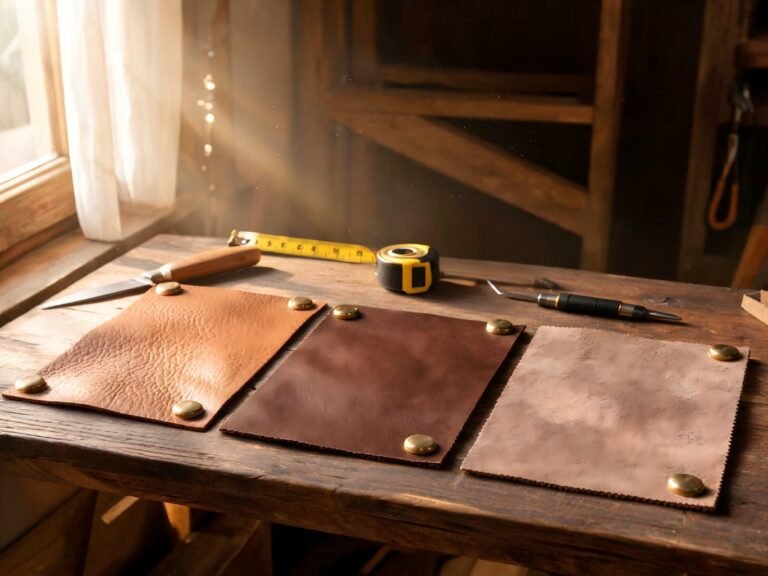
Leather sample rack — grade identification begins with surface texture irregularity that indicates full-grain vs. corrected leather
Full-Grain vs Top-Grain: The Sanding That Changes Everything
The critical distinction in cowhide genuine leather is between full-grain and top-grain. The difference is 0.1–0.3mm of surface sanding — but that thin layer is the strongest part of the hide. The outermost surface of cowhide has the densest fiber network because it’s the layer that protected the animal. Removing it through sanding creates a smoother, more uniform surface that’s easier to sell through photographs, but compromises the material’s structural integrity.
Top-grain’s pigmented finish also seals the surface — reducing breathability. Full-grain leather’s open pore structure allows moisture vapor transmission, making it more comfortable for skin-contact applications. Top-grain’s sealed surface traps heat and moisture against skin. For furniture, this means full-grain seats remain comfortable in summer; top-grain seats feel sticky and hot.
The aging difference is equally significant. Full-grain absorbs conditioning oils and environmental moisture, developing a patina that improves appearance over time. Top-grain’s sealed surface cannot absorb conditioning products effectively — the conditioner sits on the surface rather than penetrating. The material ages by coating degradation rather than character development. This is why a 10-year-old full-grain sofa looks better than new, while a 10-year-old top-grain sofa looks worn.
| Grade | Description | Durability | Breathability | How It Ages | Lifespan |
|---|---|---|---|---|---|
| Full-Grain | Natural surface, no sanding | Highest | Excellent (open pore) | Patina — improves | 10+ years |
| Top-Grain | Sanded, sealed finish | High (reduced) | Moderate (sealed) | Coating degrades | 7–10 years |
| Genuine | Lower layers, processed | Moderate | Low | Cracks, fades | 3–5 years |
| Bonded | Scraps + PU glue | Lowest | None | Peels, delaminates | 1–3 years |

Grade applications — full-grain and top-grain cowhide used in commercial furniture, genuine and bonded grades in budget products
The “Genuine Leather” Deception: Why the Label Means Lowest Quality
The term “genuine leather” is regulated by trade standards that define it as “real leather” — meaning the material contains actual animal hide fibers. But the regulation says nothing about quality, grade, or which layer of the hide is used. A cowhide genuine leather product labeled “genuine” is typically made from the lower split layers — the weakest, least dense part of the hide — processed and coated to simulate a higher-grade appearance.
This creates a consumer (and B2B buyer) deception: the word “genuine” implies authenticity and quality, when it actually means “the lowest grade that still qualifies as real leather.” Suppliers who label products “genuine leather” without specifying the grade are technically compliant with labeling regulations while misleading buyers about material quality. The B2B response should be to demand grade specification — full-grain, top-grain, genuine, or bonded — in writing, on purchase orders, not in marketing materials.
“Genuine leather” is a regulatory label meaning the material contains real leather fibers — not a quality endorsement. It typically refers to the third-lowest grade, made from lower hide layers. B2B buyers should always specify the grade, not the label.
Cowhide vs Silicone Leather: When Natural Isn’t Better
Full-grain cowhide is the benchmark for leather quality — but even the best natural leather has vulnerabilities that engineered materials have solved. For B2B specifiers weighing cowhide genuine leather against alternatives, here’s where the comparison shifts:
- Water resistance: Cowhide absorbs water through its pore structure. A single spill can permanently stain. Silicone leather’s non-porous surface repels all liquids.
- Maintenance: Full-grain requires conditioning every 6–12 months. Silicone leather needs zero conditioning — its surface chemistry is self-sustaining.
- UV stability: Cowhide fades and dries under UV exposure. Silicone leather maintains color for 1,000+ hours of accelerated UV testing.
- Cleaning compatibility: Cowhide is damaged by bleach and alcohol. Silicone leather tolerates both without surface degradation.
- Fire safety: Cowhide requires chemical treatment for fire code compliance. Silicone leather is inherently self-extinguishing (EN 13733 Class 4).
- Vegan/ethical: Cowhide requires animal sourcing. Silicone leather is vegan and cruelty-free — matching full-grain’s 10+ year lifespan without the ethical concern.
- Consistency: Natural cowhide has inherent variability between hides. Silicone leather offers Delta E ≤ 1.0 batch-to-batch color consistency across production runs.
Full-grain cowhide still wins on tactile authenticity — no synthetic material perfectly replicates the hand-feel of natural leather. But for commercial applications where performance, maintenance, and regulatory compliance matter more than tactile nuance, silicone leather delivers full-grain durability without the vulnerabilities. For more on the faux vs real leather comparison, the same framework applies.

Leather sample variety — natural cowhide’s inherent variability vs. silicone leather’s engineered consistency for commercial specification

Folded texture closeup — surface grain patterns reveal leather grade and processing level at a glance
How to Verify Cowhide Leather Quality at the Factory
When sourcing cowhide genuine leather, use these verification methods at the factory or on received samples:
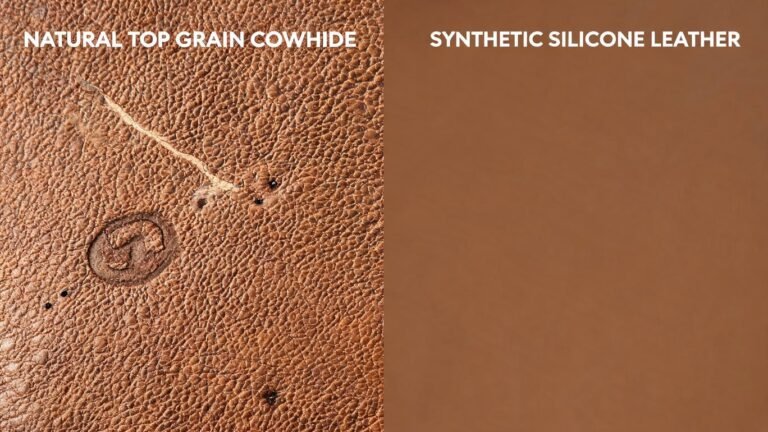
- Surface inspection: Full-grain has natural, irregular grain — no two sections look identical. Top-grain and genuine have uniform, corrected patterns. Perfectly uniform = sanded and finished, not full-grain.
- Edge cross-section: Full-grain has a consistent, tight, fibrous edge. Bonded leather shows visible layers or plastic backing. Genuine leather shows loose, inconsistent fibers.
- Finger press test: Full-grain wrinkles like skin and springs back. Corrected leather depresses stiffly without wrinkling. Bonded leather feels rigid and plastic-like.
- Smell test: Full-grain has a natural, earthy tanning odor. Genuine and bonded grades may have chemical or plastic odors from heavy processing and synthetic coatings.
- Weight test: Full-grain is dense and heavy. Bonded leather is lighter due to the PU content replacing actual leather fiber. Request weight per square meter data for comparison.

Top-grain leather furniture — the most common commercial grade, offering a balance of appearance, cost, and 7–10 year durability
Surface finishes comparison — see how silicone leather’s engineered textures compare to natural cowhide grain patterns
Frequently Asked Questions
What is the difference between full-grain and genuine leather?
Full-grain is the highest quality cowhide grade — the natural top layer with no sanding or correction, retaining the strongest fiber density and developing patina over 10+ years. “Genuine leather” is the third tier, made from the lower split layers after the top grain is removed. It’s heavily processed, less durable, less breathable, and prone to cracking within 3–5 years. The term “genuine” is a regulatory label meaning the material contains real leather fibers — it is not a quality endorsement. B2B buyers should always specify the grade (full-grain, top-grain, genuine, or bonded) in purchase orders, not rely on the “genuine leather” label.
Is cowhide leather better than synthetic leather for commercial furniture?
Full-grain cowhide offers superior tactile quality and develops character over a 10+ year lifespan — but it requires conditioning maintenance, absorbs water, stains permanently, and needs chemical treatment for fire code compliance. For commercial furniture where maintenance labor, stain resistance, and fire safety are non-negotiable, silicone leather delivers full-grain’s 10+ year durability (200K+ Martindale cycles) without the water vulnerability, conditioning requirement, or fire treatment. The decision should be driven by maintenance budget and application: full-grain cowhide for premium environments with dedicated maintenance staff; silicone leather for high-traffic commercial environments where maintenance-free durability matters more than tactile authenticity.
The Bottom Line for Cowhide Leather Specification
The cowhide genuine leather market is structured around a grading hierarchy that the word “genuine” obscures. Full-grain is the benchmark — natural, durable, and aging beautifully. Top-grain is a legitimate compromise — smoother but structurally reduced. Genuine is the third tier, despite the name implying quality. Bonded is leather scraps in plastic. For B2B specifiers, the action items are clear: demand grade specification in writing, verify with field tests at the factory, and weigh full-grain’s maintenance requirements against silicone leather’s maintenance-free alternative. The right choice depends on whether your application values tactile authenticity (full-grain cowhide) or performance consistency (silicone leather) — but either way, never accept “genuine leather” as a quality specification.
About TOPSUN
TOPSUN manufactures silicone-coated leather that delivers full-grain cowhide’s 10+ year durability without the maintenance, water vulnerability, or fire-treatment requirements. Our materials undergo head-to-head comparison testing against genuine cowhide grades to provide B2B specifiers with evidence-based material selection data across commercial furniture, automotive, and healthcare applications.
200K+ Martindale cycles · 10+ year service life · Zero conditioning · Non-porous stain resistance · EN 13733 Class 4 inherent · Vegan & cruelty-free