If your brand has faced pressure to offer vegetarian leather options, you’re not alone. Consumers, retailers, and investors are all pushing for animal-free materials. The problem: the term “vegetarian leather” (or “vegan leather”) is unregulated. It can mean anything from mushroom mycelium grown in a lab to plastic-coated polyester made from fossil fuels — and the vast majority of what’s on the market today is the latter.
In this article, we break down the three generations of vegetarian leather materials, what sustainability auditors actually verify (and what marketing claims they reject), and how to source animal-free materials that hold up under third-party scrutiny — not just in press releases. For B2B buyers navigating EU CSRD, US FTC green marketing guidelines, and customer due diligence questionnaires, the difference between genuinely sustainable and “greenwashed” vegetarian leather isn’t just an ethics issue — it’s a compliance and reputational risk.
The Three Generations of Vegetarian Leather
Not all vegetarian leather is created equal. The category spans three distinct generations of materials, each with very different environmental profiles — and very different marketing budgets.
| Generation | Materials | Market Share | Sustainability Profile |
|---|---|---|---|
| 1st Gen: Plastic-Based | PU (polyurethane), PVC, microfiber polyester | ~90% | Animal-free, but petroleum-derived; non-biodegradable; microplastic shedding risk |
| 2nd Gen: Bio-Coated | Pineapple (Piñatex), cactus (Desserto), apple skin, grape waste | ~4-5% | Uses agricultural waste; often still has a PU backing or binder; partial biodegradability |
| 3rd Gen: Full Bio-Leather | Mycelium (mushroom), bacterial cellulose, kombucha scoby, lab-grown collagen | <1% | Fully bio-based; fully biodegradable; still emerging commercially |
The uncomfortable truth is that when most consumers buy “vegan leather” products, they’re getting 1st-generation plastic-based materials — PU or PVC on a polyester backing. These are technically animal-free, but they’re made from fossil fuels, don’t biodegrade, and shed microplastics as they wear. That’s not to say they’re always worse than genuine leather from an environmental standpoint — the comparison is more nuanced — but the “sustainable” label is often misleading.

Vegetarian leather samples come in many forms — but not all meet the sustainability standards brands claim.
Compliance alert: The EU’s CSRD and US FTC Green Guides both require that “sustainable” and “eco-friendly” claims be substantiated with evidence. Calling PU leather “sustainable” just because it’s animal-free could trigger regulatory action.
What Sustainability Auditors Actually Verify
If you’ve ever filled out a retailer sustainability questionnaire or prepared for a third-party audit, you know that “vegan” alone doesn’t cut it. Auditors want data — specific, measurable, verified data. Here are the six criteria that matter most when evaluating vegetarian leather suppliers.
- Bio-based content percentage — How much of the material actually comes from renewable sources? A “cactus leather” that’s 20% cactus and 80% PU isn’t as eco-friendly as marketing suggests. Look for ISO 14067 or ASTM D6866 certification to verify bio-based content claims.
- Carbon footprint (LCA data) — Life cycle assessment data measuring CO₂ equivalent emissions per square meter or per kilogram. Genuine leather has high agricultural emissions; PU leather has high manufacturing emissions. The best bio-based materials beat both — but you need actual LCA data, not marketing claims.
- Biodegradability and end-of-life — Can the material be composted? Does it break down in landfill conditions? Does it shed microplastics? EN 13432 (industrial compostability) and ASTM D6400 are the standards to look for. Most 1st-gen PU vegetarian leather fails both.
- Chemical safety (REACH, RoHS, OEKO-TEX) — Vegetarian leather isn’t automatically “chemical-free.” PU coatings use plasticizers, solvents, and pigments that can be harmful. Look for REACH SVHC compliance, OEKO-TEX Standard 100, or bluesign certification. Our bluesign leather material guide explains what to verify.
- Supply chain transparency — Where do the raw materials come from? Are they waste streams (like apple pomace from juice production) or purpose-grown crops that compete with food? Waste-based feedstocks score much higher on sustainability audits.
- Durability and product lifespan — A material that lasts 10 years is more sustainable than one that lasts 2 years, even if the 2-year one is “more natural.” Durability is the most overlooked sustainability factor in vegetarian leather — and it’s often where bio-based materials underperform.

Raw material preparation — chemical safety and REACH compliance are non-negotiable for sustainable vegetarian leather sourcing.
The Durability Gap: Why Bio-Based Vegetarian Leather Struggles
Here’s the challenge that nobody in the sustainable materials space likes to talk about: the more “natural” a vegetarian leather is, the less durable it tends to be. Mushroom mycelium leather looks beautiful and feels great, but it doesn’t hold up to the abrasion, flexing, and UV exposure that furniture, automotive, or fashion applications demand.
In Martindale abrasion testing, most bio-based vegetarian leathers (2nd and 3rd generation) fail at 5,000–20,000 cycles. Compare that to genuine leather at 80,000–150,000 cycles, silicone-coated materials at 100,000+ cycles, or even basic PU at 30,000–50,000 cycles. For a handbag or a pair of shoes that might see light use, 10,000 cycles is fine. For a sofa or a car seat? It’s a warranty claim waiting to happen.
This creates a real dilemma for sustainability-focused brands. You can choose a material that’s genuinely bio-based but won’t last long (meaning more products end up in landfills sooner), or you can choose a more durable material that’s less “natural” but has a lower per-year environmental impact because it lasts longer. The answer depends on your product’s expected lifecycle and your sustainability priorities — but it’s a trade-off that honest brands need to acknowledge.
For more on how different materials stack up on durability, our synthetic leather durability article covers the full test data.
Download Full Technical Data Sheet

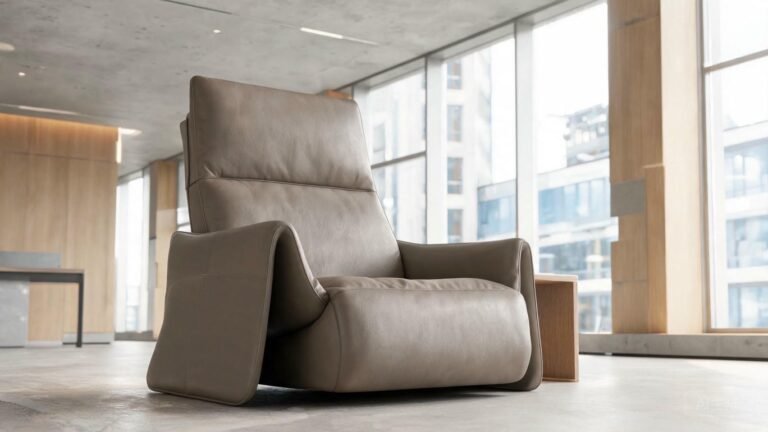
Plant-based vegetarian leather in furniture applications — beautiful aesthetic, but durability varies widely by material type.
See our eco-certification overview — what each standard means and how they’re verified by third-party auditors.
Silicone Leather: The Middle Path for Sustainable Vegetarian Materials
There’s a category of vegetarian leather that doesn’t fit neatly into the three-generation framework, and it’s one we’re increasingly recommending to clients who want both sustainability and performance: silicone leather.
Silicone leather is 100% animal-free — so it qualifies as vegetarian/vegan leather by any reasonable definition. But it’s not bio-based; it’s made from silica (sand) rather than petroleum or plants. This gives it a unique environmental profile:
- Zero VOC emissions — Silicone is an inert material that doesn’t off-gas volatile organic compounds. This is a big advantage over PU leather (which can emit VOCs, especially when new) and even some bio-based leathers that use PU binders.
- Zero plasticizers and phthalates — No plasticizers means no migration, no chemical leaching, and no microplastic shedding from plasticizer breakdown.
- Long lifespan — With 100,000+ Martindale cycles and excellent UV resistance, silicone leather lasts 2–3x longer than PU and 5–10x longer than most bio-based vegetarian leathers. Longer product life = lower per-year environmental impact.
- Easy to clean and maintain — Stains wipe off with water. No harsh cleaning chemicals needed. No conditioners required. This extends the product’s usable life and reduces the environmental impact of maintenance products.
- REACH and RoHS compliant — Silicone leather passes the strictest chemical safety standards in Europe and globally, making it suitable for products sold in regulated markets.
Silicone leather isn’t perfect — it’s not biodegradable (though it is chemically inert and doesn’t break down into microplastics), and it’s not made from waste streams. But for brands that need vegetarian leather that actually performs in high-wear applications — furniture, automotive, contract seating — silicone leather often represents the best balance of animal-free status, chemical safety, durability, and compliance.
Key framing: The most sustainable material isn’t the one with the best marketing — it’s the one that lasts the longest and contains the fewest harmful substances. By that measure, silicone leather outperforms most “eco” vegetarian leathers.
A B2B Buyer’s Checklist for Vegetarian Leather Sourcing
Before you sign a contract for vegetarian leather, make sure you’ve verified these seven things. Your sustainability team, your legal team, and your customers will thank you.
- Ask for the full composition breakdown — not just “vegan leather” or “cactus leather.” What percentage is bio-based? What’s the backing material? What chemicals are in the coating? If a supplier won’t tell you, that’s a red flag.
- Verify certifications with certificate numbers — Anybody can claim REACH compliance or OEKO-TEX certification. Ask for the certificate number and verify it on the issuing body’s website. For more on certification verification, see our OEKO-TEX leather certification guide.
- Get LCA data, not just marketing claims — If a supplier says their material is “eco-friendly” or “sustainable,” ask for a life cycle assessment showing carbon footprint, water use, and other metrics per unit. If they don’t have one, the claim is probably not substantiated.
- Test durability in your specific application — Don’t rely on supplier test data alone. Run your own abrasion, flex, and UV tests with samples from actual production batches. Make sure the material holds up to your product’s expected use case.
- Check labeling regulations for your markets — The EU, US, and other jurisdictions have different rules about what can be called “leather,” “vegan leather,” or “eco-friendly.” Make sure your labeling complies — the last thing you want is a regulatory fine or a class-action lawsuit over greenwashing claims.
- Ask about supply chain traceability — Where do the raw materials come from? Can the supplier trace each batch back to its source? Traceability is increasingly required by retailers and regulators, and it’s a basic expectation for sustainable sourcing.
- Consider the total lifecycle, not just the material — A material that’s 100% bio-based but lasts only 2 years is not necessarily more sustainable than a silicone material that lasts 10 years. Do the math on per-year environmental impact, not just per-meter.
Frequently Asked Questions
Is vegetarian leather the same as vegan leather?
Essentially yes — both terms describe leather-like materials that contain no animal products. “Vegetarian leather” is the more common term in some markets (particularly Asia), while “vegan leather” is more common in North America and Europe. Neither term is regulated, which means both can be — and often are — used to describe plastic-based materials like PU and PVC. Always verify the actual composition rather than relying on the label.
Is silicone leather really vegetarian/vegan?
Yes — silicone leather is 100% animal-free. It’s made from silica (derived from sand) combined with oxygen, carbon, and hydrogen in a polymer structure. No animal products, no animal byproducts, no animal testing. It’s suitable for vegan and vegetarian labeling, and it’s increasingly popular with brands that want animal-free materials that also meet strict performance and durability requirements.
Sourcing Vegetarian Leather Responsibly
The demand for vegetarian leather is real and growing — and it’s not going away. Consumers want animal-free options. Retailers are demanding sustainable materials. Regulators are cracking down on greenwashing.
The challenge is that the vegetarian leather market is still the Wild West. Terms are unregulated. Marketing often outpaces reality. And the materials that score highest on “sustainability” marketing often score lowest on actual durability and third-party verified environmental data.
The right approach? Treat vegetarian leather sourcing the same way you’d treat any other material sourcing decision. Verify composition. Demand test data. Check certifications. Calculate total lifecycle impact. And make sure the material can actually perform in your application — because a “sustainable” material that falls apart in two years isn’t sustainable at all.
Discuss Your Vegetarian Leather Project
About TOPSUN
TOPSUN provides silicone-based vegetarian leather that passes the strictest sustainability audits — combining animal-free status with verified REACH compliance, zero VOC emissions, and 100,000+ cycle abrasion resistance for long product lifespans.
Our materials are certified to OEKO-TEX standards, RoHS compliant, and backed by complete LCA data and batch-level traceability documentation for retail and regulatory audits.