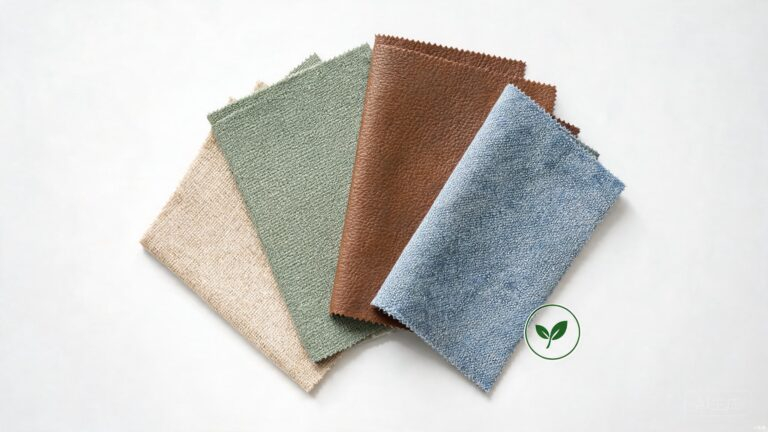
When a Sustainability Audit Exposes the Gaps
A global outdoor brand receives a sustainability audit report that stops procurement in its tracks: 12 of their 30 approved leather suppliers use chemical formulations flagged under the bluesign System Substance List (BSSL). The findings trigger an emergency supplier review, delayed product launches, and a painful realization — “eco-friendly” claims without bluesign-level chemical verification are marketing copy, not compliance documentation. For B2B sourcing teams navigating tightening ESG mandates, understanding bluesign leather material requirements isn’t a nice-to-have. It’s the difference between passing an audit and explaining why you didn’t.
The bluesign System, established in 2000 by Bluesign Technologies AG in St. Gallen, Switzerland, takes a fundamentally different approach to chemical safety. Instead of testing finished products for harmful substances after manufacturing, it manages what goes into the process — an input stream management philosophy that eliminates hazardous chemicals before they ever reach the production line. For leather material sourcing, this shifts the compliance conversation from “does the finished product pass?” to “was it made without harmful inputs from the start?” That distinction matters increasingly as the eco-friendly leather market matures and buyers demand verifiable chemical transparency.
What Bluesign Leather Material Means for B2B Sourcing
Bluesign certification covers the textile and leather supply chain — from chemical suppliers to manufacturers to brands — operating in over 50 countries. The system’s scope explicitly includes finished leather articles for industrial use, making it directly relevant to synthetic leather procurement. When a material carries bluesign alignment, it signals that every chemical input in the manufacturing process has been screened against the BSSL, a restricted substance list far more comprehensive than standard regulatory requirements.
For B2B buyers, this creates three practical sourcing advantages:
- Supply chain transparency — bluesign requires full chemical inventory disclosure from manufacturers, giving buyers visibility into every substance used in production, not just what appears in the final product test report
- Reduced audit risk — materials manufactured under bluesign-aligned input stream management are inherently compliant with overlapping regulations (REACH SVHC, CA Prop 65, EU E1), reducing the number of separate certifications needed
- Future-proofing against regulation — the EU Green Deal’s digital product passport mandate by 2030 will require chemical transparency that bluesign-aligned manufacturers already provide voluntarily
The alternative — sourcing leather materials based on finished-product testing alone — leaves a blind spot. A material can pass a restricted substance test on the finished roll while having used DMF solvents, phthalate plasticizers, or heavy-metal-based pigments during manufacturing. Those substances may not appear in the final product at detectable levels, but they entered the environment through wastewater and air emissions during production. Bluesign’s input stream approach closes that gap.

Chemical storage and mixing area — bluesign input stream management requires full disclosure and screening of every chemical input at this stage.
The Five Bluesign Criteria Applied to Leather Manufacturing
The bluesign System evaluates manufacturers against five principles. Each one maps directly to decisions leather material buyers should verify during supplier qualification:
1. Resource Productivity — Requires manufacturers to optimize energy, water, and raw material usage. For leather production, this means evaluating whether the coating process minimizes waste, whether water is recycled through closed-loop systems, and whether raw material yields are tracked. Silicone leather’s dry coating process — which uses no water baths compared to PU’s solvent-based wet processing — inherently scores well here.
2. Consumer Safety — Ensures the finished product contains no harmful substances above bluesign limits. This goes beyond pass/fail testing: it requires that the chemical formulation was designed from the start to exclude restricted substances. A leather material that achieves this principle won’t contain residual DMF, phthalates, or formaldehyde — because those chemicals were never introduced into the process.
3. Air Emission — Limits VOC emissions from manufacturing facilities. PU leather production releases significant VOCs through solvent evaporation (DMF, toluene, MEK). Silicone leather’s solvent-free dry coating process emits zero VOCs during production — a structural advantage that aligns with this criterion without requiring additional emission control equipment.
4. Water Emission — Restricts pollutants in manufacturing wastewater. Conventional synthetic leather wet processes discharge solvent-laden wastewater requiring treatment. Solvent-free production eliminates this discharge stream entirely, making water emission compliance straightforward rather than expensive.
5. Occupational Health & Safety — Protects workers from exposure to hazardous chemicals during manufacturing. Facilities using DMF, toluene, or other harmful solvents must implement ventilation, PPE, and exposure monitoring programs. Solvent-free processes remove the hazard at the source — the most effective occupational safety strategy according to the hierarchy of controls.

Production process flow chart — solvent-free dry coating means no harmful chemical inputs enter the manufacturing stream.
How Silicone Leather Aligns with Bluesign Principles
Silicone leather’s manufacturing chemistry creates a natural alignment with bluesign criteria that PU and PVC leather cannot match without significant process modification. The key is the polymer itself: silicone (polysiloxane) is applied through a dry coating process that requires no organic solvents, no plasticizers, and no chemical crosslinking agents that would appear on the BSSL restricted substance list.
In our production facility, we’ve documented how this chemistry translates into measurable compliance outcomes. TOPSUN’s silicone leather achieves zero VOC emissions verified under ISO 16000-6 chamber testing — TVOC below 0.01 mg/m³. The material passes REACH SVHC screening across 200+ substances with no detections. It is halogen-free, phthalate-free, formaldehyde-free, and BPA-free — not because these substances were filtered out of the finished product, but because they were never introduced into the manufacturing process.
This is the input stream management philosophy that bluesign promotes, achieved through material chemistry rather than process controls. A PU leather manufacturer can work toward bluesign compliance by upgrading to water-based solvents, installing emission capture systems, and implementing chemical substitution programs. A silicone leather manufacturer starts from a position of inherent compliance — the chemistry eliminates the problem at the molecular level.

Raw materials and lifecycle display — full chemical inventory transparency supports bluesign-aligned compliance reporting.
Request Chemical Inventory Report
Bluesign Leather Material vs Other Certifications
Buyers evaluating leather material sustainability face a landscape of overlapping certifications. Understanding what each one covers — and what it doesn’t — prevents the costly mistake of assuming one certification substitutes for another.
| Certification | Scope | Chemical Screening Approach | VOC Requirement | Leather Relevance |
|---|---|---|---|---|
| Bluesign | Full supply chain: chemicals → manufacturing → product | Input stream management — screens chemicals before use | Zero VOC in production (air emission criterion) | Covers finished leather articles for industrial use |
| OEKO-TEX STD 100 | Finished product testing | Output testing — detects substances in final product | VOC limits on finished material (varies by class) | Includes leather-specific testing categories |
| REACH (EU) | Regulatory — EU market access | SVHC declaration — 200+ substances of concern | No specific VOC production limit | Mandatory for all products sold in EU |
| CA Prop 65 | Regulatory — California market | List of ~900 chemicals requiring warning labels | No production VOC limit; finished product focus | Applies to leather goods sold in California |
Table: Certification comparison based on published scope documents. Bluesign’s input stream approach is unique in screening chemicals before they enter manufacturing, while others primarily test finished products.
The critical distinction: OEKO-TEX, REACH, and Prop 65 all test or regulate the finished product. A material can pass all three while having been manufactured with hazardous solvents that were emitted into the air and discharged into waterways during production. Bluesign is the only system that manages the manufacturing process itself — which is why brands with serious sustainability commitments treat it as the gold standard, not a redundancy.

Finished silicone leather rolls — zero-VOC production means the environmental compliance story is built into the material, not added afterward.
FAQ: Bluesign Leather Material Compliance
Can bluesign certification apply to synthetic leather materials?
Yes. The bluesign System scope explicitly covers the textile and leather supply chain, including finished leather articles for industrial use. Synthetic leather manufacturers can pursue bluesign system partnership by undergoing assessment of their chemical inputs, manufacturing processes, and environmental performance. Silicone leather, manufactured through a solvent-free dry coating process with no harmful chemical inputs, aligns naturally with bluesign criteria — particularly the air emission, water emission, and consumer safety principles. For a full comparison of how silicone leather differs from PU in environmental impact, our technical reference page provides detailed parameter data.
How does silicone leather’s solvent-free process support bluesign compliance?
Silicone leather’s dry coating process eliminates the primary chemical compliance challenge that PU and PVC leather face: organic solvent use. Because no DMF, toluene, or MEK enters the manufacturing process, there are no VOC air emissions to control, no solvent-laden wastewater to treat, and no residual solvents to test for in the finished product. This satisfies three of the five bluesign criteria — air emission, water emission, and consumer safety — at the chemistry level rather than through end-of-pipe controls. The remaining criteria (resource productivity and occupational health) are also inherently supported, as solvent-free production requires less energy for emission control and creates no worker exposure to hazardous vapors.
About TOPSUN
TOPSUN manufactures silicone leather through a solvent-free dry coating process that eliminates harmful chemical inputs at the source. Our materials pass REACH SVHC screening of 200+ substances, achieve zero VOC emissions under ISO 16000-6 chamber testing, and are formulated without phthalates, formaldehyde, heavy metals, or halogen compounds. We provide full chemical inventory transparency and third-party test documentation to support bluesign-aligned compliance reporting for brands and manufacturers. Learn more about TOPSUN.
Don’t Wait for the Audit. Verify Now.
If your current leather material suppliers cannot provide full chemical input disclosure, you’re carrying compliance risk that a sustainability audit will eventually expose. The brands that pass audits aren’t the ones with the most certifications — they’re the ones whose materials were manufactured without harmful chemicals from the start. Request our environmental compliance documentation, review the chemical inventory, and verify that your sourcing chain meets the standard before someone else asks you to prove it.
Request Environmental Compliance Documentation
Related reading: eco-friendly silicone leather guide and TOPSUN factory production process.