The main upholstery on your sofa looks pristine after three years of daily use. But the edge tape — that thin strip of leather tape for sofa binding along the seams, armrests, and cushion edges — started cracking at month 18. The irony? Most sourcing teams spend weeks selecting the primary leather and five minutes approving the edge tape. Here’s why this overlooked component deserves the same scrutiny, and what happens when it doesn’t get it.
What Is Leather Tape for Sofa and Why It Matters
Leather tape for sofa manufacturing serves two critical functions: edge binding that covers raw fabric edges at seams and joints, and decorative piping that defines the visual lines of the furniture. It’s the material that transitions between the main upholstery panels, creating clean finishes along curves, armrests, and cushion perimeters. When you look at a well-made sofa, the tape is invisible. When it fails, it’s the first thing a customer notices.
The problem is structural. Edge tape bears concentrated stress at every point where the sofa flexes — every time someone sits down, leans back, or shifts position. The main upholstery panel distributes that load across a wide surface area. The tape concentrates it along a narrow strip, typically 10-20mm wide. That’s why the tape fails first, even when it’s made from the same material as the main leather. For commercial furniture applications, this stress concentration is amplified by continuous daily use.

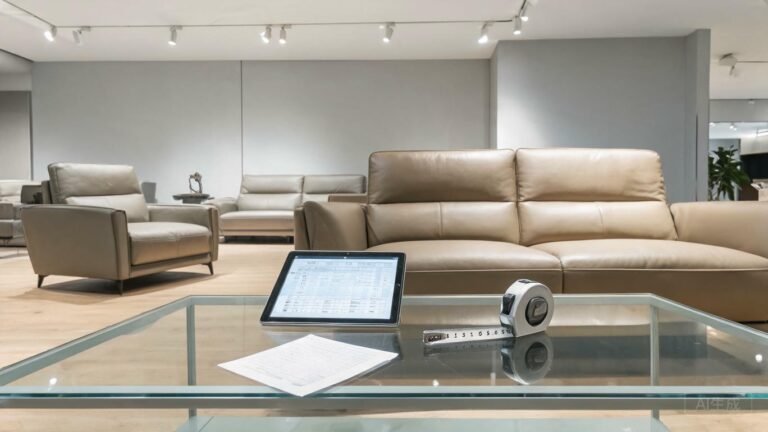
Commercial sofa with leather edge tape — the binding that takes the most stress and fails first
Why PU Leather Tape for Sofa Fails First
PU leather tape is the default choice for most furniture manufacturers because it’s cheap, flexible, and easy to work with. It’s also the component that fails first. Three mechanisms drive the failure, and they all stem from PU’s fundamental chemistry.
First, hydrolysis. PU’s molecular chains break down when exposed to moisture — even ambient humidity. The narrow strip of edge tape has a higher surface-to-volume ratio than the main panel, which means it absorbs moisture faster and degrades sooner. In tropical or coastal markets, PU tape starts peeling within 12-18 months while the main upholstery still looks serviceable. Our silicone vs PU comparison documents the full hydrolysis gap.
Second, flex fatigue. Every time the sofa cushion compresses, the edge tape bends. PU leather loses flexibility over time — the plasticizers that make it pliable migrate out, leaving the tape brittle and prone to cracking along the fold line. Third, adhesive failure. Self-adhesive PU tape relies on a pressure-sensitive adhesive that degrades with temperature cycling. The tape lifts at the edges first, then peels completely, exposing the raw fabric underneath.
Real-world pattern: A 500-unit hotel sofa order with PU edge tape generates an average of 40-60 warranty claims within the first 24 months — almost all for edge tape failure, not main upholstery damage.

Calender machine — where silicone leather tape is formed to precise thickness specifications
Silicone Leather Tape: The Edge That Outlasts the Sofa
Silicone leather tape solves all three failure mechanisms at the molecular level. Silicone polymers are inherently hydrolysis-resistant — they don’t break down in humid environments because their silicon-oxygen backbone is far more stable than PU’s carbon-based chains. In our testing, silicone tape shows zero degradation after 1,000+ hours of accelerated humidity testing, while PU tape begins surface breakdown at 300 hours.
Flex fatigue disappears as a concern because silicone maintains its flexibility across a temperature range of -40°C to 250°C. No plasticizer migration means no embrittlement — the tape that goes on at production stays as flexible in year five as it was on day one. For maintenance teams dealing with edge tape replacement, our cleaning and maintenance guide covers the protocols that keep both main upholstery and edge tape looking new.
| Property | Silicone Leather Tape | PU Leather Tape | Impact on Sofa |
|---|---|---|---|
| Hydrolysis Resistance | 1,000+ hours | Under 300 hours | No peeling in humid climates |
| Flex Endurance | Stays flexible -40°C to 250°C | Brittle after 2 years | No cracking at stress points |
| UV Color Stability | ΔE < 2.0 after 500 hrs | ΔE > 4.0 typical | Tape matches leather long-term |
| Adhesive Bond | Thermally stable | Degrades with temperature | No edge lifting |

Color-matched leather rolls — the raw material for tape that blends seamlessly with main upholstery
Sourcing Specs: Width, Thickness, and Adhesion Standards
When sourcing leather tape for sofa production, three specifications determine whether the tape performs or fails. Width matters because it controls how much stress the tape distributes — too narrow and it cuts into the fabric; too wide and it’s difficult to apply along curved edges. Standard widths range from 10mm for piping to 25mm for edge binding, with 15mm being the most common for sofa applications.
Thickness controls durability and hand-feel. Most sofa tape runs 0.5mm to 1.2mm. Thinner tape (0.5-0.7mm) works for decorative piping where flexibility matters. Thicker tape (0.8-1.2mm) is better for edge binding where abrasion resistance is critical. For leather furniture patches and edge applications, specifying the right thickness prevents both premature wear and application difficulties.
Adhesion is where most tape fails in the field. If you’re using adhesive-backed tape rather than sewn binding, demand peel strength data. The industry minimum for furniture applications is 5 N/cm, but silicone leather tape with thermally stable adhesive can achieve 8-10 N/cm — enough to survive years of thermal cycling without lifting. For commercial sofa upholstery fabric projects, specifying peel strength in your purchase order prevents the most common warranty claim.

Quality control standards — every tape batch tested before it reaches the sofa production line
Color Matching: When the Tape Doesn’t Match the Leather
Nothing signals cheap manufacturing faster than edge tape that doesn’t match the main upholstery. The problem is that tape and main leather are often sourced from different suppliers, dyed in different batches, and exposed to different UV conditions over time. What matches perfectly in the factory drifts apart within months of real-world use.
The solution is sourcing tape and main leather from the same manufacturer, dyed in the same batch. When that’s not possible, specify ΔE ≤ 2.0 at production and require UV aging data for both materials. Silicone leather offers an advantage here — its color stability is inherently superior to PU, so even when tape and main leather are from different batches, they age at similar rates and maintain visual coherence over the sofa’s lifespan.
See how silicone leather performs under stain and stress testing — the same durability applies to edge tape
Frequently Asked Questions
Can I use self-adhesive leather repair tape instead of sewn edge binding for sofa production?
No. Self-adhesive repair tape is designed for consumer touch-ups — fixing a small tear or hole on an existing sofa. It lacks the structural integrity for production-grade edge binding. In manufacturing, edge tape must be sewn or thermally bonded to withstand the concentrated stress at sofa seams. Using repair-grade adhesive tape in production leads to edge lifting within months, not years.
Does silicone leather tape cost significantly more than PU tape?
Silicone leather tape typically costs 20-30% more per meter than PU tape at purchase. However, when you factor in the elimination of warranty claims from edge tape failure — which can cost $15-40 per unit in replacement labor and materials — the total cost of ownership favors silicone from year one onward for commercial furniture orders.
Stop Treating Edge Tape as an Afterthought
The leather tape for sofa is the component that takes the most stress and gets the least attention. PU tape fails because its chemistry can’t handle the concentrated flex, moisture, and thermal cycling that edge binding endures every day. Silicone leather tape eliminates all three failure modes — hydrolysis, flex fatigue, and adhesive degradation — while maintaining color consistency with the main upholstery. For sourcing teams, the calculation is simple: the tape that costs 25% more upfront and lasts 5x longer is the one that protects your warranty budget and your brand reputation.
Get Color-Matched Tape Samples
About TOPSUN
TOPSUN produces silicone leather tape and edge binding materials engineered specifically for sofa manufacturers who need edge components that match the durability of their primary upholstery.
With color-matched silicone formulations, UV-stable pigments, and thickness options from 0.5mm to 1.2mm, our tape integrates seamlessly with TOPSUN silicone leather or third-party upholstery materials.