A furniture client once told us their design team spent six weeks perfecting a sofa that paired a linen-look fabric back with leather seat cushions — only to discover the materials bled color into each other after three months in a showroom window. The combination looked stunning. The chemistry didn’t agree. For specifiers and procurement teams working with fabric and leather in the same product, understanding where these materials clash — and how to prevent it — is the difference between a bestseller and a recall.
This guide covers the quality benchmarks, durability trade-offs, and hidden failure points that emerge when fabric and leather share the same piece of furniture — plus why silicone leather is increasingly chosen as a bridge material that eliminates the compatibility problem entirely.
Request Fabric vs Leather Sample Set
Where Fabric and Leather Meet in Modern Design
The trend of combining fabric and leather on a single furniture piece isn’t new, but it’s accelerating. Hospitality designers pair leather seat panels with fabric backs for cost optimization. Automotive interiors mix leather-wrapped steering wheels with fabric door panels. Office furniture brands use leather on high-wear armrests and fabric on seat backs to balance durability with breathability. The logic is sound — put the premium material where wear is highest, use fabric where comfort and cost matter more.
But here’s the catch: fabric and leather behave differently under the same conditions. Fabric absorbs moisture and expands; leather (especially synthetic) may not. Fabric dyes can migrate into leather coatings under heat and humidity. Seam allowances that work for a 1.2mm leather may pucker on a 0.8mm fabric. We’ve seen these mismatches surface as warranty claims 12-18 months after delivery — long after the design team has moved on.

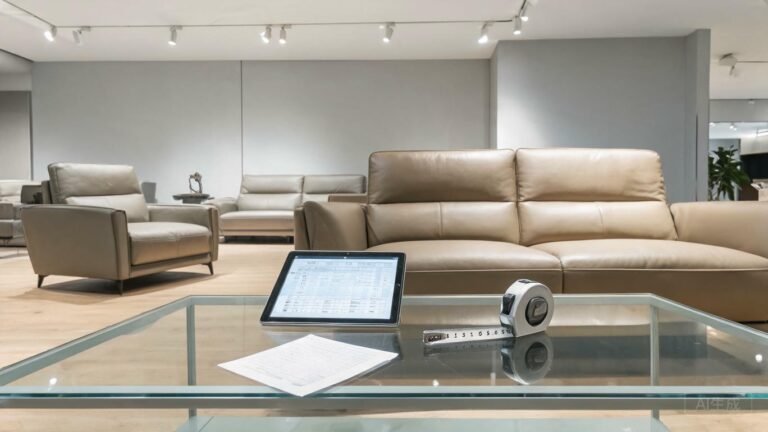
Fabric and leather combination on a commercial sofa — the junction points are where durability issues typically emerge first.
Quality Benchmarks Every Spec Sheet Needs
When you specify fabric and leather in the same product, your spec sheet needs to address both materials independently and as a system. These are the four parameters we recommend every B2B spec include — drawn from our work with furniture OEMs across furniture sofa applications.
- Martindale abrasion (fabric: ISO 12947; leather: ISO 5470) — Minimum 25,000 cycles for residential, 40,000 for commercial. Specify the standard and the cycle count separately for each material.
- Colorfastness to rubbing (ISO 105-X12) — Grade 4 minimum for both materials. This is the single most important test for preventing color migration at fabric-leather junctions.
- Seam strength (ISO 13935-2) — 180N minimum for furniture seams. When fabric and leather have different stretch characteristics, seam failure is the first symptom.
- UV colorfastness match (ISO 105-B02) — Both materials must achieve the same grade (minimum 4). If the fabric fades at grade 3 and the leather holds at grade 5, the product looks mismatched after 6 months.
Designer’s tip: Request a “junction sample” — a 10x10cm swatch where the fabric and leather are seamed together — before approving the full production run. This costs almost nothing but catches 90% of compatibility issues that individual material tests miss.

Color matching wall used to align fabric and leather shades under standardized D65 lighting before production approval.
Fabric and Leather: The Durability Reality Check
Designers often assume leather outlasts fabric in all scenarios. That’s not always true. In high-UV environments, some fabric blends (solution-dyed acrylic) outperform genuine leather, which can dry and crack. In food-service settings, leather’s wipe-clean surface wins decisively over fabric. The table below reflects what we’ve observed across hospitality and residential projects.
| Performance Factor | Fabric Upholstery | Leather Upholstery | Silicone Leather |
|---|---|---|---|
| Stain resistance | Low (treatments needed) | High | Highest |
| Breathability | High | Low to moderate | Moderate |
| Cleanability | Difficult (stains set in) | Easy (wipe down) | Easiest (soap & water) |
| UV colorfastness | Grade 4-5 (solution-dyed) | Grade 3-4 (varies) | Grade 5+ |
The pattern is clear: fabric wins on breathability, leather wins on cleanability, but neither wins across the board. That’s why specifiers increasingly ask us for a single material that performs well in all four categories — and why silicone leather, with its inherent stain resistance and UV stability, is gaining traction in hybrid designs. Learn more about silicone leather properties to see how it compares.
Download Material Spec Template
Seam Strength and Color Migration: Hidden Failure Points
Two failure modes dominate fabric and leather combination products — and both are invisible until it’s too late. The first is seam failure: fabric stretches under load while leather holds rigid, concentrating stress at the stitching line. Over time, the thread cuts through the fabric substrate like a saw. We’ve measured seam strength drop from 220N to 90N in as little as 6 months on a hospitality bar stool that paired faux leather seats with fabric backs.
The second is color migration — particularly with disperse dyes from polyester fabrics transferring into plasticized leather coatings. This happens faster at elevated temperatures. A sofa placed near a sunny window in a showroom can show visible dye transfer within 90 days. The fix is chemical compatibility testing, which is covered under ASTM D7258 standards for upholstered furniture.

Flexibility bending test equipment verifies that leather and fabric materials maintain seam integrity under repeated stress cycles.
For both issues, the solution is the same: test the combination, not just the individual materials. A junction sample that passes 15,000 flexing cycles without seam separation and shows zero color transfer after 72 hours at 70°C gives you confidence the design will survive real-world use. Our cleaning and maintenance guidelines also help extend the life of these hybrid products in the field.
Silicone Leather: The Bridge Material
Here’s where the story gets interesting for B2B buyers. Silicone leather combines the breathability and softness designers love about fabric with the cleanability and durability of leather — without the compatibility issues. Because it’s a single homogeneous material, there’s no color migration, no differential stretch at seams, and no need to run two separate material qualification processes.
One hospitality furniture client replaced their fabric-and-leather bar stool program entirely with silicone leather. They eliminated the junction sample approval step from their QC process, cut their material SKU count by 40%, and reported zero upholstery-related warranty claims in the first 18 months — down from a 3-4% claim rate on the previous hybrid design. They also leveraged our custom texture design service to create two surface finishes on the same roll, achieving the visual contrast they wanted without mixing materials.

Warm-tone swatch options — silicone leather can replicate both fabric-like matte finishes and leather-like grain textures.
For more on how fabric and leather products are evaluated in the market, check our existing fabric and leather sofa guide or our detailed fabric and leather material buyer guide.
Explore the full range of silicone leather textures — from fabric-like matte to leather-like grain, all from a single material platform.
Frequently Asked Questions
Can fabric and leather be used on the same furniture piece?
Yes, but it requires careful material pairing. Specify colorfastness to rubbing (ISO 105-X12) at grade 4 minimum for both materials, test seam strength on a junction sample, and verify color compatibility under accelerated heat/humidity conditions. Materials with similar stretch coefficients (elongation at break within 15% of each other) perform best together.
How do you prevent color migration between fabric and leather?
Use disperse-dye-free fabric formulations, or insert a barrier film between fabric and leather at seam junctions. Test for color transfer using ISO 105-X12 at elevated temperature (50°C) for 72 hours. Silicone leather eliminates this issue entirely since it’s a single material with no dye transfer risk.
Choosing the Right Material Strategy
The fabric-and-leather combination isn’t going away — it serves real cost and aesthetic purposes. But specifiers who understand the compatibility risks, test the junction points, and know when to simplify by choosing a single high-performance material like silicone leather will deliver products that look better, last longer, and generate fewer warranty headaches. The question isn’t whether to combine materials — it’s whether you’ve done the homework to make the combination survive the field.
Get Custom Hybrid Upholstery Quote
About TOPSUN
TOPSUN produces custom silicone leather that bridges the gap between fabric comfort and leather performance for furniture, automotive, and hospitality upholstery — serving brands and OEMs in 30+ countries with over 8 years of material engineering experience.
Multi-texture customization matching both fabric and leather grains | Color consistency verified under D65 standard lighting | Seam-friendly formulations tested for 15,000+ flexing cycles | Zero color migration by formulation