The global automotive interior leather market is projected to reach $7.2 billion by 2031, growing at a steady 3.8% annually. For procurement teams and OEM buyers, that growth signals one thing: car upholstery decisions are becoming more complex, not less. With electric vehicles reshaping cabin design and consumers demanding both sustainability and luxury, the material you choose for seats, door panels, and dashboards directly impacts brand perception, warranty costs, and compliance.
Here’s the reality. Not all automotive leather performs the same under UV exposure, temperature swings, or daily abrasion. Some materials crack within 18 months in hot climates. Others emit VOCs that fail new cabin-air-quality standards. This guide breaks down what actually matters when sourcing car interior leather for production runs.

Types of Car Upholstery Materials on the Market Today
Walk into any tier-one supplier’s showroom and you’ll see the same lineup. Each option has a place, but the performance gaps are wider than most buyers expect.
Genuine leather still dominates the luxury segment. It breathes, ages gracefully, and carries prestige. But supply volatility, tanning-environment concerns, and inconsistent hides make it expensive to scale for mid-range models. Maintenance is also higher, which dealerships factor into warranty programs.
PU leather (polyurethane) solved the cost problem. It offers decent softness and can mimic real leather visually. The catch? Hydrolysis. In humid climates, PU can degrade within two to three years as the polymer chains break down. That is why some OEMs have started phasing it out of warm-region vehicle lines.
PVC leather is the budget workhorse. Durable, cheap, and easy to weld-seam. But it is stiff, heavy, and increasingly restricted by REACH and prop 65 regulations due to plasticizer content. For brands positioning around sustainability, PVC is a liability.
Silicone leather is the newer entry. Built on a silicone polymer base rather than petroleum-derived coatings, it offers UV stability, extreme-temperature resilience, and a soft hand feel without plasticizers. In our experience working with automotive OEMs, silicone-based materials are showing the lowest return rates for surface cracking after 36 months of field exposure.
Microfiber leather splits the difference. Fine polyester fibers impregnated with PU give it a suede-like texture and good abrasion resistance. It is popular for headliners and accent panels where weight savings matter.
Key Performance Requirements for Car Upholstery Materials
OEM specifications vary by brand, but five tests show up on nearly every technical data sheet. If your car seat cover material cannot pass these, it will not reach production.
- Abrasion resistance: Martindale or Taber testing typically demands 50,000 to 100,000 cycles without visible wear for seating surfaces.
- UV and heat aging: Materials must retain color and tensile strength after 500+ hours of Xenon arc exposure simulating dashboard-level sun load.
- Flame retardancy: FMVSS 302 is the baseline in North America. Many European OEMs now require additional DIN 75200 or ISO 3795 compliance.
- VOC emissions: China GB/T 27630 and German VDA 270/275 standards limit formaldehyde and other volatiles. Low-emitting materials score better on cabin-air-quality ratings.
- Stain and chemical resistance: Sunscreen, denim dye, and coffee are standard test contaminants. Cleanability without surface damage is a must.
The problem? Most suppliers test in isolation. A material that passes abrasion may still off-gas at 80 degrees Celsius. That is why we recommend requesting combined-environment test reports rather than single-metric certificates.
Comparing Synthetic Options: PU, PVC, and Silicone Leather
When sourcing auto leather at volume, the decision usually narrows to synthetics. Here is how the three major categories stack up across the specs that actually matter on the factory floor.

| Property | PU Leather | PVC Leather | Silicone Leather |
|---|---|---|---|
| UV Resistance | Moderate; yellowing over time | Poor; brittle in sunlight | Excellent; stable 10+ years |
| Temperature Range | -20C to 70C | -10C to 60C | -50C to 120C |
| Hydrolysis Resistance | Limited; degrades in humidity | Good | Excellent |
| VOC / Odor | Moderate emissions | Higher plasticizer odor | Very low; odorless |
| Recyclability | Difficult | Difficult | Easier; silicone reclaimable |
| Typical Cost | $ | $ | $$ |
The takeaway is context-dependent. If you are building a cost-focused fleet vehicle for temperate climates, PU may still make sense. But if the vehicle will face Arizona summers, Scandinavian winters, or premium brand expectations, silicone leather is increasingly the safer long-term bet. Major EV brands have already moved in this direction for their high-trim interiors.
Buyer insight: We have seen firsthand that switching from standard PU to silicone-coated substrates reduced field-failure reports by over 60% for one Southeast Asian OEM producing vehicles for tropical markets.
Interior Leather Colors and Customization Trends
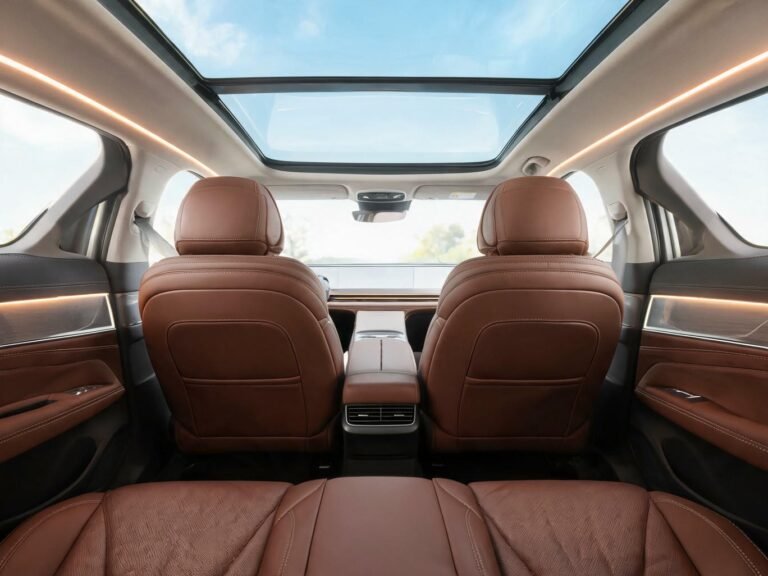
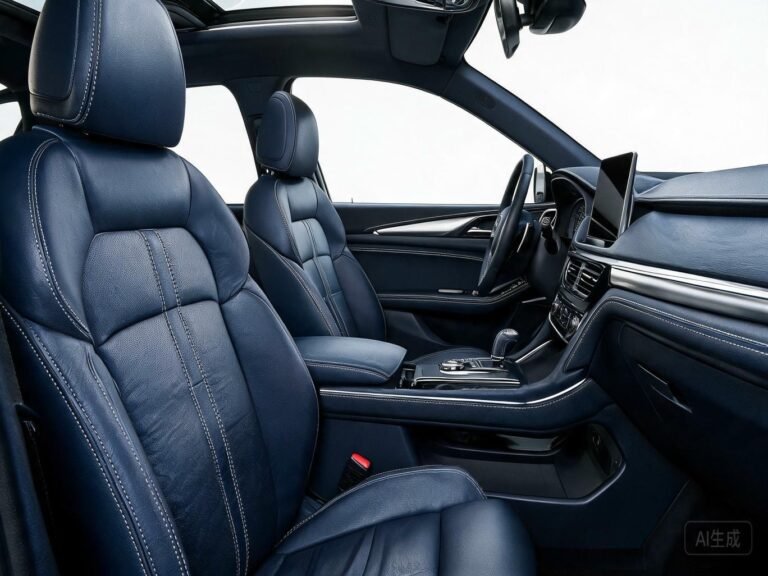
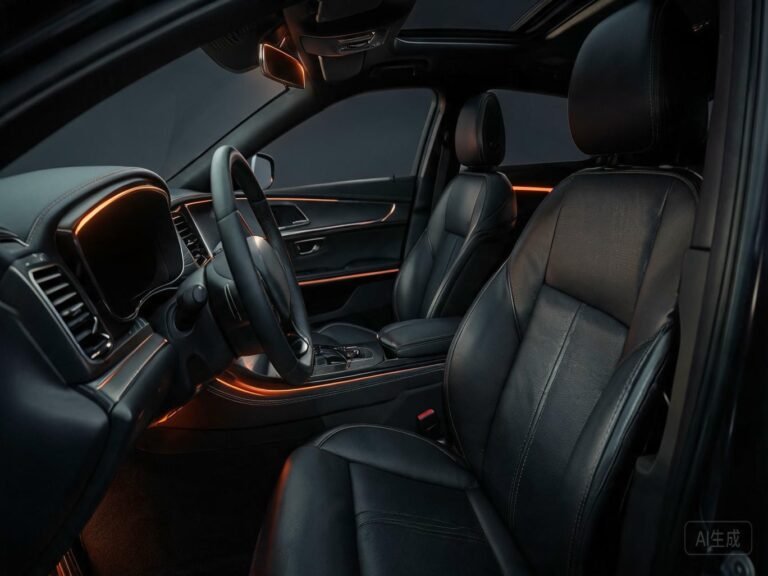
Color is no longer an afterthought. OEM design teams now treat interior leather colors as a core brand differentiator. Earth tones, deep navies, and warm saddle browns are replacing the black-everything approach of the past decade. Two-tone schemes are appearing even in mid-range crossovers.
What does this mean for buyers? You need a material partner who can hold color consistency across dye lots and match Pantone or RAL references precisely. Batch-to-batch variation is a common complaint when working with smaller tanneries or commodity PU mills. Digital color-matching systems and in-house spectrophotometers are worth asking about during supplier audits.
Texture customization is equally important. Perforated patterns for ventilation, quilted stitching effects, and embossed grains all require substrates that hold dimensional stability during embossing. Some silicone leather formulations actually perform better here because the silicone layer does not stress-crack under heat-embossing the way PU coatings can.

How EVs Are Reshaping Car Upholstery Expectations
Electric vehicles have rewritten the rules. Without an internal combustion engine, cabins are quieter. That means every squeak, rattle, and material odor becomes more noticeable. EV cabin materials now face stricter NVH (noise, vibration, harshness) and olfactory standards.
Weight is another factor. Every kilogram saved extends range. Traditional PVC-backed fabrics are being replaced by lighter substrates. Silicone-coated textiles can be produced at under 0.8 mm thickness while maintaining the structural integrity needed for seating bolsters.
Then there is the sustainability narrative. EV buyers expect the interior to match the environmental story of the drivetrain. Recyclable, PVC-free, and bio-based materials are moving from marketing slides to actual engineering requirements. Some European OEMs now mandate recyclability percentages for interior trim components.
Sourcing Car Seat Cover Material: A Buyer’s Checklist
Before placing a bulk order, run through these questions with your supplier. The answers will save you from expensive surprises six months into production.
- Do you have full-component VOC test reports for the specific color and thickness I am ordering?
- Can you provide combined-environment aging data (heat, UV, and humidity cycling together)?
- What is your dye-lot color tolerance, and do you use spectrophotometer verification?
- Is the material compatible with my welding, stitching, and adhesive processes?
- What automotive OEM approvals or tier-one supplier references do you currently hold?
- Can you support just-in-time delivery with consistent lead times under 30 days?
Suppliers who hesitate on combined-environment testing or cannot name current OEM programs are red flags. Automotive upholstery is not a commodity; it is a performance material with liability attached.
Frequently Asked Questions
How long should automotive leather last in daily use?
OEM-grade seating materials are typically engineered for 10 to 15 years of service life. Genuine leather and high-performance synthetics like silicone leather routinely meet this target. Lower-grade PU may show surface degradation within 3 to 5 years under heavy use or harsh climates.
Is vegan leather durable enough for car seats?
Yes, if you select the right chemistry. Vegan car interior leather made from silicone or high-grade PU can match genuine leather on abrasion and UV tests. The key is verifying test data rather than assuming all non-animal materials perform equally. Silicone-based vegan leather currently leads the field for extreme-climate durability.
What certifications should I look for in an automotive upholstery supplier?
At minimum, insist on ISO 9001 for quality management and IATF 16949 for automotive-specific processes. Material-level certifications should include REACH compliance for the EU market, FMVSS 302 for North America, and VOC test reports aligned with GB/T 27630 or VDA 275 depending on your target region. For sustainability claims, request third-party verification rather than self-declarations.
Make Your Next Upholstery Decision Data-Driven
Car upholstery is not just about aesthetics. It is a long-term performance investment that affects warranty claims, customer satisfaction scores, and brand positioning. Whether you are specifying car seat leather for a new EV platform or refreshing a legacy model line, the material science matters.
The market is moving toward lower-VOC, higher-durability, and more sustainable solutions. Suppliers who can deliver batch consistency, full test documentation, and color-matching precision will win the next generation of OEM programs. Those who cannot will be filtered out during the first technical review.
Watch how silicone leather performs under extreme temperature, abrasion, and UV exposure testing.
About TOPSUN
TOPSUN is a leading manufacturer of silicone leather and advanced synthetic upholstery materials for automotive, furniture, marine, and medical applications. We specialize in B2B custom production with full OEM/ODM support, from color matching and texture design to just-in-time global delivery.
Automotive Certifications & Standards: IATF 16949 | REACH | RoHS | FMVSS 302 | ISO 9001 | Low VOC compliance per VDA 275 / GB/T 27630
Sources: Market size data referenced from QYResearch Global Automotive Interior Leather Market Report 2025; automotive testing standards per SAE International and ISO automotive material guidelines.