A hotel chain in Southeast Asia replaced 1,200 armrests upholstered with vegan PU leather. Eighteen months after installation, the surfaces were flaking — not from abrasion, not from UV, but from hydrolysis. When our QC team pulled the failed samples and ran them alongside silicone leather through the same accelerated aging protocol, the gap was stark: PU delaminated in under 4 weeks. Silicone lasted 14+.
Request Material Comparison Samples
When Vegan PU Leather Starts Dying: The Hydrolysis Cascade
Vegan PU leather dominates the synthetic market — it captured 55.25% of global vegan leather revenue in 2025, generating $27.06 billion, according to Fortune Business Insights. But that market share masks a durability problem that every QC inspector sees on the testing bench.

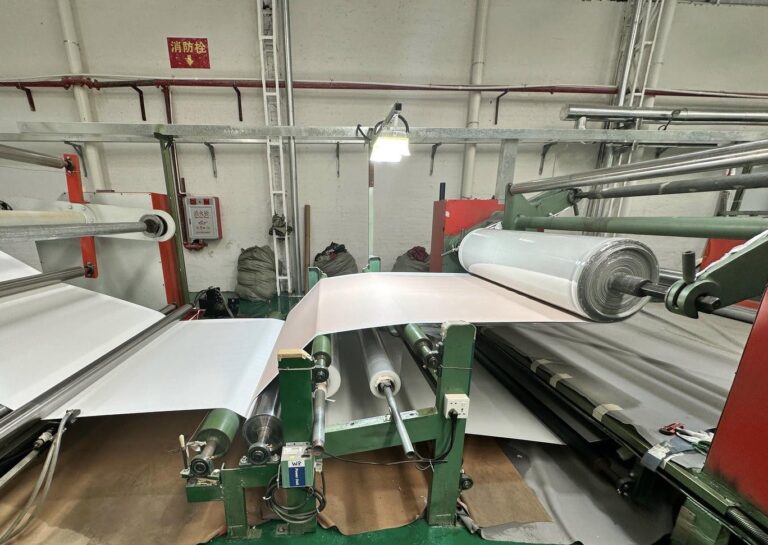
QC testing laboratory where accelerated aging and flex endurance tests are conducted
Here’s what happens: moisture attacks the ester bonds in polyurethane, breaking down the polymer chain. The surface turns sticky, then brittle, then cracks and peels. According to data from a European furniture manufacturer, 85% of documented PU leather failures across 12 countries trace back to hydrolysis — not wear, not sunlight, not tearing.
The numbers from Bally flex testing make this concrete. Standard PU starts at 110,000 flex cycles to failure. After 6 weeks of accelerated aging — roughly equivalent to 6 years of tropical wear — that drops to 9,000 cycles. Tensile strength plummets to 14% of original. The material hasn’t just aged; it has structurally collapsed.
Compounding the problem: most vegan PU leather is manufactured with DMF (dimethylformamide), a solvent classified as a Substance of Very High Concern under EU REACH regulations. DMF is restricted to 0.1 mg/kg in consumer articles — meaning the very process that creates PU leather creates a compliance liability.
Vegan PU vs Silicone: Accelerated Aging Data
In our ASTM D3690 accelerated aging protocol — 70°C, 95% relative humidity — the performance gap between vegan PU and silicone leather becomes undeniable.
| Test Parameter | Vegan PU | Silicone Leather |
|---|---|---|
| Delamination onset (weeks) | 3–4 weeks | 14+ weeks |
| Bally flex after 6 wk aging | 9,000 cycles | 50,000+ cycles |
| Tensile retention after aging | 14% | 85%+ |
| Service life (normal use) | 2–5 years | 10+ years |

Tensile strength tester — PU samples lose 86% of tensile capacity after accelerated aging
Our QC team documents every Bally flex cycle and tensile data point on batch test reports. The pattern is consistent: silicone leather’s inorganic backbone is immune to the ester hydrolysis that destroys PU. Where PU’s polymer chains break apart in moisture, silicone’s Si-O bonds hold firm — the same chemistry that makes silicone bake-ware dishwasher-safe makes silicone leather hydrolysis-proof.
When comparing silicone vs PU leather for any application exposed to humidity — hospitality furniture, automotive interiors, marine seating — the hydrolysis data should be your primary filter, not price per square meter.
That’s why hydrolysis-resistant silicone leather is increasingly specified for environments where PU cannot survive the warranty period.
The QC Verdict: What Passes 6-Year Simulation

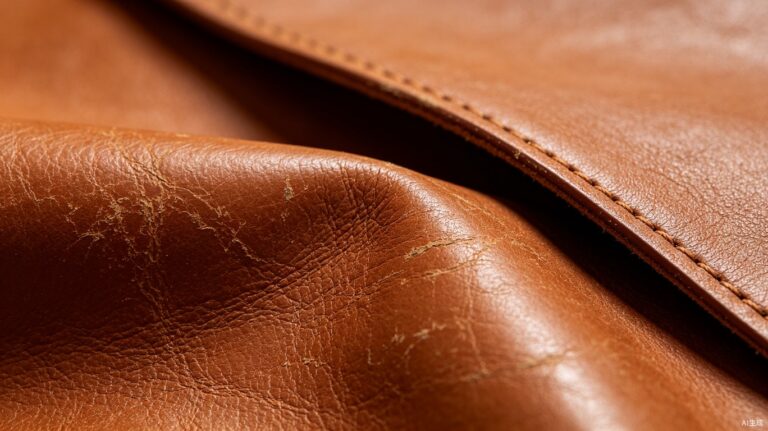
PU leather sofa upholstery — vulnerable to hydrolysis in humid environments within 2–5 years
The verdict from the testing bench is unambiguous. If your application involves any moisture exposure — human contact, humidity, cleaning, or tropical climates — vegan PU leather will fail before its silicone equivalent by a factor of five. The 85% hydrolysis failure rate isn’t a marketing claim; it’s the aggregate finding from QC labs across a dozen countries.
For dry, low-traffic, short-lifecycle applications, PU remains a cost-justified choice. But for anything that needs to survive 5+ years in real-world conditions, the math favors silicone — and the durability testing data backs that up.
Vegan PU leather isn’t a long-term material — it’s a 2-to-5-year consumable. If your product lifecycle exceeds that, you’re not buying material; you’re buying a warranty claim.