What is vegan leather? The question seems simple, but the answer determines product quality, regulatory compliance, and brand reputation. Vegan leather is “any material designed to mimic the aesthetic appeal and supple texture of leather without using animal-derived components”. But that definition encompasses five chemically distinct materials — PVC, PU, plant-based, microfiber, and silicone — with lifespans ranging from 2 to 10+ years and prices from $1.50 to $50/m². When a brand says “vegan leather,” they could be describing a material that lasts 2 years or one that lasts a decade. This guide defines what vegan leather actually is, material by material, so B2B buyers can specify with precision.
The term “vegan leather” has no legal definition or regulatory standard. The FDA doesn’t regulate it. The EU doesn’t define it. Any material without animal products can claim the label. This means a $2/m² PVC material that cracks in 18 months and a $16/m² silicone material that lasts 10+ years both carry the same “vegan leather” label. For defining vegan leather for B2B sourcing, the material chemistry — not the marketing label — is what matters.
Request Material Identification Kit

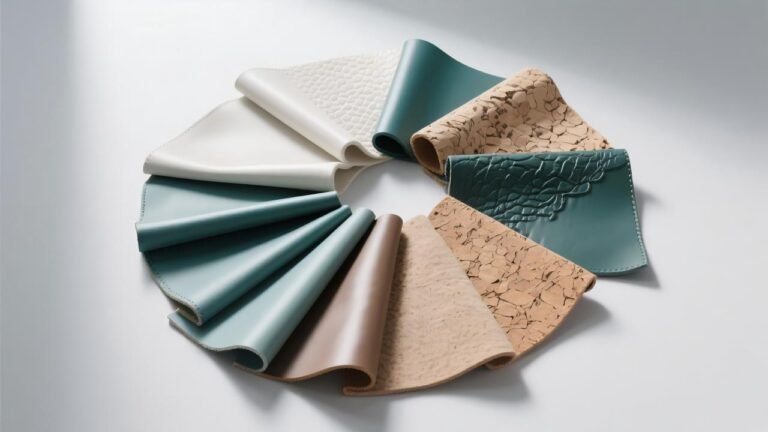
Material composition — five chemistries are marketed under the single label “vegan leather”
Vegan Leather Is 5 Materials: The Definitive Breakdown
Each vegan leather material has a specific chemistry, production process, and performance profile. Understanding these differences is essential for B2B specification:
1. Vegan leather is PVC (polyvinyl chloride)
The oldest and cheapest form. PVC resin is mixed with phthalate plasticizers (up to 40% by weight) to achieve leather-like flexibility, then coated onto a fabric substrate. Production cost: $1.50–3.50/m². Service life: 2–3 years. The plasticizers evaporate over time, causing embrittlement and cracking. PVC vegan leather is increasingly regulated — phthalates are banned in EU automotive interiors since January 2026 and restricted under REACH. It is “vegan” but not sustainable — and not durable.
2. Vegan leather is PU (polyurethane)
The most common vegan leather, accounting for 52% of the synthetic leather market. PU polymer is coated onto fabric through a wet process using DMF (dimethylformamide) as a solvent. The result is softer and more leather-like than PVC, but the ester bonds in polyester-based PU are susceptible to hydrolysis — water molecules cleave them over time, causing the coating to peel. Service life: 3–5 years (1.5–3 in humid climates). PU vegan leather is “cruelty-free” but still involves solvent-based production and has a limited lifespan.
3. Vegan leather is plant-based (bio-based)
The newest and most marketed category — made from agricultural byproducts including apple skins (AppleSkin), cactus (Desserto), pineapple leaves (Piñatex), mushroom mycelium (Mylo), and grape marc. These materials command premium pricing ($20–50/m²) and strong sustainability narratives. However, durability is the weakest of all vegan leather types — Martindale ratings of 15,000–25,000 cycles and service life of 2–4 years. Most plant-based leathers still use a PU or bio-polyurethane binder, meaning they carry some of PU’s hydrolysis vulnerability.
4. Vegan leather is microfiber (PU-based)
A premium PU variant using a three-dimensional non-woven microfiber base that mimics the dermal structure of genuine leather. The microfiber base provides superior tear strength and dimensional stability. Martindale ratings: 100,000–150,000 cycles. Service life: 8–12 years. It’s the highest-grade PU material — but it still uses polyurethane as the surface coating, meaning eventual hydrolysis is inevitable. Cost: $6–15/m². For applications where genuine-leather-like structure matters but budget is constrained, microfiber is the best non-silicone option.
5. Vegan leather is silicone (siloxane polymer)
The newest and highest-performing vegan leather. Silicone polymer is applied to fabric through a solvent-free dry coating process. The Si-O-Si (siloxane) backbone is inherently water-stable, UV-stable, and thermally stable from -40°C to 250°C. No plasticizers, no phthalates, no DMF solvent. Martindale: 200,000+ cycles. Service life: 10+ years. Zero VOC emissions. 100% recyclable. Cost: $12–20/m². Silicone leather is both the most durable and the most environmentally clean vegan leather — and it’s priced between commodity PU and plant-based materials.

Production process — silicone leather uses a solvent-free dry coating process unlike PU’s DMF-based wet process
The 5 Materials Compared: What Vegan Leather Actually Is
| What Vegan Leather Is | Chemistry | Martindale | Lifespan | Cost/m² | Sustainability |
|---|---|---|---|---|---|
| PVC | C-C-Cl + phthalates | 15K–30K | 2–3 yr | $1.50–3.50 | Poor (phthalates, non-recyclable) |
| PU | C-C-C (urethane) | 30K–80K | 3–5 yr | $3–8 | Moderate (DMF solvent) |
| Plant-based | Bio-polymer + PU | 15K–25K | 2–4 yr | $20–50 | High narrative, low durability |
| Microfiber | Microfiber + PU | 100K–150K | 8–12 yr | $6–15 | Good (durable, some recycled) |
| Silicone | Si-O-Si (siloxane) | 200K+ | 10+ yr | $12–20 | High (zero VOC, recyclable) |
Vegan Leather Is Not Always Sustainable: The Greenwashing Problem
The biggest misconception about vegan leather is that “vegan” equals “sustainable.” It doesn’t. A material that is cruelty-free but lasts 2 years, uses solvent-based production, and ends up in landfill is not sustainable — it’s just not made from animals. True sustainability requires three conditions: clean production (no solvents, no VOCs), long lifespan (reduces replacement and waste), and recyclability (circular economy). By this standard:
- PVC vegan leather is not sustainable — phthalate off-gassing, non-recyclable, 2-year lifespan
- PU vegan leather is marginally sustainable — DMF solvent production, 3–5 year lifespan, limited recyclability
- Plant-based leather is narratively sustainable — bio-sourced but short lifespan and still uses PU binders
- Microfiber is practically sustainable — 8–12 year lifespan reduces replacement, but still PU-based
- Silicone leather is genuinely sustainable — solvent-free production, 10+ year lifespan, 100% recyclable, zero VOC

Material comparison — vegan leather encompasses both high-performance and commodity materials under one label
The Bottom Line: What Vegan Leather Should Be
Vegan leather is a category, not a material. For B2B specification, “vegan leather” tells you only that the material contains no animal products — it tells you nothing about durability, sustainability, or safety. The vegan leather definition that matters is the material chemistry behind the label.
When sourcing vegan leather, always specify:
- The specific polymer chemistry — not “vegan leather” but “silicone leather” or “PU leather” or “PVC leather”
- The Martindale abrasion rating — minimum 50,000 for contract use, 200,000+ for ultra-performance
- The hydrolysis resistance data — if the material is PU-based, request ISO 11507 test results
- The VOC emission level — ISO 16000-6 test report, ≤ 100 μg/m³ for enclosed environments
- The certifications — REACH, ISO 10993-5, FDA, EN 71 as applicable to your market
- The recyclability — can the material be recycled at end of life?
TOPSUN manufactures silicone leather — the vegan leather material that delivers on every dimension of the category’s promise: cruelty-free, durable, sustainable, and safe. By specifying “silicone leather” instead of “vegan leather,” you eliminate the ambiguity and ensure your supply chain delivers the material performance your brand requires.
About TOPSUN: TOPSUN manufactures silicone leather — the highest-performing material in the vegan leather category. Our solvent-free dry coating process produces material with 200,000+ Martindale cycles, 10+ year service life, zero VOC emissions, and 100% recyclability. The Si-O-Si polymer backbone provides inherent hydrolysis immunity, UV stability, and thermal stability that no C-C-based material can match. With certifications including ISO 10993-5, REACH, FDA 21 CFR 177.2600, EN 13773 Class 4, and EN 71, we serve brands that need their “vegan leather” to mean something specific: cruelty-free + durable + sustainable + safe. MOQ: 500 meters. Lead time: 7–15 days. Free A4 swatches worldwide via DHL/FedEx.
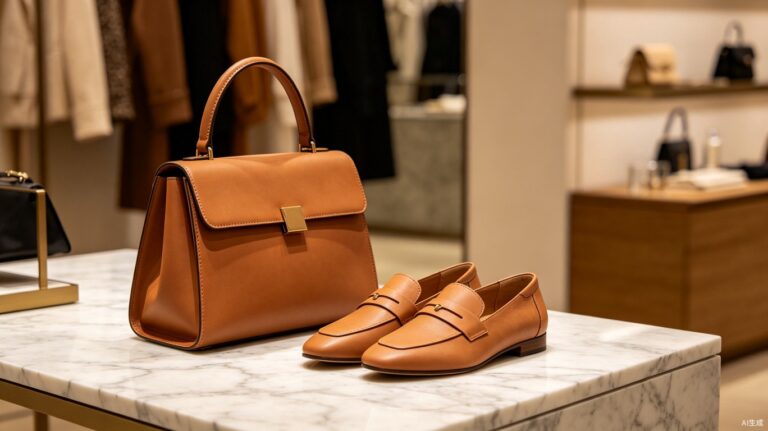
Silicone leather properties — the vegan leather material that delivers on the category’s promises
Request Silicone Samples
Get Material Specs
Learn About Silicone Leather
Frequently Asked Questions
What is vegan leather made of?
Vegan leather is made from five material types: PVC (polyvinyl chloride + phthalate plasticizers), PU (polyurethane coated onto fabric), plant-based polymers (apple, cactus, pineapple, mushroom with PU binders), microfiber (non-woven microfiber base + PU coating), and silicone (siloxane polymer coated onto fabric). Each has different chemistry, durability, and cost — “vegan leather” alone doesn’t tell you which material you’re buying.
Is vegan leather real leather?
No. Vegan leather is by definition not real leather — it contains no animal hide or animal-derived materials. It’s a synthetic or plant-based material designed to mimic the appearance and texture of genuine leather. Silicone leather is the closest to genuine leather in performance, achieving 200,000+ Martindale cycles versus genuine leather’s 30,000–50,000, while being 100% animal-free.
Is vegan leather plastic?
Most vegan leather is plastic-based: PVC and PU are petroleum-derived polymers. However, silicone leather is not a plastic in the traditional sense — it’s a silicone polymer (polysiloxane) with a Si-O-Si backbone, fundamentally different from carbon-based plastics. Plant-based leather is partially bio-sourced but typically uses PU as a binder, making it semi-plastic. The only non-plastic vegan leather is silicone.
What does 100% vegan leather mean?
“100% vegan leather” means the material contains zero animal-derived components. It does not indicate material quality, durability, or sustainability — a 2-year PVC material and a 10-year silicone material are both “100% vegan leather.” The label is about ethics (no animal products), not performance. Always ask for the specific material chemistry to understand what you’re actually buying.