To define vegan leather accurately, procurement teams must look past the marketing label. “Vegan leather” is not a single material — it is an umbrella term for any leather alternative that contains no animal-derived ingredients. In practice, this category spans everything from petroleum-based polyurethane coatings to mushroom mycelium composites to 100% silicone polymers. For B2B buyers, the critical question is not whether a material is “vegan” — it is what the material is actually made of, how it performs, and whether its sustainability claims hold up under scrutiny.
Request Vegan Leather Sample Kit
What Does “Vegan Leather” Actually Mean?
The term “vegan leather” is an ethical and marketing classification, not a technical material specification. It tells you what the material is not (no animal products) but reveals nothing about what it is. A product labeled “100% vegan leather” simply means it contains no animal-derived materials — but the actual composition could be PVC, PU, plant-based biopolymers, silicone, or any combination thereof.
This matters for B2B sourcing because material chemistry determines performance, compliance, and environmental impact. Two products both labeled “vegan leather” can have completely different durability profiles, VOC emission levels, and regulatory statuses. For a deeper dive into the distinction between vegan and faux leather categories, see our article on vegan leather vs faux leather.

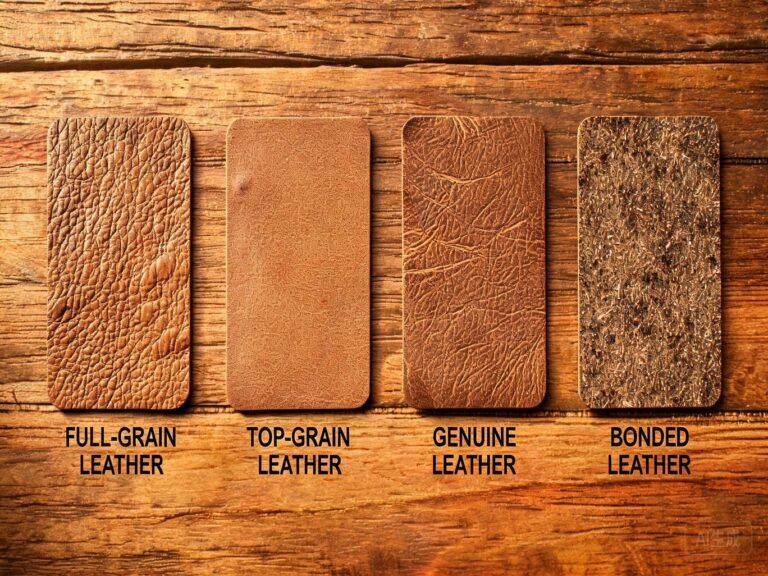
Vegan leather textures vary widely — the label alone tells you nothing about underlying material chemistry.
The Three Generations of Vegan Leather Materials
Vegan leather has evolved through three distinct material generations, each representing a different approach to replacing animal hide. Understanding these generations is essential for procurement teams making specification decisions.
| Generation | Material Types | Bio-Content | Market Share |
|---|---|---|---|
| 1st — Petroleum-based | PVC, PU coated polyester | 0% | ~90% |
| 2nd — Bio-based hybrid | Cactus, apple, pineapple + PU matrix | 20–70% | ~9% |
| 3rd — Novel biomaterials | Mycelium, microbial collagen | 80–100% | <1% |
| Next-gen — Silicone | 100% silicone polymer | 0% (mineral-based) | Emerging |
In 2026, the market reality is stark: when you purchase “vegan leather,” you are approximately 90% likely to receive PU-coated polyester. First-generation petroleum-based materials dominate because they are inexpensive, easy to process, and offer acceptable performance for mid-range consumer goods.
Second-generation bio-based leathers — cactus (Desserto), apple waste, pineapple leaves (Pinatex), grape marc — incorporate plant-derived inputs into a PU or polyester matrix. Bio-content ranges from 20% to over 70%, but the structural backbone remains plastic. These materials offer improved marketing narratives but do not eliminate the fundamental durability and end-of-life challenges of PU chemistry.

Factory swatch rack — the range of colors and textures available across vegan leather generations.
Third-generation biomaterials — mycelium leather (Mylo), microbial collagen (Modern Meadow) — represent genuine innovation but remain at under 1% market share with costs exceeding £200 per square meter. Production scale is insufficient for volume B2B applications. Our comprehensive vegan leather guide covers each type in greater detail.
Vegan Leather vs Genuine Leather: Key Differences for B2B

Plant-based vegan leather in fashion applications — a growing but still niche segment of the overall market.
The comparison that matters for B2B buyers goes beyond surface aesthetics and into material engineering:
| Factor | Genuine Leather | Vegan Leather (PU-based) | Silicone Leather |
|---|---|---|---|
| Durability | 5–10+ years | 2–5 years | 10+ years |
| Consistency | Variable (hide-to-hide) | Uniform | Uniform |
| VOC Emissions | Processing chemicals | PU residuals | Zero |
| Hydrolysis Resistance | Variable | 3–5 years | 10+ years |
| Recyclability | Limited | Difficult (mixed materials) | Possible |
Genuine leather still leads in raw durability and consumer-perceived value, retaining approximately 3.2% more residual value in luxury automotive segments. However, its variability, ethical concerns, and regulatory pressure — including EU deforestation regulations and chrome VI restrictions — are pushing OEMs toward alternatives. For fashion and accessories applications, explore vegan leather jacket materials and their specific performance characteristics.
Is Vegan Leather Truly Sustainable? The Greenwashing Problem

Production process flow — understanding the manufacturing chain is essential for evaluating sustainability claims.
The sustainability claims surrounding vegan leather require careful scrutiny. The central issue: most vegan leather is PU-coated polyester — a petroleum-based plastic that is neither biodegradable nor easily recyclable. When bio-content is added (cactus, apple, etc.), the material becomes a composite that is actually harder to recycle than pure PU, because separating plant fibers from the plastic matrix is economically unfeasible.
Key sustainability questions B2B buyers should ask any supplier:
- What is the total bio-content percentage? Verify with third-party testing, not a supplier declaration.
- Is the bio-content structural or merely a surface additive? A 5% cactus infusion in a 95% PU matrix changes nothing about end-of-life.
- What is the material’s end-of-life pathway? Landfill, incineration, or recycling — most vegan leather ends up in landfill.
- Does the supplier provide a full LCA (Life Cycle Assessment)? If not, the sustainability claim is marketing, not data.
The term “vegan” addresses animal welfare but says nothing about environmental impact. A PVC-based vegan leather has a substantially worse environmental footprint than responsibly sourced genuine leather. This is why understanding faux leather types matters for procurement decisions — the label alone is insufficient.
Silicone Leather: The Next-Generation Vegan Alternative
Zero VOC certification — silicone leather emits no volatile organic compounds during production or use.
Silicone leather resolves the fundamental contradiction at the heart of vegan leather: it is simultaneously animal-free, petroleum-free, and performance-superior. Made from silicone polymers derived from silicon dioxide (silica sand — the same material as glass), it contains no PU, no PVC, no plasticizers, and emits zero VOCs during use. Its durability metrics — 200,000+ Martindale abrasion cycles, 10+ year hydrolysis resistance, temperature tolerance from -40°C to 250°C — exceed both PU-based vegan leather and genuine leather.
For B2B buyers who need a material that is both genuinely sustainable and performance-competitive, silicone leather represents the only current option that resolves the vegan, performance, and sustainability triangle simultaneously. Learn more about silicone leather’s properties and manufacturing.
The Bottom Line on Vegan Leather Definition
To define vegan leather is to recognize that the term describes an ethical boundary (no animal products), not a material reality. The vast majority of today’s vegan leather is PU-coated polyester — functional, affordable, but neither sustainable nor durable enough for demanding applications. True next-generation vegan leather must be both animal-free and petroleum-free, which is precisely what silicone leather delivers. The procurement question shifts from “is it vegan?” to “what is it actually made of, and how long will it last?”
About TOPSUN
TOPSUN manufactures silicone leather that defines the next generation of vegan materials — not through marketing claims but through measurable material chemistry. Our silicone leather contains zero petroleum-based components, zero VOCs, and zero plasticizers, while delivering 200,000+ Martindale abrasion cycles and 10+ year hydrolysis resistance. We serve B2B clients across automotive, furniture, medical, marine, and consumer electronics sectors with custom OEM specifications.
ISO 10993 biocompatibility certified | REACH 247 SVHC compliant | FDA food-contact safe | PAHs certified | Zero VOC emissions