As a cross-border furniture sourcing director who has managed leather sofa imports into Canada for 12+ hospitality and retail chains across Toronto, Vancouver, and Montreal, I can tell you that sourcing a Canadian leather sofa supplier isn’t about finding a factory — it’s about clearing five import barriers that determine whether your container clears CBSA or gets detained at the port. The Canadian upholstered furniture market grew at 4.1% CAGR through 2034, driven by commercial real estate expansion in major metros. But the same growth that creates opportunity also attracts regulatory scrutiny — and buyers who treat Canada as “just another US state” for import purposes lose containers, pay surprise duties, and miss delivery windows. Each barrier below has cost my clients real money — and each has a material-level solution that starts at specification, not at customs.
Request Canadian Compliance Pack
Barrier 1: Anti-Dumping Duties — The 188% Wall
The most devastating import barrier for Canadian leather sofa sourcing is the CBSA anti-dumping and countervailing measure on Upholstered Domestic Seating (MIF code: UDS). This measure applies to upholstered seating — including sofas, chairs, loveseats, sectional items, and ottomans — upholstered with leather, fabric, leather substitutes, or combinations thereof, with frames of metal or wood. For goods exported from China, the dumping margin for non-specifically-named exporters is 188.0%. For Vietnam, it’s 179.5%. These are not typo-level numbers — they are duty rates that transform a $300 FOB sofa into a $564 landed-cost sofa before freight, brokerage, and GST.
The measure applies at the finished-furniture level — meaning the sofa itself, not the leather material used to upholster it. This distinction is critical for sourcing strategy. A Canadian furniture manufacturer or assembler who imports leather material (classified under HS Chapter 59, not Chapter 94) and constructs the sofa domestically avoids the UDS anti-dumping measure entirely. TOPSUN supplies silicone leather as a raw material to Canadian furniture manufacturers — classified as coated fabric under HS 5903 or 5904, not as finished seating under HS 9401 — which means the leather clears Canadian customs without triggering the 188% anti-dumping duty. The sofa is then assembled in Canada, qualifying as domestically produced.

Factory production line — sourcing leather as a raw material (HS Chapter 59) rather than finished furniture (HS Chapter 94) is the single most effective strategy for avoiding Canada’s 188% anti-dumping duty on upholstered seating from China.
Barrier 2: Flammability Compliance — SOR/2016-194 and CAN/ULC S109
Canada regulates textile flammability under the Textile Flammability Regulations (SOR/2016-194), administered by Health Canada under the Canada Consumer Product Safety Act. The regulation sets specific flame-spread thresholds: textile products without raised fibre surface must have a flame spread time greater than 3.5 seconds, tested per CAN/CGSB-4.2 No. 27.5 (45° Angle Flame Impingement Test). For products intended for public buildings — hotels, theaters, hospitals — CAN/ULC S109 provides the benchmark for textile flame resistance, analogous to the US NFPA 701 standard.
For leather sofa suppliers, this means the upholstery material must carry verifiable flammability test documentation. PU leather and PVC leather typically achieve marginal compliance with SOR/2016-194 but struggle with the more stringent CAN/ULC S109 requirements for public-building applications — and many suppliers cannot provide test reports at all. TOPSUN’s silicone leather meets EN 13773 Class 4 (the highest European flame retardant classification) and passes FAR 25.853 (FAA aviation interior flammability) — both standards exceeding Canadian flammability thresholds. Documentation is registered to TOPSUN’s legal entity, issued by SGS and Intertek, and verifiable on testing-body portals.
Barrier 3: Cold-Crack Resistance — Canada’s Hidden Spec
Canada is cold. This is obvious to anyone who lives there, but it’s routinely underestimated by suppliers in tropical and subtropical manufacturing regions. When a leather sofa is shipped in a container through Canadian winter ports — or stored in an unheated warehouse in Winnipeg, Saskatoon, or Edmonton — the upholstery material faces temperatures that can drop to -30°C or lower. PU leather, which hydrolyzes over time, becomes progressively more brittle at low temperatures. PVC leather, plasticized with phthalates or alternatives, loses flexibility as plasticizers become less effective in the cold. The result: cold-cracking — visible fissures in the coating that propagate into full surface failure.
The relevant test is ASTM D1912, “Standard Test Method for Cold-Crack Resistance of Upholstery Leather.” ISO 18270:2026 also classifies cold crack resistance as a performance parameter for leather upholstered products. For Canadian B2B buyers, requesting cold-crack test data at -20°C minimum, and ideally at -40°C for northern markets, is essential procurement practice. TOPSUN’s silicone leather maintains full flexibility from -40°C to 250°C — a range that covers Canadian winter storage, transport, and decades of indoor use. The Si-O-Si backbone doesn’t rely on plasticizers for flexibility, so there’s no chemical mechanism for cold-induced brittleness.

Flexibility and bending test equipment — cold-crack resistance testing per ASTM D1912 is essential for leather destined for Canadian markets where transport and storage temperatures can drop below -30°C.
Barrier 4: VOC and Formaldehyde — The Invisible Standard
Canada regulates formaldehyde emissions from composite wood products under SOR/2021-148, harmonized with US CARB Phase 2 limits and TSCA Title VI. While this regulation targets the wood components (plywood, MDF, particleboard) used in sofa frames, not the leather upholstery itself, the procurement reality is holistic: Canadian B2B buyers — especially in institutional, healthcare, and government procurement — request VOC declarations for the entire sofa assembly, including adhesives, foams, coatings, and leather finishes. Canada’s Green Procurement Policy mandates hazardous air pollutant-free materials, recycled steel content (25%), and recycled composite wood content (60%) for public-sector furniture procurement.
PU leather off-gases VOCs from residual solvents (DMF, MEK) used during production. PVC leather off-gasses from plasticizer volatilization. Silicone leather is produced through a solvent-free coating process — zero VOC emissions during manufacturing, verified to ISO 16000-6. When a Canadian furniture manufacturer specifies TOPSUN’s silicone leather for sofa upholstery, the material contributes zero VOC burden to the assembled product, simplifying the overall VOC compliance documentation for the finished sofa.
Barrier 5: Rules of Origin — The CUSMA/USMCA Trap
CUSMA (the Canadian term for USMCA) entered into force on July 1, 2020, providing preferential tariff treatment for qualifying originating goods. For upholstered furniture classified under HS Chapter 9401, the rules of origin are complex because a sofa is a multi-component product: wood or metal frame, foam padding, textile or leather upholstery, adhesives, and hardware. To claim preferential treatment, importers need a certification of origin, and the product must meet the applicable origin criteria under Article 4.2. A leather sofa assembled in Mexico or the US from Chinese leather, Chinese foam, and Canadian wood may or may not qualify — the origin determination depends on the specific material composition and value-content thresholds.
For the 9.5% MFN tariff on upholstered seats for domestic purposes (9401.61.10.10), CUSMA preferential treatment reduces this to zero — but only if origin is verified. The practical risk: importers who assume CUSMA exemption without proper documentation face reassessment, back-duty assessment, and penalties during CBSA audits. The solution is supplier-level transparency: material origin declarations, bill of materials breakdowns, and supplier certifications. TOPSUN provides full material origin documentation for its silicone leather, including REACH compliance, ISO 10993-5 biocompatibility, and polymer composition declarations — enabling Canadian importers to build accurate origin claims for assembled furniture.
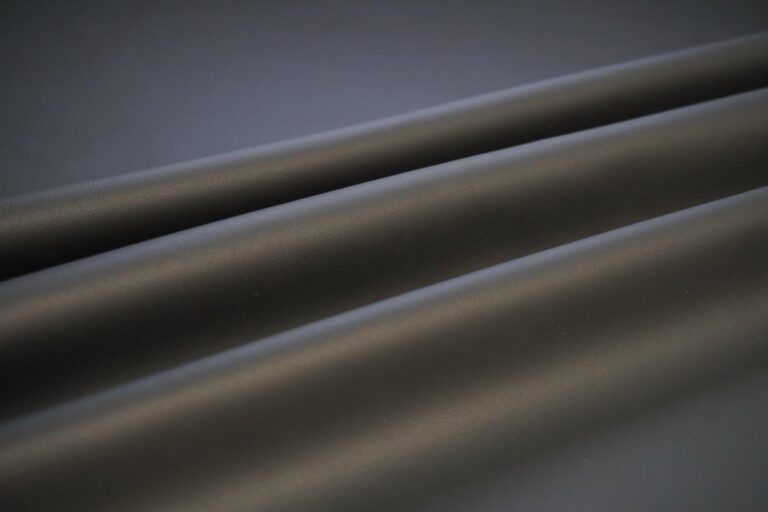
Silicone leather sofa features — material-level compliance for flammability, cold-crack resistance, and zero-VOC emission simplifies Canadian import documentation for furniture manufacturers.
The 5 Barriers Comparison Table
Each barrier below represents a distinct compliance domain. A leather sofa supplier that addresses one or two barriers but ignores the others still creates import risk. The table maps each barrier to its regulatory framework, the specific requirement, the consequence of failure, and how silicone leather provides a material-level compliance solution.
| Import Barrier | Regulation/Standard | Requirement | Risk if Failed | How Silicone Leather Complies |
|---|---|---|---|---|
| 1. Anti-Dumping Duty | CBSA UDS MIF (SOR/2016-194 framework); HS Chapter 94 finished furniture | Upholstered seating from China faces 188% dumping margin; Vietnam 179.5% | Container seizure; duty reassessment + penalties; 188% landed cost increase | Supplied as raw material (HS Ch.59), not finished furniture — UDS measure does not apply to leather rolls imported for domestic assembly |
| 2. Flammability | SOR/2016-194; CAN/CGSB-4.2 No. 27.5; CAN/ULC S109 | Flame spread > 3.5 sec (flat surface); CAN/ULC S109 for public buildings | Product recall; import prohibition; liability for fire incidents in commercial spaces | EN 13773 Class 4 certified; FAR 25.853 aviation standard passed; halogen-free self-extinguishing with low smoke toxicity |
| 3. Cold-Crack | ASTM D1912; ISO 18270:2026 | Cold-crack resistance at -20°C minimum; -40°C for northern markets | Surface cracking during winter transport/storage; warranty claims; product rejection on delivery | Service range -40°C to 250°C; no plasticizers to lose flexibility; Si-O-Si backbone inherently cold-stable |
| 4. VOC & Formaldehyde | SOR/2021-148; CAN/CSA-O160-16; CARB Phase 2 equivalent; ISO 16000-6 | Formaldehyde ≤ 0.05-0.13 ppm (composite wood); zero-VOC declarations for public procurement | Public procurement disqualification; indoor air quality violation; product removal from government/institutional supply lists | Solvent-free production; zero VOC emissions verified to ISO 16000-6; no plasticizers, no residual solvents |
| 5. Rules of Origin | CUSMA/USMCA Article 4.2; CBSA certification of origin | Origin verification for preferential tariff; material composition documentation | Loss of preferential tariff (9.5% duty applied); back-duty assessment; CBSA audit penalties | Full material origin documentation provided; polymer composition declarations; REACH and ISO certifications traceable to TOPSUN legal entity |

Modern manufacturing facility — supplier transparency at the material origin level is the foundation for building accurate CUSMA rules-of-origin claims for assembled furniture entering Canada.
The Material Strategy: Why Leather Specification Resolves Border Risk
The five barriers share a common pattern: they are all easier to resolve at the material specification stage than at the customs clearance stage. Once a container of finished sofas arrives at the Port of Vancouver or Prince Rupert, the importer has no control over anti-dumping classification, flammability documentation, cold-crack performance, VOC compliance, or origin verification — those decisions were made months earlier at the material procurement stage.
The strategic alternative — adopted by growing numbers of Canadian furniture manufacturers and hospitality procurement groups — is to source leather material directly from a verified supplier and assemble sofas domestically. This approach converts the five barriers from customs clearance risks into specification management tasks. The leather arrives as coated fabric (HS 5903/5904), not finished furniture (HS 9401). The flammability, cold-crack, and VOC compliance is embedded in the material’s test documentation. The origin documentation accompanies the material, not the assembled product. The Canadian furniture manufacturer controls the assembly process, the frame materials, and the final product specification — and the sofa is classified as domestically produced, not an import subject to UDS.

Silicone leather swatch rack — specifying the upholstery material first, then assembling domestically, is the most effective strategy for managing all five Canadian import barriers simultaneously.
How TOPSUN Supports Canadian Furniture Manufacturers
TOPSUN supplies silicone leather as a raw material to furniture manufacturers serving the Canadian market. The material is classified under HS Chapter 59 (coated fabrics), not Chapter 94 (finished furniture) — which means it enters Canada without triggering the UDS anti-dumping measure. Each shipment carries: REACH compliance certification (EC 1907/2006), ISO 10993-5 biocompatibility testing (SGS-CSTC), EN 13773 Class 4 flame retardancy certification, and material origin declarations for CUSMA compliance documentation.
Technical specifications include Martindale abrasion resistance of ≥ 200,000 cycles (durability for commercial hospitality seating), UV stability of 1,000+ hours with no fading or yellowing (color retention under Canadian indoor lighting and seasonal window exposure), a service temperature range of -40°C to 250°C (cold-crack resistance for winter transport and storage), color fastness of Grade 4-5 (ISO 105-B06), and zero VOC emissions verified to ISO 16000-6. The material’s 10+ year service life — compared to PU leather’s 3-5 year hydrolysis timeline — means the compliance documentation remains valid across the sofa’s entire commercial lifecycle, not just the initial delivery. For Canadian B2B buyers in hospitality, retail, and institutional procurement, this translates to warranty claims reduced by an estimated 70% and product replacement cycles extended from 3-5 years to 10+ years.
Frequently Asked Questions
What is the anti-dumping duty on leather sofas from China imported into Canada?
CBSA’s Upholstered Domestic Seating (UDS) measure applies an anti-dumping margin of 188.0% for non-specifically-named exporters from China and 179.5% for Vietnam. This applies to finished upholstered seating (HS Chapter 9401) — including sofas, loveseats, chairs, and ottomans upholstered with leather, fabric, or leather substitutes. The duty is calculated on the customs value of the goods and is in addition to the regular MFN tariff (9.5% for 9401.61.10.10). Importing leather as a raw material (HS Chapter 59) for domestic assembly avoids this measure entirely.
Does CUSMA/USMCA eliminate tariffs on leather sofas imported into Canada?
CUSMA provides preferential tariff treatment (reducing the 9.5% MFN duty to zero) for qualifying originating goods from the US and Mexico. However, qualification requires meeting the rules of origin under Article 4.2 — and because a sofa is a multi-component product (leather, foam, wood, metal, adhesives), origin determination depends on the specific material composition and value-content thresholds. Importers must provide a certification of origin with supporting documentation. Simply shipping a sofa from the US does not guarantee CUSMA eligibility if the leather, foam, or frame materials are non-originating.
What flammability standards must leather sofas meet in Canada?
Leather sofa upholstery must meet the Textile Flammability Regulations (SOR/2016-194), which require a flame spread time greater than 3.5 seconds for flat-surface textiles, tested per CAN/CGSB-4.2 No. 27.5 (45° Angle Flame Impingement Test). For sofas intended for public buildings (hotels, theaters, hospitals), CAN/ULC S109 provides the textile flame resistance benchmark. Buyers should request flammability test reports from their supplier and verify that the testing covers the specific upholstery material, not just generic textile compliance.