The Warranty Claim That Keeps Coming Back
A furniture manufacturer in Munich sourced 5,000 meters of PU synthetic leather sheets for a contract sofa line. The spec sheet looked solid — 0.9 mm thickness, 300 GSM, a embossed grain that matched the sample. Eighteen months later, the first warranty claims arrived. By month 36, surface peeling had spread across 40% of the fleet. The procurement team had checked thickness and color. They never checked the four specs that actually predict whether synthetic leather sheets survive a decade or fail before the warranty expires.
The global synthetic leather market reached approximately USD 41.5 billion in 2026, with PU-based products holding over 51% of market share. Yet the fastest-growing segment is solvent-free and bio-based leather at nearly 10% CAGR — driven by buyers who learned the hard way that conventional PU sheets carry a hidden cost: premature field failure. The question is not whether synthetic leather sheets look good on day one. It is whether they will still perform in year three, year five, and year ten.
This article breaks down the four failure modes that destroy synthetic leather sheets in the field — and the specific test specs that predict each one before you commit to a production run.
Failure Mode #1: Surface Abrasion — Why 50,000 Martindale Cycles Is Not Enough
Abrasion is the most visible failure mode. It starts as a dull patch on armrests, seat edges, and high-contact zones. Within months, the top coat wears through, exposing the backing fabric underneath. The Martindale abrasion test (ISO 12947-2) is the industry standard for measuring surface wear resistance, and the gap between materials is enormous.
Standard PU synthetic leather sheets typically achieve 20,000 to 50,000 Martindale cycles before visible wear. Premium PU microfiber products can reach 80,000 to 100,000 cycles. PVC sheets vary widely but generally fall between 30,000 and 60,000 cycles. Silicone synthetic leather sheets, by contrast, clear 200,000+ Martindale cycles with no surface breakdown — a four-to-tenfold advantage over standard PU.

Why does this gap matter? A contract sofa in a hotel lobby experiences an estimated 250,000 contact cycles per year. PU sheets rated at 50,000 cycles will show visible wear within the first three months of commercial use. Silicone sheets rated at 200,000+ cycles maintain their surface integrity through multiple years of high-traffic service. For a deeper look at how TOPSUN tests abrasion performance, see our silicone leather abrasion test breakdown.
Spec to demand: Martindale cycles ≥ 100,000 for residential, ≥ 200,000 for commercial. Ask for the full ISO 12947-2 test report, not a supplier’s self-declared rating.
Failure Mode #2: Hydrolytic Breakdown — The Invisible Killer
Hydrolysis is the chemical decomposition of PU polymer chains in the presence of moisture. It does not show on the surface immediately. Instead, the bond between the coating and the backing fabric silently weakens over months. One day, the surface peels off in sheets — and by then, the damage is irreversible.
PU synthetic leather sheets degrade in 3 to 5 years in humid environments. In tropical climates or applications involving frequent cleaning (hospital furniture, restaurant seating, marine upholstery), hydrolysis can destroy PU sheets in under 2 years. PVC sheets are more water-resistant but suffer plasticizer migration — the surface becomes brittle and cracked as plasticizers leach out over time.
Silicone polymer is inherently hydrolysis-resistant. Silicone synthetic leather sheets withstand 10+ weeks of continuous water immersion with zero structural degradation. The silicone backbone (Si-O-Si) is chemically stable against water, acid rain, and standard disinfectants. This is why silicone sheets are specified for marine, medical, and outdoor applications where moisture exposure is constant.

Spec to demand: Hydrolysis resistance test per ASTM D2990 or equivalent — minimum 4 weeks immersion at 70°C with no delamination. For humid-climate applications, require 6+ weeks.
Failure Mode #3: Flex Cracking — What Cold Does to PU vs Silicone
Flex cracking occurs when the material is repeatedly bent at low temperatures. The surface develops hairline cracks that propagate through the coating, eventually splitting the sheet. This failure mode is especially critical for automotive interiors, outdoor furniture, and any product shipped or stored in unheated environments.
PU synthetic leather sheets begin to crack at temperatures below -10°C. PVC sheets become brittle below 0°C — a serious limitation for vehicles and outdoor applications in temperate climates. The flex cycle data tells the story: PU sheets fail at 20,000 to 60,000 flex cycles, PVC at 5,000 to 20,000 cycles, while silicone sheets survive 100,000+ flex cycles with no cracking at -40°C.

For B2B buyers specifying automotive interiors, this spec is non-negotiable. A door panel or seat bolster that cracks after one winter season generates immediate warranty claims and brand damage. Learn more about synthetic leather durability testing and how flex performance translates to real-world lifespan.
Spec to demand: Flex cracking test per ISO 7854 or ASTM D2096 — minimum 50,000 cycles at -20°C for automotive, 100,000+ for cold-climate applications.
Failure Mode #4: UV Degradation — The Color Fastness Gap
UV exposure breaks down polymer bonds and destroys surface pigments. The result: fading, chalking, and embrittlement. UV degradation is the slowest failure mode but the most expensive to remediate — by the time color shift is visible, the polymer structure has already weakened.
Standard PU synthetic leather sheets show visible fading after 200 to 500 hours of QUV-B exposure (ASTM G154). The UV stabilizers in PU coatings degrade over time, leaving the polymer chain vulnerable. PVC sheets perform slightly better initially but suffer rapid plasticizer migration under UV, leading to surface cracking within 300 to 600 hours.
Silicone synthetic leather sheets maintain color stability for 1,500+ hours under ASTM D4329 UV exposure — three times longer than premium PU. The Si-O-Si backbone is inherently UV-stable, requiring no added stabilizers that can deplete over time. This makes silicone sheets the default choice for automotive interiors, outdoor furniture, and marine applications where UV exposure is constant and intense.

Spec to demand: UV resistance per ASTM D4329 or ASTM G154 — minimum 1,000 hours for indoor with sun exposure, 1,500+ hours for automotive and outdoor.
Silicone vs PU vs PVC Synthetic Leather Sheets — Full Spec Comparison
| Spec | Silicone Sheets | PU Sheets | PVC Sheets |
|---|---|---|---|
| Martindale Abrasion (cycles) | 200,000+ | 20,000–80,000 | 30,000–60,000 |
| Hydrolysis Resistance | 10+ weeks immersion, no degradation | Degrades in 3–5 years | Plasticizer migration in 3–5 years |
| Flex Cracking at Low Temp | No cracking at -40°C, 100,000+ cycles | Cracks below -10°C, 20,000–60,000 cycles | Brittle below 0°C, 5,000–20,000 cycles |
| UV Color Fastness (hours) | 1,500+ (ASTM D4329) | 200–500 | 300–600 |
| Temperature Range | -50°C to 250°C | -20°C to 80°C | 0°C to 60°C |
| Field Lifespan | 10–15+ years | 2–5 years | 3–5 years |
| Certifications | REACH, FDA, ISO 10993, EN 13773, PAHs | Varies by supplier | Limited, often fails REACH |
The pattern is clear: silicone synthetic leather sheets outperform PU and PVC across all four critical failure modes by margins of 3x to 10x. For a comprehensive material comparison, see our silicone vs PU vs PVC technical breakdown and our analysis of hidden problems in PU leather.
How to Specify Synthetic Leather Sheets for 10+ Year Performance
Translating these failure modes into a procurement spec sheet is straightforward. Industry buying guides emphasize checking GSM and thickness, but those two specs alone cannot predict field performance. Print this checklist and attach it to every RFQ:
- Martindale abrasion: ≥ 100,000 cycles (residential) / ≥ 200,000 cycles (commercial) per ISO 12947-2
- Hydrolysis resistance: ≥ 4 weeks immersion at 70°C, no delamination per ASTM D2990
- Flex cracking: ≥ 50,000 cycles at -20°C per ISO 7854 (automotive: ≥ 100,000)
- UV color fastness: ≥ 1,000 hours per ASTM D4329 (outdoor: ≥ 1,500)
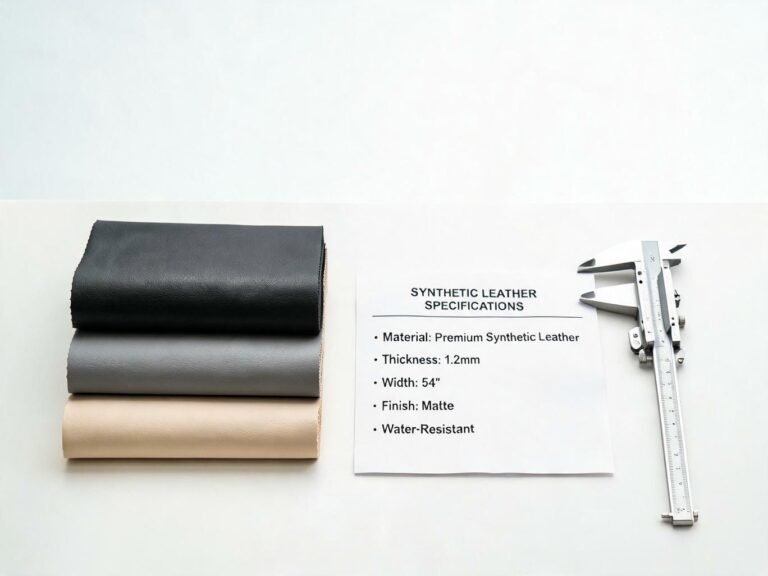
- Thickness: 0.8–1.2 mm for upholstery, 0.6–0.8 mm for apparel, 1.2–2.0 mm for heavy-duty
- GSM: 300–450 g/m² for furniture, 200–300 g/m² for lighter applications
- Certifications: REACH SVHC, ISO 10993 biocompatibility, PAHs compliance minimum
For buyers calculating total cost of ownership, replacing PU sheets every 3 years at $4/meter costs more over a decade than specifying silicone sheets once at a higher unit price. Our synthetic leather upholstery TCO guide walks through the full 10-year cost model.
About TOPSUN Silicone Leather Sheets
TOPSUN manufactures silicone synthetic leather sheets for B2B buyers who cannot afford year-3 field failures. Our sheets are produced through a solvent-free coating process on polyester knit or non-woven backing, available in thicknesses from 0.6 mm to 2.0 mm and roll widths up to 150 cm. Every production batch ships with third-party test reports covering Martindale abrasion, hydrolysis, flex cracking, and UV color fastness — the four specs that predict real-world lifespan.
Our certifications include REACH SVHC compliance, FDA food-contact certification, ISO 10993 biocompatibility, EN 13773 fire resistance, FAR 25.853 aviation flame retardancy, and PAHs compliance — all issued by SGS and Intertek. We serve automotive interiors, contract furniture, marine upholstery, medical equipment, and consumer electronics manufacturers who require materials that perform for a decade, not a season.
Request a spec sheet and sample pack at our contact page, or browse our full certification gallery to verify compliance before you commit.
FAQ: Synthetic Leather Sheets
What thickness of synthetic leather sheets should I specify?
For furniture upholstery, 0.8–1.2 mm provides the best balance of durability and workability. For automotive interiors, 0.7–1.0 mm is standard. Heavy-duty applications like marine seating use 1.2–2.0 mm. Below 0.6 mm, sheets lack sufficient abrasion resistance for load-bearing surfaces.
How long do silicone synthetic leather sheets last compared to PU?
Silicone sheets last 10–15+ years in normal use, compared to 2–5 years for PU sheets and 3–5 years for PVC. The lifespan difference is driven by silicone’s resistance to abrasion (200,000+ Martindale cycles), hydrolysis, UV degradation (1,500+ hours), and flex cracking at low temperatures. See our FAQ page for more durability data.
Can I get synthetic leather sheets in custom colors and textures?
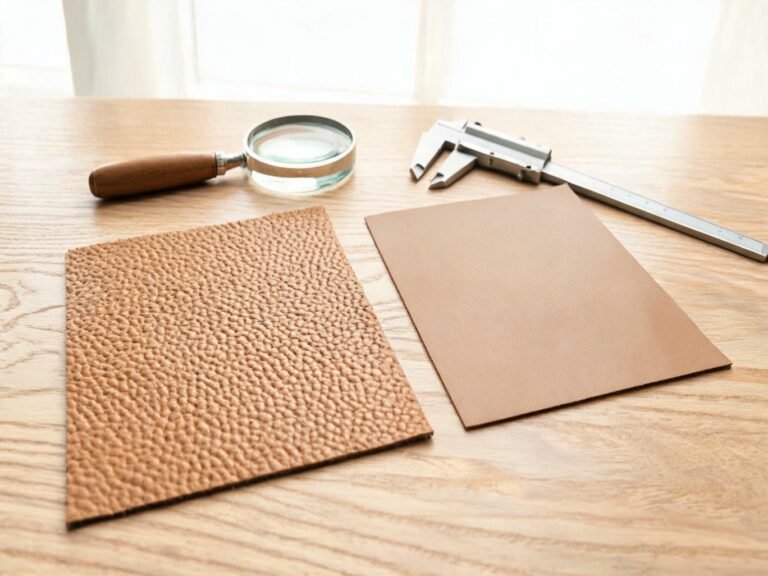
Yes. TOPSUN offers custom color matching (Pantone or physical sample), embossed grain patterns (lychee, pebble, smooth, silk), and custom thickness/GSM combinations. Minimum order quantities apply — contact our sales team for details.
What certifications should I require for synthetic leather sheets?
At minimum: REACH SVHC compliance, PAHs compliance, and ISO 10993 for medical or skin-contact applications. For automotive: add FMVSS 302 or EN 13773 flame resistance. For aviation: FAR 25.853. Request third-party test reports from SGS, Intertek, or equivalent accredited labs — not supplier self-declarations.
Don’t Let Your Spec Sheet Miss the Four Specs That Matter
Thickness and color are the easy specs. They are also the ones that fail to predict field performance. The four specs that actually determine whether your synthetic leather sheets last 3 years or 10 years are Martindale abrasion cycles, hydrolysis resistance, flex cracking at low temperature, and UV color fastness. PU sheets fail on all four within the warranty period. Silicone sheets clear every threshold by margins that turn warranty claims from a certainty into a non-event.
Before your next production run, demand the test reports. If your supplier cannot provide ISO 12947-2, ASTM D2990, ISO 7854, and ASTM D4329 data from an accredited lab, you are buying a year-3 failure waiting to happen.