As a product development materials specialist, I’ve specified synthetic cloth material for everything from automotive seat covers to medical upholstery to consumer electronics cases. The one thing every project has in common: someone on the team writes “synthetic cloth” on the material spec without defining which polymer, which construction, or which coating — and then wonders why the prototype fails environmental testing six months later. After mapping materials to products across 50+ B2B programs, I’ve learned that the difference between a material that passes and one that fails isn’t quality — it’s fit. The right synthetic cloth material for a marine cushion is the wrong one for a medical surface, and vice versa.
Request Material Comparison Kit
What “Synthetic Cloth Material” Means in B2B Procurement
“Synthetic cloth material” covers an enormous range — any textile or coated fabric where the primary component is manufactured rather than grown. That includes woven and knit fabrics made from polyester, nylon, acrylic, and spandex fibers; it also includes coated fabrics where a polymer layer (PU, PVC, silicone) is applied over a textile backing to create leather-like surfaces. Synthetic fibers already comprise over 60% of global fiber production, and within B2B manufacturing, the category spans everything from automotive interiors to medical devices to outdoor furniture.
The procurement problem is that “synthetic cloth material” on a purchase order is as specific as “metal” on a machining order. Without naming the polymer, the construction, and the coating chemistry, you’re leaving material selection to the supplier — and the supplier will optimize for cost, not for your product’s performance requirements. The result is material substitution: a cheaper base fabric, a thinner coating, a different plasticizer package that passes initial inspection but fails in service.

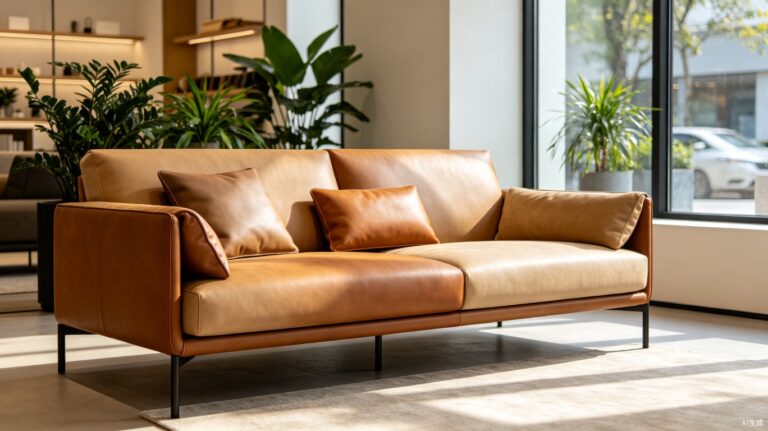
The range of synthetic cloth materials — each looks similar in a swatch book but performs completely differently in a product over 5 years of service.
5 Synthetic Cloth Material Types — By Polymer and Construction
I’ve categorized the synthetic cloth materials most commonly specified in B2B products into five types, ordered from simplest construction to most complex. Each type has a distinct polymer backbone, degradation mechanism, and end-of-life profile — and each fits specific applications where its strengths matter and its weaknesses don’t.
| Material | Base Polymer | Key Property | Weakness | Microplastic Risk | Recyclable | Best B2B Application |
|---|---|---|---|---|---|---|
| Polyester Fabric | PET (polyethylene terephthalate) | Dimensional stability, UV resistance, fast drying | Low breathability, static buildup | High — sheds fibers per wash | Yes (rPET) | Base fabric for coated leather, linings, outdoor covers |
| Nylon Fabric | Polyamide (PA 6 / PA 66) | Abrasion resistance, high tensile strength | UV yellowing, moisture absorption | High | Limited | Luggage, technical gear, military textiles |
| PVC-Coated Cloth | Polyvinyl chloride + phthalates | Waterproof, low cost | Phthalate migration, cracking in 2-3 years | Moderate (coating reduces shedding) | No | Tarpaulins, cheap upholstery, banner signage |
| PU-Coated Cloth | Polyurethane + polyester base | Soft hand-feel, leather-like appearance | Hydrolysis in 3-5 years, DMF residues | Moderate | Limited (composite separation difficult) | Fashion accessories, furniture upholstery, footwear |
| Silicone-Coated Cloth | Silicone (Si-O-Si polymer) + polyester base | 10+ year lifespan, zero VOC, UV stable | Higher initial cost | Low — no shedding in service | Yes | Medical, automotive, marine, hospitality, childcare |

Material cross-section comparison — the coating layer determines surface performance, but the base fabric determines structural strength. Both must be specified together.
The Microplastics Problem — Which Materials Shed and Which Don’t
Synthetic textiles are the fourth-largest source of microplastic pollution in the EU. A single wash of a polyester garment can release over 700,000 microplastic fibers, and global synthetic textile production discharges an estimated 0.2 to 0.5 million tonnes of microplastics into oceans each year. This isn’t an abstract environmental concern for B2B manufacturers — it’s a regulatory trajectory. The EU’s strategy for sustainable and circular textiles is tightening requirements on fiber shedding, recyclability, and extended producer responsibility, which means materials that shed heavily or can’t be recycled will face increasing compliance costs.
Material comparison overview — how silicone-coated cloth compares to conventional synthetic materials in durability, environmental impact, and B2B application fit.
The shedding risk varies significantly by material type. Woven and knit polyester fabrics shed continuously throughout their service life — each abrasion cycle releases fibers. PVC and PU coated fabrics shed less because the polymer coating encapsulates the base fabric, but they trade that benefit for end-of-life non-recyclability: the coating-fiber composite can’t be economically separated. Silicone-coated cloth offers a different profile — the silicone layer bonds permanently to the base fabric without shedding in service, and at end of life, the material is recyclable because the silicone polymer can be processed separately from the polyester substrate.
The shedding hierarchy: woven polyester fabric (high shedding) > nylon fabric (high) > PU-coated cloth (moderate, but non-recyclable) > PVC-coated cloth (moderate, but non-recyclable) > silicone-coated cloth (low shedding, recyclable). Specify for end-of-life compliance, not just initial performance.
Application Mapping: Which Material Fits Which Product

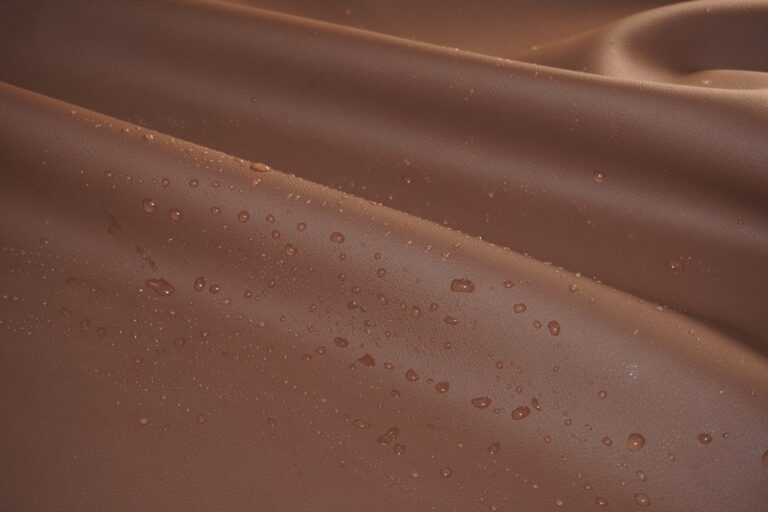
Silicone-coated cloth texture — the material that fits medical, automotive, and hospitality applications where longevity and cleanability outweigh low initial cost.
The right synthetic cloth material depends on three factors: the product’s service environment (UV, moisture, chemical exposure), the required service life (2 years for fast fashion vs. 10+ years for automotive interiors), and the end-of-life requirement (recyclability, biodegradability, or disposal tolerance). Here’s how the five types map to common B2B applications:
Polyester fabric is the right base for coated leather applications where dimensional stability matters — it doesn’t stretch or shrink, and it provides the structural backbone that the coating can’t. Specify by weight (200-800 g/m²), weave type (plain, twill, or satin), and yarn denier. Avoid using polyester fabric alone for products requiring surface durability — it’s a structural layer, not a surface layer.
Nylon fabric fits high-abrasion applications: luggage shells, military gear, technical outdoor equipment. Its tensile strength (2.5-7.0 grams per denier) exceeds polyester, but UV yellowing makes it unsuitable for products exposed to direct sunlight without UV stabilizers. For automotive interiors, nylon’s moisture absorption (up to 4.5% at standard conditions) causes dimensional changes that create fitment issues in precision-molded components.
PVC-coated cloth is the budget option for waterproof applications — tarpaulins, banner signage, temporary covers. Don’t specify it for products with a service life exceeding 3 years or for applications involving human skin contact. Phthalate migration makes it a compliance risk under REACH and CA Prop 65, and the material cannot be recycled at end of life.
PU-coated cloth is the standard for fashion accessories, furniture upholstery, and footwear where soft hand-feel and leather-like appearance matter more than longevity. Budget for replacement every 3-5 years — the hydrolysis mechanism is thermodynamic and cannot be stopped, only slowed. If your product must last beyond 5 years in a humid environment, PU is the wrong material regardless of grade.
Silicone-coated cloth is the specification for products that combine surface durability, cleanability, and environmental compliance: medical surfaces, automotive interiors, marine upholstery, hospitality seating, and childcare products. The silicone coating doesn’t degrade through hydrolysis or plasticizer migration — its Si-O-Si polymer backbone is thermally stable to 250°C and UV-stable for 1,000+ hours. The trade-off is higher initial cost, offset by a 10+ year service life that’s 2-5x longer than PU or PVC.
About TOPSUN: Synthetic Cloth Material Engineered as a System

Material swatches — when base fabric weight, coating chemistry, and texture are engineered as one system, the result is a synthetic cloth material that outlasts its application’s service requirement.
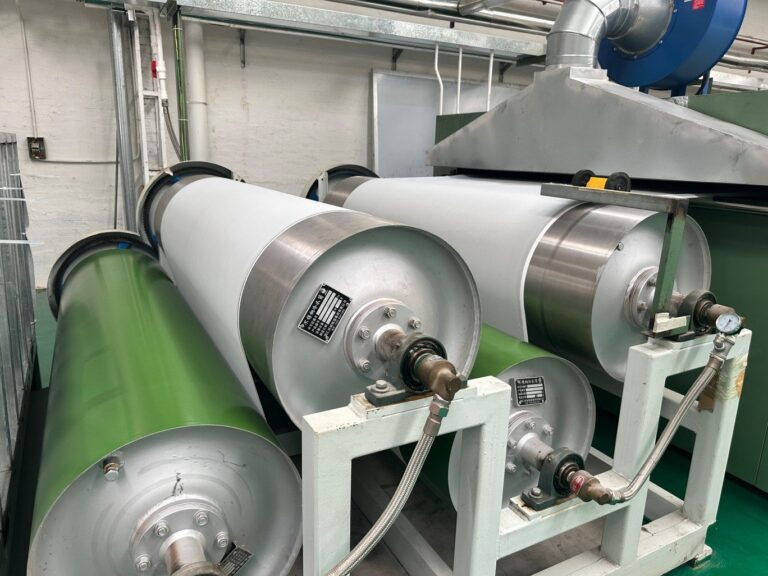
TOPSUN engineers silicone-coated synthetic cloth material — combining polyester base fabric strength with zero-VOC silicone coating chemistry — for B2B applications where the base textile and the surface coating must perform as a single system. Our solvent-free dry coating process produces 16,000m daily across 10+ automated lines, with 100+ texture options, Pantone and RAL color matching (Delta E ≤ 1.0), and thicknesses from 0.23mm to 2.0mm. Every batch ships with third-party test reports from SGS and Intertek covering Martindale abrasion (200,000+ cycles), UV stability (1,000+ hours), and VOC emission (ISO 16000-6 verified zero).
With manufacturing facilities in Dongguan, Yichang, and Xiangyang, we serve 100+ brands across automotive, furniture, medical, marine, and consumer electronics markets. Free A4 swatches ship worldwide via DHL/FedEx with full material data sheets. MOQ starts at 500 meters with 7-15 day lead times.
Synthetic Cloth Material FAQ
What is the most durable synthetic cloth material for commercial products?
For commercial products requiring 10+ year service life, silicone-coated cloth is the most durable option. The silicone polymer’s Si-O-Si backbone resists UV degradation (1,000+ hours with no visible change), hydrolysis (no water cleavage of polymer bonds), and thermal stress (-40°C to 250°C without cracking). It also resists chemical disinfection — alcohol, bleach, and hospital-grade cleaners don’t degrade the surface. Nylon fabric offers the highest tensile strength for structural applications but is vulnerable to UV yellowing. PU-coated cloth, despite a softer feel, typically fails within 3-5 years through hydrolysis regardless of grade. For commercial products, specify material by required service life first, then by hand-feel and cost.
Are synthetic cloth materials recyclable or biodegradable?
Most synthetic cloth materials are neither recyclable nor biodegradable in practice. Polyester fabric is technically recyclable (rPET) but only at meaningful rates when collected separately — blends with other fibers are not recyclable. PVC and PU coated fabrics are composite materials where the coating and base fabric can’t be economically separated, making them non-recyclable. None of these materials biodegrade in landfills within practical timeframes — PVC persists for decades, PU fragments into microplastics, and polyester takes 20-200 years to decompose. Silicone-coated cloth is recyclable because the silicone polymer can be processed separately from the polyester substrate at end of life. The EU’s circular economy action plan is tightening requirements on textile recyclability, making this a procurement specification issue, not just an environmental concern.
Specify the Right Synthetic Cloth Material
The difference between a product that lasts 3 years and one that lasts 10 isn’t quality control — it’s material fit. Map your application’s environment, service life, and end-of-life requirements to the right synthetic cloth material before your next specification. Request our material comparison kit with physical samples of all five types and the test data behind each recommendation.
Contact: info@topsunsiliconeleather.com | WhatsApp: +44 744 461 7933 | Free A4 swatches shipped worldwide via DHL/FedEx