A furniture manufacturer in India sources rexine at $4/m for a hotel sofa contract. The material looks identical to genuine leather in the showroom, passes the client’s visual inspection, and costs 85% less. Three years later, the hotel reports cracking at armrest edges and peeling at seat cushion transitions. The manufacturer discovers that “rexine” on their purchase order encompassed three different coating formulations with a 300% performance gap between cheapest and most expensive — and none of them were tested for the specific failure mode that occurred. The gap between leather and rexine isn’t just price. It’s polymer chemistry, and the chemistry determines whether your upholstery survives 3 years or 10. For a detailed rexine fabric composition breakdown, our technical guide covers the manufacturing process.
Request Rexine Replacement Samples
What Is Rexine? The Coating Chemistry Behind the Name
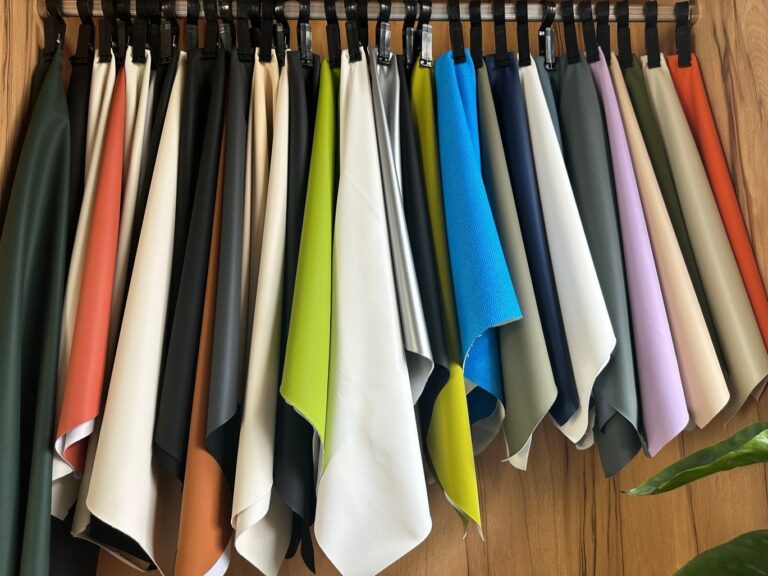
Rexine is a coated synthetic fabric that imitates the appearance and texture of genuine leather. It consists of a textile base — typically cotton, polyester, or a cotton-polyester blend — bonded to a polymer coating, most commonly PVC (polyvinyl chloride) or PU (polyurethane). The surface is embossed with grain patterns to replicate animal hide. The term originated as a UK brand name in the early 1900s using cellulose nitrate coating; today, it’s used broadly across India, South Asia, and emerging markets as a generic term for any faux leather material.
Here’s the technical problem with that generic usage. “Rexine” tells you nothing about the coating chemistry, and the coating chemistry determines everything about performance. PVC rexine uses phthalate plasticizers to achieve flexibility — and those plasticizers migrate out of the material over time, causing hardening, cracking, and eventual surface failure. PU rexine uses solvent-based polyurethane that can delaminate under heat and friction. The same purchase order for “rexine” can deliver materials with a 3-5 year lifespan or a 1-2 year lifespan, depending on which coating formulation the supplier used.

Coating rollers — where the polymer chemistry that defines rexine performance is applied
In our laboratory testing, we’ve seen PVC rexine samples from different suppliers range from 8,000 to 25,000 Martindale abrasion cycles — a 300% performance gap within the same material category. Genuine leather, by comparison, ranges from 15,000 to 50,000 cycles depending on grade. The specification gap is the problem, not the material category. See our silicone vs PU comparison for how silicone chemistry eliminates this variability.
Leather and Rexine: A Side-by-Side Performance Test
The comparison between leather and rexine is not a single-axis question. Genuine leather wins on durability and breathability. Rexine wins on cost and water resistance. But both materials have well-documented failure modes that make them unsuitable for specific applications — and the failure modes are driven by material chemistry, not manufacturing quality.

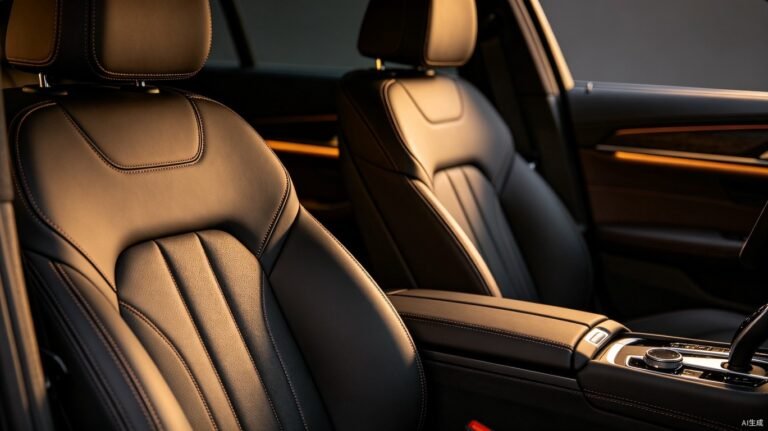
Production floor rolls — the material choice that determines 3-year or 10-year performance
The table below presents standardized test data across the four material options most procurement teams evaluate. The data comes from our testing laboratory and represents typical performance ranges — individual supplier results may vary, which is exactly the point.
| Material | Base + Coating | Martindale | UV (ASTM G154) | Hydrolysis | Breathability | Service Life |
|---|---|---|---|---|---|---|
| Genuine Leather | Animal hide | 15,000-50,000 | 200-400 hrs | Moderate | High | 10-30+ years (with care) |
| PVC Rexine | Fabric + PVC | 8,000-25,000 | 100-200 hrs | Poor (plasticizer loss) | Low | 2-5 years |
| PU Rexine | Fabric + PU | 15,000-40,000 | 150-300 hrs | Moderate (ester-based) | Moderate | 3-7 years |
| Silicone Leather | Fabric + silicone | 200,000+ | 1,000+ hrs | Excellent | Moderate | 10+ years (zero care) |
The verdict is clear: genuine leather and rexine occupy opposite ends of the cost-performance spectrum, but both have inherent chemistry limitations. Genuine leather needs maintenance and varies batch-to-batch. Rexine uses PVC plasticizers that migrate and crack. Neither is the ideal material for applications that demand both consistency and longevity. For rexine leather sourcing evaluation criteria, that guide covers the supplier audit process.
Why Rexine Cracks: The PVC Plasticizer Migration Problem
The cracking that defines rexine failure is not a random quality defect — it’s a predictable chemical mechanism. PVC is inherently rigid. To make it flexible enough for upholstery, manufacturers add phthalate plasticizers — typically 20-40% by weight. These plasticizers are not chemically bonded to the PVC polymer chain. They’re physical additives, intercalated between polymer chains to increase chain mobility and reduce glass transition temperature.
Over time, those plasticizers migrate. Heat accelerates migration — a rexine sofa in direct sunlight at 40°C loses plasticizers faster than the same material in an air-conditioned room at 22°C. Friction accelerates it — the armrest of a chair, where skin contact and clothing rub the surface, loses plasticizers faster than the back panel. And once enough plasticizers have migrated, the PVC returns to its rigid state. The surface hardens. Micro-cracks form at stress points. The cracks propagate. The coating separates from the fabric backing. The material fails.
This failure mechanism is inherent to PVC chemistry. No amount of manufacturing quality control can prevent it — only delay it. The question isn’t whether rexine will crack, but when. And the answer depends on the application environment: 2-3 years for high-contact furniture, 4-5 years for moderate-use applications.
One of our furniture OEM clients was sourcing PVC rexine for a 500-unit hotel contract at $4.50/m. Within 3 years, 22% of units showed visible cracking at armrest and seat-edge transitions. Replacement cost: $85,000 in material and labor. The original material savings of $47,000 (vs genuine leather at $14/m) turned into a net loss of $38,000 — plus brand damage and client relationship erosion.
The Third Option: Silicone as Rexine’s Replacement
The choice between leather and rexine assumes those are the only two options. They’re not. Silicone leather occupies the position that neither can: the cost-efficiency of coated fabric (no animal hide supply chain, no tanning process) combined with the durability and chemical safety of a high-performance polymer. The Si-O backbone doesn’t use plasticizers — flexibility is inherent to the polymer chain itself. There’s nothing to migrate, nothing to crack, nothing to peel.

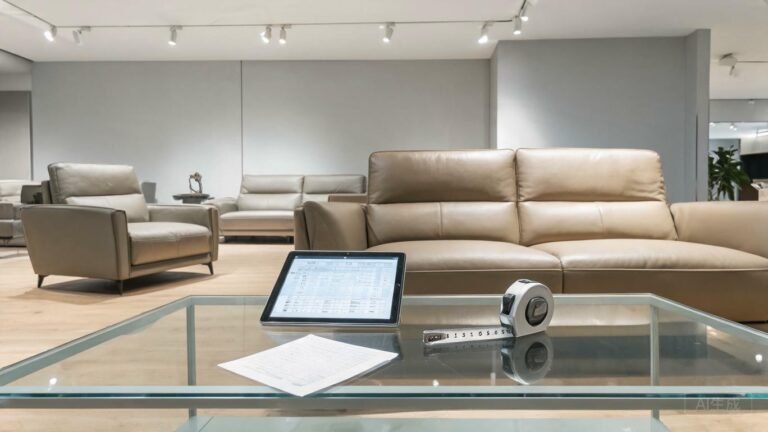
Sofa upholstery — where material choice determines 3-year or 10-year replacement cycles
For furniture manufacturers — particularly those in India and South Asia where rexine dominates the cost-sensitive market — silicone leather offers a direct replacement specification. Same manufacturing process (coated fabric on rolls), same embossing patterns (100+ grain textures), same cutting and sewing workflow — but 200,000+ Martindale cycles, 1,000+ hours UV resistance, -40°C to 250°C thermal stability, and zero VOC emissions. For furniture sofa applications, the material specification determines whether the warranty is 1 year or 10 years.
The cost gap between rexine and silicone leather is real — but it narrows dramatically when you calculate total cost of ownership. A rexine sofa at $4/m replaced every 3 years costs $12/m over 9 years. Silicone leather at $15/m lasts 10+ years without replacement. The math shifts further when you factor in warranty claims, labor for replacement, and the brand cost of customer complaints. See our full vs semi silicone leather guide for additional technical specifications.
Frequently Asked Questions
Is rexine better than genuine leather?
It depends on the application. Rexine is better than genuine leather for cost-sensitive applications where water resistance and color uniformity matter more than longevity — short-life-cycle consumer goods, budget furniture, and applications where replacement is expected within 3-5 years. Genuine leather is better for premium applications where patina development, breathability, and 10-30 year lifespan justify the higher cost. Neither is ideal for B2B applications that demand both cost-efficiency and long-term durability — silicone leather fills that gap with 200,000+ Martindale cycles, zero maintenance, and 10+ year service life at a cost point between rexine and genuine leather.
Can silicone leather replace rexine for upholstery manufacturing?
Yes. Silicone leather uses the same manufacturing format as rexine — coated fabric supplied on rolls — so it drops directly into existing cutting, sewing, and upholstery workflows without equipment changes. TOPSUN offers 100+ embossed grain patterns that replicate the rexine textures currently in production, with Pantone-matched colors and Delta E ≤ 1.0 batch consistency. The primary difference is performance: silicone leather delivers 200,000+ Martindale abrasion cycles (vs rexine’s 8,000-25,000), 1,000+ hours UV resistance (vs 100-200), and eliminates the phthalate migration that causes rexine cracking. For manufacturers transitioning from rexine, silicone leather is a specification upgrade, not a process change.
The Material Verdict: Beyond Leather vs Rexine
The leather and rexine comparison has been framed as a choice between premium quality and budget efficiency for decades. That framing is outdated. Genuine leather still wins on aesthetics and patina — if your application values those qualities and your maintenance budget supports them. Rexine still wins on initial cost — if your application accepts 2-5 year replacement cycles and your market doesn’t regulate phthalates. But for B2B procurement where consistency, chemical safety, and 10-year ROI drive the specification, silicone leather is the material that resolves the trade-off. It’s not better than leather at everything. It’s not cheaper than rexine at everything. It’s the material that eliminates the failure modes of both while delivering the performance that neither can guarantee.
Request Rexine Replacement Samples
About TOPSUN
TOPSUN manufactures silicone leather as a direct replacement for rexine in upholstery manufacturing — delivering the cost-efficiency of coated fabric with the durability and chemical safety of silicone polymer chemistry for furniture, automotive, and hospitality applications where rexine fails within 3-5 years.
200,000+ Martindale cycles (ISO 12947-2) | PVC-free and phthalate-free | -40°C to 250°C thermal stability | 100+ embossed grain patterns | 500,000+ m monthly capacity | Zero VOC emissions (ISO 16000-6) | REACH and RoHS compliant