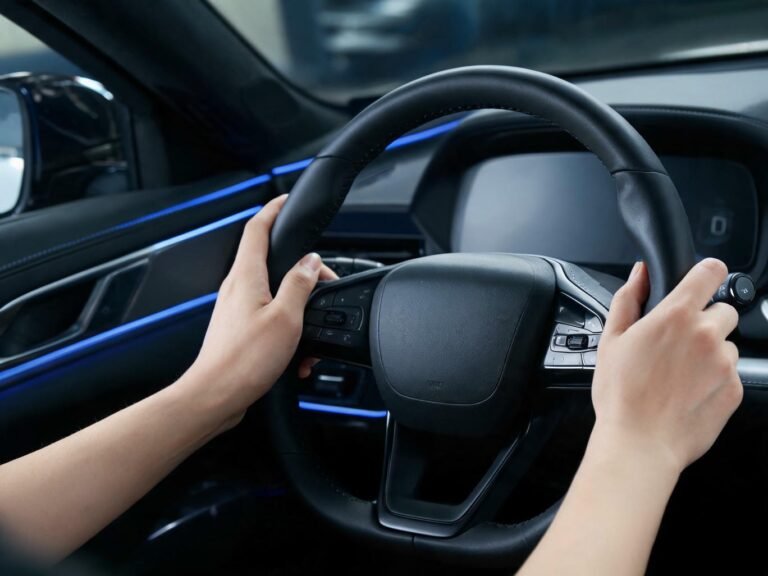
The steering wheel is the one interior component every driver touches on every trip. Hands grip it for hours, often with sweat, sunscreen, or hand cream residue. In winter, gloved hands create friction. In summer, bare skin transfers oils and moisture. No other steering wheel cover material faces this level of constant, chemical-laden human contact — and that makes material selection more nuanced than it appears.
What Drivers Actually Need from a Wheel Cover

A steering wheel cover needs to satisfy competing demands that pull in different directions:
- Grip stability — the surface must provide consistent friction, wet or dry, hot or cold
- Comfort during extended driving — no roughness, no excessive heat absorption, no sticky feeling
- Chemical resistance — hand sweat contains salts, urea, and oils; many drivers apply sunscreen or hand sanitizer
- Thermal neutrality — the wheel shouldn’t burn hands in summer or feel icy in winter
Let’s see how common car upholstery materials perform when applied to the steering wheel’s unique operating conditions.
Request Steering Wheel Material Samples
Material Comparison: The Steering Wheel Stress Test
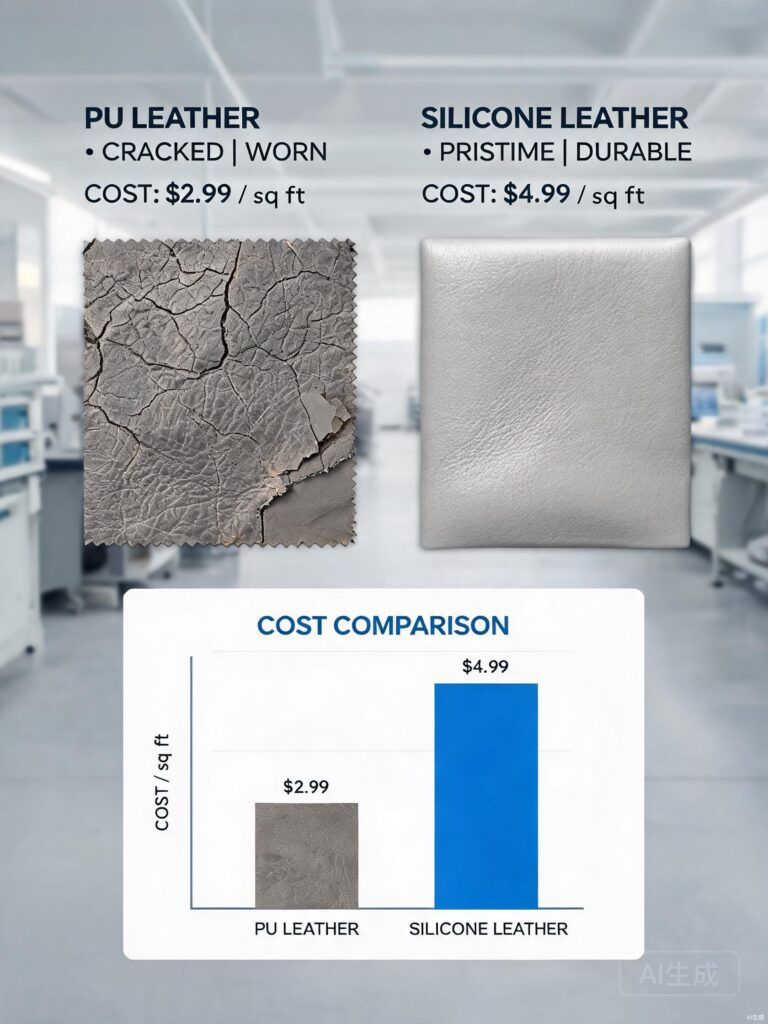
| Property | Silicone Leather | Genuine Leather | PU Leather |
|---|---|---|---|
| Wet Grip | Consistent | Slips when wet | Becomes sticky |
| Sweat / Sanitizer Resistance | Inert (no reaction) | Absorbs, darkens | Hydrolyzes, peels |
| Hand Cream / Sunscreen | No effect | Stains, softens | Degrades surface |
| Temperature Feel (Summer) | Neutral | Hot (absorbs heat) | Hot + sticky |
| Perforation Compatibility | Clean holes, no fraying | Possible edge wear | Can crack at holes |
The sanitizer factor: Post-2020, many drivers regularly apply hand sanitizer before entering their vehicles. Alcohol-based sanitizers are particularly aggressive toward PU and genuine leather surfaces. Silicone leather’s chemical inertness means it handles alcohol exposure without surface damage — a practical advantage that didn’t matter much five years ago but matters a lot now.
Grip Engineering: More Than Just Friction

Steering wheel grip isn’t a single property — it’s the interaction between the material’s surface texture, its coefficient of friction (dry and wet), and how that friction changes as the surface wears.
Genuine leather starts with excellent grip but develops a smooth, glossy patina at the 9 and 3 o’clock positions where hands grip most. According to SAE International guidelines on HMI (Human-Machine Interface) design, steering wheel surface friction directly affects driver control precision. PU leather starts smooth and can develop a sticky surface as the topcoat degrades — which is actually worse than low friction because sticky grip is unpredictable.
Silicone leather maintains a consistent coefficient of friction throughout its service life. The surface doesn’t polish smooth and doesn’t become tacky. For automotive interior applications where consistent feel matters — steering wheels, gear shift covers, paddle shifters — this predictability is valuable.
Scratch resistance testing — a key metric for steering wheel covers that face constant hand friction.
Frequently Asked Questions
Is perforated silicone leather available for steering wheels?
Yes. Perforation patterns can be customized — common options include 1mm, 1.5mm, and 2mm hole diameters with varying densities. Perforated silicone leather maintains its structural integrity because the silicone coating doesn’t fray or crack around the hole edges. The texture and perforation can be combined for both grip enhancement and breathability.
What thickness works best for steering wheel covers?
Most OEM steering wheel applications use 0.8–1.0mm. This provides enough body for the sewing and wrapping process while keeping the wheel diameter within ergonomic limits. For aftermarket covers that go over an existing wheel, 1.0–1.2mm is more common to provide sufficient cushioning.
Does the material work with heated steering wheels?
Yes. Silicone leather has low thermal conductivity, which means it doesn’t dissipate heat as quickly as thin PU films. The heating element beneath the cover warms the surface effectively. The material’s maximum service temperature of ~200°C also means there’s no risk of thermal degradation from the heating system.
The Most-Handed Component Deserves the Right Material
Choosing a steering wheel cover material isn’t just a spec-sheet exercise. It’s about understanding the chemistry of human hands, the physics of grip, and the reality of what happens to a surface that gets handled thousands of times per year. Silicone leather’s chemical inertness, consistent friction, and thermal stability make it uniquely suited for this application — especially in markets where high temperatures, humidity, and hand sanitizer use are the norm.
Discuss Your Steering Wheel Program
About TOPSUN
TOPSUN manufactures silicone leather for automotive steering wheel covers, seat upholstery, and interior trim. We support OEM programs with full TDS, color matching, and perforation customization services.
Testing: Taber abrasion, ISO 5402 flex endurance, DIN 75201 fogging, QUV weathering. Certifications: REACH, RoHS, ISO 9001.