NIO is one of the most material-forward EV brands in the world. Their interior material strategy — Haptex PU for seat surfaces, recycled polyester from PET bottles for fabric zones, Clean+ Nappa leather tanned with coffee shell extracts, microfibre for bolsters — represents the most sophisticated sustainable material portfolio in the EV industry. Every material choice is deliberate: Haptex eliminates organic solvents; recycled polyester diverts waste; Clean+ Nappa removes aldehydes and chrome. But there’s a gap in NIO’s strategy that this silicone leather NIO case study examines: every synthetic surface material in NIO’s interior portfolio still falls short on at least one critical performance dimension — abrasion life, UV stability, or recyclability. Silicone leather, which NIO hasn’t yet adopted at scale, addresses all three simultaneously. Here’s the analysis of where NIO’s material strategy excels, where it has gaps, and why silicone leather represents the logical next material evolution for the brand that defines premium EV interiors.
Explore Automotive Silicone Leather

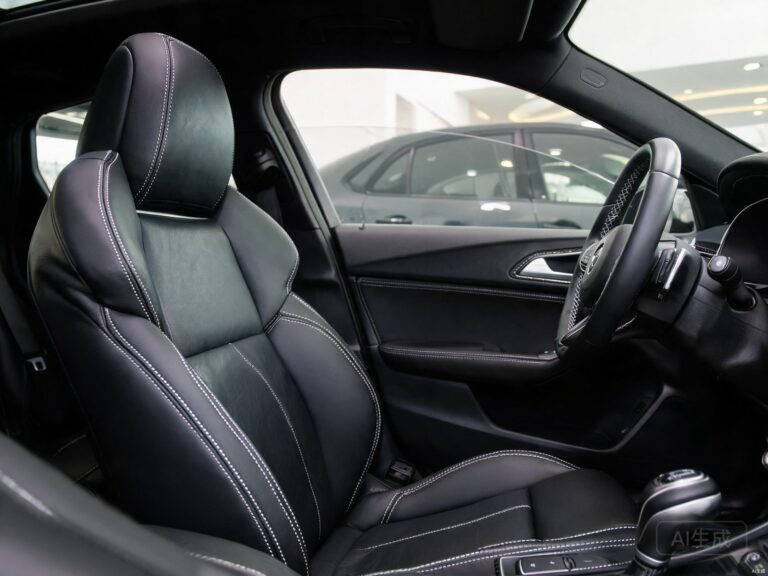
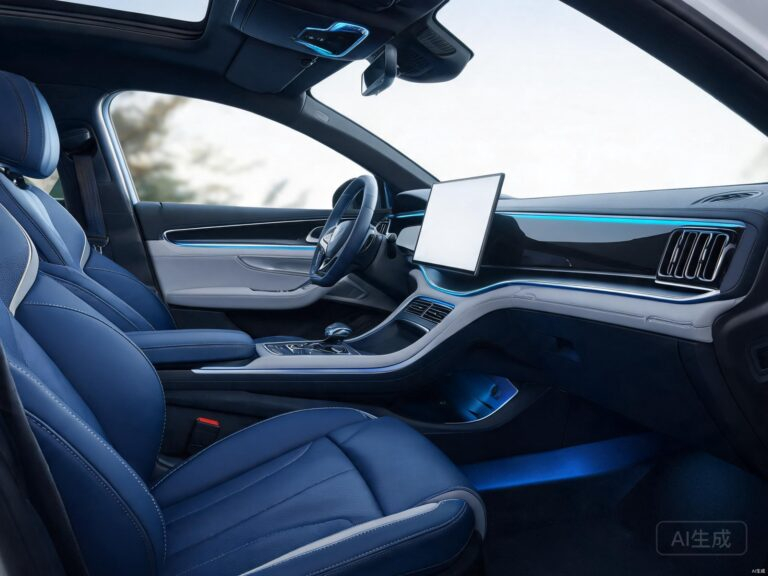
Premium EV interior — the application environment where material performance, sustainability, and luxury converge
NIO’s Current Interior Material Portfolio
NIO’s interior material strategy is built around three principles: sustainability (solvent-free, recycled, bio-based), performance (durability, comfort, safety), and sensory quality (touch, scent, visual texture). Here’s what they currently specify and where each material has limitations:
| Material | Application | Sustainability Profile | Performance Gap |
|---|---|---|---|
| Haptex PU | Seat surfaces, door panels | Solvent-free, 30–50% less energy, OEKO-TEX certified | ~50,000 Martindale cycles; hydrolysis risk in humid markets |
| Recycled Polyester Fabric | Main seating zones, instrument panel inserts | Made from recycled PET bottles, nano-hydrophobic coating | Coating degrades; fabric not inherently stain-proof |
| Clean+ Nappa Leather | Premium seat option (ES7) | Coffee shell tannins, chrome-free, aldehyde-free | Animal-derived; not vegan; limited supply |
| Microfibre | Seat bolsters, door panels, IP inserts | Synthetic, leather-like feel | Not inherently waterproof; cleaning limitations |
The Haptex row is the most instructive for this case study. Haptex is NIO’s flagship sustainable interior material — a solvent-free PU that eliminates the VOC emissions and solvent waste of conventional PU production. It represents a genuine improvement over standard PU. But it’s still PU: the polymer chemistry that makes PU susceptible to hydrolysis, UV degradation, and eventual cracking is still present in Haptex. The Martindale abrasion rating of approximately 50,000 cycles means that in high-wear zones (seat bolsters, door armrests), Haptex surfaces will show visible wear within 3–5 years — well short of the 8–10 year typical EV ownership cycle. Silicone leather, with 200,000+ Martindale cycles and inherent UV resistance, addresses exactly this gap.

Silicone leather in automotive interiors — the material that could close the performance gap in NIO’s sustainable material strategy
Silicone Leather vs Haptex: The Performance Gap Analysis
If we place silicone leather alongside Haptex across the dimensions that matter for EV interior materials, the gap becomes visible:
| Dimension | Haptex (NIO Current) | Silicone Leather | Improvement |
|---|---|---|---|
| Martindale Abrasion | ~50,000 cycles | 200,000+ cycles | 4x longer wear life |
| UV Resistance | Moderate (PU degrades) | 1,000+ hours, no fading | Eliminates UV failure mode |
| Hydrolysis Resistance | Moderate (PU backbone) | Inherent — no hydrolyzable bonds | Solves humid market durability |
| Temperature Range | -20°C to 80°C | -40°C to 250°C | Survives extreme climates |
| VOC Emission | Low (solvent-free production) | Zero | Exceeds VDA 270 odor rating |
| Recyclability | Limited (PU cannot fully recycle) | 100% recyclable | Supports circular economy |
| Flame Retardancy | Additive-based | Inherent (EN 13773 Class 4) | No additives needed |
| Skin-Contact Safety | OEKO-TEX certified | ISO 10993-5 biocompatibility | Medical-grade certification |
The table shows that silicone leather doesn’t just incrementally improve on Haptex — it eliminates failure modes that Haptex’s PU chemistry structurally cannot avoid. Hydrolysis, UV degradation, and limited recyclability are inherent properties of polyurethane chemistry, regardless of how the PU is processed. Silicone polymer chemistry doesn’t have these failure modes. For a brand like NIO that positions sustainability as a core differentiator, silicone leather’s 100% recyclability and zero VOC profile extend the sustainability narrative beyond production process (Haptex’s advantage) to the material’s entire lifecycle — including end-of-life recycling.
Silicone leather for automotive interiors — the performance material that extends sustainable EV cabin design to the 10-year ownership cycle
The OEM Qualification Challenge
If silicone leather is superior across every dimension, why hasn’t NIO (or other EV OEMs) adopted it at scale? The answer is the OEM material qualification process — a 12–24 month gauntlet of testing, auditing, and validation that new interior materials must pass before they appear in a production vehicle. Here’s what that process looks like:
- Material submission and initial testing (Months 1–3): Submit material samples for initial testing against OEM specifications — abrasion, UV, temperature cycling, fogging (DIN 75201), odor (VDA 270), VOC (VDA 277), flammability (FMVSS 302 / FAR 25.853). Approximately 40% of materials fail at this stage.
- Extended durability testing (Months 3–9): Materials that pass initial screening enter extended testing — accelerated aging (1,000+ hours UV + humidity), thermal shock cycling (-40°C to 85°C, 500 cycles), flex fatigue (100,000+ cycles), and chemical resistance (sunscreen, insect repellent, hand sanitizer, coffee). Materials must show no visible degradation.
- Production trial runs (Months 9–15): Material is trialed on the production line — vacuum forming, lamination, stitching, adhesive bonding. The material must process identically to the incumbent material on existing equipment. Process changes require additional validation.
- Pilot vehicle testing (Months 15–21): Material installed in pilot vehicles for real-world testing — fleet vehicles, climate chamber testing, customer clinic feedback. Appearance, comfort, and wear are evaluated after 6+ months of simulated use.
- Production approval (Months 21–24): Final quality agreement, PPAP documentation, supplier audit, capacity verification. Only after this does the material enter production vehicle BOM.
The 24-month timeline explains why material transitions in automotive happen slowly — even when the new material is clearly superior. OEMs can’t risk a material failure in production vehicles that could trigger recalls, warranty claims, and brand damage. But the timeline also means that the EV brands investing in silicone leather qualification now will have it in production vehicles by 2027–2028 — and the brands that wait will be 2 years behind on the material that defines the next generation of sustainable EV interiors.
The NIO Opportunity: Where Silicone Leather Fits
Based on NIO’s material strategy and current portfolio gaps, silicone leather would fit in three specific applications within the NIO interior:
- Seat bolsters and high-wear zones — Replace microfibre bolsters with silicone leather for 4x abrasion resistance. Bolsters fail first in NIO seats because they bear the most lateral stress during cornering. Silicone leather’s 200K+ Martindale cycles extend bolster life beyond the vehicle’s ownership cycle.
- Door armrests and center console lids — These surfaces face constant elbow contact, UV through windows, and sunscreen chemical exposure. Silicone leather’s UV resistance and chemical inertness address both failure modes that Haptex PU can’t.
- Steering wheel cover — The highest-wear interior surface, experiencing continuous hand contact, sweat, and friction. Silicone leather’s skin-contact safety (ISO 10993-5), sweat resistance, and 200K+ abrasion cycles make it ideal for the most touched surface in the vehicle.
About TOPSUN: Automotive OEM Qualification Readiness
TOPSUN’s silicone leather meets the testing prerequisites for automotive OEM qualification: FMVSS 302 and FAR 25.853 flame retardancy, VDA 270 odor rating compliance, VDA 277 VOC emission compliance, DIN 75201 fogging compliance, 200,000+ Martindale abrasion cycles, 1,000+ hours UV resistance (ASTM G154), 1,000+ hours salt spray resistance (ISO 9227), and -40°C to 250°C temperature range. Our ELV Directive (EU 2000/53/EC) compliance means the material meets end-of-life vehicle material requirements in the EU. Production capacity of 500,000+ meters/month with 7–15 day lead times supports OEM-scale contracts. Explore our automotive silicone leather or read our Mercedes case study for a comparable OEM material analysis.
Silicone Leather NIO Case Study: Frequently Asked Questions
Does NIO currently use silicone leather in its vehicles?
Based on publicly available information, NIO currently uses Haptex PU, recycled polyester fabric, Clean+ Nappa leather, and microfibre in its interiors. This case study analyzes where silicone leather would fit as the next material evolution in NIO’s strategy, based on the performance gaps in their current portfolio.
What is Haptex and why is it significant?
Haptex is NIO’s proprietary solvent-free PU interior material. It eliminates organic solvents from production, reducing energy consumption by 30–50% and water usage by 90%+ compared to conventional PU. It holds OEKO-TEX certification. It represents the current state-of-the-art in sustainable PU for automotive interiors — but its PU chemistry still has inherent limitations in abrasion life, UV resistance, and recyclability that silicone leather overcomes.
How long does it take to qualify a new interior material for an EV?
Typically 12–24 months, including initial material testing, extended durability testing, production trial runs, pilot vehicle testing, and production approval. Materials that pass all stages enter the vehicle BOM and appear in production vehicles within the following model year.
Is silicone leather more expensive than Haptex PU?
Yes, silicone leather carries a per-meter cost premium over PU materials including Haptex. However, the 4x longer abrasion life, elimination of UV and hydrolysis failure modes, and 100% recyclability deliver lower total cost of ownership over the vehicle’s life — particularly for high-wear interior zones where PU replacement during the ownership cycle is likely.
The Bottom Line
This silicone leather NIO case study reveals a clear pattern: NIO’s interior material strategy is sophisticated and sustainability-forward, but its current materials — however improved over conventional PU — still carry the inherent limitations of their polymer chemistries. Haptex’s PU backbone will hydrolyze, degrade under UV, and cannot be fully recycled. Recycled polyester’s hydrophobic coating will wear off. Clean+ Nappa leather, while innovative in its tanning process, is still animal-derived with limited supply. Silicone leather closes these gaps: 200,000+ abrasion cycles, inherent UV resistance, zero hydrolysis risk, 100% recyclability, medical-grade skin-contact safety, and inherent flame retardancy — all in one material. The OEM qualification timeline means the brands that start the process now will have silicone leather in production by 2027–2028. NIO, with its material-forward brand positioning and sustainability commitment, is uniquely positioned to lead this transition. The question isn’t whether silicone leather will enter EV interiors — it’s which OEM will be first to make it a brand-defining material choice.
Evaluating silicone leather for automotive OEM programs?
TOPSUN provides FMVSS 302, VDA 270/277, DIN 75201, and ELV-compliant silicone leather with OEM qualification support. Free A4 test swatches and technical data packages shipped worldwide via DHL/FedEx. Contact info@topsunsiliconeleather.com or WhatsApp +44 744 461 7933.
Related: Mercedes Case Study | Silicone Leather for Automotive | VDA 277 Compliance | Automotive Future