The smoother the faux leather surface, the faster it fails. That is not an opinion — it is polymer chemistry. Smooth faux leather has no embossed grain to disguise the first micro-cracks that appear when UV, humidity, and flex stress begin breaking down the polyurethane or PVC topcoat. For B2B buyers specifying upholstery, automotive trim, or consumer goods, the zero-grain aesthetic that looks premium on day one becomes a liability by year three. Understanding why smooth surfaces fail — and what alternative chemistries solve the problem — separates a spec that lasts a decade from one that generates warranty claims.
What Is Smooth Faux Leather? The Chemistry Behind the Surface
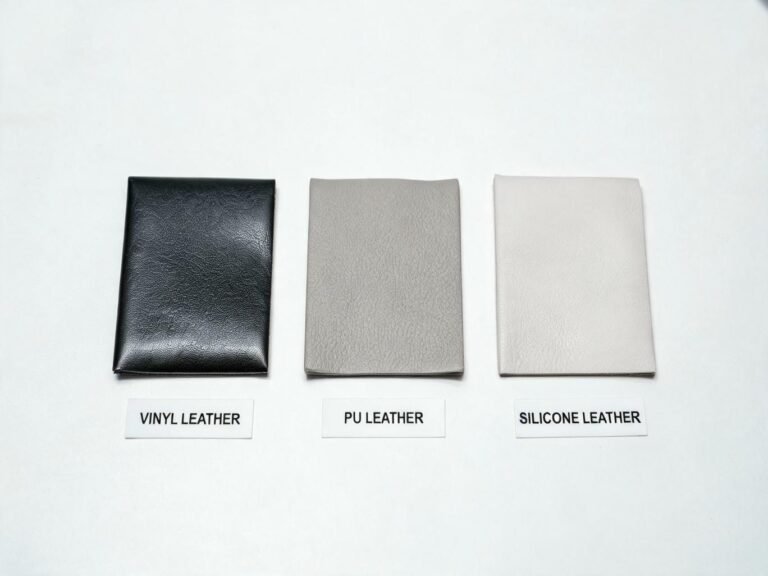
Smooth faux leather is a synthetic material with a flat, unembossed surface coating applied to a textile substrate — typically polyester or a cotton-poly blend. Unlike pebble-grain or perforated finishes, the smooth variant offers no texture to scatter light or mask surface degradation. The coating chemistry falls into three categories: polyurethane (PU), polyvinyl chloride (PVC), and silicone. Each bonds to the substrate differently, ages differently, and fails differently.
The smooth finish amplifies those chemical differences because there is no grain to hide the earliest stages of coating breakdown — no pebbled texture to disguise the first hairline cracks, no embossed pattern to camouflage delamination at the edges. A smooth surface is an honest surface: it shows everything. That honesty becomes a problem when the underlying polymer begins to degrade. For a deeper baseline on synthetic material categories, see our guide on what faux leather actually is.

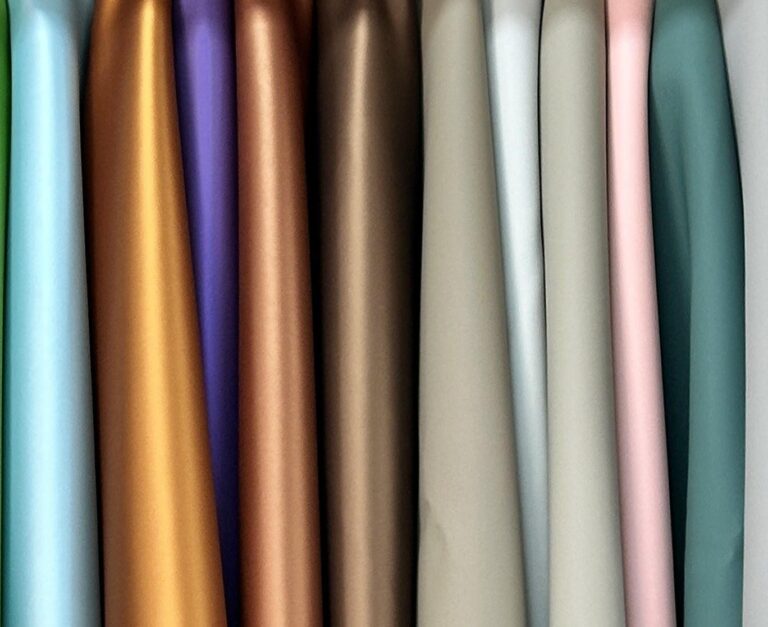
Smooth finish samples — without embossed grain, every surface defect is visible the moment the polymer coating begins to break down.
The Three Failure Modes No Spec Sheet Mentions
Most spec sheets list tensile strength, tear resistance, and abrasion cycles. They omit the three mechanisms that actually destroy smooth faux leather in service:
1. Hydrolytic degradation. Water molecules — from ambient humidity, perspiration, or cleaning products — attack the ester bonds in polyurethane. This is not surface wear; it is molecular decomposition. As polymer chains shorten, the coating loses elasticity and bond strength until it separates from the backing fabric. The visible peeling that buyers report at year three is the endpoint of a chemical process that began at the molecular level on day one. Research confirms that hydrolysis-driven delamination is the dominant failure mode for PU-coated faux leather in humid environments [$TOPSUN](https://decrum.com/blogs/news/faux-leather-vs-real-leather).
2. UV-initiated chain scission. Ultraviolet radiation breaks polymer chains in PU and PVC coatings. The smooth surface, lacking grain depth, shows every micro-crack as a visible line. Within 1,000–2,000 hours of cumulative UV exposure, standard PU smooth faux leather develops a network of surface fissures that no cleaning or conditioning can reverse. Grained leather hides these cracks in the valleys of the embossing pattern; smooth leather displays them across the entire surface.
3. Plasticizer migration (PVC). In PVC-based smooth faux leather, plasticizers continuously migrate to the surface and evaporate. The material feels softer initially, then stiffens and cracks as plasticizer content drops. The smooth surface makes this stiffening visible — what begins as a slight loss of sheen becomes surface cracking within 18–24 months in any application with UV or heat exposure.
Smooth Faux Leather vs Real Leather: Why Neither Ages Gracefully
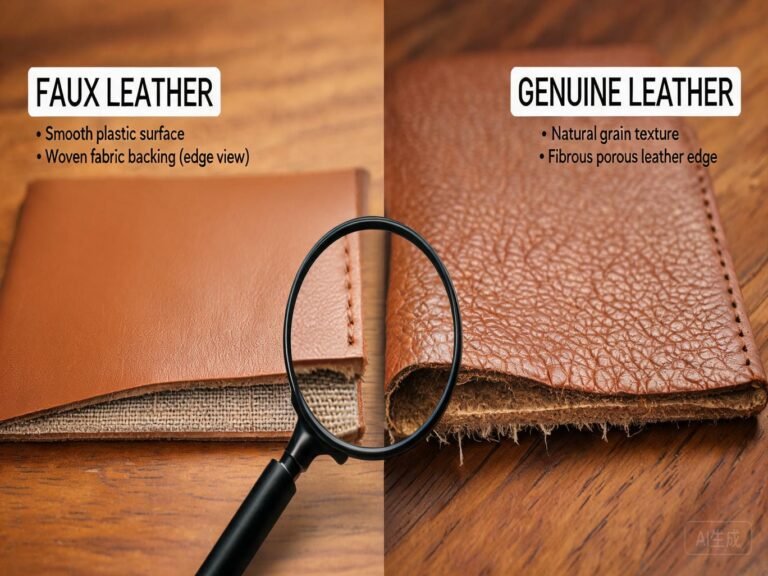
Real leather ages by developing patina — a soft, gradual change in color and sheen from skin oils, light, and handling. Smooth faux leather cannot patina. Instead of evolving, it deteriorates. The polymer coating does not absorb oils; it repels them until the surface treatment wears off, then absorbs them unevenly, creating permanent stains that no refinishing can remove.
Real leather can last 10–20 years with conditioning. Smooth PU faux leather typically lasts 3–5 years before visible peeling begins. Smooth PVC fails even faster — 2–3 years in applications with any UV or humidity exposure. The difference is structural, not cosmetic: collagen fibers flex and recover; polymer chains crack and do not. The faux vs real leather comparison breaks down these aging differences across specific product categories.

Smooth PU leather (left) vs genuine leather (right) — the faux surface cannot develop patina, so any change is permanent degradation, not character.
Why Silicone-Coated Smooth Surfaces Don’t Peel
Silicone chemistry solves the smooth faux leather failure problem at the molecular level. Unlike PU, silicone has no ester bonds for hydrolysis to attack. Unlike PVC, it contains no plasticizers to migrate and evaporate. The Si–O–Si backbone is inherently UV-stable — the same chemistry used in outdoor sealants, aerospace gaskets, and medical-grade tubing. When applied as a smooth coating on a textile substrate, silicone maintains flexibility across -40°C to 250°C, resists hydrolysis indefinitely, and does not yellow under UV exposure exceeding 1,000 hours.
The smooth surface stays smooth because the polymer does not degrade. TOPSUN produces smooth-finish silicone leather for B2B manufacturers who need zero-grain surfaces that resist peeling, hydrolysis, and UV degradation without embossed textures to mask coating failure. The silicone leather manufacturing process uses a solvent-free dry coating method that eliminates VOC emissions entirely — the same process that prevents the plasticizer and solvent migration issues inherent in PU and PVC production.
| Property | Smooth PU | Smooth PVC | Smooth Silicone |
|---|---|---|---|
| Peel resistance (flex cycles) | ~20,000 cycles | ~15,000 cycles | ≥ 50,000 cycles |
| Hydrolysis resistance | Poor — ester bonds break | Moderate — plasticizer leaches | Excellent — no ester bonds |
| UV stability (hours to cracking) | 500–800 hrs | 300–500 hrs | 1,000+ hrs, no cracking |
| Cleaning pH tolerance | pH 6–8 only | pH 6–8, degrades with alcohol | Bleach-safe, alcohol-compatible |
| Service life (commercial use) | 3–5 years | 2–3 years | 10+ years |
Specifying Smooth Faux Leather: 5 Tests That Predict 5-Year Survival
When evaluating smooth faux leather for a product lifecycle that must exceed five years, specify these five tests before signing a purchase order:
1. ISO 11507 hydrolysis resistance. Request test data at 70°C / 95% RH for a minimum of 8 weeks. If the supplier cannot provide documentation, assume the material will peel in humid or tropical climates within 2–3 years. Silicone-coated smooth leather passes this test with no measurable degradation.
2. ASTM G154 UV resistance. Require 1,000+ hours of QUV exposure with Delta E ≤ 2.0 color shift and zero surface cracking. Standard PU smooth faux leather fails at 500–800 hours; PVC fails even sooner due to concurrent plasticizer loss.
3. ISO 12947-2 Martindale abrasion. Specify ≥ 200,000 cycles for commercial applications. Smooth surfaces show abrasion damage faster than grained finishes because there is no texture depth to absorb wear before the coating is compromised.
4. DIN 75201 fogging. This test measures volatile components that condense on glass — critical for automotive interior specs. PU-based smooth faux leather emits plasticizers and residual solvents; silicone scores near-zero fogging, which is why it is increasingly specified for EV interiors where windshield clarity is a safety requirement.
5. ISO 16000-6 VOC emission. B2B buyers serving EU markets need E1 compliance. Solvent-based PU coatings fail this threshold; solvent-free silicone coating processes pass with zero measurable VOC output. Request the full technical data sheet to verify all five tests before committing to a supplier.

Martindale abrasion testing — smooth finishes show wear faster than grained surfaces because no texture absorbs the friction before coating damage occurs.

Automotive interiors demand smooth-finish leather that resists UV, fogging, and hydrolysis — three tests PU-based faux leather consistently fails.
FAQ
What cleaning products are safe for smooth faux leather surfaces?
For PU and PVC smooth faux leather, use only pH-neutral cleaners (pH 6–8). Cleaners with pH above 9 — including many commercial degreasers and sanitizers — initiate chemical attack on ester bonds, causing micro-fissures within weeks that lead to visible cracking and peeling. Silicone-coated smooth leather tolerates bleach, alcohol disinfectants, and mild abrasives without surface degradation, making it the only smooth faux leather suitable for medical, hospitality, and food-contact applications where aggressive daily cleaning is mandatory. See our cleaning and maintenance guide for protocol details.
The Bottom Line on Smooth Faux Leather
Smooth faux leather fails not because the surface is smooth, but because the chemistry behind it degrades. PU ester bonds hydrolyze. PVC plasticizers migrate and evaporate. UV breaks polymer chains that the smooth finish cannot hide. The solution is not to add grain to mask the failure — it is to specify a coating chemistry that does not fail in the first place. Silicone-coated smooth leather delivers the zero-grain aesthetic that designers want, with the 10+ year service life that warranty terms demand. When the spec calls for smooth, specify chemistry that stays smooth.