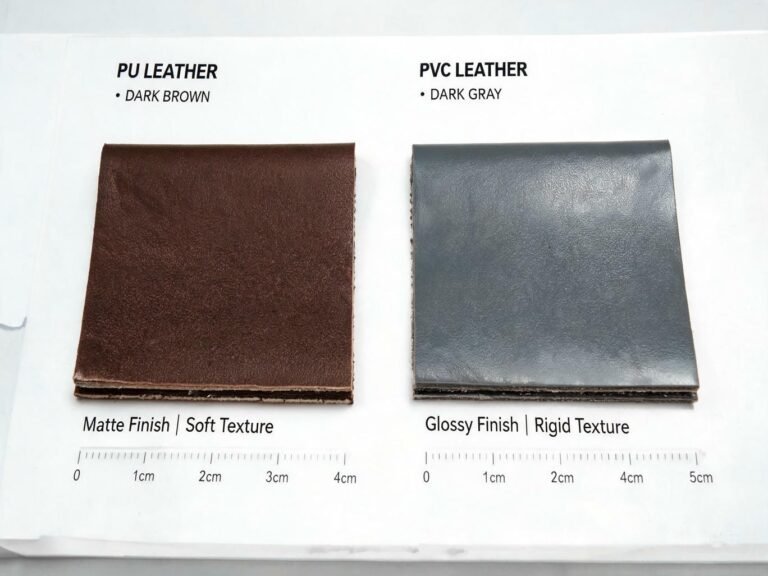
EU REACH Annex XVII Entry 63, amended in November 2024, banned lead content above 0.1% in all PVC articles — including synthetic leather PVC used in upholstery, automotive interiors, and accessories. For B2B brands still sourcing PVC-based materials, this means products manufactured after November 2024 must include independent third-party certificates proving compliance. Products that fail customs testing face seizure, fines, and brand-damaging regulatory notifications. The era of PVC synthetic leather as a “good enough, cheap enough” material is ending — not because of performance limitations, but because the chemical composition itself has become a regulatory liability.
PVC synthetic leather requires phthalate plasticizers for flexibility, heavy metal stabilizers for thermal processing, and chlorine chemistry for the base polymer. Each of these chemical components now faces tightening regulatory restrictions under REACH, RoHS, CPSIA, and California Prop 65 — creating compounding compliance risk for brands that continue using PVC.
What Is PVC Synthetic Leather? The Chemical Composition Breakdown

Synthetic leather PVC is manufactured by coating a fabric backing (typically polyester or cotton blend) with polyvinyl chloride resin mixed with plasticizers, stabilizers, and pigments. The PVC resin itself is produced through chlorine chemistry — polymerizing vinyl chloride monomer, a known human carcinogen (IARC Group 1). While the finished polymer is chemically stable, the additives required to make PVC flexible and processable are the source of regulatory and health concerns.
The chemical composition of standard PVC synthetic leather includes:
- Polyvinyl chloride (PVC) resin — 40–60% of total weight; provides the base polymer matrix
- Plasticizers (phthalates or alternatives) — 20–35% of total weight; required to make rigid PVC flexible enough for upholstery use
- Stabilizers (lead, cadmium, or mixed metals) — 1–3% of total weight; prevent PVC from decomposing during heat processing
- Pigments and fillers — 5–15% of total weight; colorants and cost-reducing mineral fillers
- Backing fabric — 15–25% of total weight; provides structural strength
4 Restricted Substances Hiding in PVC Synthetic Leather

| Restricted Substance | Function in PVC | REACH Restriction | Health Risk |
|---|---|---|---|
| Phthalates (DEHP, DBP, BBP, DIBP) | Plasticizer for flexibility | ≤ 0.1% each (REACH Annex XVII Entry 51/52) | Endocrine disruptor, reproductive toxicity |
| Lead (Pb) | Heat stabilizer | ≤ 0.1% (REACH Annex XVII Entry 63, Nov 2024) | Neurotoxin, developmental harm |
| Cadmium (Cd) | Pigment, stabilizer | Banned (REACH Annex XVII Entry 23) | Carcinogen, kidney damage |
| Organotin compounds | Stabilizer alternative | ≤ 0.1% (REACH Annex XVII Entry 18) | Immunotoxic, endocrine disruptor |
Restriction limits reflect EU REACH regulations. US CPSIA and California Prop 65 impose additional restrictions on phthalates and heavy metals in consumer products.
“Phthalate-free” PVC alternatives using DOTP or DINCH plasticizers still face scrutiny — these substitutes are not yet fully cleared under all regulatory frameworks, and the base PVC polymer still requires chlorine chemistry and heavy metal thermal stabilizers during processing.
The PVC End-of-Life Problem: Dioxins and Landfill Toxicity

While regulatory restrictions focus on the chemical content of PVC products during use, the end-of-life phase presents equally serious concerns. When PVC synthetic leather is incinerated — the standard disposal method for synthetic materials in many regions — it releases:
- Dioxins — Among the most toxic synthetic compounds known; classified as persistent organic pollutants (POPs) under the Stockholm Convention. PVC incineration is a primary anthropogenic source of dioxin emissions.
- Hydrogen chloride (HCl) — Corrosive gas that requires specialized incineration equipment; standard waste incinerators cannot safely process PVC without acid gas scrubbing.
- Heavy metal residues — Lead and cadmium stabilizers remain in ash after incineration, creating hazardous waste disposal requirements.
In landfill disposal, PVC synthetic leather leaches plasticizers and stabilizers into groundwater over decades. Phthalates are semi-volatile organic compounds that migrate from the PVC matrix into surrounding soil and water. This end-of-life liability is increasingly factored into ESG assessments and circular economy mandates.
PVC vs Silicone: The Chemical Safety Comparison

For B2B brands evaluating material alternatives to PVC, the comparison should focus on chemical composition — not just performance metrics. Here is how PVC synthetic leather compares to silicone leather on the parameters that determine regulatory and health risk:
| Chemical Parameter | PVC Synthetic Leather | Silicone Leather |
|---|---|---|
| Base Polymer | Polyvinyl chloride (chlorine chemistry) | Silicone polymer (silicon-oxygen backbone) |
| Plasticizers | Phthalates or alternatives (20–35%) | None required |
| Heavy Metals | Lead, cadmium stabilizers | Zero heavy metals |
| VOC Emissions | Phthalate off-gassing | Zero VOC |
| End-of-Life | Dioxin release if incinerated | Non-toxic (amorphous silica residue) |
| REACH SVHC | Multiple restricted substances | Zero SVHC content |
| Skin Contact Safety | Phthalate migration risk | ISO 10993 biocompatible |
| Martindale Abrasion | 40,000 cycles | 200,000+ cycles |
Regulatory Timeline: Why PVC Restrictions Are Tightening
The regulatory pressure on PVC synthetic leather is not a single event — it is a compounding timeline of restrictions that make PVC increasingly difficult to specify for B2B products:
- 2007 — REACH regulation enters force; phthalates DEHP, DBP, BBP added to SVHC list
- 2015 — Cadmium banned in PVC articles (REACH Annex XVII Entry 23)
- 2020 — Phthalate restriction tightened to ≤0.1% for DEHP, DBP, BBP, DIBP combined
- 2024 (November) — Lead banned above 0.1% in all PVC articles; third-party certification required for imports
- 2025 (May) — Recycled soft PVC transition period expires; full lead restriction applies
- 2026+ — EU CSRD Scope 3 reporting makes PVC’s carbon and chemical footprint visible in brand sustainability disclosures
Each new restriction layer adds testing costs, documentation requirements, and customs risk. A PVC product that complied in 2023 may fail in 2026 because of a new restriction added in the interim. This moving compliance target is the hidden cost of PVC that does not appear in the per-yard price.
About TOPSUN: PVC-Free Synthetic Leather with Zero Restricted Substances
TOPSUN manufactures silicone synthetic leather that contains zero PVC, zero phthalates, zero heavy metal stabilizers, and zero chlorine chemistry. Our material’s base polymer is silicone (polydimethylsiloxane) — a silicon-oxygen backbone chemically inert to the regulatory restrictions tightening around PVC. Certified to ISO 10993 (biocompatibility), REACH (zero SVHC), FDA, and RoHS, TOPSUN silicone leather passes 200,000+ Martindale cycles with zero VOC emissions and non-toxic end-of-life. For brands transitioning away from PVC, we provide a full chemical composition declaration, per-batch REACH compliance documentation, and a material that will not face future chemical restrictions because its chemistry is fundamentally clean.
Zero VOC introduction — see how silicone leather eliminates the chemical risks of PVC without compromising performance
Synthetic Leather PVC FAQ
Is “phthalate-free” PVC synthetic leather safe to use?
“Phthalate-free” PVC uses alternative plasticizers like DOTP or DINCH, which are less regulated than traditional phthalates. However, the base PVC polymer still requires chlorine chemistry, heavy metal or organotin thermal stabilizers during processing, and releases dioxins if incinerated at end-of-life. “Phthalate-free” addresses one restricted substance category but does not eliminate the broader chemical liability of PVC. Silicone leather eliminates all these concerns at the base polymer level.
What happens if my PVC products fail REACH customs testing?
Products that exceed REACH restricted substance limits face customs seizure, meaning the shipment is held or destroyed at the border. The importer receives a formal notification and may face fines. The brand may also be listed in the EU Safety Gate (Rapex) rapid alert system, which is publicly visible and can damage brand reputation. Remediation requires reformulation, retesting, and reshipment — a process that typically costs $10,000–50,000 per incident.
Can silicone leather replace PVC in all applications?
Yes, in essentially all upholstery, accessories, automotive, and decorative applications. Silicone leather matches or exceeds PVC on waterproof performance (100% waterproof), temperature resistance (-40°C to 250°C vs PVC’s typical -10°C to 60°C), and abrasion resistance (200,000+ vs 40,000 Martindale cycles). The only applications where PVC may still be preferred are extremely price-sensitive commodity products where material cost is the sole decision factor.
How can I verify that my synthetic leather is truly PVC-free?
Request a full material composition declaration from the supplier, then send a sample to an accredited lab (SGS, Intertek) for Fourier-transform infrared spectroscopy (FTIR) analysis. FTIR can definitively identify whether the material contains PVC polymer or silicone polymer. Also request a REACH SVHC full declaration — if the supplier cannot provide it, the material likely contains restricted substances.
Related resources: PVC leather industry alternatives · Silicone vs PU vs PVC comparison · Certification gallery · Environment friendly fabrics
Request PVC-Free Material Declaration
Receive free A4 samples with full chemical composition declaration, REACH SVHC documentation, RoHS certificate, and FTIR verification data. Compare silicone leather against your current PVC supplier and see the chemical difference at the molecular level.