The B2B procurement world has been treating the difference between real leather and faux leather as a binary: animal hide or plastic coating. That framing is obsolete. When you test all three options — real leather, PU/PVC faux leather, and silicone leather — against the same ISO standards, the results demolish conventional wisdom. Real leather outlasts faux by 3-5x but carries tanning-chemical baggage. Faux leather fails by hydrolysis in 2-5 years and sheds microplastics. Silicone leather matches real leather’s durability without the environmental cost of either. Here’s what the data actually shows.
What’s the Real Difference Between Real Leather and Faux Leather?
At the molecular level, the difference is structural. Real leather is a collagen fiber network — the protein matrix of animal hide, preserved through tanning. It’s porous, breathable, and develops a patina because the fibers interact with moisture and oils over time. Faux leather — whether PU or PVC — is a polymer coating bonded to a fabric backing. It’s non-porous, non-breathable, and ages by chemical degradation rather than natural wear.
For B2B buyers, the practical tests matter more than the molecular definitions. Here’s how to tell real leather from faux leather on a spec sheet: real leather lists “genuine hide” or “full-grain/top-grain” with thickness in millimeters (typically 1.0-1.4mm). Faux leather lists “polyurethane” or “PVC” with a fabric backing specification. If the spec sheet says “bonded leather” or “reconstituted,” you’re looking at leather dust mixed with adhesive — technically real, practically the worst performer in the category. The synthetic vs genuine leather distinction becomes critical when you’re sourcing for applications where material failure means warranty claims.
The binary “real vs faux” misses the point. The real question is: which material’s failure mode is acceptable for your application’s lifecycle?

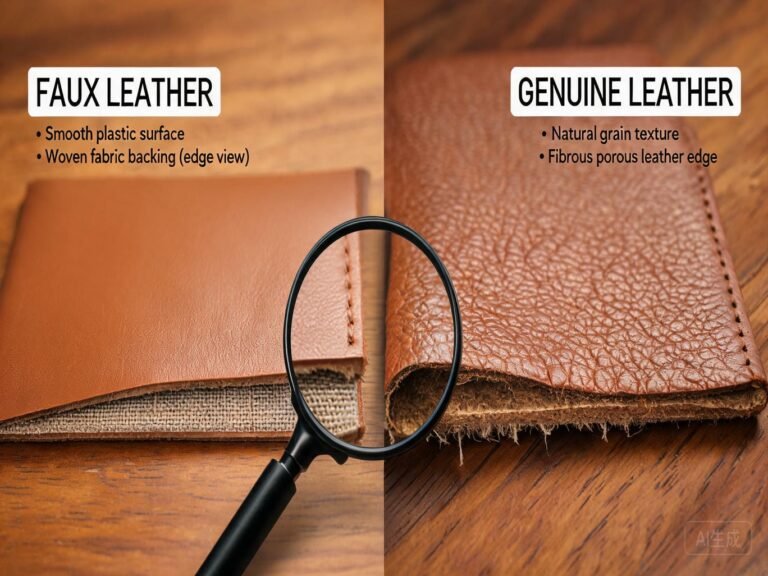
Surface texture at macro scale reveals material composition differences invisible to the naked eye.
Material Composition: Animal Hide vs Polymer Coating
Let’s be specific about what goes into each material. Real leather production relies on chromium tanning for approximately 90% of global output — a process that uses chromium salts, significant water volumes (estimated 17,000 liters per hide in some supply chains), and generates effluent containing sulfides and chlorides. Vegetable-tanned leather avoids chromium but requires longer processing and commands a price premium. The tanning chemicals remain in the finished product at trace levels, which is why REACH and California Prop 65 specifically regulate heavy metals in leather goods.
Faux leather has its own chemical profile. PU production uses dimethylformamide (DMF) — classified as a reproductive toxin in the EU — as a primary solvent. PVC relies on phthalate plasticizers to achieve flexibility, and those plasticizers migrate out over time, causing the embrittlement and cracking that defines faux leather’s end-of-life. Both PU and PVC shed microplastics throughout their service life and are non-biodegradable at disposal. The eco-friendly silicone leather alternative uses zero DMF, zero phthalates, and zero plasticizers — the Si-O-Si backbone doesn’t require them for flexibility.

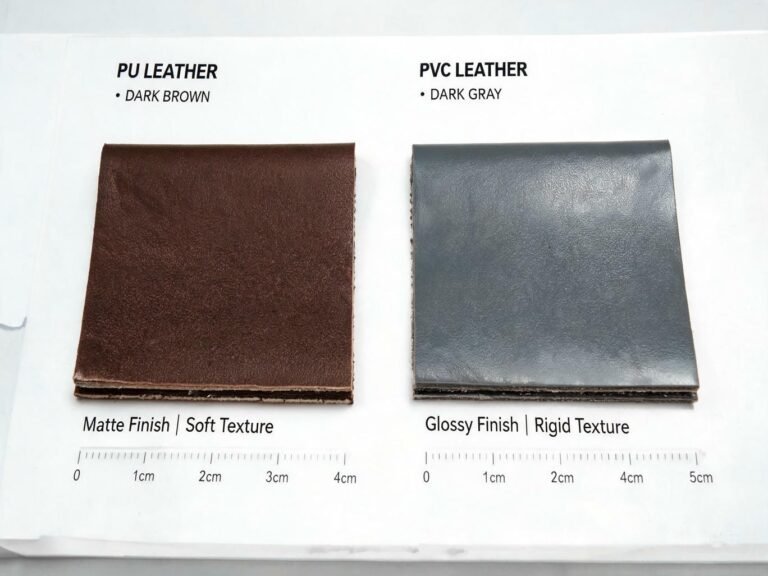
Tensile strength testing quantifies the structural difference between collagen fiber and polymer coating.
The Third Option Nobody Compares: Silicone Leather
Here’s where most comparison articles stop being useful. They line up real leather and faux leather, declare real leather the winner on durability and faux the winner on cost, and leave procurement teams to pick their compromise. But there’s a third material that changes the equation — and it’s not another variant of PU or PVC.
Silicone leather is built on a Si-O-Si (silicon-oxygen) molecular backbone, fundamentally different from the carbon-based polymers in PU and PVC. This chemistry delivers properties that neither real nor faux leather achieves: inherent non-porosity without a coating, UV stability from the molecular level, and thermal stability from -40°C to 250°C. It’s cruelty-free, 100% recyclable, and emits zero VOCs during production and use. When we run the silicone leather introduction alongside real and faux in the same test battery, the results speak for themselves.
| Parameter | Real Leather | Faux (PU/PVC) | Silicone Leather |
|---|---|---|---|
| Composition | Tanned collagen fibers | PU/PVC on fabric | Si-O-Si polymer on fabric |
| Lifespan | 10-25 years | 2-5 years | 10-15+ years |
| Failure Mode | Drying, cracking | Hydrolysis, peeling | Minimal degradation |
| Breathability | High (porous) | None (barrier) | None (non-porous) |
| Repairability | Yes (re-dye, restitch) | No (irreversible) | No (but rarely needed) |
| VOC Emissions | Moderate (tanning) | High (DMF, plasticizers) | Zero (TVOC < 0.01) |
| Environmental Impact | Water-intensive, tanning waste | Microplastics, non-biodegradable | 100% recyclable, solvent-free |

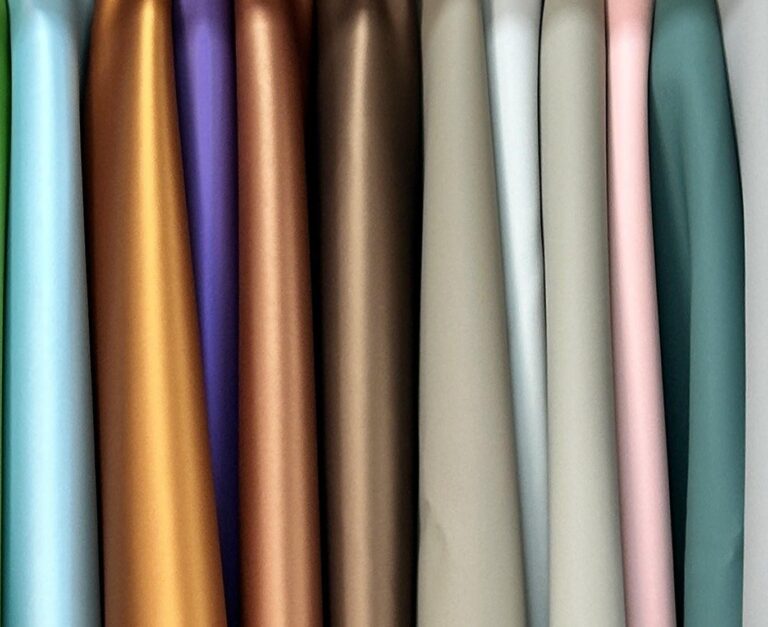
Color and texture consistency across the full silicone leather range — matching real leather’s aesthetic variety.
Watch the side-by-side material comparison — real leather, PU faux leather, and silicone leather under identical test conditions.
Real Leather vs Faux Leather: Cost Analysis B2B
Let’s talk about the numbers that drive procurement decisions. Real leather costs $40-60/m² upfront and delivers 10-25 years of service — but requires conditioning ($150-200/yr per sofa), is susceptible to UV damage, and carries the silicone vs PU comparison equivalent of $8-12/m²/yr in lifecycle cost. Faux leather costs $8-15/m² but needs replacement every 2-5 years — working out to $4-6/m²/yr when you factor in the reupholstery cycle. That “affordable” label hides a recurring cost trap.
Silicone leather at $50-70/m² with a 10-15+ year lifespan delivers $4-5/m²/yr — competitive with faux leather’s lifecycle cost while matching real leather’s longevity. The environmental compliance calculus adds another layer: REACH SVHC screening, California Proposition 65 disclosure, and the EU CSRD’s ESG reporting requirements all penalize materials with chemical content disclosures. Silicone leather’s zero-VOC, zero-plasticizer, zero-DMF profile means your compliance team has nothing to report. According to the UN Environment Programme, the fashion and textile industry generates 20% of global industrial water pollution — a statistic that increasingly drives procurement policy toward solvent-free alternatives.
The procurement insight: silicone leather doesn’t sit between real and faux — it outperforms both on the metrics B2B buyers actually track.

The traditional binary comparison misses the third option that outperforms both.
Frequently Asked Questions
Does faux leather breathe like real leather?
No. Real leather’s collagen fiber network is naturally porous — it allows moisture vapor transmission, which is why leather jackets feel comfortable in varying temperatures. Faux leather’s polymer coating is a complete moisture barrier. Silicone leather is also non-porous, but its thermal stability (-40°C to 250°C) and soft hand-feel compensate by preventing the heat buildup that makes PU/PVC uncomfortable in warm environments.
Is silicone leather considered faux leather?
Technically yes — silicone leather is synthetic, not derived from animal hide. But it shares none of PU/PVC’s chemical liabilities. The vegan leather and faux leather category is evolving, and silicone represents a distinct subcategory with fundamentally different chemistry, performance, and environmental impact profiles compared to traditional faux leather.
The Binary Is Obsolete
The difference between real leather and faux leather used to be simple: one came from animals, one from petrochemicals. That distinction still holds — but it no longer defines the procurement decision. When you add silicone leather to the comparison, the binary collapses. Real leather wins on tradition but loses on environmental cost and maintenance burden. Faux leather wins on upfront cost but loses on durability and chemical liability. Silicone leather wins on test data — 10-15+ year lifespan, zero VOC, Level 5 stain resistance, 100% recyclable — the metrics that procurement teams are increasingly held accountable for. The real vs faux debate is over. The data settled it.
About TOPSUN
TOPSUN manufactures silicone leather that bridges the gap between real leather’s premium durability and faux leather’s cost efficiency — delivering a cruelty-free, solvent-free material with 10-15+ year service life for B2B buyers across automotive interiors, commercial furniture, and medical applications.
ISO 10993-5 biocompatibility · REACH 247 SVHC screened · FDA food-contact · 100% recyclable · Zero VOC (TVOC < 0.01 mg/m³)