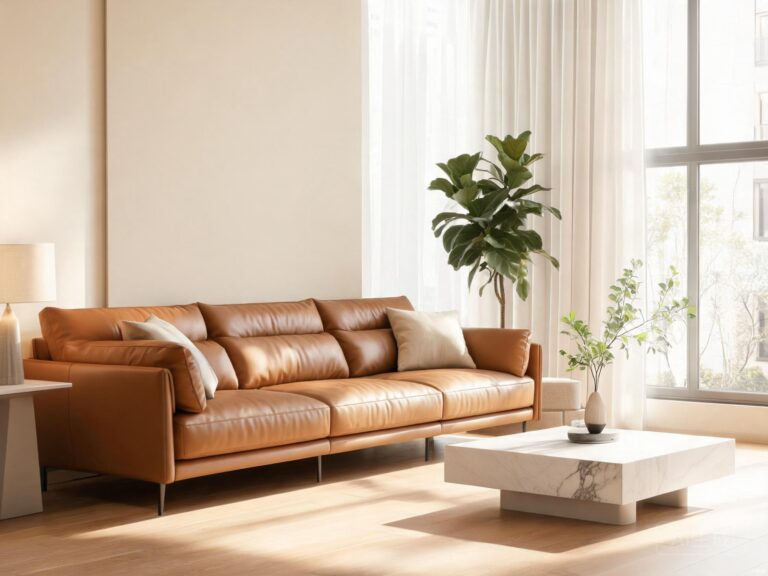
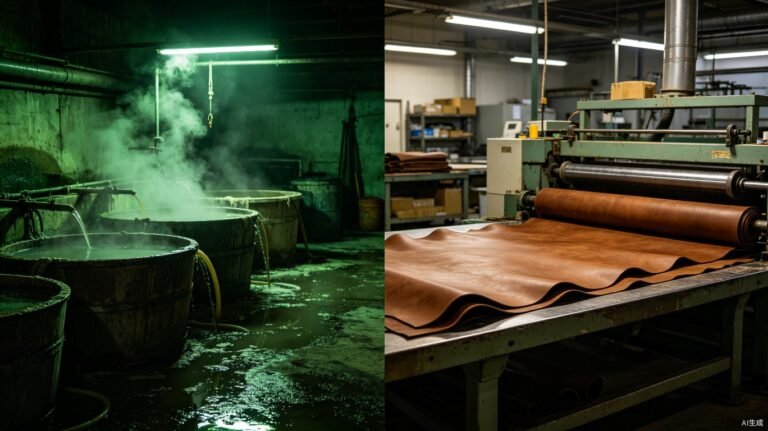
Ask any procurement manager what keeps them up at night, and material selection ranks surprisingly high on the list. Choose wrong, and you’re looking at warranty claims, premature replacements, and compliance headaches. The synthetic leather vs genuine leather debate isn’t academic — it’s a six-figure decision that plays out in every furniture factory, automotive Tier-1 supplier, and contract manufacturing negotiation. The global synthetic leather market reached $6.19 billion in 2023, while genuine leather sits at roughly $48 billion. But the growth rates tell a different story: synthetic leather’s premium segments are growing at 14% CAGR, while traditional leather plods along at 3.8%. Here’s what’s driving that shift — and what B2B buyers need to know before making their next sourcing decision.
The Performance Gap Nobody Talks About
Here’s the uncomfortable truth that genuine leather suppliers won’t volunteer: natural leather is inconsistent by design. Every hide is different — different grain, different thickness, different defect patterns. What passes QC on one batch fails on the next. For B2B manufacturers producing thousands of identical units, this variability is a production nightmare.
Synthetic leather, by contrast, delivers meter-to-meter consistency. Every roll has the same thickness, the same color, the same surface texture. But the real story is in the performance data — and it’s not even close on several key metrics:
| Performance Metric | Genuine Leather | PU Synthetic Leather | Silicone Synthetic Leather |
|---|---|---|---|
| Abrasion Resistance | 50,000-100,000 cycles | 100,000-150,000 cycles | 200,000+ cycles |
| UV Resistance | Fades within 1-2 years | Moderate, 2-3 years | Grade 4+, 5+ years |
| Hydrolysis Resistance | Susceptible to mold | Degrades in 3-5 years | 10+ weeks immersion, no degradation |
| Chemical Resistance | Stains easily, needs conditioning | Moderate | Disinfectant-proof, stain-proof |
| Temperature Range | -10°C to 60°C (practical) | -20°C to 80°C | -50°C to 250°C |
| Material Consistency | Variable by hide | Consistent | Consistent, meter to meter |
The takeaway isn’t that synthetic leather is universally better — it’s that the performance gap has widened dramatically in the last five years. For applications where durability, consistency, and chemical resistance matter, synthetic leather has moved from “acceptable alternative” to “preferred choice.”

The Cost Equation: Purchase Price vs Total Cost of Ownership
Let’s talk numbers. Genuine leather for furniture upholstery typically runs $3-8 per square foot at wholesale, depending on grade and finish. PU synthetic leather ranges from $1-3 per square foot. Silicone synthetic leather, the premium option, lands at $2-5 per square foot.
But here’s the thing: purchase price is the shallowest metric. A commercial furniture manufacturer we’ve worked with ran the numbers on a 500-unit hotel seating project. Genuine leather had the lowest upfront material cost. But when they factored in the 15% waste rate from hide defects, the labor cost of sorting and cutting around imperfections, and the expected 3-year reupholstery cycle — the silicone synthetic leather option came out 32% cheaper over a 7-year lifecycle. The math changes fast when you move from “what does a meter cost?” to “what does a seat cost per year of service?”
Key insight for procurement: Always request lifecycle cost data, not just per-unit pricing. A material that costs 50% more upfront but lasts 3x longer is almost always the better financial decision — especially when labor costs for replacement are factored in.
Sustainability: The Factor Reshaping B2B Sourcing in 2026
Five years ago, sustainability was a nice-to-have in B2B leather sourcing. Today, it’s a hard requirement. The EU’s tightening REACH regulations, California’s Prop 65, and corporate ESG commitments are forcing procurement teams to evaluate materials through an environmental lens. According to Grand View Research, sustainability considerations now influence over 60% of B2B material sourcing decisions in the furniture and automotive sectors.
Genuine leather’s environmental story is complicated. Tanning requires chromium salts, formaldehyde, and significant water consumption — roughly 17,000 liters per hide. The argument that leather is a “byproduct of the meat industry” doesn’t fully account for the tanning and finishing chemicals. Meanwhile, PVC synthetic leather is under regulatory siege due to phthalate plasticizers and lead stabilizers. The November 2024 EU REACH amendment banning lead in PVC was a watershed moment.
This is where premium synthetic leather — particularly silicone-based options — gains a decisive advantage. No plasticizers. No solvents. Near-zero VOC emissions. REACH and FDA compliant out of the box. For automotive OEMs facing stringent cabin air quality standards, or furniture manufacturers chasing LEED and WELL building credits, the compliance story alone can close the deal. Learn more about the environmental advantages of silicone leather.

Application-by-Application: Where Each Material Wins
The synthetic leather vs genuine leather decision isn’t one-size-fits-all. Here’s how it breaks down by application, based on what we see across our 100+ global client base:
Automotive Interiors: Synthetic leather dominates. 94.8% of the automotive PVC+PU leather market uses synthetic materials. The trend is accelerating toward silicone for premium EVs, where low-VOC, lightweight, and heat-resistant properties align with EV platform requirements. Genuine leather retains a niche in ultra-luxury segments (Bentley, Rolls-Royce), but even there, vegan interior options are gaining traction.
Commercial Furniture: Split decision. High-traffic hospitality and healthcare environments overwhelmingly favor synthetic leather for cleanability and durability. Residential luxury furniture still leans toward genuine leather for the “premium story,” though high-performance faux leather is rapidly closing the perception gap.
Marine and Outdoor: Synthetic leather wins decisively. UV exposure, salt spray, and moisture destroy genuine leather within 1-2 seasons. Marine-grade silicone leather handles 500+ hours of salt spray testing and UV Grade 4+ exposure — genuine leather simply cannot compete.
Fashion and Accessories: Genuine leather still commands premium positioning in luxury handbags and footwear, where the “real leather” label carries brand value. But the vegan leather market is exploding — plant-based and silicone-based options are growing at 17% CAGR, driven by younger consumers and sustainability-conscious brands.
Healthcare and Medical: Synthetic leather is non-negotiable. The ability to withstand aggressive disinfectants, resist bacterial colonization (99.9% antibacterial rate), and meet ISO 10993 biocompatibility standards makes silicone synthetic leather the only viable option for medical furniture. For a deeper dive, see our guide on medical-grade silicone leather upholstery.
The Types of Synthetic Leather: Not All Alternatives Are Equal
The term “synthetic leather” covers a wide range of materials with dramatically different performance profiles. Understanding the different types of leather is essential for making informed sourcing decisions:
PVC Leather (Vinyl): The oldest and cheapest synthetic option. Contains plasticizers (up to 40% by weight) that leach out over time, causing brittleness and cracking. Facing existential regulatory pressure from REACH restrictions on phthalates and lead. Still dominant in low-cost applications but declining rapidly in premium segments.
PU Leather (Polyurethane): The current volume leader. Better hand feel and breathability than PVC. Water-based PU variants address some environmental concerns. However, PU still hydrolyzes under heat and humidity, limiting its lifespan to 3-7 years in demanding environments.
Microfiber Leather: High-end PU variant using ultra-fine fibers for a more realistic leather texture. Excellent for fashion and accessories. Performance is closer to genuine leather but still susceptible to UV and hydrolysis degradation.
Silicone Leather: The premium synthetic option. Silicon-oxygen polymer backbone provides inherent thermal stability, UV resistance, and chemical inertness. No plasticizers, no solvents, near-zero VOCs. The 14% CAGR reflects its rapid adoption in automotive, healthcare, and marine applications where performance requirements are highest.
Frequently Asked Questions
Which is more durable: synthetic leather or genuine leather?
Premium synthetic leather — particularly silicone-based variants — outperforms genuine leather on abrasion resistance (200,000+ vs 50,000-100,000 Martindale cycles), UV resistance, and chemical resistance. Genuine leather can last decades with proper care, but it requires regular conditioning and is vulnerable to stains, moisture, and UV damage. For high-traffic commercial applications, synthetic leather is typically the more durable choice.
Is synthetic leather environmentally friendly?
It depends on the type. PVC leather has significant environmental concerns due to plasticizers and chlorine content. PU leather is better but still involves solvents. Silicone synthetic leather is the most environmentally friendly option: no plasticizers, no solvents, near-zero VOCs, and compliance with REACH, FDA, and other stringent regulations. It also lasts 3x longer than alternatives, reducing replacement frequency and material waste.
Can synthetic leather match the look and feel of genuine leather?
Modern high-end synthetic leather has reached a point where most users cannot distinguish it from genuine leather by touch or appearance. Custom embossing, advanced surface finishing, and multi-layer construction create realistic grain patterns and supple hand feel. The key difference is consistency — synthetic leather offers uniform quality meter-to-meter, while genuine leather varies by hide.
Making the Right Call for Your Next Project
The synthetic leather vs genuine leather decision ultimately comes down to three questions: What are your performance requirements? What’s your compliance exposure? And what’s your true lifecycle cost? For most B2B applications in 2026 — especially in automotive, healthcare, marine, and commercial furniture — premium synthetic leather offers the better answer on all three counts.
That doesn’t mean genuine leather is obsolete. It retains genuine advantages in luxury branding, breathability, and the unique patina that develops with age. But for procurement teams optimizing for performance, consistency, compliance, and total cost of ownership, the synthetic leather advantage is widening — and it’s widening fast.
Order Free Synthetic Leather Samples
About TOPSUN
TOPSUN is a premier silicone synthetic leather manufacturer with 233 patents, 3 production bases, and 100+ global clients. We provide OEM/ODM solutions for automotive, furniture, healthcare, marine, and electronics industries, delivering 6 million meters of premium synthetic leather annually.
Certifications: ISO 10993-5 | REACH (247+7 SVHC) | FDA 21 CFR 175.300 | PAHs | EN 13773 Class 4 | FAR 25.853