A procurement director at a European furniture brand once shared their frustration: they’d sourced “quality leather” from three suppliers at the same price point, yet one batch passed QC, another required 12% rework, and the third was rejected outright. Same spec sheet, same grade label, wildly different outcomes. The problem wasn’t the price — it was the hidden cost factors that don’t appear on any quotation but determine whether your order is profitable or painful.
This guide breaks down what quality leather actually means in B2B transactions, the six cost factors most buyers overlook, and how to evaluate suppliers beyond the surface-level grade claim — including why silicone leather is increasingly specified as a Grade A alternative.
What Defines Quality Leather in B2B Transactions
In consumer markets, “quality leather” is a marketing phrase. In B2B, it’s a specification. Genuine quality leather is graded by defect density, grain consistency, and physical performance — and those grades carry contractual weight. Grade A leather allows fewer than 3 visible defects per square meter. Grade B allows 3-8. Grade C permits up to 15, making it suitable only for products where the leather is cut into small pieces.
But here’s what suppliers don’t put on the quotation: the usable yield. A Grade A hide might yield 75% usable area after cutting around defects — or only 55% if the defects cluster. That 20-point difference means you need to buy 27% more raw material to get the same output. When evaluating quality leather, the metric that matters isn’t price per square meter — it’s price per usable square meter. We’ve seen sourcing teams negotiate a 10% price cut only to discover the supplier compensated by shipping hides with lower usable yield, effectively raising the real cost.

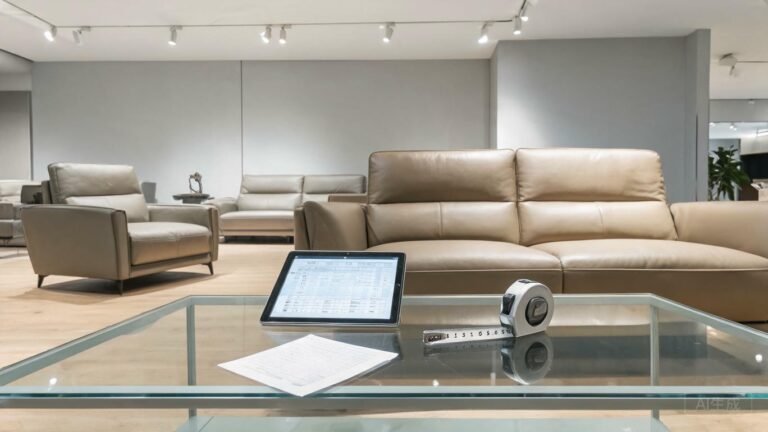
Quality leather grades vary significantly — Grade A hides command premium pricing due to their higher usable yield and defect-free surface.
The 6 Cost Factors That Determine Your Real Price
Based on our work with procurement teams across furniture and automotive sectors, these are the six factors that separate the quoted price from the landed cost of quality leather:
- Usable yield — The percentage of defect-free, cuttable area. Grade A: 70-85%. Grade B: 55-70%. Grade C: 40-55%. Always request a yield guarantee in writing.
- Thickness tolerance — Quality leather should vary no more than ±0.2mm across the hide. Exceeding this causes cutting issues and inconsistent product feel. Suppliers sometimes ship at the lower end of tolerance to save material.
- Color batch consistency — Each dye lot differs slightly. For multi-roll orders, request ΔE ≤ 2.0 between batches. Suppliers who can’t guarantee this will cost you in color-matching rejects.
- Defect clustering pattern — Random defects are manageable; clustered defects in the center of the hide are not. Ask for digital defect maps before purchasing.
- Tanning method — Chrome-tanned leather is cheaper but faces regulatory scrutiny in the EU. Vegetable-tanned commands a 15-25% premium but passes stricter environmental standards.
- Warranty exposure — The cost of returns and rework. A supplier offering quality leather at 8% below market but with a 2% higher defect rate in the field costs more over a 3-year product lifecycle.
Procurement insight: The cheapest quality leather quote is rarely the lowest total cost. We tracked a furniture OEM that switched from a 15% cheaper supplier to one with stricter yield guarantees — and saved 9% on material cost over 12 months due to reduced cutting waste and fewer rejects.
Quality Leather Grade Comparison: A vs B vs C
Understanding grade differences helps you match material to product requirements. There’s no point paying Grade A prices for components that get cut into 5cm strips. The table below shows typical industry benchmarks — always verify with your specific supplier.
| Grade | Defect Allowance (per m²) | Typical Use | Price Index |
|---|---|---|---|
| Grade A | ≤ 3 defects | Full panels, visible surfaces | 100 (baseline) |
| Grade B | 3-8 defects | Side panels, hidden areas | 75-85 |
| Grade C | Up to 15 defects | Small cut parts, trims | 50-65 |
| Silicone Leather | 0 (engineered uniformity) | All applications, any cut size | 80-95 |
Notice the silicone leather row: zero defects, full usability, and a price index between Grade A and Grade B. That’s the value proposition — you get Grade A consistency at Grade B pricing because it’s manufactured, not harvested. For more on how this works, see our silicone vs PU comparison and our factory production process.
Download Quality Assessment Checklist

Tensile strength testing verifies that quality leather meets minimum performance thresholds before shipment approval.
Batch Consistency: The Silent Margin Killer
The most expensive quality leather problem isn’t visible defects — it’s invisible variation between batches. When a supplier ships Roll 1 at 1.2mm thickness and Roll 2 at 1.0mm, your cutting dies produce inconsistent results. When Lot A matches your approved color standard and Lot B drifts by ΔE 3.5, your assembly line grinds to a halt while you sort and match.
We’ve quantified this with a furniture client who tracked batch-related downtime: inconsistent quality leather shipments caused an average of 4.5 hours of production stoppage per week, translating to roughly $23,000 in lost throughput annually — on a material that was “cheaper” by $0.80 per meter. The solution? Specify batch consistency parameters in your purchase contract: thickness tolerance ±0.15mm, color ΔE ≤ 2.0, and grain pattern density within 10% of the approved sample.

Color fastness testing equipment verifies that each batch maintains consistent color performance within agreed tolerances.
Silicone leather eliminates this problem by design. Because it’s manufactured from liquid silicone polymer rather than harvested from animal hides, every roll comes out at the same thickness, the same color, and the same grain pattern. No natural variation, no defect clustering, no usable yield calculation needed. You can also verify our certifications and compliance documentation to understand the quality framework behind the product.
Quality Leather Sourcing: Silicone Leather as Grade A Alternative
For procurement teams evaluating quality leather alternatives, silicone leather offers a compelling value equation. It matches or exceeds Grade A genuine leather on every physical performance metric — tensile strength, tear resistance, flexing endurance, colorfastness — while eliminating the variables that make genuine leather sourcing unpredictable: yield calculation, defect clustering, and batch variation.
In a side-by-side comparison we ran for an automotive seating client, genuine Grade A leather and silicone leather showed nearly identical performance on Martindale abrasion (both 20,000+ cycles) and tear strength (both above 40N/mm). The difference showed up in usable area: genuine leather yielded 78% after defect cutting, while silicone leather delivered 98% — because there are no natural defects to cut around. Over a 100,000-unit production run, that 20-point yield advantage translated to $340,000 in material savings. Learn more about suitable applications across industries for silicone leather.

Finished goods warehouse — each roll of silicone leather maintains consistent specifications without the natural variation of genuine hides.
For additional reading on quality leather evaluation, see our existing quality leather goods B2B guide or our guide to what makes good leather quality. You can also reference ISO 2419 leather physical testing standards for the full testing framework.
Durability comparison video — see how silicone leather performs against genuine quality leather in standardized testing.
Frequently Asked Questions
What’s the minimum quality leather grade for commercial furniture?
Grade B is the minimum acceptable for commercial furniture, as it balances cost with acceptable defect levels. For visible surfaces (seat cushions, armrests), specify Grade A. For hidden areas (bottoms, backs), Grade B or C is acceptable. Always calculate usable yield, not just raw material cost — a Grade B hide with 60% yield may cost more per usable meter than a Grade A hide at 80% yield.
How do you verify quality leather claims from a new supplier?
Request three documents: a third-party test report (ISO 2419 physical testing), a defect map for the specific batch you’re quoting, and a yield guarantee in writing. If the supplier can’t provide all three within 7 business days, walk away. For silicone leather, request batch-to-batch color consistency data (ΔE values) and thickness tolerance reports instead of defect maps.
Building a Smarter Sourcing Strategy
Quality leather sourcing isn’t about finding the lowest price — it’s about controlling total cost across usable yield, batch consistency, and warranty exposure. Whether you source genuine Grade A hides or switch to silicone leather for its engineered uniformity, the procurement framework is the same: verify the metrics that matter, demand documentation, and calculate landed cost per usable meter, not per raw meter. The suppliers who can’t answer those questions aren’t cheaper — they’re just hiding the cost where you can’t see it yet.
About TOPSUN
TOPSUN delivers Grade A-equivalent silicone leather that meets or exceeds genuine quality leather performance criteria across automotive, furniture, and healthcare applications — serving OEMs and procurement teams in 30+ countries for over 8 years.
Batch-to-batch color consistency within ΔE ≤ 1.5 | Full traceability from raw material to finished roll | Third-party verified ISO 2419 test reports on every shipment | 98% usable yield guaranteed by formulation