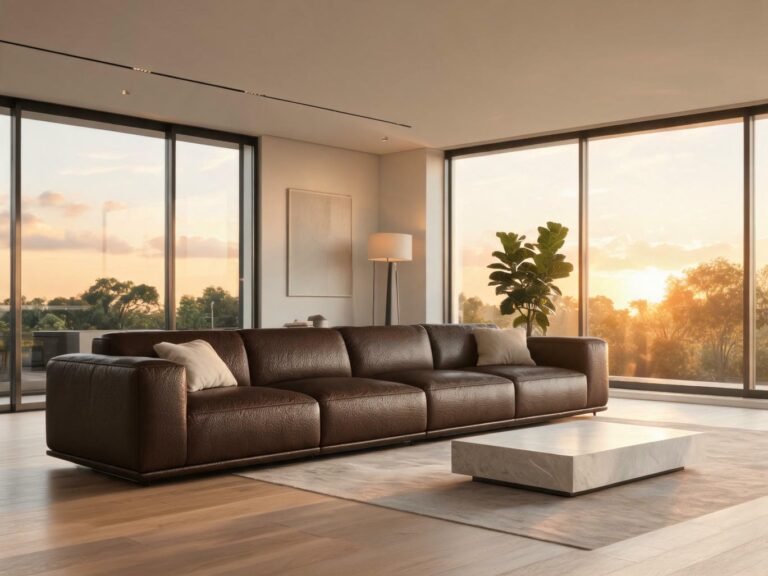
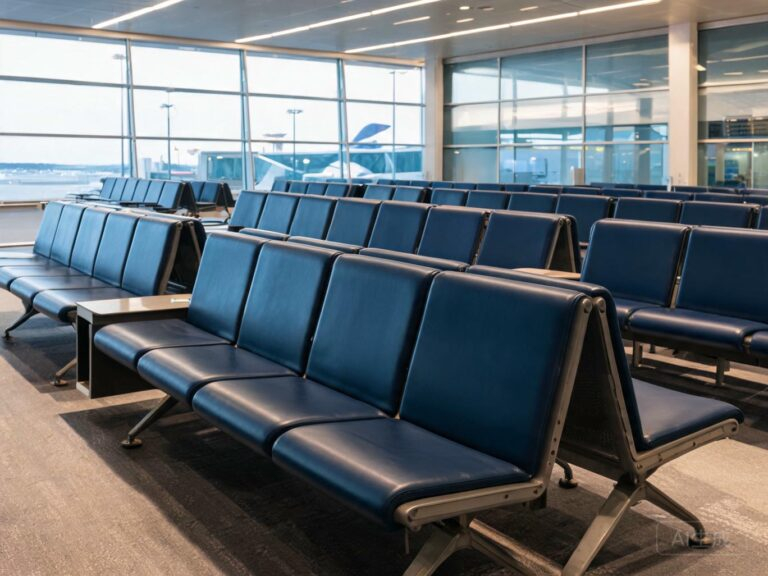
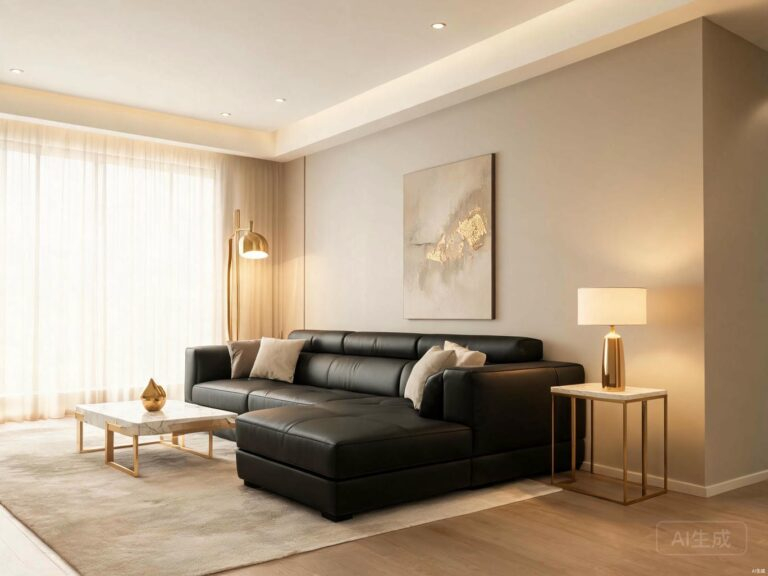
PU upholstery is the workhorse of the synthetic leather world. It covers office chairs, restaurant booths, hotel headboards, and medical waiting room seating across every continent — chosen because it looks acceptable, costs little, and performs “good enough” on a spec sheet. But that same spec sheet rarely mentions hydrolysis, plasticizer migration, or the VOC profile that follows the material for months after installation. For B2B buyers, understanding what PU upholstery actually delivers — and where it silently fails — is the difference between a three-year product and a seven-year regret.
This guide evaluates PU upholstery across the criteria that matter in commercial sourcing: chemistry, performance benchmarks, failure modes, cost structure, and the decision point where upgrading to silicone vs PU becomes economically justified.
Request Material Comparison Samples
What Is PU Upholstery? Chemistry and Manufacturing Basics
PU upholstery is a coated fabric: a textile base (typically polyester or cotton blend) layered with polyurethane resin to simulate the look and feel of leather. The polyurethane coating provides flexibility, water resistance, and surface texture. Unlike PVC, which uses a continuous film layer, PU is applied as a solution that penetrates the fabric matrix, creating a more breathable and flexible composite.
There are two manufacturing routes, and the distinction matters enormously for buyers:
- Solvent-based PU — the traditional process. Uses DMF (dimethylformamide) and other organic solvents to dissolve the polyurethane for application. Produces a durable coating but emits significant VOCs during manufacturing and continues to off-gas residual solvents for weeks after installation. Most budget PU upholstery on the market is solvent-based.
- Water-based PU — a newer process that replaces organic solvents with water as the carrier. Lower VOC emissions, better environmental profile, but historically produced softer, less durable coatings. Recent formulations have narrowed the performance gap, though at a 20–40% price premium over solvent-based.

Chemical mixing equipment in the coating workshop — where PU resin formulations are prepared before application to fabric substrates
Both routes rely on plasticizers to achieve the softness and flexibility that makes PU feel leather-like. These plasticizers are not chemically bonded to the polymer — they are physically mixed in. Over time, they migrate to the surface and evaporate, which is why old PU upholstery becomes stiff, then brittle, then cracks. This is not a defect. It is the inherent chemistry of the material.
PU Upholstery Performance Criteria: The Spec Sheet Reality Check
When a supplier sends you a PU upholstery spec sheet, it typically highlights four numbers: thickness, grammage, Martindale abrasion, and color fastness. These are useful, but they tell you nothing about how the material will perform in year three of commercial use. Here is what the spec sheet shows versus what actually matters:

Coating machine rollers — the application stage where PU resin is deposited onto the fabric base, determining coating uniformity and thickness
| Spec Sheet Metric | Typical PU Value | What It Actually Tells You |
|---|---|---|
| Thickness | 0.7–1.2 mm | Nothing about durability — only tactile feel |
| Martindale abrasion | 15,000–25,000 cycles | Day-one wear resistance only — does not predict coating degradation |
| Color fastness (UV) | Grade 4–5 | Initial fade resistance — does not account for plasticizer-driven yellowing |
| Tear strength | 30–60 N | Fabric base strength — irrelevant once coating delaminates |
The metrics that predict real-world failure — hydrolysis resistance, plasticizer migration rate, and VOC emission profile — are almost never on the spec sheet. Buyers who want the full picture should request EPA-compliant VOC testing data and accelerated aging test results (85°C / 85% RH for 7 days, per ISO 2440).
The Hydrolysis Problem: Why PU Upholstery Fails Prematurely
Hydrolysis is the chemical breakdown of polyurethane bonds in the presence of moisture. It is the single most common failure mode for PU upholstery, and it is entirely predictable based on climate. In humid environments (Southeast Asia, Gulf states, tropical regions), PU upholstery begins hydrolytic degradation within 18–36 months. In temperate, dry climates, the same material may last 5–7 years.

Scratch resistance testing — after hydrolysis begins, PU upholstery loses surface integrity and fails even basic scratch tests
The mechanism is straightforward: water molecules attack the ester bonds in the polyurethane polymer chain, breaking it into shorter segments. The coating loses flexibility, becomes brittle, and eventually separates from the fabric base. The first visible sign is usually surface micro-cracking at stress points — seat edges, armrests, stitching holes. Once cracking starts, it accelerates rapidly because exposed fabric wicks moisture deeper into the composite.
Compliance note: In addition to hydrolysis, solvent-based PU upholstery emits VOCs that can exceed indoor air quality limits under EPA guidelines and California Section 01350. For healthcare and education projects, specify materials with third-party VOC test data.
For projects in humid climates, the hydrolysis-resistant silicone leather alternative eliminates this failure mode entirely — silicone’s Si–O backbone is impervious to water molecule attack. Our detailed analysis of PU leather hidden problems covers the full failure taxonomy.
Cost Factors in PU Upholstery Sourcing
PU upholstery pricing ranges from $2.50/yd for budget solvent-based to $9/yd for premium water-based formulations. The price drivers are not always intuitive. Here is what actually determines cost:
- Solvent vs water-based — 20–40% premium for water-based, driven by formulation complexity and slower line speeds
- Base fabric quality — polyester vs cotton blend, fabric weight (200–400 g/m²), and weave density
- Coating thickness — more resin means more material cost but better abrasion performance
- Embossing and finishing — textured patterns, matte/gloss finishes, and special effects (metallic, perforated) add 10–30%
- MOQ and order volume — pricing drops significantly at 5,000+ yards for a single color/texture

Water droplet test — PU upholstery repels water initially, but moisture vapor penetration drives hydrolysis from within the coating
The hidden cost is quality inconsistency. PU manufacturing is sensitive to temperature, humidity, and resin batch variation. Two rolls from the same supplier can have measurably different coating adhesion and flexibility. For B2B buyers specifying large furniture programs, batch-to-batch consistency is a bigger risk than the unit price. Always request production-line samples, not showroom swatches.
When PU Upholstery Makes Sense — and When It Doesn’t
Not every project needs to abandon PU. The material has legitimate use cases where its cost-to-performance ratio is genuinely favorable:
- Residential furniture with 3–5 year replacement cycles — PU delivers adequate performance at lowest cost
- Short-life products — promotional seating, event furniture, seasonal items where longevity is not a design requirement
- Dry climate installations — temperate regions with low humidity extend PU lifespan significantly
- Budget-constrained projects where initial capital expenditure is the binding constraint, not lifecycle cost
Conversely, PU is the wrong choice when any of these conditions apply: humid or tropical climate, commercial cleaning frequency above once per week, regulatory VOC limits (healthcare, education), product lifespan expectation above 5 years, or warranty exposure on surface degradation. In those cases, the question is not whether to upgrade, but to what. For environmentally conscious buyers, eco-friendly silicone leather offers the same look and feel without the chemical liabilities. The PU leather fundamentals guide on our site provides additional context.

PU upholstery on a residential sofa — an appropriate application where replacement cycles are short and humidity is controlled

Material structure comparison — the cross-section view reveals why PU coatings delaminate while silicone forms a more stable bond
Material comparison video — see how PU, PVC, and silicone leather perform side by side in abrasion, waterproofing, and flexibility tests
Frequently Asked Questions
How long does PU upholstery last in commercial use?
In temperate, dry climates with moderate cleaning frequency, PU upholstery typically lasts 4–6 years in commercial settings. In humid or tropical environments, expect 2–3 years before visible hydrolysis damage appears. High-traffic hospitality applications with daily cleaning can reduce lifespan to 18–24 months. Always specify the expected climate and cleaning protocol when requesting material recommendations.
Is water-based PU upholstery worth the price premium over solvent-based?
For projects with VOC compliance requirements (healthcare, education, California-market products), water-based PU is not optional — it is the only route to meet indoor air quality standards. For general commercial use in well-ventilated spaces, the premium is harder to justify on performance alone, as water-based PU does not significantly improve hydrolysis resistance. The decision should be driven by regulatory requirements, not by perceived quality differences.
Making the Right PU Upholstery Decision
PU upholstery is not a bad material — it is a material with a specific performance envelope, and too many B2B buyers specify it for applications outside that envelope. The key is matching the material to the use case: short lifecycle, dry climate, budget-constrained? PU is appropriate. Long lifecycle, humid climate, commercial cleaning, regulatory compliance? The upgrade to PU upholstery alternatives like silicone leather is not a luxury — it is risk management. Evaluate your project against the hydrolysis timeline, the VOC profile, and the replacement cost before signing the purchase order.
About TOPSUN
TOPSUN manufactures silicone leather as a direct specification upgrade for B2B buyers who need PU-level pricing flexibility with significantly better hydrolysis resistance, VOC performance, and coating longevity.
Our material is REACH-compliant, zero-solvent in formulation, and available in water-based and silicone-based variants — with full technical data packages including accelerated aging, Martindale abrasion, and third-party VOC test reports for qualified sourcing teams.