The global PU fabric market just crossed $27.8 billion in 2025, growing toward $44.6 billion by 2032. That number tells you the material is everywhere — furniture, automotive, fashion, electronics. What it doesn’t tell you is what happens in year three, when hydrolysis begins breaking down the ester bonds in the polymer coating and the surface starts peeling. As a procurement team evaluating PU fabric for your next product line, the headline cost per meter is the smallest number in your total cost of ownership. Here are the three hidden costs that actually matter.
What Is PU Fabric? Beyond the Basic Definition
PU fabric — polyurethane-coated fabric — is manufactured by applying a liquid polyurethane coating onto a textile substrate (typically polyester, cotton, or microfiber). The coating creates a leather-like surface that’s flexible, waterproof, and significantly cheaper than genuine leather. It’s the dominant synthetic leather material globally, holding 56.3% of the leatherette market share in 2025.
But “PU fabric” isn’t a single material — it’s a category with dramatic quality differences depending on the base resin:
- Polyether PU — Mid-range cost, medium hydrolysis resistance. Acceptable for dry commercial environments but vulnerable in humid or wet-end applications.
- Polyester PU — Lowest cost, lowest durability. Ester bonds in the polymer chain react with water, sweat, and cleaning agents — this is the formulation that peels after 2-3 years.
- Microfiber PU — Premium tier, ultra-fine fiber base with breathable PU coating. Can exceed 100,000 Martindale cycles but costs 40-60% more than standard PU.
Most B2B buyers don’t specify which PU formulation they’re getting — they accept whatever the supplier provides at the quoted price. That’s where hidden cost #1 lives. A polyester-PU fabric quoted at $3/m² may look identical to a polyether-PU at $5/m² in the showroom, but the polyester version will fail 2-3 years sooner in any environment with moisture exposure.

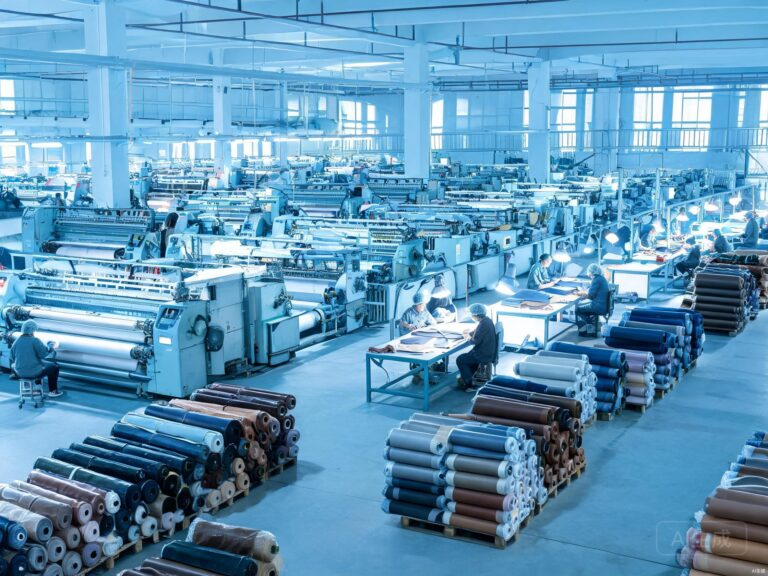
PU coating application — the process that determines long-term hydrolysis resistance
Why PU Fabric Fails: Hydrolysis and DMF Solvents
Two failure modes account for the vast majority of PU fabric warranty claims and premature replacement. Understanding both is essential for B2B material specification:
Hydrolysis is the chemical breakdown of ester bonds in PU polymers when exposed to water, humidity, perspiration, or cleaning agents. It’s not a surface issue — it’s a structural degradation that happens inside the material. The coating loses flexibility, becomes brittle, and eventually cracks and peels. In commercial furniture, PU fabric typically shows hydrolysis damage within 2-4 years. In automotive interiors exposed to temperature cycling and body contact, the timeline shortens further.
DMF (dimethylformamide) solvent residue is the second hidden cost. Traditional PU fabric manufacturing uses DMF as a solvent in the wet coating process. DMF is a reproductive toxicant and is increasingly restricted under silicone vs PU comparisons — the EU’s REACH regulation lists it as a Substance of Very High Concern. Residual DMF in finished PU fabric can off-gas for months after production, creating VOC emissions in enclosed environments like car cabins and hospital rooms. This is why VDA 277 emission testing is becoming non-negotiable for automotive interiors.
Hidden cost #2: VOC compliance. If your PU fabric supplier cannot provide VDA 277 or VOC test data, you’re exposed to regulatory risk — not just material failure. Air quality complaints in car cabins and commercial interiors trace back to residual solvents in PU coatings.

Physical testing lab — verifying hydrolysis resistance and VOC emissions before procurement
Silicone leather properties overview — the zero-VOC, zero-hydrolysis alternative to PU fabric
Durability Benchmarks: What the Numbers Show
Here’s where procurement teams can make data-driven decisions. The durability gap between PU fabric tiers is wider than most buyers realize — and it directly drives hidden cost #3: premature replacement:
| Property | Standard PU Fabric | Microfiber PU | Silicone Fabric |
|---|---|---|---|
| Martindale abrasion (cycles) | 10,000-30,000 | 100,000+ | 200,000+ |
| Hydrolysis onset (years) | 2-4 | 4-6 | None (inherent) |
| Temperature limit | Up to 80°C | Up to 100°C | -40°C to 250°C |
| VOC emissions | DMF residue risk | Low (water-based options) | Zero VOC |
| Expected service life | 3-5 years | 5-8 years | 10+ years |
| Disinfectant resistance | Poor (coating dissolves) | Moderate | Alcohol & bleach safe |
The replacement math is stark. A commercial furniture project using standard PU fabric at $3/m² that requires replacement every 3 years costs more over 10 years than silicone fabric at $8/m² that lasts the full decade — before factoring in labor, logistics, and brand damage from visible degradation. For deeper analysis, see our PU fabric leather guide and the hidden problems of PU leather breakdown.

PU fabric in furniture upholstery — comfort at day one, hydrolysis risk by year three
Silicone Fabric: The Zero-Hydrolysis Alternative
For procurement teams who’ve been burned by PU fabric’s hidden costs, silicone leather offers a fundamentally different value proposition. Instead of coating a textile with a polymer that will eventually hydrolyze, silicone fabric uses a PDMS (polydimethylsiloxane) coating that is inherently hydrophobic — water cannot break it down because there are no ester bonds to attack.
The manufacturing process is also cleaner. Silicone leather uses a solvent-free dry coating process — zero DMF, zero phthalates, zero heavy metals, zero VOC emissions. For automotive buyers facing VDA 277 requirements and furniture brands targeting LEED or EU Ecolabel certification, this eliminates an entire category of compliance risk.
In one of our furniture and sofa applications projects, a commercial furniture manufacturer switched from polyester-PU fabric to silicone leather for a 500-unit hotel contract. The material cost increased 45%, but the elimination of mid-cycle reupholstery (previously needed at year 4 for PU) delivered net savings of 28% over the 8-year contract term — before accounting for reduced warranty claims and maintenance labor.

Flexibility bending test — silicone fabric maintains suppleness where PU fabric stiffens with age
Frequently Asked Questions
How long does PU fabric last in commercial applications?
Standard polyester-PU fabric lasts 2-4 years before visible hydrolysis damage. Polyether-PU extends to 3-5 years. Microfiber PU can reach 5-8 years with proper maintenance. Silicone fabric, by contrast, maintains appearance and structural integrity for 10+ years under identical conditions because its molecular structure is inherently resistant to the hydrolysis that breaks down PU.
Is PU fabric safe for prolonged skin contact?
It depends on the formulation and residual solvent content. PU fabric manufactured with DMF solvents can off-gas volatile compounds for months after production. For applications with prolonged skin contact — medical devices, baby products, wearables — request VOC test data and REACH compliance documentation. Silicone leather is hypoallergenic, BPA-free, and passes ISO 10993-5 cytotoxicity testing, making it suitable for direct skin contact applications where PU fabric carries risk.
The Real Cost of Cheap Fabric
PU fabric dominates the synthetic leather market for one reason: low initial cost. But B2B procurement isn’t about initial cost — it’s about total cost of ownership. When you account for hydrolysis-driven replacement cycles, DMF solvent compliance risk, and warranty claims from premature peeling, the real cost of PU fabric is significantly higher than the quoted price per meter. Silicone fabric eliminates all three hidden costs by using a molecular structure that cannot hydrolyze, a manufacturing process that uses no solvents, and a service life that exceeds PU by 3-5×. For procurement teams writing material specifications in 2026, the question isn’t whether silicone costs more per meter — it’s whether you can afford the hidden costs of the cheaper alternative.
About TOPSUN
TOPSUN supplies solvent-free silicone fabric to B2B buyers replacing PU fabric in automotive, furniture, medical, and consumer applications. Our dry coating process eliminates DMF solvents entirely, delivering zero-VOC material that passes VDA 277 emission standards without post-production off-gassing.
Zero VOC · No DMF solvents · 200,000+ Martindale cycles · FDA 21 CFR 177.2600 · ISO 10993 biocompatible · 500,000m² monthly capacity