A housekeeping supervisor at a physiotherapy clinic once showed us two documents that could not both be true. The first was the care card from her seating supplier: clean polyurethane synthetic leather with pH-neutral solution only, never alcohol, condition monthly. The second was the facility’s infection-control policy: wipe every contact surface with hospital-grade disinfectant, daily, no exceptions. She was being asked to choose between voiding the furniture warranty and failing the accreditation audit. That collision — between what PU synthetic leather needs and what modern facilities must do to it — is the most expensive misunderstanding in commercial upholstery, and it rarely shows up in material spec discussions until the chairs are already installed. Here’s how to see it coming.
How Polyurethane Synthetic Leather Is Built — and Why Cleaning Breaks It
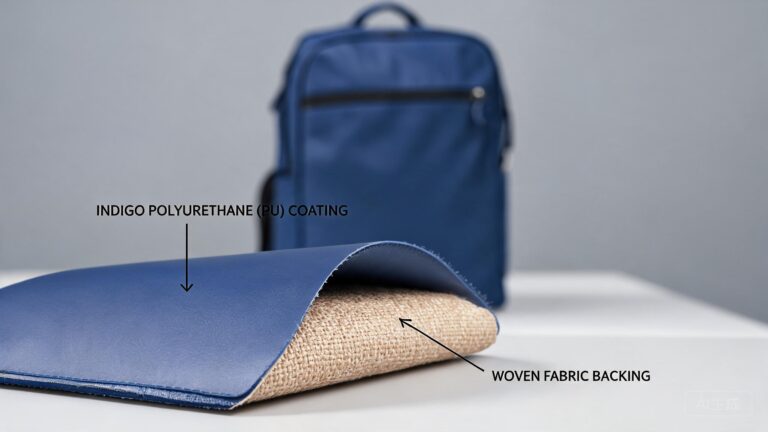
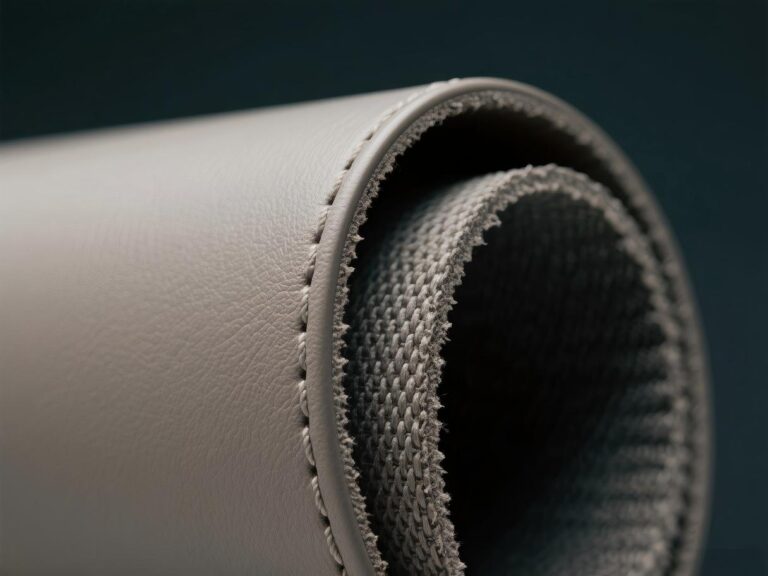
Polyurethane synthetic leather is a layered construction: a textile base, a PU foam middle layer for softness, and a thin polyurethane top film carrying the color and grain. That top film is the whole ballgame. It stays flexible thanks to plasticizers and a carefully balanced polymer chemistry — which means anything that dissolves, dehydrates, or chemically attacks polyurethane attacks the appearance of the entire product. The safe-cleaning guidance follows directly from the chemistry: pH-neutral solutions (6.5–7.5), microfiber cloths, gentle circular motion, every four to six weeks. The forbidden list is longer — alcohol, acetone, vinegar, ammonia, and abrasives all strip or embrittle the topcoat, which is why detailers and care guides keep repeating it. None of this is a defect. It’s a material with a spa routine, specified into buildings that run boot camps.

Surface chemistry decides cleaning chemistry — lab testing predicts what a maintenance closet will do to it
The Care Card Nobody Reads
Add up what proper PU maintenance actually asks of a facilities team and the burden becomes clear. Weekly light cleaning in humid climates — where 75–90% relative humidity accelerates both soiling and hydrolysis. Monthly conditioning with a compatible product to keep the surface flexible. Quarterly anti-mold treatment in tropical regions. Dedicated cleaners, conditioners, and UV protectants, each an additional line item. Skip the routine and PU doesn’t fail gracefully: the surface loses flexibility, micro-cracks at flex points, then peels — and no conditioner reverses embrittlement once it’s started. In high-humidity cities, maintenance teams report that a neglected PU chair can go from fine to flaking in a single wet season. For a complete protocol breakdown, our synthetic leather care guide compares what each material family genuinely needs week to week.
When the Sanitation Schedule Meets the Care Card
Now overlay the reality of regulated facilities. Clinics disinfect daily — often multiple times daily — with alcohol-based and quaternary ammonium products, many of them reviewed and registered in the U.S. through the EPA. Gyms wipe every pad and bench between users. Restaurants sanitize food-contact-adjacent seating on a health-department schedule. Every one of those routines sits on the PU forbidden list, and the market that keeps installing PU anyway is enormous — synthetic leather overall runs from roughly $46.7 billion in 2025 toward a projected $89.9 billion by 2034, with PU the dominant share and water-based PU growing near 10% annually. The failure pattern we see in the field is consistent and predictable: PU seating in disinfect-heavy environments holds its look for the first year, dulls in the second, and arrives at peeling by the third — right around when the furniture budget planned on it lasting five.
| Cleaning scenario | PU synthetic leather | Silicone leather |
|---|---|---|
| Alcohol disinfectant wipes | Not permitted — embrittles topcoat | Compatible, repeated use |
| Diluted bleach sanitizing | Not permitted — discolors and degrades | Bleach-safe, no surface degradation |
| Routine cleaning cadence | Weekly light + monthly deep + conditioning | Wipe as needed; water suffices |
| Humid-climate burden | Anti-mold treatment quarterly, hydrolysis risk | Hydrolysis-proof construction |
If your facility disinfects daily, the material question isn’t “which PU lasts longest” — it’s “which surface chemistry doesn’t mind.” Those are different purchases.
Beyond Polyurethane Synthetic Leather: Surfaces Built for Disinfection
The reason silicone leather keeps showing up in clinics, rehab equipment, and food-industry seating is structural, not marketing. The surface is a cured silicone layer — chemically closer to the material in medical-grade tubing than to any polyurethane film — and it simply has no plasticizer to strip and no polymer bond that alcohol attacks. In our own stain and chemical testing, we spray disinfectant-strength alcohol and diluted bleach directly onto the surface repeatedly and watch for change; the material spec allows both with no surface degradation, and rehab facilities we supply wipe their chairs five to ten times a day without visible wear. It also cleans with water alone in most cases, which removes the entire conditioner-and-protectant shelf from the maintenance budget.
For teams writing infection-control requirements into procurement documents, our medical and healthcare applications page details the biocompatibility credentials involved.
And before the next order gets signed, walk the maintenance closet: our cleaning and maintenance guide documents what a compliant wipe-down routine looks like on each surface chemistry.

Liquids that bead and wipe away cleanly are the baseline — surviving the cleaning chemicals is the harder test

Food-service seating gets sanitized on schedule — the surface has to be specified for that reality
The test the care card forbids: alcohol applied directly to the surface — watch what doesn’t happen
Frequently Asked Questions
Can you use alcohol wipes on PU synthetic leather?
No — and this is the collision point for most facilities. Alcohol dehydrates and embrittles the polyurethane topcoat, leading to cracking and peeling well before the material’s expected life. Care guidance is explicit: pH-neutral cleaners only. If your cleaning policy requires alcohol-based disinfectants, PU is the wrong surface chemistry for the building.
How often does PU leather need conditioning?
Roughly monthly under normal use, with full cleaning every four to six weeks and quarterly anti-mold treatment in humid climates. Miss the cycle and the surface loses flexibility — once micro-cracking starts, conditioning cannot reverse it, only slow the visible decline.
Why does my PU chair feel sticky?
Sticky surfaces mean plasticizer migration — the compounds keeping the topcoat flexible are working their way out, accelerated by heat and humidity. It’s the early stage of the same failure that later becomes peeling, and it signals the material is aging chemically regardless of how gently it’s cleaned.
Specify for the Wipes, Not the Brochure
Polyurethane synthetic leather remains a rational choice for dry, gentle-duty interiors where its cost and look do the job — and the synthetic leather market’s growth to nearly $90 billion by 2034 says plenty of buyers agree. But the material decision in any disinfecting facility is really a cleaning-chemistry decision. Ask one question before signing the next upholstery order: what will this surface be wiped with, how often, for the next five years? If the honest answer involves alcohol or bleach, buy a surface that survives the answer. The housekeeping supervisor from the start of this piece replaced her clinic’s seating once. She won’t get a second lesson — and neither should you. For deeper care-protocol comparisons, our guide on washable leather care extends the same logic to the harshest cleaning regimes.
Get Facility-Grade Material Specs
About TOPSUN
TOPSUN supplies cleanable silicone leather to facilities that disinfect — physiotherapy and rehab equipment, clinic seating, food-industry furniture, and high-traffic public interiors across 100+ brands.
Alcohol-disinfectant compatible and bleach-safe · EtO / Gamma sterilizable · ISO 10993-5 biocompatibility certified · Zero VOC, no plasticizers to migrate · Free A4 cleaning-test swatches worldwide.