A boutique hotel in Phoenix ordered 120 lobby chairs upholstered in polyurethane leather. Month 14, the seat edges went chalky. Month 18, the fabric backing showed through the coating. The warranty claim came back with one line: normal wear.
That claim was technically correct. Polyurethane leather does not fail like hide does. It delaminates, and it usually fails from underneath. Here is what the peel was telling you, and what to specify instead.
Why Polyurethane Leather Peels From the Backing Up
Ask does polyurethane leather peel and suppliers hedge. The honest answer: yes, and the mechanism is structural. PU leather is a two-layer composite, a fabric base laminated with a polyurethane film. Buyers obsess over topcoat scratch resistance. Industry teardowns put roughly 80% of peeling at the base fabric, not the topcoat.
The usual culprit is a light non-woven backing, around 150 gsm, chosen because it prints cheap. It flexes apart after a few thousand cycles, the lamination bond starves, and the film lifts. Heat, UV, humidity, and friction accelerate every step. Low-grade rolls can start flaking within one to two years of contract service.

Lamination quality decides whether the film stays down – or lifts in year two
The Fix Most Buyers Try First Does Not Work
When pu leather sofa peeling starts, the natural move is a repair kit: filler, leather paint, a fresh topcoat. It looks fine for a season. Then the patch edges lift, because the backing underneath is still disintegrating.
Repair guides themselves admit the root cause: the coating breaks down from heat, moisture, friction, and UV. That is a material limitation, not a defect anyone caused. In our lamination hall, we have watched three such repairs on contract chairs all fail inside twelve months. Re-upholster beats repair on anything that seats the public daily.

A cross-section tells the whole story: film, adhesive, backing – and which layer gives first
If your seating program is mid-failure, our engineers will diagnose which layer quit before you buy again. Talk to Our Coating Engineers
What We Specify When Polyurethane Leather Fails
Specifying around the failure is not choosing a thicker film. It is changing the system. In the faux leather vs polyurethane debate, both share the same weak point: a bonded coating over a flexing base. Our answer to pu delamination is a silicone coating that bonds differently, paired with a woven rather than non-woven carrier.
- Backing: woven PET or knitted base, not 150 gsm non-woven. The flex life lives here.
- Coating: hydrolysis-resistant silicone leather that resists the moisture-driven breakdown that lifts PU film.
- Verified number: 200,000 Martindale cycles (ISO 12947-2), against the few-thousand-cycle life of a starved lamination.

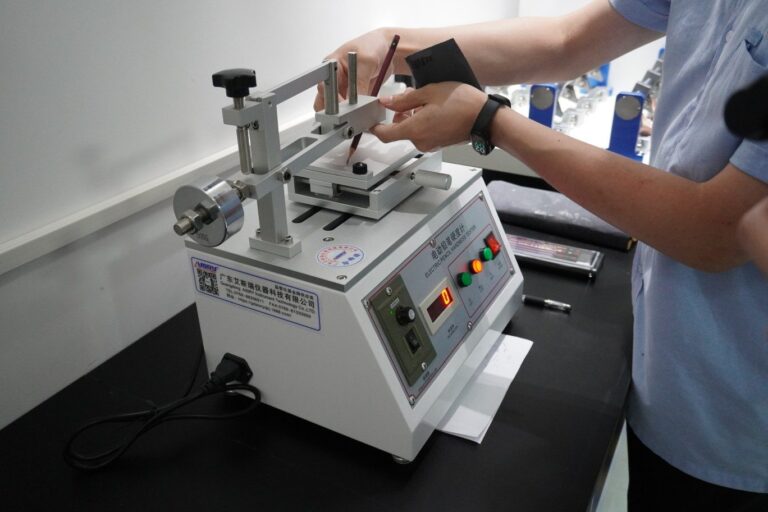
The backing is chosen at this machine, long before any topcoat is discussed
Where PU delamination shows up next after furniture: premium bags. See what a silicone surface does at flex points.
For the seating side of the decision, our furniture and sofa application page lists the exact spec lines we put behind contract re-upholstery quotes.
Polyurethane Leather: Three Numbers Before You Rebuy
Polyurethane leather peels because its weakest layer is the one nobody specifies: the backing. Before you re-buy for the same program, put three numbers on the sheet. Backing weight and type. Lamination flex cycles to failure. Abrasion rating under ISO 12947-2. If a supplier cannot answer all three, you are not buying a material. You are buying next year’s warranty claim.
Put those numbers to work on your next sample round. Request Polyurethane-Free Silicone Leather Samples
Is polyurethane leather the same as faux leather?
Not exactly. Faux leather is the umbrella term for any synthetic that imitates hide. Polyurethane leather is one construction under it: a PU film on a fabric base. The other common route is PVC, and blends exist too. Two rolls can both say faux leather and fail through different mechanisms.
Can peeling polyurethane leather be repaired?
Cosmetically, yes. Structurally, no. Fillers and leather paint cover the lifted film, but they cannot rebuild the bond to a disintegrated backing. On daily-use contract seating, repairs typically hold one season before the edges lift again.
References
1. https://neveitaliafurniture.com/es/pu-leather-s… — Roughly 80% of PU peeling starts in the base fabric; common light non-woven backing around 150 gsm
2. https://kentdohealthybeauty.com/blogs/beauty-se… — Low-grade PU can flake within 1-2 years; heat, UV, humidity, and friction accelerate degradation
3. https://sitsmartguide.com/how-to-fix-peeling-fa… — Coating breakdown from heat, moisture, friction, and UV is a material limitation, not a user-caused defect