The question sounds simple enough. Can you machine wash leather? But if you are a procurement manager sourcing upholstery for hospitality, automotive, or furniture projects, the answer can make or break a product line. The wrong cleaning method turns a premium sofa into a warranty claim. The right approach extends material life by years.
Here is the truth most suppliers gloss over. Not all leather is created equal. Genuine animal leather, PU faux leather, PVC vinyl, and silicone leather each react differently to water, heat, and agitation. Some tolerate a gentle cycle. Most do not. In this guide, we break down exactly what machine wash leather protocols work for each material type — and which ones destroy them.
Machine Wash Leather: Which Types Survive and Which Do Not
Let’s cut through the noise. If you are wondering whether your upholstery shipment can survive industrial laundering, here is the breakdown:
- Genuine leather: Never. Water strips natural oils. Agitation damages fiber structure. Shrinkage is guaranteed.
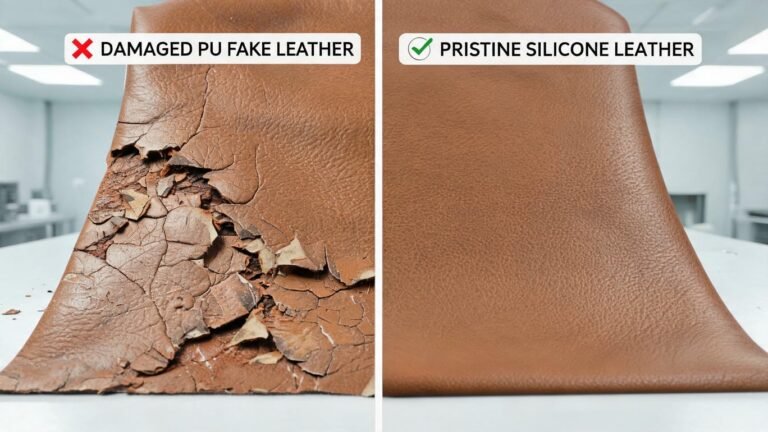
- PU faux leather: Rarely. Water seeps into seams and backing. The polyurethane film cracks after drying.
- PVC vinyl leather: Occasionally, on delicate cycle. But heat from drying warps the plasticizers.
- Silicone leather: Not recommended in a machine. However, it cleans effortlessly by hand — no machine needed.
The pattern is clear. Traditional leather and synthetic alternatives are fundamentally vulnerable to water immersion and mechanical stress. The search for truly washable leather has pushed manufacturers toward surface technologies that resist soil without relying on laundering at all.

Can You Machine Wash Genuine Leather? Safe Hand-Cleaning Methods
Genuine animal leather is a skin. It has pores, grain, and natural oils that keep it supple. Submerge it in water and those oils escape. The fibers tighten. The surface wrinkles permanently.
For proper leather care on genuine hides, follow this routine:
- Dust first. Use a dry microfiber cloth to remove surface particles.
- Damp wipe only. Lightly moisten a cloth with distilled water. Wring until barely damp.
- pH-neutral soap. If needed, add a drop of saddle soap or dedicated leather cleaner.
- Condition after drying. Once fully air-dried, apply a thin layer of leather conditioner to replenish oils.
This process takes time. It requires trained staff or clear end-user instructions. For commercial projects — hotel lobbies, restaurant booths, fleet vehicle interiors — the maintenance burden adds up fast. That is why many B2B buyers are shifting toward synthetic alternatives that forgive rougher cleaning and maintenance protocols.
Faux Leather Cleaning: What Works for PU and PVC
Faux leather cleaning is a category, not a single method. PU and PVC behave differently because their chemistries differ. Understanding that difference protects your investment.
PU (polyurethane) leather has a thinner, softer coating. Water can penetrate the film layer over time, especially at seams. Once moisture reaches the fabric backing, delamination begins. For PU, stick to surface wiping. Never immerse. Never scrub aggressively.
PVC (polyvinyl chloride) leather is thicker and more water-resistant. Some lower-risk items — aprons, certain fashion pieces — survive a cold, delicate machine cycle. But there is a catch. PVC contains plasticizers that soften the material. Heat from washing or drying drives those plasticizers to the surface, creating a sticky film. Over time, the material hardens and cracks.
| Factor | PU Faux Leather | PVC Vinyl Leather |
|---|---|---|
| Water immersion | Not recommended | Delicate cycle only |
| Heat tolerance | Low — avoid dryers | Moderate — air dry preferred |
| Cleaning agent | Mild soap, damp cloth | Mild soap, soft sponge |
| Lifespan with care | 3–5 years | 5–7 years |
| Common failure mode | Delamination, hydrolysis | Cracking, plasticizer migration |
Why Silicone Leather Changes the Cleaning Game
Here is where the story shifts. At TOPSUN, we have spent over 12 years manufacturing silicone leather for B2B clients across automotive, furniture, medical, and marine sectors. We have run every durability test imaginable. And we have learned this: the best washable leather is the one that never needs washing in the first place.
Silicone leather is built on a polydimethylsiloxane (PDMS) backbone. Unlike carbon-based polymers, the Si-O bond does not hydrolyze in water. It does not oxidize under UV. And critically, it presents a low-surface-energy finish that repels liquids at the molecular level.
What does that mean in practice? Coffee beads up. Wine slides off. Ketchup wipes away with a damp cloth — no soap, no scrubbing, no staining. Healthcare-grade disinfection with 70% isopropyl alcohol is safe and effective. The material tolerates temperatures from -40°C to 250°C without degradation.
But can you machine wash it? We do not recommend it. Mechanical agitation stresses seams and backing fabric. High heat from dryers can warp the substrate. The point is — you do not need to. A 30-second hand wipe delivers better results than an hour in a washing machine ever could.

Watch coffee and wine bead up on silicone leather — no stain, no soak, no machine needed.
Leather Care Mistakes That Void Your Warranty
Even the best material fails when abused. We have seen it firsthand in warranty feedback from our global client base. These are the most common leather care errors that lead to premature failure:
- Bleach and chlorine cleaners. They degrade polymer chains in both synthetic and silicone leather. Use pH-neutral solutions only.
- Abrasive scrubbing pads. Steel wool and scouring pads scratch surface finishes permanently. Stick to microfiber cloths.
- Leather conditioners on faux materials. Oils and waxes designed for animal leather create sticky residue on synthetics that attracts dirt.
- Machine drying after spot cleaning. Concentrated heat warps backing fabric and adhesive layers. Always air dry.
- Ignoring seam integrity. Water enters through stitched seams, not the surface. Check edge sealing regularly on upholstered pieces.
For furniture and hospitality applications, train cleaning staff on material-specific protocols. A single bleach wipe on a PU sofa destroys the finish. A single hot dryer cycle shrinks a silicone leather cover’s backing. Prevention is cheaper than replacement.
Choosing Washable Leather for Commercial Projects
If you are specifying upholstery for high-traffic commercial environments, your leather cleaning strategy should be decided at the procurement stage — not after installation. Ask these questions before placing an order:
- What is the expected cleaning frequency? Medical and childcare settings need daily disinfection. Hotel lounges need weekly wiping. Match the material to the protocol.
- Who will perform the cleaning? Professional facilities staff follow protocols. Home users do not. If end-users will clean the product, choose forgiving materials.
- What chemicals are already in use? If a facility standardizes on quaternary ammonium disinfectants or alcohol wipes, verify material compatibility upfront.
- What is the total cost of ownership? Cheap PU saves on unit cost but requires replacement in 3 years. Silicone leather lasts 10+ years with minimal maintenance.
At TOPSUN, we produce silicone leather in thicknesses from 0.23mm to 2.0mm across 8 production lines. Our automotive-grade collections withstand 200,000+ Martindale cycles. Our medical-grade lines meet ISO 10993 and FDA requirements. Every roll ships with a clear care card — no guesswork, no warranty disputes.

Frequently Asked Questions
Can any leather be machine washed safely?
No. Genuine leather should never be machine washed. Some PVC items survive a cold, delicate cycle, but heat drying ruins them. Silicone leather does not need machine washing — surface wiping is sufficient.
What happens if you accidentally machine wash leather?
Genuine leather shrinks, wrinkles, and loses oils permanently. PU faux leather may delaminate as water penetrates the backing. Silicone leather may survive structurally but seam stress and backing distortion are risks. Air dry flat and inspect for damage.
Is silicone leather truly washable?
Silicone leather is not designed for machine washing, but it is exceptionally easy to clean by hand. Most stains wipe off with plain water. Disinfection with alcohol or hydrogen peroxide is safe. See our complete synthetic leather care guide for detailed protocols.
What is the best leather type for easy maintenance?
For commercial projects requiring minimal maintenance, silicone leather is the clear leader. It requires no conditioning, no special cleaners, and no protective sprays. Daily dusting and occasional damp wiping are all that is needed.
The Bottom Line on Machine Washing Leather
So, can you machine wash leather? For most types, the answer is no. Genuine leather demands hand care. PU and PVC tolerate limited water exposure but suffer in machines. Only silicone leather sidesteps the problem entirely — by making stains so easy to remove that a machine becomes unnecessary.
For B2B buyers, the real question is not whether a material survives a washing cycle. It is whether the material stays presentable with the least effort and lowest total cost. In that calculation, silicone leather consistently wins. No conditioners. No special cleaners. No replacement every three years. Just a surface that performs.
If you are evaluating upholstery materials for your next project, order samples and test the cleaning yourself. Industry standards on leather sustainability continue to evolve, but the fundamentals remain: a material that cleans easily lasts longer, looks better, and costs less over time.
About TOPSUN
TOPSUN is a leading manufacturer of silicone leather for B2B custom orders. With 12+ years of experience, 20,000㎡ factory space, 8 production lines, and 2,000+ tons annual output, we supply automotive, furniture, medical, marine, and fashion industries worldwide.
Certifications: FDA, REACH, PAHs, ISO 10993, RoHS, EN 71, EN 13773 Class 4, FAR 25.853, ISO 9001
Product ranges: Classic (0.8–2.0mm), Ultra-Thin (0.23mm+), Designer, High Performance (200,000+ Martindale), Rigid Substrate, Super Flame Retardant.