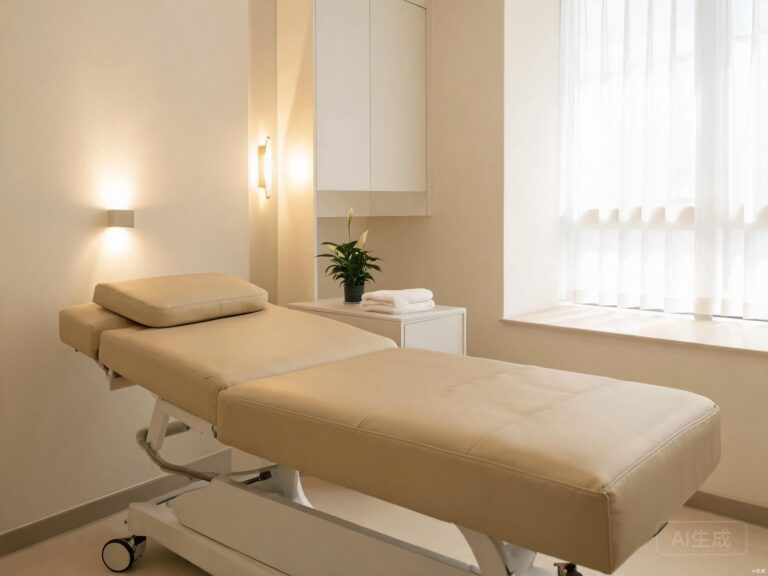
Physiotherapy tables see a different rhythm than operating tables: oil-based lubricants, patient repositioning every few minutes, and exposure to electrotherapy gels. Physiotherapy table upholstery needs low friction for manual therapy, resistance to liniments and ultrasound gel, and enough durability to handle three hundred patient contacts per week. This guide explains how to specify rehabilitation table covers and where silicone leather supports clinic workflow.
Download Material Specifications
Manual therapy involves continuous hand contact, patient repositioning, and exposure to lubricants, gels, and electrode compounds. A physiotherapy table cover must resist these substances without becoming slippery, maintain comfort for patients lying face-down for extended periods, and survive three hundred or more contact sessions per month. Cracking at the face-cradle cutout or staining from massage oils are common early failure modes.
Patient safety during mobilization exercises depends partly on surface friction. The International PU/PI Guideline identifies friction and shear as major contributors to pressure injuries. Physiotherapy table upholstery selection should balance low friction for manual techniques with enough grip to prevent patients from sliding during active rehabilitation. A surface that becomes tacky under gel contact or too smooth under oil exposure creates liability during assisted movement.
Clinic type shapes requirements. Sports rehabilitation centers need oil and sweat resistance plus durability under high-use schedules. Neurological rehab units need surfaces that accommodate hoists and slide sheets without tearing. Pediatric therapy tables need biocompatibility certification and bright color options. Defining therapy modality, patient throughput, and cleaning agents in the specification helps suppliers recommend the right construction rather than a one-size-fits-all cover.

Flexibility bending test — physiotherapy tables require materials that flex without cracking.
Oil, Lotion, and Disinfectant Exposure
Smooth silicone leather gives sourcing teams a practical balance: a soft hand feel, low odor, and a non-porous surface that can be wiped quickly. For therapy bench material, this matters because tables must be cleaned between every patient while facing exposure to massage oils, ultrasound gel, and moisturizing lotions. The cover must resist swelling or tackiness from oil contact while staying comfortable against bare skin and clothing during treatment.
In our factory testing and sample reviews, the biggest early warning signs for therapy applications are surface tackiness after oil exposure, flex cracking at table hinge points, and coating softening from lotion contact. When these appear, the material may still look acceptable in a showroom, but it is not ready for demanding clinical use. Buyers should ask for oil compatibility data, flex resistance results, and relevant biological evaluation references such as ISO 10993-1 biological evaluation.

Waterproof surface test — treatment tables face frequent cleaning with disinfectant solutions.
Treatment Durability and Pressure Distribution
The upholstery does not replace foam or gel engineering in a therapy table. Its job is to protect that pressure-distribution system while allowing the table to support patients during movement and manual therapy. If the cover is too stiff, it can restrict patient positioning and reduce therapist access. If it stretches too much under load, seams and corners may fatigue early from repeated flexing. The best specification defines the top material, backing, thickness, and cleaning method together.
Another practical detail for therapy tables is seam placement relative to table hinges and patient contact zones. The best material can still fail early if high-stress seams sit directly at table fold points or where patients repeatedly sit and lie down. In TOPSUN sample reviews, we often ask buyers to share a drawing or photo of the final table shape and hinge locations. That lets our engineers check whether the proposed grain, backing, and cutting direction will work with the production process.
| Decision Area | What to Specify | Best Fit |
|---|---|---|
| Flex resistance | Maintains integrity through repeated bending and patient movement | Adjustable therapy tables and treatment couches |
| Oil compatibility | Resists swelling and tackiness from massage oils and lotions | Sports therapy and massage treatment tables |
| Surface friction | Low shear to allow patient repositioning during manual therapy | Manual therapy and physiotherapy clinics |
| Disinfection cycles | Resists clinic-grade cleaners between back-to-back appointments | High-volume outpatient therapy practices |
How TOPSUN Builds Therapy-Grade Silicone Leather
TOPSUN produces silicone leather specifically for therapy and rehabilitation surfaces that face oils, lotions, and frequent patient movement during treatment sessions. The formulation prioritizes flex resistance for active positioning, oil compatibility to prevent surface degradation, and smooth grain options for patient comfort. Backing options can be tuned for stretch recovery during table adjustment and durability through repeated loading cycles. See our medical and healthcare silicone leather applications for typical healthcare applications.
For therapy table OEM projects, we usually start by understanding the treatment type: manual therapy with heavy patient movement, massage with oil exposure, or electrotherapy with gel contact. Then we tune color, grain, thickness, and backing to match the clinical demands. Related references include our medical-grade silicone leather guide and hospital bed upholstery material.

Medical treatment couch upholstery application.
Flexing durability test — demonstrates how silicone leather withstands repeated bending on therapy tables.
Specifying Physiotherapy Table Material for OEM Production
A good RFQ for therapy tables should include target thickness, backing type, expected flex cycles per day, oil and lotion exposure level, cleaning agents, seam design, color tolerance, and sample test expectations. Do not specify only price per meter. For therapy products, a cover with better flex resistance and oil compatibility can reduce warranty claims and clinic downtime over the product life. TOPSUN can support custom color, embossing, and backing trials before bulk production.
Before approving mass production, request swatches from the same construction that will be used in the order. Test them after repeated flexing at table hinge angles, wiping with your specified clinic disinfectants, and exposure to typical massage oils or lotions. This simple step catches many problems early: coating cracking after flex cycles, surface swelling from oil contact, color shift after chemical exposure, or backing that does not bond well to the chosen foam core.
Next Step for Buyers
Physiotherapy table upholstery must survive oils, gels, and constant repositioning while keeping patients comfortable. TOPSUN develops silicone leather covers for therapy clinics, sports rehab centers, and neurological units, with options for low-friction manual therapy surfaces and textured grip for active exercise. Custom cutout reinforcement and color matching are available for clinic branding.
About TOPSUN
TOPSUN produces silicone leather for physiotherapy clinics, sports rehab centers, and neurological rehabilitation facilities.
Relevant capabilities include oil and gel resistance testing, low-friction surface options, cutout reinforcement, and clinic-brand color matching for therapy table programs.