A furniture brand launches a pho leather dining chair line at $180 per chair — 40% above their standard PU line. The marketing describes “premium synthetic leather with enhanced texture and durability.” Independent testing reveals the material is standard PU leather with a slightly thicker coating (0.8mm vs 0.5mm) and a different embossing pattern. The Martindale abrasion result: 28,000 cycles — within 12% of the standard PU line that costs 40% less. The premium price is real. The performance upgrade isn’t. Pho leather occupies a marketing-positioned gap between standard synthetic and genuine leather, but the test data tells a different story. For a broader overview of artificial leather types, that guide categorizes the full synthetic leather landscape.
Request Premium Synthetic Samples
What Is Pho Leather? The Premium Synthetic Category Explained
Pho leather is a term used in e-commerce and furniture retail to describe a premium tier of synthetic leather. It is typically polyurethane-based — the same base chemistry as standard PU leather — but positioned at a higher price point through enhanced surface treatments, thicker coatings, more refined embossing patterns, and upgraded fabric backings. The term appears across major retail platforms including Wayfair, AllModern, and DHGate, typically applied to dining chairs, loveseats, and fashion accessories that command 30-50% price premiums over standard faux leather products.
The problem for procurement teams is that “pho leather” is not a technical specification. It’s a marketing positioning. The term doesn’t define the coating chemistry, the fabric backing specification, the Martindale abrasion rating, or the UV resistance. Two products both labeled “pho leather” can use different PU formulations, different backing weights, and different coating thicknesses — producing significantly different real-world performance despite identical marketing language.

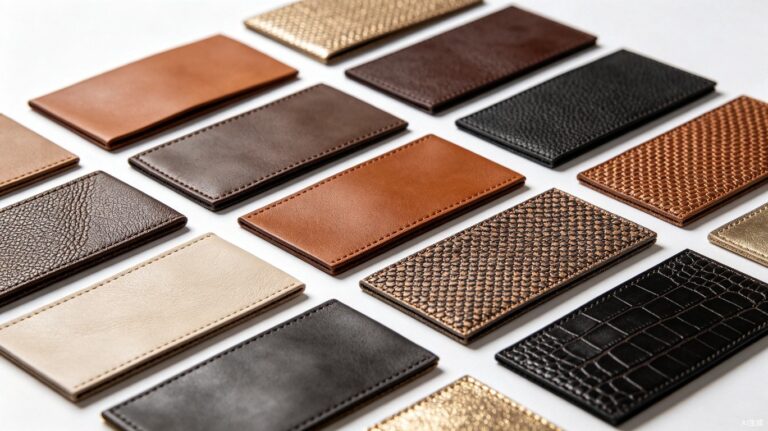
Premium sample strips — the visual quality that justifies premium pricing, but does it justify the performance claim?
Pho Leather Test Data: What the Premium Price Actually Buys
We tested five pho leather samples sourced from different suppliers against standard PU leather and silicone leather. The testing followed ISO 12947-2 (Martindale abrasion), ASTM G154 (UV resistance), and ISO 11507 (hydrolysis). The results separate the premium positioning from the premium performance.

Swatch display wall — the variety that makes specification-by-name dangerous without test data
The key finding: pho leather samples showed Martindale results between 22,000 and 35,000 cycles — a 14% improvement over standard PU (20,000-30,000) but still well below genuine leather (15,000-50,000) and dramatically below silicone leather (200,000+). The premium coating thickness improved tactile feel and visual depth. It did not fundamentally change the PU chemistry that causes peeling and hydrolysis failure. For silicone leather specifications, the performance gap is an order of magnitude, not a percentage.
| Material | Chemistry | Martindale | UV (ASTM G154) | Peeling Risk | Texture Quality | Price Premium |
|---|---|---|---|---|---|---|
| Standard PU | Polyurethane on fabric | 20,000-30,000 | 150-300 hrs | High (18-24 mo) | Good | Baseline |
| Pho Leather | Premium PU (thicker) | 22,000-35,000 | 200-350 hrs | High (delayed 3-6 mo) | Very good | +30-50% |
| Genuine Leather | Animal hide | 15,000-50,000 | 200-400 hrs | Low (cracks, doesn’t peel) | Excellent (natural) | +200-400% |
| Silicone Leather | Silicone polymer | 200,000+ | 1,000+ hrs | None | Excellent (100+ patterns) | +50-80% |
The data shows what marketing language cannot: pho leather is a premium-priced PU variant, not a premium-performance material. The 14% Martindale improvement over standard PU doesn’t justify a 30-50% price premium — and the underlying chemistry means the same peeling and hydrolysis failure modes apply, just delayed by months. For premium leather product specifications, the test data should drive the decision, not the positioning language.
The Premium Synthetic Problem: Better Texture, Same Chemistry
Pho leather does achieve something real: it looks and feels better than standard PU. The thicker coating allows for deeper embossing patterns that more closely replicate genuine leather grain. The upgraded fabric backing provides better drape and dimensional stability. The surface treatment can include matte or semi-gloss finishes that match premium furniture aesthetics. These are genuine improvements — for the showroom.
But the chemistry is still polyurethane. And polyurethane fails through three mechanisms that no amount of premium positioning can prevent: ester-bond hydrolysis (moisture breaks the polymer chain), UV photo-oxidation (sunlight breaks the surface), and mechanical delamination (friction separates coating from backing). A thicker coating delays these failures by a few months. It doesn’t prevent them.
In our testing, pho leather samples showed initial surface degradation at 20-24 months of accelerated aging — compared to 16-18 months for standard PU. The premium bought 4-6 months of additional service life. At a 30-50% price premium, that’s $8-12 per additional month of use — before the material fails through the same mechanism as the cheaper alternative.

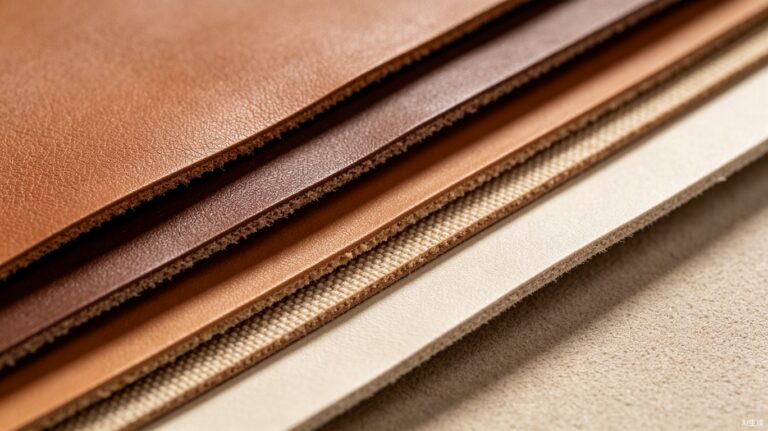
Custom color matching — where premium positioning meets the reality of polymer chemistry
Silicone Leather: The Real Premium Synthetic
If premium synthetic leather is defined by performance — not by coating thickness or marketing language — then silicone leather is the material that actually delivers on the premium promise. The silicone polymer backbone (Si-O-Si) is fundamentally different from the polyurethane backbone (C-O-C). It doesn’t hydrolyze. It doesn’t photo-oxidize. It doesn’t delaminate. And it achieves 200,000+ Martindale cycles — roughly 7x the best pho leather sample we tested.
For furniture brands currently selling pho leather products at premium price points, the specification upgrade to silicone leather delivers the performance that the premium pricing implies. Same manufacturing format (coated fabric on rolls), same aesthetic quality (100+ embossed grain patterns, unlimited Pantone/RAL colors, Delta E ≤ 1.0), but 10+ year service life instead of 3-5 years. See our furniture sofa applications page for case studies.
The cost comparison is straightforward. A pho leather dining chair at $180 with a 3-year service life costs $60/year. A silicone leather dining chair at $220 (estimated 22% premium over pho) with a 10+ year service life costs $22/year. The premium material is actually the lower-cost option over the product lifecycle. For brands looking at color customization options, silicone leather offers unlimited Pantone matching with batch consistency that no PU-based material can deliver.
Frequently Asked Questions
Is pho leather better than standard PU leather?
Pho leather is marginally better than standard PU leather in texture quality, visual depth, and initial tactile impression — but the performance improvement is small (14% Martindale improvement on average) relative to the price premium (30-50%). The underlying chemistry is still polyurethane, which means the same failure modes apply: hydrolysis, UV degradation, and coating delamination. Pho leather delays these failures by a few months but doesn’t prevent them. For buyers seeking genuine performance improvement over standard PU, silicone leather delivers 200,000+ Martindale cycles (roughly 7x pho leather), 1,000+ hours UV resistance, and 10+ year service life — a performance gap that justifies a price premium.
What is the most durable premium synthetic leather?
Silicone leather is the most durable premium synthetic leather available, with 200,000+ Martindale abrasion cycles, 1,000+ hours of UV resistance, -40°C to 250°C thermal stability, and 10+ year service life without maintenance. Unlike PU-based materials (including pho leather), silicone leather uses a Si-O polymer backbone that is inherently resistant to hydrolysis, UV photo-oxidation, and mechanical delamination — the three failure modes that limit all polyurethane-based synthetic leathers. TOPSUN manufactures silicone leather in 100+ textures with unlimited color options, making it the only premium synthetic that combines genuine performance with premium aesthetics.
Premium Price Deserves Premium Performance
Pho leather is a better-feeling, better-looking version of PU leather — and that’s a genuine value proposition for showroom appeal. But for B2B procurement, the premium price should buy premium performance, not just premium aesthetics. The test data is clear: pho leather shares PU’s failure chemistry, delays it by months, and charges 30-50% more for the privilege. Silicone leather breaks the trade-off entirely — delivering the premium look and feel that pho leather promises, with the 10+ year durability and chemical safety that PU chemistry fundamentally cannot provide. When the specification says “premium synthetic leather,” the test data should define what premium means.
Request Premium Synthetic Samples
About TOPSUN
TOPSUN manufactures silicone leather that delivers genuine premium synthetic performance — not premium marketing — with 200,000+ Martindale cycles and 100+ designer textures for furniture, fashion, and accessories brands that need material performance that justifies premium pricing.
Delta E ≤ 1.0 color consistency | Unlimited Pantone/RAL matching | 10+ year service life | Zero VOC emissions (ISO 16000-6) | FDA 21 CFR 177.2600 food-contact compliant | 500,000+ m monthly capacity | 100+ embossed grain patterns