Mushroom leather sounds like the perfect vegan alternative — grown in weeks, compostable in months, and marketed as cruelty-free. But when we tested mycelium leather against silicone leather in our lab, the results revealed a critical durability gap that sustainability claims alone can’t bridge. For B2B buyers specifying materials for commercial applications, the mushroom leather alternative story requires a closer look at both environmental impact and real-world performance. The data shows that what wins on eco-marketing doesn’t always survive on a contract furniture floor.
What Is Mushroom Leather? Mycelium Growth to Commercial Product
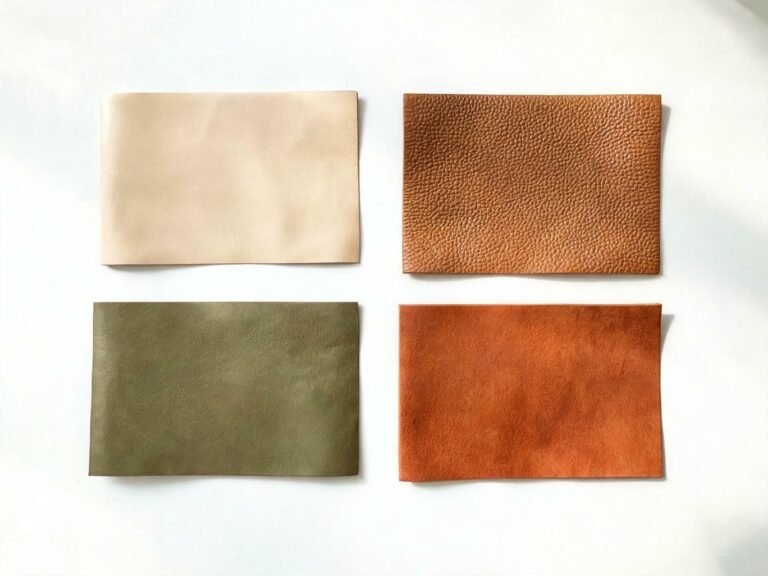
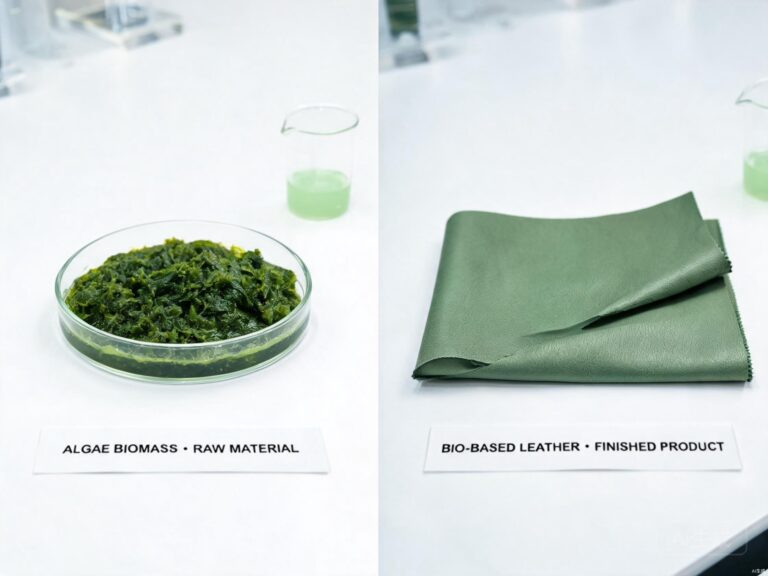
Mushroom leather — more accurately, mycelium leather — is produced by growing the root structure of fungi (mycelium) on agricultural waste substrates like sawdust or corn stalks. Within 2–3 weeks, the mycelium forms a dense, fibrous mat that is harvested, pressed, and tanned to create a material resembling suede. Recent research from the biofabrication field has achieved tensile strengths of approximately 20 MPa, comparable to synthetic leather at ~13 MPa and approaching cowhide at 10–31 MPa.
The sustainability narrative is compelling: mycelium grows without petrochemical inputs, uses agricultural waste streams, and the finished material can biodegrade under the right conditions. But here is what the marketing decks often omit: most commercial mushroom leather alternative products contain 10–30% polyurethane (PU) coating to improve water resistance and durability. That PU layer is what makes the material only partially biodegradable — the mycelium base composts, but the plastic coating persists.
This is not an argument against biofabricated materials. It is an argument for honest material specification. If your sustainability scorecard rewards biodegradability, a mycelium-PU hybrid scores lower than the marketing suggests. If your specification demands 10-year commercial durability, mycelium leather in its current form scores lower than silicone leather — and the gap is not subtle.

Flame retardancy test — silicone leather is inherently self-extinguishing, while mycelium leather requires chemical treatment to meet fire codes
The Abrasion Test: Mycelium vs Silicone Leather Under Martindale
The single most revealing test for commercial material viability is the Martindale abrasion test (ISO 12947-2). It simulates years of wear by abrading the material surface in controlled circular motions. The cycle count at which visible surface degradation appears is your best predictor of real-world service life.
Independent testing data and manufacturer disclosures show mycelium leather reaching approximately 15,000–25,000 Martindale cycles before surface wear becomes visible. For context: standard contract furniture specifications call for minimum 40,000 cycles, and heavy-duty commercial applications like airport seating or hospital upholstery demand 100,000+. Silicone leather, verified by SGS-CSTC Guangzhou, maintains structural integrity past 200,000 cycles — an order of magnitude beyond what mycelium leather currently delivers.
This is not a minor performance gap. It is the difference between a material that lasts 1–3 years in commercial use and one that lasts 10+ years. For a 500-seat cinema refurbishment, choosing a material with a 2-year replacement cycle over a 10-year material means 4 additional replacement cycles per decade — with all the labor, logistics, and downtime costs that entails.
| Material | Growth/Production Time | Tensile Strength | Martindale Cycles | Service Life | End-of-Life |
|---|---|---|---|---|---|
| Mycelium Leather | 2–3 weeks | ~20 MPa | 15K–25K | 1–3 years | Partially compostable |
| PU Leather | Industrial (days) | ~13 MPa | 50K–80K | 3–5 years | Limited recycling |
| Cowhide Leather | 2–3 years (animal) | 10–31 MPa | 30K–50K | 5–8 years | Biodegradable |
| Silicone Leather | Industrial (days) | ≥10–15 N/mm | 200K+ | 10+ years | 100% recyclable |

Plant-based leather in fashion accessories — where mycelium leather’s soft hand-feel matters more than abrasion resistance
Mycelium leather contains 10–30% polyurethane coating for water resistance — making it only partially biodegradable despite the “compostable” marketing claim. The mycelium base composts; the PU layer does not.
Sustainability Scorecard: Composting, Carbon, and Plastic Content
Sustainability is not a single metric. A credible mushroom leather alternative assessment looks at four dimensions: production carbon footprint, water usage, end-of-life pathway, and chemical content. Here is how mycelium and silicone leather compare across each:
- Production carbon: Mycelium leather wins. Growing fungi on agricultural waste at ambient temperature uses minimal energy compared to industrial silicone coating. But the PU coating and tanning steps add chemical processing carbon that is often excluded from LCA calculations.
- Water usage: Mycelium requires controlled humidity but no irrigation. Silicone leather uses a dry coating process — no process water, no wastewater discharge. Both outperform cowhide, which requires 17,000+ liters of water per hide.
- End-of-life: Pure mycelium is home-compostable in 30–90 days. But commercial mycelium leather with PU coating takes 5–10 years to partially break down, leaving microplastic residue. Silicone leather is 100% recyclable — it can be ground and reprocessed into new silicone products without quality loss.
- Chemical content: Mycelium leather may contain residual tanning chemicals and the PU coating introduces solvent residues. Silicone leather has zero VOC emissions, is PVC-free, phthalate-free, and formaldehyde-free — verified through REACH and RoHS testing.

Finished goods warehouse — silicone leather production scale enables consistent quality that biofabricated materials cannot yet match
Where Mushroom Leather Belongs — and Where It Doesn’t
The honest answer is that mycelium leather is not a universal replacement for animal or synthetic leather. It is a material in its early commercialization phase with specific applications where it excels — and clear boundaries where it fails. Independent testing confirms that mycelium leather’s primary limitation is durability under intense, repeated abrasion, where it shows wear faster than bovine leather.
Where mushroom leather works: Fashion accessories (handbags, wallets, watch straps) with short product lifecycles and low abrasion exposure. Promotional items and limited-run collections where the “grown not made” narrative adds brand value. Applications where replacement within 1–2 years is expected and acceptable.
Where mushroom leather doesn’t work: Commercial furniture, automotive interiors, medical upholstery, hospitality seating, marine applications — anywhere the material must survive 50,000+ abrasion cycles, frequent chemical cleaning, or fire code compliance. In these B2B contexts, specifying mycelium leather means accepting replacement cycles 3–5× more frequent than silicone leather, with higher lifecycle cost and greater material waste.
Watch silicone leather outperform PU, PVC, and bio-based alternatives in head-to-head durability testing
Matching Material to Application: A B2B Decision Framework
The mushroom leather alternative conversation should not be “is mushroom leather better than silicone leather?” It should be “which material matches my application’s lifecycle requirements?” Use this decision framework to align material choice with commercial reality:
- If your product lifecycle is 1–3 years: Mycelium leather is a legitimate sustainability play. Fashion accessories, promotional goods, and limited-run collections benefit from the “grown” narrative. Budget for the shorter replacement cycle.
- If your product lifecycle is 5–10+ years: Silicone leather delivers verified durability (200K+ Martindale cycles, 10+ year service life) with a strong sustainability profile — zero VOC, 100% recyclable, PVC-free, and no plastic coating to partially biodegrade.
- If fire code compliance is required: Silicone leather is inherently self-extinguishing (EN 13773 Class 4). Mycelium leather requires chemical flame retardant treatment to meet fire codes — which can compromise its biodegradability claim.
- If chemical cleaning is part of the maintenance protocol: Silicone leather tolerates bleach, alcohol, and hospital-grade disinfectants without degradation. Mycelium leather’s PU coating may degrade under repeated chemical exposure.
For sourcing teams evaluating leather alternatives for commercial specifications, the test data should drive the decision — not the eco-narrative alone. Request Martindale abrasion reports, fire code test certificates, and chemical cleaning compatibility data before committing to any material. The color retention and commercial wear data we’ve published elsewhere on this site applies the same evidence-based approach.

Silicone leather swatches — 100+ textures and unlimited Pantone colors available for commercial specification
Talk to Our Material Engineers
Frequently Asked Questions
How long does mushroom leather last in commercial applications?
Independent testing data indicates mushroom leather lasts 1–3 years in real-world commercial use, with visible surface wear appearing at approximately 15,000–25,000 Martindale abrasion cycles. By comparison, contract-grade silicone leather maintains structural integrity past 200,000 cycles and delivers a 10+ year service life verified by SGS-CSTC Guangzhou. The durability gap is roughly 8–10× in favor of silicone leather for commercial upholstery applications.
Is mushroom leather fully biodegradable or does it contain plastic?
Commercial mushroom leather is only partially biodegradable. Most products contain a 10–30% polyurethane coating applied for water resistance and durability. The mycelium base composts under industrial or home composting conditions within 30–90 days, but the PU coating persists as microplastic residue. If full biodegradability is a specification requirement, request documentation of plastic content percentage and end-of-life testing data before approving the material.
The Bottom Line for Mushroom Leather Alternative Sourcing
The mushroom leather alternative story is real — mycelium-based materials represent a genuine innovation in sustainable material science, and they have a legitimate place in fashion and short-lifecycle product categories. But for B2B specifiers evaluating materials for commercial furniture, automotive interiors, healthcare environments, and hospitality seating, the current data is clear: mycelium leather’s abrasion resistance (15K–25K cycles) is 8–10× lower than silicone leather (200K+ cycles), and its partial plastic content undermines the full biodegradability claim. Silicone leather delivers the sustainability metrics that matter — zero VOC, PVC-free, 100% recyclable — alongside verified commercial-grade durability. The right answer isn’t one material for all applications. It’s matching material performance to your product’s lifecycle — with lab data, not marketing claims, as the basis.
Download Durability Test Report
About TOPSUN
TOPSUN produces silicone-coated leather materials that combine the sustainability metrics B2B buyers need — zero VOC, 100% recyclable, PVC-free — with commercial-grade durability verified through independent lab testing. Our materials undergo head-to-head comparison testing against PU, PVC, and emerging bio-based alternatives including mycelium leather to provide sourcing teams with evidence-based material selection data.
200K+ Martindale cycles · 10+ year service life · Zero VOC solvent-free process · SGS-CSTC verified · EN 13773 Class 4 flame retardant · 100% recyclable