A vehicle interior parked in summer sun reaches 65°C. At that temperature, PU leather off-gasses volatile organic compounds measured by VDA 277. PVC leather migrates plasticizers to the surface, creating a sticky film. Genuine leather dries, loses moisture, and develops stress cracks at flex points. The cabin air quality sensor triggers. The dashboard surface temperature reads 78°C. And the seat upholstery — the material in direct contact with the driver’s skin — is expected to survive this environment for 10+ years. This is the leather vehicle upholstery challenge: a material must simultaneously pass flammability, VOC, UV, hydrolysis, abrasion, and thermal cycling standards while maintaining color, flexibility, and passenger safety. Most materials pass two or three. Only one passes all six. For the full compliance framework, see our VDA 277 technical guide.
The 6 Standards That Govern Leather Vehicle Upholstery
Vehicle interior materials face the most demanding regulatory environment of any leather application. A single material must comply with flammability standards, VOC emission limits, chemical substance restrictions, and durability requirements — simultaneously. Here are the six standards that determine whether a leather material is approved for vehicle upholstery.
| Standard | Region | Requirement | PU Leather | PVC Leather | Silicone Leather |
|---|---|---|---|---|---|
| FMVSS 302 | USA | Horizontal burn rate ≤ 102 mm/min | Passes (with FR additives) | Passes (with FR additives) | Passes (inherent) |
| VDA 277 | EU/Germany | Total VOC emission limit | Exceeds limit | Exceeds limit | Zero emission |
| ELV Directive | EU | Heavy metal restriction | Compliant | Risk (lead stabilizers) | Compliant |
| ISO 105-B06 | International | UV color fastness ≥ Grade 4 | Grade 2-3 (fails) | Grade 2 (fails) | Grade 4-5 |
| ISO 12947-2 | International | Martindale abrasion | 25,000-40,000 cycles | 10,000-25,000 cycles | 200,000+ cycles |
| ISO 11507 | International | Hydrolysis resistance | Fails (degrades) | Moderate | Excellent |
PU leather passes FMVSS 302 only because flame retardant additives are mixed into the polymer. Without those additives, synthetic leather is inherently flammable — it’s constructed from urethane resin and polyester fibers, both of which burn. Genuine leather, by contrast, contains collagen fibers that are naturally non-flammable. Silicone leather is inherently self-extinguishing without additives — the polymer doesn’t support combustion. For OEM-specific guidance, see our automotive leather OEM guide.
Silicone leather is the only vehicle upholstery material that passes all 6 standards without chemical additives. No flame retardants needed. No plasticizers to migrate. No solvents to off-gas. The compliance is inherent to the polymer chemistry.
The Cabin Air Problem: VOC Emissions in Enclosed Vehicles
VDA 277 measures total VOC emissions from non-metallic interior materials using headspace gas chromatography at 120°C. This test exists because vehicle cabins are enclosed spaces — approximately 2-3 cubic meters of air — where emitted compounds concentrate rather than disperse. A material that passes VOC testing in a ventilated furniture showroom can fail in a sealed vehicle cabin where the same emissions accumulate.
PU leather contains residual solvents from the coating process — DMF, MEK, or toluene — that off-gas when heated. At 65°C cabin temperature, this off-gassing accelerates dramatically. The result is the “new car smell” that consumers associate with freshness but is actually chemical off-gassing from interior materials. Per VDA 277, PU leather consistently exceeds emission limits. PVC leather is worse — plasticizers like phthalates volatilize at elevated temperatures, adding endocrine-disrupting compounds to the cabin air.

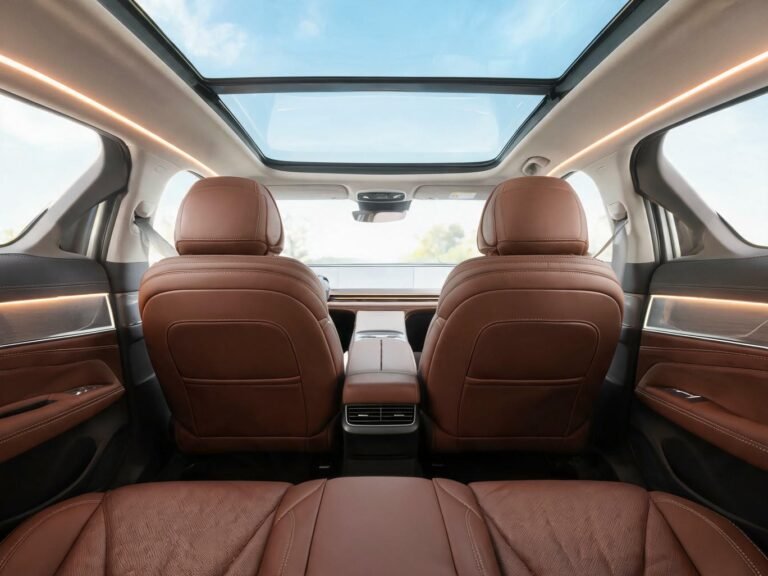
Automotive interior upholstery detail — where 65°C heat, UV exposure, and daily wear test every material to its limit.
Silicone leather emits zero VOC. The solvent-free dry coating process means there are no residual solvents to off-gas. The silicone polymer itself is stable at temperatures far exceeding cabin conditions. This makes silicone leather uniquely suited for EV interiors, where reduced ventilation (no engine noise means smaller air intake) and larger glass surfaces create even higher cabin temperatures. For EV-specific material guidance, see our EV car interior materials analysis.
Thermal Cycling: The Test Most Materials Fail
Vehicle interiors experience thermal cycling that no other application encounters. A car parked overnight in winter drops to -20°C. By afternoon, the cabin reaches 65°C. That’s an 85°C temperature swing in a single day, repeated 365 times per year. Over a 10-year vehicle life, that’s 3,650 thermal cycles.
PU leather’s temperature range is -20°C to 80°C — it operates at the very edge of its thermal limits inside a vehicle. Repeated cycling through the full range causes cumulative stress: the polymer contracts and expands, the bond between coating and fabric backing flexes, and micro-cracks develop at stress concentration points. These cracks become channels for moisture penetration, accelerating hydrolysis. For more on car upholstery testing, see our vehicle upholstery test protocol.
Silicone leather’s temperature range is -40°C to 250°C. The 85°C daily swing represents less than 25% of the material’s total range. The polymer doesn’t experience stress at these temperatures — it’s operating well within its comfort zone. Over 3,650 cycles, the material shows no cumulative degradation. Per FMVSS 302, the material also meets flammability requirements without flame retardant additives — an inherent property of the silicone polymer.
Why Automotive OEMs Are Switching to Silicone
The automotive industry’s shift toward silicone leather is driven by three converging pressures: tightening VOC regulations (especially in EU and China), EV cabin thermal management (reduced ventilation, larger glass), and consumer demand for sustainable materials. Silicone leather addresses all three simultaneously — something no PU or PVC material can achieve without chemical additives.
For procurement teams, the compliance advantage translates directly to specification simplicity. A material that passes FMVSS 302, VDA 277, ELV Directive, ISO 105-B06, ISO 12947-2, and ISO 11507 without additives eliminates the need for separate flame retardant, UV stabilizer, and plasticizer formulations. For OEM case studies, see our automotive case study.
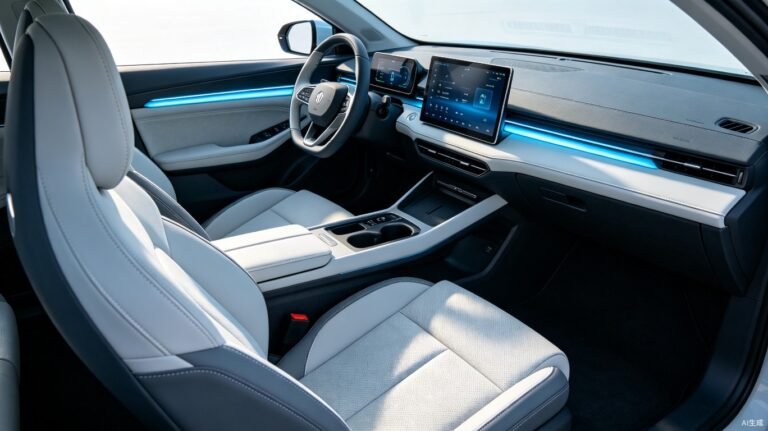
Silicone leather automotive interior overview — the material that passes every standard without additives.
About TOPSUN
TOPSUN manufactures silicone leather for vehicle upholstery that passes FMVSS 302, VDA 277, ELV Directive, ISO 105-B06, ISO 12947-2, and ISO 11507 without chemical additives — serving automotive OEMs and Tier 1 suppliers across North America, Europe, and Asia.
500,000+ meters monthly capacity. 7-15 day lead times. Pantone-matched colors with Delta E ≤ 1.0. IATF-compatible documentation. Free A4 swatches shipped worldwide via DHL/FedEx.
Frequently Asked Questions
Does silicone leather meet FMVSS 302 for vehicle interiors?
Yes. Silicone leather passes FMVSS 302 horizontal burn rate requirements inherently — without flame retardant additives. The silicone polymer is self-extinguishing and doesn’t support combustion. This is a fundamental chemistry advantage: PU and PVC leather require chemical flame retardants to pass the same test, and those additives can off-gas over time. Silicone’s compliance is permanent and inherent to the material.
Is silicone leather more expensive than PU for vehicle upholstery?
On a unit price basis, yes — silicone leather costs more per meter than PU. On a total cost of ownership basis, no. PU vehicle upholstery requires replacement after 3-5 years due to hydrolysis and UV degradation. Silicone leather lasts 10+ years. Over a vehicle’s lifecycle, the replacement cost, labor, and warranty claims associated with PU exceed the initial price premium of silicone. Additionally, silicone eliminates the cost of flame retardant additives, UV stabilizers, and plasticizer formulations that PU requires to meet automotive standards.
The Material That Passes Without Additives
Leather vehicle upholstery must survive the most demanding material environment in manufacturing: 85°C daily thermal cycling, sustained UV exposure, hydrolysis from humidity and perspiration, abrasion from daily entry and exit, and regulatory compliance across six international standards. PU passes some with chemical additives. PVC passes some with flame retardants and plasticizers. Genuine leather passes flammability but fails hydrolysis and UV.
Silicone leather passes all six standards without a single additive. The compliance is in the chemistry. That’s the difference between a material engineered for vehicle upholstery and a material adapted to it.