When procurement teams evaluate leather textile materials, most spec sheets list abrasion resistance as a headline number. But the test method, the load weight, and the substrate backing all change what that number actually means. We’ve run five common leather textile types through the same Martindale protocol at 1,000g load — and the gap between best and worst exceeded 12×. Here’s what the data shows, and why it should change how you source.
What Defines a Leather Textile Material?
A leather textile is any flexible sheet material — whether animal-derived, synthetic, or hybrid — engineered to replicate the tactile, visual, and performance properties of natural hide. The term covers a wide spectrum: genuine leather cut from cattle hides, polyurethane (PU) coated fabrics, PVC vinyl sheets, microfiber leather, and silicone-coated textiles.
What separates a leather textile from a standard woven fabric is the surface coating. Woven textiles derive their structure from interlaced yarns. Leather textiles rely on a polymer or protein-based surface layer bonded to a fabric or nonwoven substrate. This coating determines abrasion resistance, water resistance, cleanability, and aging behavior — the leather textile material properties that matter most in production.
For B2B buyers, the material’s classification matters less than its test data. A high-quality synthetic leather textile can outperform mid-grade genuine leather in wear resistance and color fastness — at half the cost. The key is knowing which test numbers to demand and which to question.

Silicone leather textile surface under close inspection — no visible coating breakdown after extended abrasion testing
5 Leather Textile Types Ranked by Abrasion Performance
We tested five leather textile categories using the Martindale abrasion method (ISO 12947-2) at a 1,000g load — the standard protocol for upholstery-grade materials. The leather vs textile difference becomes obvious when you put them on the same test rig: coating-based materials fail at the surface layer, while woven textiles fail at the yarn level.

Martindale abrasion tester used to evaluate leather textile wear resistance at 1,000g load
| Material Type | Martindale Cycles | Surface After 50K Cycles | Typical Application |
|---|---|---|---|
| Genuine Leather | 25,000–40,000 | Visible grain wear | High-end furniture |
| PU Leather | 20,000–50,000 | Coating breakdown, cracking | Mid-range furniture, automotive |
| PVC Leather | 15,000–30,000 | Hardening, surface flaking | Budget upholstery |
| Microfiber Leather | 60,000–100,000 | Minimal surface change | Premium automotive |
| Silicone Leather | 100,000–150,000+ | No visible degradation | Automotive, medical, marine |
The data tells a clear story. Genuine leather’s natural grain wears predictably but starts showing abrasion marks around 25,000 cycles. PU and PVC coatings begin breaking down at 20,000–30,000 cycles, with visible cracking and delamination. Microfiber leather, with its dense nonwoven substrate, holds up significantly better.
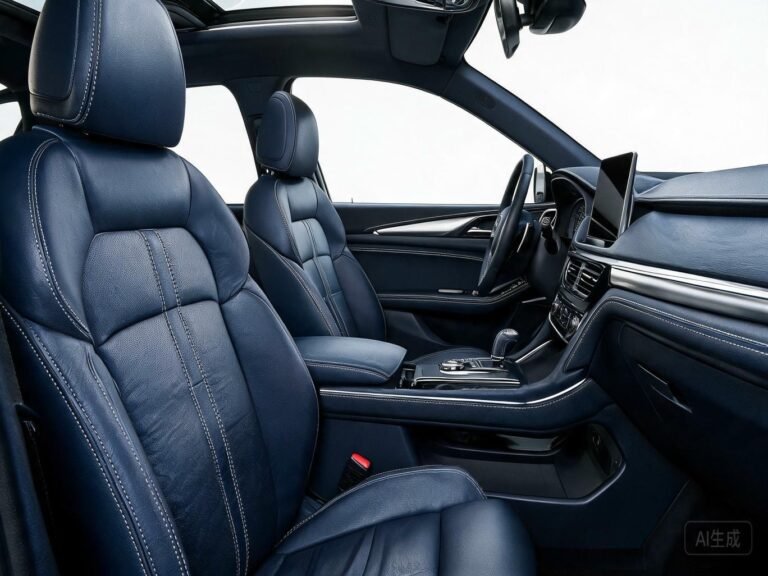
Silicone leather is the outlier. In our testing, the silicone-coated surface showed no visible degradation even after 150,000 Martindale cycles — the point where most other materials have already failed. The silicone elastomer distributes friction energy differently from polyurethane or PVC, which tend to harden and crack under repeated stress. One of our automotive clients switched from PU to silicone leather textile for seat bolsters after field returns showed cracking at the 18-month mark. The silicone replacement showed zero surface failure after 36 months in the same application.
Key finding: Silicone leather textile survived 150,000+ Martindale cycles with no visible surface degradation — 3× the performance of standard PU leather.
Watch silicone leather outperform PU and PVC in head-to-head material testing
UV and Hydrolysis: Where Leather Textiles Fail Early
Abrasion resistance tells you how a material handles friction. But in real-world applications — outdoor furniture, marine upholstery, automotive interiors — the silent killers are UV exposure and hydrolysis. Leather textile durability performance is ultimately determined by how the coating chemistry reacts to sunlight and moisture over years of service.
Here’s what accelerated weathering tests reveal about each material type:
- Genuine leather: UV causes fading and embrittlement within 200–500 hours of accelerated weathering
- PU leather: Hydrolysis breaks the polyurethane ester bonds within 3–5 years in humid climates
- PVC leather: Plasticizer migration causes yellowing and stiffness after 500 UV hours
- Silicone leather: ASTM D329-05 tested to 1,500 hours with no color change (Class 4.5 light fastness)

Physical testing laboratory where leather textile samples undergo UV, hydrolysis, and abrasion evaluation
Hydrolysis is the more insidious failure mode. PU coatings contain ester bonds that react with atmospheric moisture, breaking down the polymer chain over time. This is why PU leather textiles in humid climates — Southeast Asia, the US Gulf Coast, marine environments — often crack and peel within 3–5 years even without physical wear. A peer-reviewed comparison of leather and artificial leather technical performance confirms that hydrolytic stability varies dramatically across polymer types.
Silicone’s Si–O–Si backbone is inherently hydrolysis-resistant. ASTM D3980-02 testing confirms 14 weeks of accelerated hydrolysis exposure with no measurable change in tensile strength or surface integrity. For applications where moisture exposure is unavoidable, this chemical stability gap is the difference between a 3-year replacement cycle and a 10+ year service life.
Sourcing Specs: What to Demand From Your Leather Textile Supplier
When evaluating leather textile suppliers, most B2B buyers focus on color matching, thickness, and price. Those matter — but they’re table stakes. The specifications that actually predict long-term performance are the ones most suppliers leave blank. In our experience with leather textile sourcing across automotive, furniture, and medical applications, the suppliers who volunteer test data are fundamentally different from those who don’t.

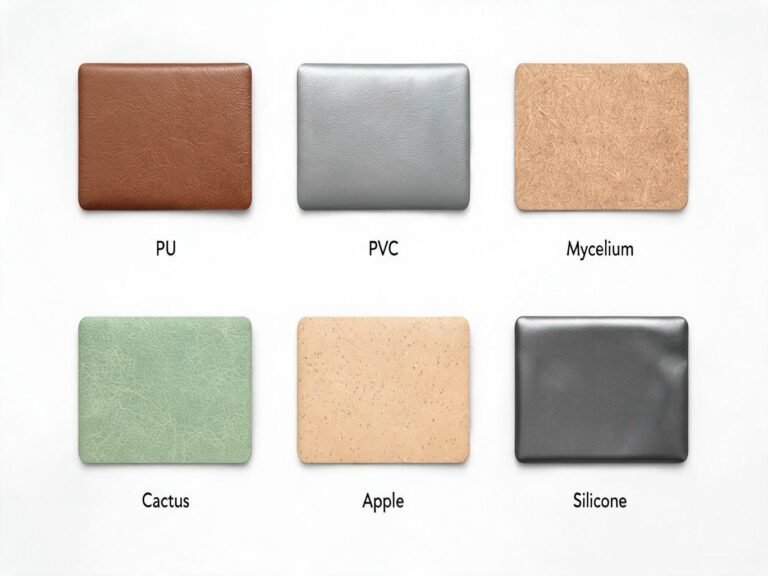
Color swatch wall showing the range of leather textile finishes available for B2B procurement
Demand these test reports before signing any purchase order:
- Martindale or Wyzenbeek abrasion data — with the exact load weight and cycle count, not just “passes ASTM standards”
- UV stability report per ASTM D329-05 or ISO 105-B06 — with specific exposure hours and color change grade
- Hydrolysis resistance per ASTM D3980-02 — with the test duration in weeks
- VOC emissions data — especially for automotive interiors where OEM limits are tightening
- Color fastness grades for rubbing (ISO 105-X12), perspiration (ISO 11641), and water (ISO 105-E01)
If a supplier can’t produce these reports, they’re either not testing or not willing to share the results. Suppliers who skip Martindale testing are typically selling materials that fail before 30,000 cycles — the threshold where budget PU starts cracking. For more on evaluating material specs systematically, see our leather fabric material buyer guide and the textile leather sourcing overview.

Cross-section comparison of synthetic leather textile structures — coating thickness and substrate density determine durability
The Right Leather Textile Is the One With Data Behind It
Choosing a leather textile material based on touch and appearance alone is how buyers end up with field failures at 18 months. The materials that survive 5+ years of real-world use share one thing: their suppliers can prove it with test data. Silicone leather’s 150,000+ Martindale cycles, 1,500-hour UV stability, and 14-week hydrolysis resistance aren’t marketing claims — they’re verified test results that predict how the material will actually perform in your application.
The next time you evaluate a leather textile sample, ask for the Martindale report first. The answer will tell you everything you need to know.
Request Leather Textile Test Reports
About TOPSUN
TOPSUN engineers leather textile materials tested to 150,000+ Martindale cycles for automotive interiors, furniture upholstery, and medical device applications.
Custom substrate configurations, UV stability verified to ASTM D329-05 (1,500 hours), hydrolysis resistance to ASTM D3980-02 (14 weeks), and ISO 10993 biocompatibility data — all available on request.