A typical furniture factory spends $2–4 per square meter on leather protect products every year — conditioners, UV sprays, waterproofers, and stain guards layered across every batch. Over a five-year production cycle, that recurring spend adds 12–18% to your base material cost before a single piece reaches the showroom. But what if the material itself made every one of those treatments unnecessary? Silicone leather, tested to 200,000+ Martindale abrasion cycles and 1,000+ hours of UV stability, carries its own protection — built into the polymer, not sprayed on top.
The Hidden Cost of Every Leather Protect Regime
Most procurement teams calculate cost per square meter and stop there. They price the leather, not the upkeep. But every leather protect regime — the conditioners, the UV inhibitors, the waterproofing sprays — represents a recurring line item that compounds over the product lifecycle. A conditioner applied every 3–6 months at $0.50–1.00 per square meter doesn’t sound like much until you multiply it across 10,000 square meters of monthly output.
In our experience working with furniture manufacturers, annual treatment costs run $2–4 per square meter including product and labor. A production line processing 10,000 square meters monthly spends $20,000–40,000 per year just keeping leather protected. Over five years, that’s $100,000–200,000 — and the substrate still degrades underneath. The deeper issue is that traditional leather protection is reactive by nature. Conditioners replenish oils that evaporate. UV sprays form temporary barriers that wear off. Waterproofing treatments peel after repeated cleaning cycles. Each reapplication introduces downtime, labor variability, and a fresh layer of chemicals that may not match the previous batch.
$100,000–200,000 over 5 years — that’s what a single production line spends on leather protect products. The substrate still cracks, fades, and fails underneath.

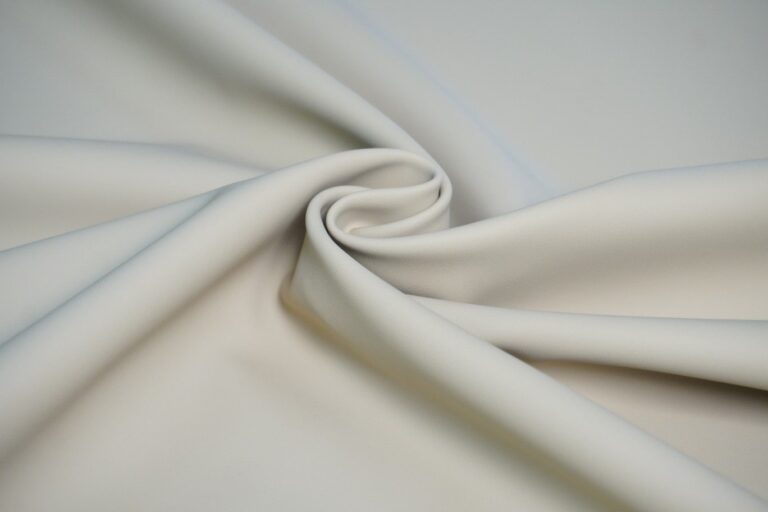
Traditional leather requires regular conditioning, UV sprays, and waterproofing — silicone leather needs none of these.
Why Traditional Leather Cracks, Fades, and Peels
Traditional leather — whether genuine, PU, or PVC — shares fundamental material vulnerabilities. Genuine leather loses moisture from its collagen fibers over time, especially in environments below 30% humidity. The result is stiffness, then cracking. UV radiation breaks down organic pigments in PU and PVC, causing visible fading within 1–2 years of exposure. When you compare performance profiles side by side — and we detail this in our silicone vs PU analysis — the structural gap becomes obvious. PU leather cracks in cold weather. PVC releases plasticizers. Genuine leather needs conditioning every 3–6 months just to maintain flexibility.
Hydrolysis attacks PU coatings from within, turning supple material brittle. Black leather is particularly vulnerable to thermal fading, as we’ve documented in field testing across automotive and furniture applications. The leather protect industry’s response has been to add more products — conditioners, UV inhibitors, waterproofers — but this creates a cycle: protect, degrade, reapply, repeat. The underlying substrate continues aging regardless of how many treatment layers sit on top.
Silicone leather takes a fundamentally different approach. The silicone polymer is inherently UV-stable, hydrolysis-resistant, and thermally stable from -40°C to 250°C. No protective layer is needed because the base material itself doesn’t degrade under conditions that destroy conventional leather. Here’s the thing — the protection isn’t a coating that wears off. It’s the molecular structure.

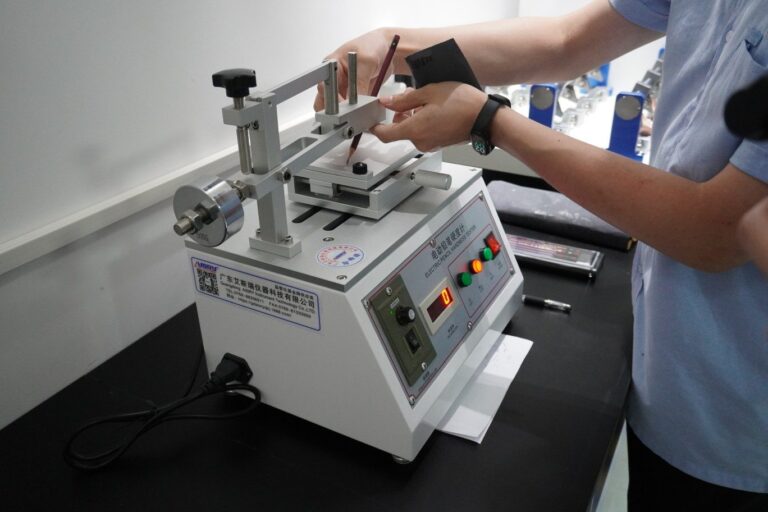
Color fastness testing equipment verifies UV stability without protective sprays — Grade 4–5 is built into the material.
5 Protection Treatments Silicone Leather Eliminates
Here’s what the elimination looks like in practice — five categories of leather protection products that become entirely unnecessary when you switch to silicone-coated material:
- Leather conditioners — Silicone doesn’t lose oils. Its polymer structure maintains flexibility across 50,000–100,000 flex cycles without replenishment. No conditioning, no re-oiling, no seasonal treatment cycle.
- UV protection sprays — Silicone leather withstands 1,000+ hours of ASTM G154 UV testing with no fading or yellowing. Grade 4–5 color fastness comes from the material matrix, not a topical coating.
- Waterproofing treatments — The non-porous silicone surface naturally repels liquids. Water beads on contact. No DWR spray, no reapplication cycle, no PFAS compliance concerns.
- Stain guards — Silicone is stain-resistant by nature. Coffee, ink, and food residues clean off with water. The surface is bleach-safe and compatible with alcohol disinfectants — which matters enormously in healthcare and hospitality settings where our cleaning and maintenance protocols are already simplified.
- Anti-microbial coatings — Silicone exhibits intrinsic antimicrobial properties, inhibiting bacteria, mold, and mildew without chemical additives. No biocidal surface treatment required.
| Protection Treatment | Traditional Leather | Silicone Leather | Annual Savings/sqm |
|---|---|---|---|
| Conditioner (every 3–6 months) | Required | Not needed | $0.50–1.00 |
| UV protectant spray | Every 6–12 months | Not needed | $0.80–1.50 |
| Waterproofing treatment | Every 6–12 months | Not needed | $0.40–0.80 |
| Stain guard coating | One-time + reapplication | Not needed | $0.30–0.70 |
| Total | Recurring | Zero | $2.00–4.00 |
The pattern we see across furniture, automotive, and healthcare clients is consistent: when the material itself resists what protection products are designed to fight, the entire maintenance budget disappears. Seat failure from hydrolysis — one of the most common warranty claims — simply doesn’t occur with silicone’s hydrolysis-resistant structure.

Scratch resistance testing confirms silicone leather’s surface integrity without any protective coatings applied.
When Leather Protect Sprays Become Unnecessary
The proof sits in the test data. When we run silicone leather through the same battery of tests that traditional leather needs protection to survive, it passes — untreated:
- Martindale abrasion: 200,000+ cycles (ISO 12947-2) — no surface degradation
- UV stability: 1,000+ hours (ASTM G154) — Grade 4–5, no yellowing
- Salt spray resistance: 1,000+ hours (ISO 9227) — no corrosion
- Hydrolysis resistance: passed (ISO 11507) — no structural breakdown
- Temperature range: -40°C to 250°C — no cracking or flexibility loss
These aren’t projections or marketing claims. They’re verified results from SGS and Intertek laboratories — the same bodies that certify materials for automotive, aviation, and medical applications. One of our automotive clients switched from conditioned PU leather to silicone leather for EV seat covers. Within 18 months, they eliminated their entire leather protect product budget — no conditioners, no UV sprays, no reapplication labor. The material performed identically in year two as it did on day one. Their warranty claims for seat surface degradation — a common failure mode we’ve analyzed across leatherette seat projects — dropped to zero.

Water beads on silicone leather’s non-porous surface — no waterproofing treatment applied.
Watch silicone leather repel water and resist scratching without any protective coating — the performance is in the material itself.
Frequently Asked Questions
Can silicone leather truly last 10+ years without any leather protect products?
Yes. Silicone leather’s UV stability (1,000+ hours, ASTM G154), Martindale abrasion resistance (200,000+ cycles, ISO 12947-2), and hydrolysis resistance are inherent material properties — not surface treatments that wear off. The 10+ year service life projection is based on accelerated weathering data from SGS and Intertek, not extrapolation from protective coatings that degrade over time.
Rethinking Leather Protection
The leather protect industry exists because traditional leather degrades. Conditioners, UV sprays, and waterproofing treatments are responses to material limitations — not inevitabilities. Silicone leather changes the equation. With 200,000+ Martindale cycles, 1,000+ UV hours, and inherent resistance to hydrolysis, staining, and microbial growth, the protection regime isn’t reduced. It’s eliminated. For B2B buyers, that means lower total cost of ownership, simpler supply chains, and fewer quality variables across production batches. The question shifts from “which leather protect product should we specify?” to “do we need leather protection at all?”
Get a Material Comparison Quote
About TOPSUN
TOPSUN manufactures silicone-coated leather that eliminates protective treatments across automotive interiors, furniture upholstery, and healthcare applications.
Verified at 200,000+ Martindale cycles, 1,000+ UV hours, and ISO 10993 biocompatibility — our material resists cracking, fading, and staining without chemical protectants.