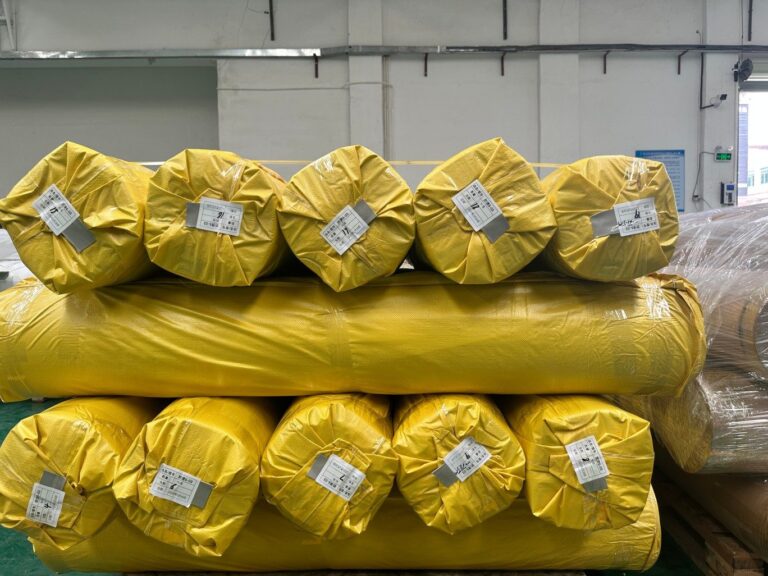
A furniture brand in Stuttgart received a compliance notice in early 2026: their chrome-tanned leather production supplier exceeded the newly tightened EU REACH chromium VI limit — down from 3 ppm to 1 ppm. The entire shipment, 12,000 meters, was rejected at customs. The brand lost €340,000 and six weeks of production time. This kind of supply chain disruption is becoming routine as environmental regulations tighten globally. Meanwhile, 90% of the world’s leather still relies on chrome tanning, a process that consumes 30-50 liters of water per kilogram of hide and carries an inherent risk of generating carcinogenic chromium VI. There’s a better production model — and it doesn’t involve tanning at all.
Request Free Compliance Samples
Why Leather Production Still Depends on Chrome Tanning
The dominance of chrome tanning in leather production comes down to one factor: speed. Chrome tanning completes in 24 to 48 hours, producing soft, heat-resistant leather compatible with most dye systems. Vegetable tanning — the alternative — requires 40 to 60 days and produces firmer material with natural color variation. For high-volume B2B manufacturers, that 60x time differential is decisive.
But the chrome tanning vs vegetable tanning debate misses a bigger point. Both methods are fundamentally wet processes that generate wastewater contaminated with heavy metals, sulfides, and tannins. Chrome tanning specifically produces chromium-laden sludge that requires specialized disposal. When chromium III oxidizes to chromium VI under certain conditions — acidic wastewater, heat, or UV exposure — it becomes a confirmed carcinogen regulated under REACH Annex XIV and the EU Industrial Emissions Directive (EU LIFE Programme).

Precision coating rollers — solvent-free dry coating eliminates the wastewater stream entirely, unlike chrome or vegetable tanning
Regulatory reality: The EU lowered the Cr(VI) threshold from 3 ppm to 1 ppm in 2026, and ZDHC MRSL v4.0 now prohibits 40+ chemical substance groups in leather production. Supply chains built on chrome tanning face escalating compliance risk with every regulatory update.
The Environmental Cost of Conventional Leather Production
The leather production environmental impact extends far beyond chromium. A single ton of raw hides generates approximately 30-50 cubic meters of wastewater loaded with sulfides, chlorides, ammonia, and suspended solids. In countries with less stringent enforcement — where much of the world’s tanning capacity is located — this wastewater often enters rivers untreated. A 2025 Portuguese case study found chromium contamination in aquatic environments near tannery zones at levels exceeding 2,000 μg/L, ten times the EU surface water quality standard (NIH/PMC, 2025).
The leather tanning wastewater pollution problem is structural. Tanneries must chemically separate the hide’s hair, flesh, and fat before tanning can even begin. Each preprocessing step — liming, deliming, bating, pickling — generates its own waste stream with distinct chemical signatures. Modern tanneries invest heavily in effluent treatment plants, but these add 15-25% to production cost and still cannot eliminate all contaminants.

Calender machine — dry coating process uses no water, no chromium, no solvents, producing zero liquid waste
VOC Emissions and Regulatory Pressure in Leather Manufacturing
Beyond tanning, the finishing stage of leather manufacturing creates another compliance burden: volatile organic compounds. Solvent-based finishes — used for gloss, hand-feel modification, and surface protection — release VOCs during application and drying. Water-based finishing systems have demonstrated 80%+ VOC reduction in trials, but adoption remains limited in cost-competitive markets where solvent-based processes are cheaper and faster.
The regulatory direction is unambiguous. The EU’s 2026 ESPR (Eco-Design for Sustainable Products Regulation) now requires Digital Product Passports for leather goods entering the EU market, mandating full disclosure of raw material origin, chemical composition, and manufacturing process data. Brands that cannot trace their leather manufacturing VOC emissions through the supply chain will face market access barriers — not just fines.
In our factory, we made the decision to eliminate solvents entirely from the production chain. Our eco-friendly silicone leather uses a solvent-free dry coating process — meaning zero VOC emissions at the application stage. We verified this under ISO 16000-6 chamber testing: no detectable VOC release. For B2B buyers shipping into the EU, that’s not just an environmental claim; it’s a compliance shortcut that eliminates an entire category of regulatory risk.
Solvent-Free Silicone Leather: A Cleaner Production Model
Solvent-free leather production isn’t a future aspiration — it’s a proven manufacturing model that bypasses tanning entirely. Instead of chemically transforming animal hides, silicone leather applies a silicone elastomer coating onto a textile substrate through a dry calendering process. No water. No chromium. No solvents. No wastewater stream to treat. For a broader look at synthetic fabrics in leather production, our previous analysis covers the full material landscape. Here’s how the production methods compare:
| Production Metric | Chrome Tanning | Vegetable Tanning | Silicone Coating |
|---|---|---|---|
| Processing time | 24–48 hours | 40–60 days | 7–15 days |
| Water usage per kg | 30–50 liters | 40–60 liters | 0 liters |
| Chromium risk | Cr(III) → Cr(VI) | None | None |
| VOC emissions | Moderate (finishing) | Low–moderate | Zero (ISO 16000-6) |
| EU REACH compliance | At risk (Cr VI ≤1 ppm) | Compliant | Fully compliant |
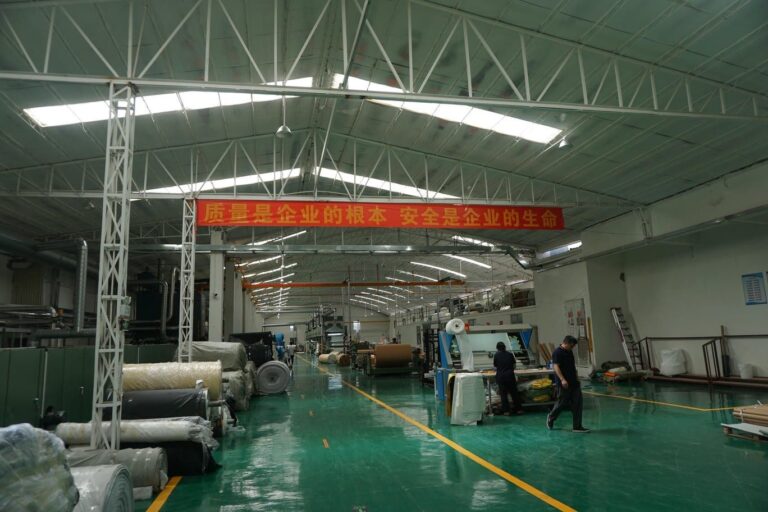
Our factory production operates across 60,000+ m² in three locations — Dongguan, Yichang, and Xiangyang — with 10+ automated lines producing 500,000+ meters monthly. Every line runs the same solvent-free process, meaning batch-to-batch consistency is built into the manufacturing method rather than enforced through inspection. For the complete silicone leather manufacturing process walkthrough, see our detailed production guide. We’ve found that clients transitioning from chrome-tanned leather to our silicone coating typically reduce their compliance documentation burden by 60-70%, because there’s no chromium chain-of-custody to trace.

Solvent-free production in action — the dry coating line eliminates water usage and VOC emissions at the source
Talk to Our Production Engineers
Frequently Asked Questions
Is chrome-tanned leather still legal in 2026?
Yes, chrome-tanned leather remains legal, but the regulatory window is narrowing. The EU REACH regulation lowered the chromium VI limit from 3 ppm to 1 ppm in 2026, and ZDHC MRSL v4.0 has expanded its prohibited substance list to 40+ chemical groups. Additionally, the EU ESPR now requires Digital Product Passports for leather goods, mandating full chemical composition disclosure. Brands using chrome-tanned leather must invest significantly in compliance testing and documentation to maintain EU market access.
How does silicone leather production compare to traditional tanning in resource usage?
Silicone leather production uses zero water in the coating process, compared to 30-60 liters per kilogram for chrome and vegetable tanning. It eliminates chromium entirely, produces zero VOC emissions (verified to ISO 16000-6), and generates no liquid waste stream. The process completes in 7-15 days versus 24-48 hours for chrome tanning, but the tradeoff is a dramatically lower compliance burden and no environmental remediation costs. Learn more in our silicone leather introduction guide.
Choosing Production Methods for Regulatory-Proof Supply Chains
The leather production landscape is bifurcating. On one side: traditional tanning methods facing tightening chromium limits, expanding restricted substance lists, and new product passport requirements. On the other: coating-based production models that bypass tanning entirely, eliminating the compliance risk at its source. For B2B buyers evaluating supply chain resilience over the next 3-5 years, the production method you choose today determines whether your materials will clear customs in 2027.
The Stuttgart furniture brand that lost €340,000 on a rejected chrome-tanned shipment? They’re now sourcing silicone-coated material from our facility — and their compliance team reports zero rejected shipments in the eight months since switching. That’s the practical difference between a production model designed for 2010 regulations and one built for 2026.
Whether your application is silicone leather for interior applications or specialized compliance-grade materials, the production method matters as much as the end product. Solvent-free, water-free, chromium-free — these aren’t marketing claims. They’re manufacturing process specifications that determine whether your goods pass regulatory scrutiny.
About TOPSUN
TOPSUN produces silicone-coated leather using a solvent-free dry coating process that bypasses tanning entirely, for automotive, furniture, and medical applications requiring low-emission, REACH-compliant materials.
Zero VOC verified to ISO 16000-6 · EU E1 formaldehyde compliance · 100% recyclable · 60,000+ m² across three production facilities · 10+ automated coating lines · Chromium-free, DMF-free, phthalate-free manufacturing