The US leather manufacturing sector generated approximately USD 60.32 billion in 2026, growing at a 6.42% CAGR through 2034. But behind that headline number lies a sourcing landscape that has fundamentally changed. Domestic leather production in the United States now concentrates on finished goods assembly (handbags, garments, accessories) and specialty tanning — while the synthetic leather manufacturing that supplies automotive, furniture, and medical applications has largely migrated to Asia. For B2B procurement teams, the question is no longer “where are the leather manufacturers in USA?” but “does domestic production actually make economic sense for my application?”
The answer depends on three variables that most sourcing guides ignore: the effective tariff rate on imported leather (currently 35% for Chinese-origin products under Section 301), the total landed cost including logistics and quality control overhead, and whether the material technology you need — specifically next-generation silicone leather — is even available from domestic producers. This guide breaks down the real economics of US leather sourcing, maps the tariff landscape, and provides a framework for deciding between domestic and international suppliers.
Request Leather Sourcing Samples
The US Leather Manufacturing Landscape in 2026
The United States leather industry spans three distinct segments — and conflating them leads to sourcing mistakes. Understanding which segment your project falls into is the first step in making the right supplier decision.
Segment 1 — Tanneries and hide processors: The US maintains approximately 320 tanning facilities across North America (78% of regional processing activity), processing over 850 million square feet of animal hide annually. These operations supply genuine leather for automotive upholstery (34% of regional demand), footwear, and garments. If your project requires genuine animal-hide leather, domestic tanneries are viable — though hide supply is constrained by the livestock industry and prices are volatile.
Segment 2 — Finished goods manufacturers: Companies like Schott NYC (garments, est. 1913), Jack Georges (bags, est. 1987), and numerous smaller workshops assemble leather goods from pre-tanned hides. These manufacturers excel at craftsmanship and small-batch production but do not produce the leather material itself — they buy it from tanneries or import it. If you need finished leather products, domestic manufacturers can deliver — at a labor cost premium of 4-5x versus Asian assembly.
Segment 3 — Synthetic leather manufacturers: This is where the gap is most pronounced. The US has very limited domestic capacity for producing PU, PVC, or silicone synthetic leather at industrial scale. Major synthetic leather production has migrated to China, Vietnam, and South Korea — where coating technology, chemical infrastructure, and labor economics converge. A few specialty producers (Ultrafabrics, others) offer domestic PU leather, but silicone leather production — the fastest-growing segment — is concentrated in Asian factories with the specialized coating equipment required for solvent-free thermal lamination.

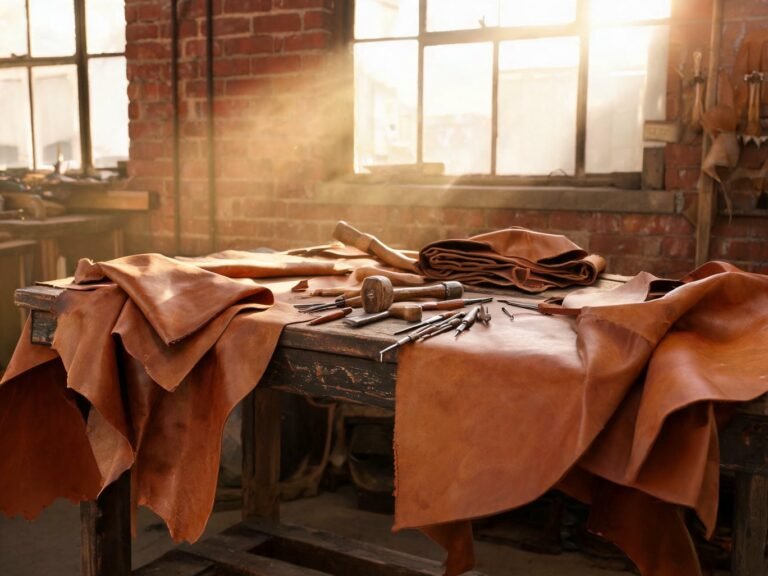
Modern synthetic leather production requires specialized coating and lamination equipment rarely available from domestic US manufacturers
Domestic vs Offshore: The Real Cost Equation
The most common procurement error in leather sourcing is comparing US and Asian manufacturing on labor cost alone — then concluding that Asia is always cheaper. The real equation includes labor, material, logistics, quality control, tariff exposure, and lead time. Here is the cost structure for a representative synthetic leather order (10,000 yards, automotive grade):
| Cost Component | US Domestic | China (pre-tariff) | China (post-tariff) |
|---|---|---|---|
| Material/yd | $15-20 | $7-10 | $9.45-13.50 |
| Labor/yd | $35-45 | $6-10 | $6-10 |
| Logistics/yd | $1-2 | $2-4 | $2-4 |
| Tariff (35%) | $0 | $0 | $4.55-6.50 |
| QC overhead/yd | $1-2 | $3-5 | $3-5 |
| Lead time | 2-4 weeks | 8-12 weeks | 8-12 weeks |
| Total/yd | $52-69 | $18-29 | $25-39 |
Even with a 35% tariff applied, Chinese synthetic leather remains 40-50% cheaper than US domestic production on a per-yard basis. The tariff narrows the gap but does not close it — and for most B2B applications, the cost differential is too large to justify domestic sourcing on price alone. However, the equation shifts when you factor in lead time (domestic production cuts 4-8 weeks off delivery), quality control overhead (domestic QC is cheaper and more responsive), and tariff volatility (tariff rates can change with trade policy shifts). For a broader sourcing analysis, our B2B leather sourcing guide covers these variables in depth.
How Tariffs Reshape the Sourcing Decision
As of mid-2026, articles of leather imported from China face a combined tariff rate of approximately 35% — the base MFN duty plus Section 301 tariffs plus, in some categories, additional trade remedy duties. This is not a temporary measure; the Section 301 framework has been in place since 2018 and was reinforced in 2024-2025 with expanded product coverage. Procurement teams must treat this tariff as a structural cost, not a passing trade dispute.
The tariff’s impact varies by product classification. HTS code 3921 (synthetic leather under plastics) and HTS 4202 (leather articles) carry different effective rates. Some silicone leather products may classify under different HTS codes than PU or PVC leather — potentially qualifying for lower tariff exposure. This is a sourcing optimization opportunity that most procurement teams miss because they assume “leather from China = 35% tariff” without examining the specific product classification.
For procurement teams evaluating leather and textile sourcing shifts, the strategic question is not “how do we avoid the tariff?” but “how do we structure our supply chain to minimize total cost including tariff?” Options include: sourcing from countries outside the Section 301 scope (Vietnam, Mexico, South Korea), classifying products under the most favorable HTS code, and — most importantly — selecting material technology that delivers enough performance premium to justify the tariff-inclusive cost.

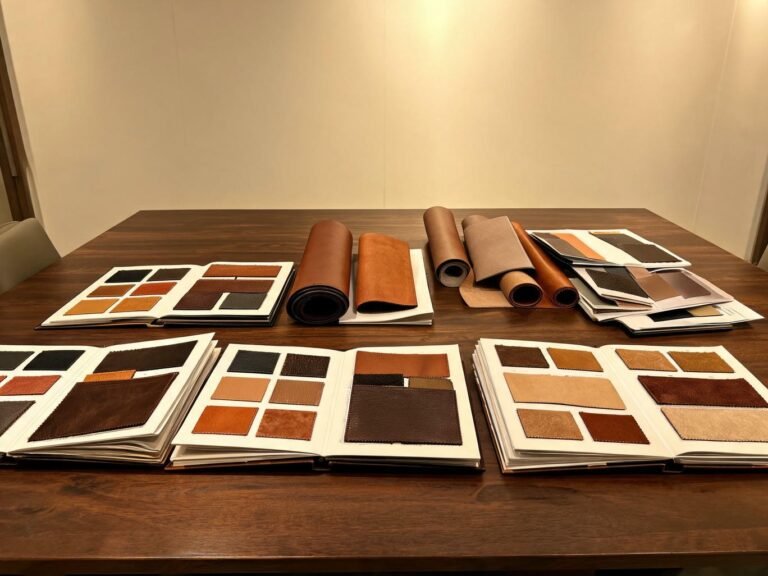
Understanding raw material supply chains is essential for evaluating leather manufacturers regardless of geographic origin
What US Leather Manufacturers Actually Produce
When B2B buyers search for “leather manufacturers in usa,” they often expect to find domestic producers of synthetic leather — the material used in automotive interiors, furniture upholstery, and medical applications. The reality is that domestic synthetic leather production capacity is limited. Most US-based companies in the leather sector are:
Finished goods assemblers who import pre-manufactured leather material and cut/sew it into products. These companies do not control the material formulation, coating chemistry, or performance specifications — they are downstream of the material manufacturing decision.
Specialty tanneries processing genuine animal hides for premium automotive and luxury applications. These operations produce genuine leather, not synthetic — and their capacity is constrained by hide availability and environmental regulations on tanning chemicals.
Distributors and importers who source synthetic leather from Asian manufacturers and warehouse it in the US for domestic delivery. While these companies provide faster lead times and domestic customer service, they are not manufacturers — they cannot modify material formulations, adjust coating chemistry, or produce custom colors and textures at the material level.
The implication for procurement is clear: if your project requires custom synthetic leather — specific color, texture, thickness, or performance specification — the manufacturing capability is almost certainly in Asia. A domestic supplier claiming to “manufacture” synthetic leather is typically importing finished rolls and reselling them. For guidance on evaluating suppliers, our quality leather sourcing guide provides a structured audit framework.

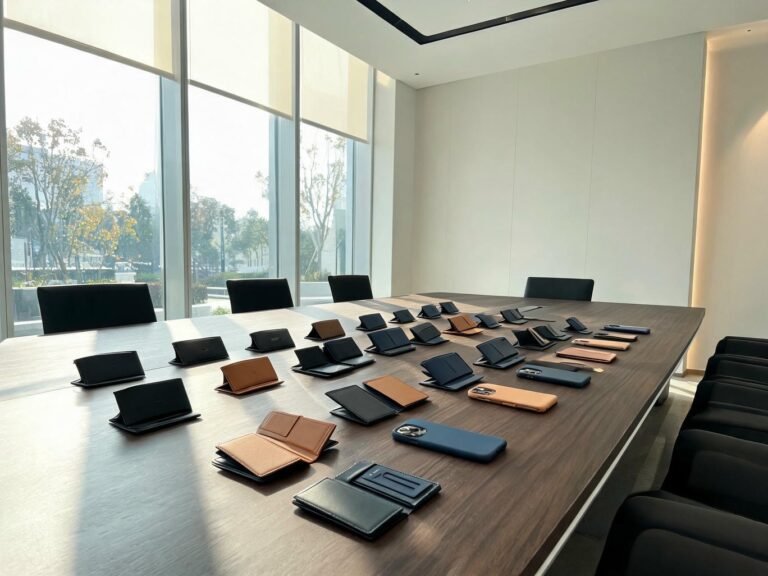
Quality inspection protocols must be verified regardless of whether the supplier is domestic or international
The Silicone Leather Alternative
Silicone leather represents a material technology shift that changes the sourcing equation. Traditional PU and PVC synthetic leather from Asia competes primarily on price — the tariff-inclusive cost is still lower than domestic alternatives, and the performance difference is marginal. Silicone leather is different: it offers a performance premium (8-10 year lifespan vs 2-3 years for PU, zero VOC emissions, inherent flame retardancy, biocompatibility) that justifies a higher material cost regardless of where it is manufactured.
The manufacturing reality is that silicone leather production requires specialized equipment — platinum-catalyzed addition-cure coating systems, multi-zone thermal lamination lines, and in-house testing for ISO 10993 biocompatibility. These capabilities are concentrated in factories that have invested specifically in silicone technology, not in general-purpose synthetic leather plants. For B2B buyers who need this material, the question of “domestic vs international” becomes irrelevant — the question is “which factory has the technology and quality systems to produce silicone leather to my specifications?”
TOPSUN operates one of these specialized facilities, producing silicone leather for automotive, furniture, medical, and marine applications with full IATF 16949 quality systems, custom development capabilities, and direct export to US customers. For more on our supply capabilities, see our silicone leather supplier USA guide.
6 Criteria for Evaluating Any Leather Supplier
Whether your supplier is domestic or international, these six criteria determine whether the partnership will succeed. Apply them to every supplier evaluation — including US-based distributors who import material from overseas.
1. Manufacturing capability vs trading status: Is the supplier an actual manufacturer with production lines, or a trading company that resells material? Request factory photos, virtual tours, or — for critical programs — an on-site audit. A distributor can offer faster delivery but cannot modify formulations or guarantee production consistency over multi-year programs.
2. Material certifications: For each material grade quoted, request: REACH SVHC compliance, RoHS, OEKO-TEX, and application-specific certifications (IATF 16949 for automotive, ISO 10993 for medical, BS5852/CAL TB 117 for furniture). Verify that certificates cover the specific material grade — not a generic company-wide certificate.
3. Custom development capability: Can the supplier produce custom colors, textures, thicknesses, and substrates? Or do they only stock standard catalogs? For branded programs, custom development is essential — and only actual manufacturers (not distributors) can provide it.
4. Quality system documentation: Request PPAP documentation (for automotive), control plans, FMEA, and batch-level traceability. A supplier without documented quality systems cannot maintain consistency across production runs. Our factory production process demonstrates what a properly documented system looks like.
5. Tariff and logistics transparency: Does the supplier provide FOB pricing with clear HTS classification? Do they offer DDP (delivered duty paid) terms that simplify your customs process? Can they ship via multiple carriers and routes? Transparent logistics pricing prevents budget surprises.
6. Sample-to-production consistency: Does the production batch match the approved sample? Request a production sample from the actual manufacturing run — not a lab-prepared sample. Compare it to the original approval sample for color, texture, thickness, and performance. Inconsistency between sample and production is the most common cause of project delays and rejections.

Finished leather rolls ready for international export — proper packaging ensures material integrity during shipping
About TOPSUN Silicone Leather
TOPSUN is a silicone synthetic leather manufacturer serving B2B customers globally, including the US market. Our production facility is equipped with specialized silicone coating and thermal lamination lines — the equipment required to produce solvent-free silicone leather that meets automotive, furniture, medical, and marine performance standards. We export directly to US customers, providing FOB and DDP shipping terms with transparent tariff classification.
Our silicone leather is certified to IATF 16949 (automotive quality), ISO 10993-5/10 (biocompatibility), REACH SVHC, and carries flame retardancy certifications including BS5852, DIN EN 1021, CAL TB 117-2013, and FMVSS 302. Performance: 150,000+ Martindale abrasion cycles, 1,500-hour UV stability, 14-week hydrolysis resistance, and 200,000 low-temperature flex cycles at -30°C. We support full custom development — color matching to OEM standards, texture design, substrate selection, and thickness specification down to 0.23 mm.
To learn more about our material technology and manufacturing capabilities, visit our silicone leather introduction page.
Request Silicone Leather Samples for US Market
Frequently Asked Questions
Are there leather manufacturers in the USA that produce synthetic leather?
Domestic US synthetic leather production capacity is limited. Most US-based companies in the leather sector are finished goods assemblers (who import pre-manufactured leather), specialty tanneries (who process genuine animal hides), or distributors (who import and resell). Actual synthetic leather manufacturing — particularly silicone leather production — requires specialized coating equipment concentrated in Asian factories. A US supplier claiming to “manufacture” synthetic leather is typically importing finished rolls.
How much does importing leather from China cost with tariffs?
As of mid-2026, articles of leather from China face an effective tariff rate of approximately 35% — the base MFN duty plus Section 301 tariffs. On a $10/yard synthetic leather, this adds $3.50/yard in tariff costs. Even with this tariff, the total landed cost ($25-39/yard including material, labor, logistics, tariff, and QC) remains 40-50% below US domestic production costs ($52-69/yard).
Is it better to source leather domestically or internationally?
It depends on the application. For genuine animal-hide leather, domestic tanneries are viable. For finished leather goods (bags, garments), domestic assemblers offer faster lead times but at 4-5x labor cost premium. For synthetic leather material (PU, PVC, silicone), international sourcing is almost always more cost-effective — even after tariffs — because the manufacturing technology and labor economics are concentrated in Asia. The decision should be based on total landed cost, lead time requirements, and material technology availability.
Can TOPSUN ship silicone leather to the USA?
Yes. TOPSUN exports silicone leather directly to US customers with FOB and DDP shipping terms. We provide transparent HTS classification, full material certifications (REACH, IATF 16949, ISO 10993), and production-to-delivery traceability. Sample orders typically ship within 5-7 business days; bulk production orders ship in 3-4 weeks depending on quantity and customization requirements.