The leather goods USA market crossed $60 billion in 2026 and shows no sign of slowing — automotive interiors, fashion accessories, furniture upholstery, and 3C electronics are all pulling demand upward. For B2B procurement teams, the question is no longer whether to carry leather goods, but which sourcing model delivers the best total cost of ownership.
Buyers face three distinct paths: domestic USA manufacturing, overseas importation, or switching to high-performance alternatives like silicone leather. Each has its own cost structure, risk profile, and margin implications. Here’s the breakdown from a procurement perspective.
Why USA-Made Leather Goods Command a Premium
American leather manufacturing has a well-earned reputation for quality. The U.S. processes over 30 million bovine hides annually and supports more than 1,000 leather goods manufacturers across the country. Brands like Horween, Shinola, and Portland Leather Goods have built loyal followings around domestic craftsmanship — and they charge accordingly.

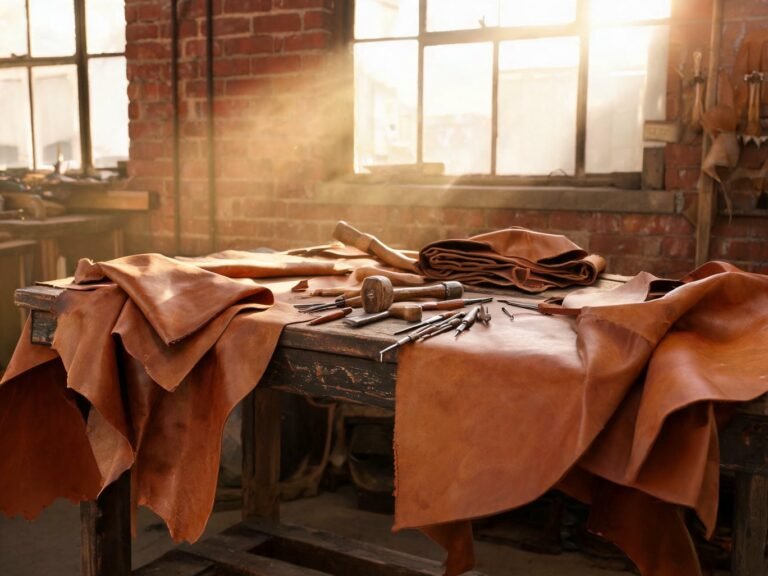
Domestic leather suppliers offer tight quality control but at significantly higher unit costs
The advantages of USA-made leather goods are real:
- Strict quality standards — ISO and ASTM compliance is standard, reducing defect rates to under 2% in most factories
- Faster lead times — Domestic factories can turn prototypes in 2–3 weeks vs 6–8 weeks for overseas
- IP protection — U.S. trademark and patent laws give brands real recourse against copycats
- “Made in USA” marketing value — Consumers pay 15–30% more for domestically produced goods in premium categories
But the premium is steep. A typical leather accessory that costs $56–75 to make in the USA costs only $15–25 in China — roughly one-third the price. For high-volume lines, that gap is hard to ignore.
The Real Cost Gap: USA vs Imported Manufacturing
Unit cost comparison only tells part of the story. Smart procurement teams look at total cost of ownership (TCO), which includes freight, duties, defect rates, returns, and inventory carrying costs.
| Cost Factor | USA-Made | Imported (China) | Silicone Leather Alternative |
|---|---|---|---|
| Unit cost (wallet example) | $56–$75 | $15–$25 | $18–$28 |
| Typical defect rate | 1–2% | 5–8% | 1–2% |
| Lead time (production + shipping) | 3–5 weeks | 8–12 weeks | 4–6 weeks |
| Return rate (durability-related) | 2–3% | 8–12% | 1–2% |
| 5-year TCO index | 100 (baseline) | 55–65 | 40–50 |
Here’s the thing: imported leather goods look cheaper on a PO, but the hidden costs — quality rejections, shipping delays, duty fluctuations, and customer returns — erode the advantage quickly. In our experience working with US brands, the landed cost gap shrinks from 3x to about 1.7x once you account for everything.
Procurement tip: Always request a 5-year TCO projection from suppliers, not just unit pricing. The lowest PO cost rarely wins on total value.
What US Buyers Actually Want in 2026
The leather goods landscape is shifting faster than at any point in the last decade. Three trends are reshaping what American B2B buyers source:

Vegan and alternative leather materials now rival genuine leather in search volume across several product categories
1. The vegan leather surge. Search volume for “vegan leather” products has grown to rival genuine leather queries in categories like handbags, phone cases, and accessories. For B2B buyers, this isn’t a niche trend — it’s now table stakes for catalog breadth.
2. Private label and custom branding. US brands increasingly want their own logo, embossing, and custom colorways. Texas-based brands in particular are seeing strong traction in corporate gifting (custom portfolios, pen holders) and everyday carry accessories in the $60–$120 retail range.
3. Durability claims under scrutiny. Consumers have been burned too many times by “genuine leather” products that crack and peel within 18 months. Buyers now actively seek test data — Martindale cycles, flex test results, hydrolysis resistance — before signing on.
Brands that can supply all three — vegan options, custom branding, and verified durability — are capturing outsized share in the US leather goods market.
Silicone Leather: A Third Path for USA Accessories Brands
Here’s a material option many US procurement teams haven’t fully explored: silicone-coated synthetic leather. It’s not traditional leather and it’s not basic PU — it sits in a performance tier of its own, and it’s quietly gaining share in 3C accessories, travel goods, and premium corporate gifting.

Silicone leather offers consistent texture, zero VOC emissions, and superior stain resistance for accessories
Silicone leather addresses several pain points that plague both USA-made genuine leather and imported PU alternatives:
- Consistent quality — Manufactured in controlled environments with automated coating lines, so every batch matches the last
- Stain and water resistance — Coffee, ink, and sunscreen wipe off with a damp cloth; critical for phone cases and travel accessories
- Zero VOC emissions — No off-gassing smell that triggers returns and customer complaints
- Vegan by default — Checks the sustainability box without sacrificing the leather look and feel
- Customizable at scale — Embossing, debossing, custom colors, and texture patterns are all standard capabilities
One of our clients — a mid-sized accessories brand based in California — switched their passport holder line from top-grain leather to silicone leather and saw return rates drop from 7% to under 2% in the first quarter. The cost per unit also fell by 35%, which they reinvested in marketing.
Explore 3C & Accessories Applications
See how custom printing and embossing work on silicone leather accessories
How to Select the Right Sourcing Model for Your Brand
There’s no universal “best” choice. The right sourcing model depends on your product category, target price point, brand positioning, and volume.
| Scenario | Recommended Sourcing | Why |
|---|---|---|
| Premium heritage brand, low volume, high price point | USA-made genuine leather | “Made in USA” and full-grain patina drive the value proposition |
| Mid-market fashion, high volume, cost-sensitive | Imported PU or top-grain blend | Unit cost is the deciding factor; accept higher defect rates |
| 3C accessories, travel goods, corporate gifts | Silicone leather (OEM) | Best TCO: low returns, consistent quality, easy customization, vegan-friendly |
| Furniture and automotive upholstery | Silicone leather (performance grade) | Durability, stain resistance, and flame retardancy are critical |
Not so fast — there’s a middle ground many brands miss. You don’t have to choose one model for everything. Successful US brands often use a hybrid approach: USA-made for their flagship SKUs, imported PU for entry-level lines, and silicone leather for accessories and performance categories. This lets them cover the full price spectrum while protecting margin at every tier.
Making the Right Call for Your 2026 Lineup
The leather goods USA market is growing at a 6.4% CAGR, and the brands winning share aren’t just picking the cheapest supplier — they’re matching material and sourcing strategy to each product’s specific role in their catalog.
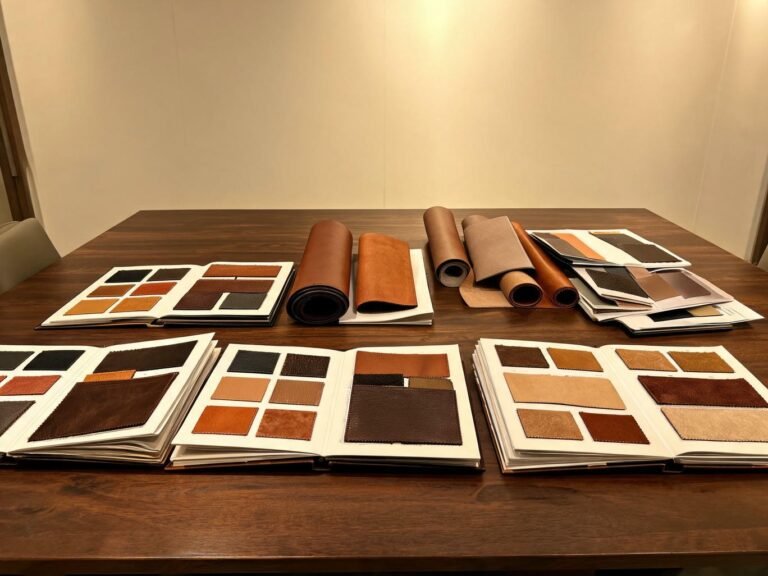
If you’re evaluating silicone leather as a material option for your accessories, 3C, or travel goods line, the fastest way to evaluate is to get physical samples in hand. You can feel the texture, test stain resistance, and run your own quality checks before committing to a production run.
Get a Custom Quote for Your Line
About TOPSUN
TOPSUN manufactures high-performance silicone leather for USA accessories brands, 3C electronics OEMs, and corporate gifting suppliers who need consistent quality at competitive landed costs.
Custom embossing & debossing · 100K+ Martindale cycles verified · Zero VOC · 4-week sample turnaround · OEM/ODM capability