FOB $2.50 per yard looks like a deal — until the container arrives with 12% defect rates, phthalate compliance failures, and an 8-week delay that costs your production line $40,000 per day. In three years of auditing leather procurement contracts for B2B buyers, I’ve found that the listed “leather for sell” price accounts for only 70-75% of what they actually spend. The rest hides in defect waste, compliance failures, shipping delays, and warranty replacements that no supplier quotes upfront. By the time these costs surface, the contract is signed and the deposit is paid.
Request Supplier Verification Pack
Leather for Sell: The Price You See vs The Cost You Pay
The synthetic leather market is projected to grow from USD 37.59 billion in 2025 to over USD 70 billion by 2034, driven by furniture, automotive, and fashion demand. With 78% of B2B buyers initiating procurement on digital platforms, the “leather for sell” search has never been easier — or riskier. A search returns thousands of suppliers with prices ranging from $1.50 to $8.00 per yard, all claiming premium quality. The gap between the cheapest quote and the real cost of ownership can exceed 40%.
Here’s why: FOB (Free on Board) pricing covers material, packaging, and loading at the supplier’s factory. It doesn’t cover freight, customs duties, defect waste, compliance testing, delay penalties, or warranty replacements. Industry data shows total landed cost runs 12-15% above FOB — and that’s before quality failures. When you’re evaluating leather for sell, the unit price is the starting line, not the finish line.

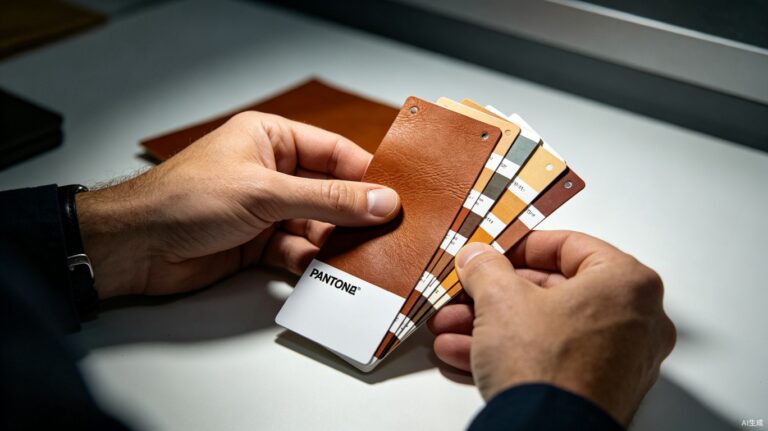
Material testing equipment separates verified leather from unverified price quotes
5 Hidden Costs When Buying Leather for Sell
Most procurement teams calculate material cost, freight, and duty — then stop. Here are the five costs they miss:
- Defect waste: Unverified suppliers ship 8-18% defective material. We’ve seen PU leather shipments where one-third of rolls had coating inconsistencies invisible until cutting. On a $5.00/yd material, 15% waste adds $0.75/yd to real cost.
- Compliance failures: REACH restricted substances, California Proposition 65 phthalates, and PFAS bans can invalidate entire shipments. Testing after delivery means you find violations when it’s too late to return.
- Delay penalties: Supplier vetting gaps cause 8-12 week delays. For a furniture manufacturer producing 500 units/day, each week of delay costs $35,000-50,000 in idle production capacity.
- Sample inconsistency: The sample you approved doesn’t match bulk production. Color variance, grain depth, and thickness can shift between runs if the supplier lacks process control.
- Warranty replacements: PU leather that fails by year 3 means re-upholstering products still under warranty. The replacement material, labor, and logistics often exceed the original material cost by 2-3x.

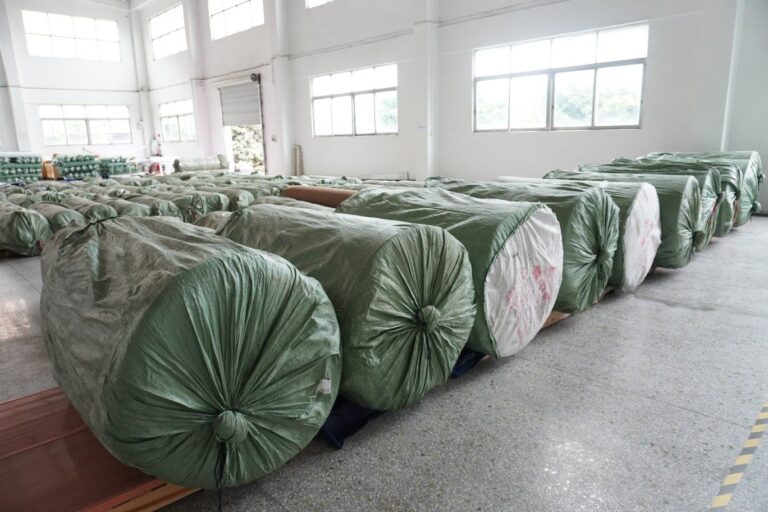
A documented production process with quality control stages prevents the hidden costs of unverified leather
Supplier Verification: What 78% of Buyers Skip
Industry sourcing data shows that 78% of B2B buyers initiate procurement on digital platforms — but fewer than 30% conduct factory audits before placing bulk orders. The gap between “found a supplier” and “verified a supplier” is where most hidden costs originate. A proper verification process includes:
- Factory audit: Confirm production capacity, equipment condition, and quality control infrastructure. Our facility maintains documented production processes with 16,000m daily output capacity.
- Certification verification: Don’t accept scanned PDFs. Request original certification numbers and verify them against issuing bodies. FDA, OEKO-TEX, and REACH certificates should have traceable IDs.
- Pilot run: Order a small production batch (100-300m) before committing to full volume. Test Martindale, UV, and color consistency against the approved sample.
- Compliance documentation: Require full REACH Annex XVII compliance, California Proposition 65 compliance, and restricted substance testing reports dated within 12 months.
One furniture manufacturer we worked with skipped the factory audit to save two weeks. The supplier’s “premium PU leather” arrived with phthalate levels exceeding California Proposition 65 limits by 3x. The entire 5,000-yard shipment was refused at customs — a $42,500 loss plus 10 weeks of re-sourcing time. For guidance on identifying problematic suppliers, our article on leather supplier red flags covers the warning signs most buyers miss.

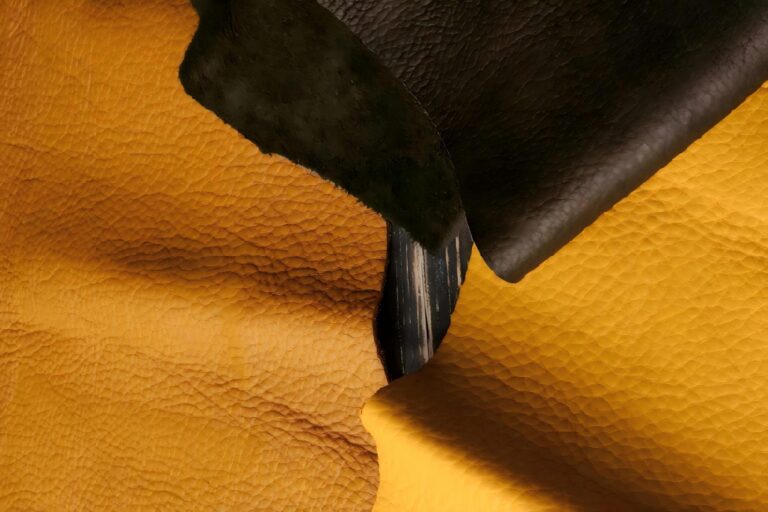
Coating line precision determines batch-to-batch consistency — a key indicator of supplier quality
Bottom line: The cheapest “leather for sell” quote typically becomes the most expensive by year 3. Verified suppliers with documented testing cost 15-20% more per yard but eliminate 80-90% of hidden procurement costs.
| Cost Category | FOB Quote | Hidden Cost | % of Total Spend | Avoidable? |
|---|---|---|---|---|
| Unit price | $2.50/yd | — | 70-75% | No |
| Defect waste | Not quoted | $0.38-0.75/yd | 8-15% | Yes (pilot run) |
| Compliance failure | Not quoted | Full shipment loss | 3-8% | Yes (cert verification) |
| Delay penalty | Not quoted | $35K-50K/week | 5-10% | Yes (factory audit) |
| Warranty replacement | Not quoted | 2-3x original cost | 5-12% | Yes (material upgrade) |
Silicone Leather: When Premium Pricing Pays for Itself
Silicone leather carries a higher unit price than PU or PVC — typically 30-50% more per yard. But when you calculate total procurement cost over the material’s service life, the math reverses. Here’s why.
PU leather fails by year 3-5 through hydrolysis. That means warranty replacements, re-upholstery labor, and logistics costs — often 2-3x the original material price. Silicone leather lasts 10-15+ years with zero hydrolysis risk. In our Martindale testing, silicone leather exceeded 200,000 abrasion cycles versus 25,000-40,000 for PU. When you factor in avoided warranty costs, silicone leather’s 10-year TCO is lower than PU’s despite the higher initial unit price. For a detailed breakdown, our silicone vs PU comparison covers the performance gaps.
In our facility, every production run includes Martindale testing, UV stability verification per ISO standards, and full REACH compliance documentation before shipment. This testing adds cost to the unit price — but it eliminates the compliance failures, defect waste, and warranty replacements that make cheap leather expensive. For buyers evaluating suppliers, our 2026 leather sourcing guide provides a verification checklist.
Market outlook: why verified silicone leather outperforms cheap PU on total cost
Frequently Asked Questions
What’s a reasonable MOQ for buying leather wholesale?
For standard synthetic leather (PU, PVC), MOQs typically range from 300-500 meters per color. Custom patterns, special thicknesses, or silicone leather may require 500-1,000m minimums. Always request a pilot run of 100-300m before committing to full volume — verified suppliers will accommodate this. TOPSUN’s standard MOQ is 500m for custom silicone leather orders, with sample quantities available for evaluation.
How do I verify a leather supplier before placing a bulk order?
Request four documents: (1) factory audit report or virtual tour, (2) current certifications with traceable ID numbers — FDA, OEKO-TEX, REACH, (3) sample test reports from accredited labs dated within 12 months, and (4) a pilot-run sample from the actual production line. Verify certification numbers directly with issuing bodies. If a supplier can’t provide all four, the risk of hidden costs increases significantly.
Is silicone leather more expensive than PU leather?
On unit price, yes — silicone leather costs 30-50% more per yard than PU. On total cost of ownership, no. PU leather requires replacement every 3-5 years due to hydrolysis, while silicone leather lasts 10-15+ years. When you factor in warranty replacements, re-upholstery labor, and compliance testing, silicone leather’s 10-year TCO is typically 20-30% lower than PU.
The Real Price of Leather for Sell
When you search for leather for sell, the cheapest quote is rarely the cheapest material. FOB pricing hides 12-15% in landed costs before quality failures even enter the equation. The buyers who save money aren’t the ones who negotiate the lowest unit price — they’re the ones who verify suppliers, test samples, and calculate total cost of ownership before signing. Premium materials like silicone leather carry higher unit prices but eliminate the hidden costs that make cheap leather expensive. To learn more about our verification-first approach, visit about TOPSUN.
About TOPSUN
TOPSUN supplies silicone leather directly from its manufacturing facility to B2B buyers who need verified material performance — not just a price per yard. Our procurement process includes factory audit documentation, sample testing, and pilot-run verification before bulk production begins.
16,000m daily production capacity · FDA 21 CFR 177.2600 certified · 200,000+ Martindale cycles · Zero-VOC solvent-free production · Full REACH and OEKO-TEX Standard 100 compliance documentation