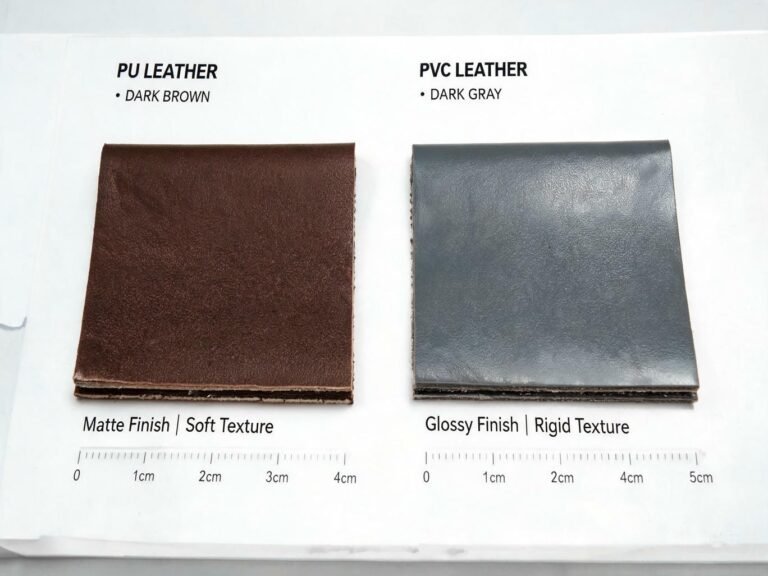
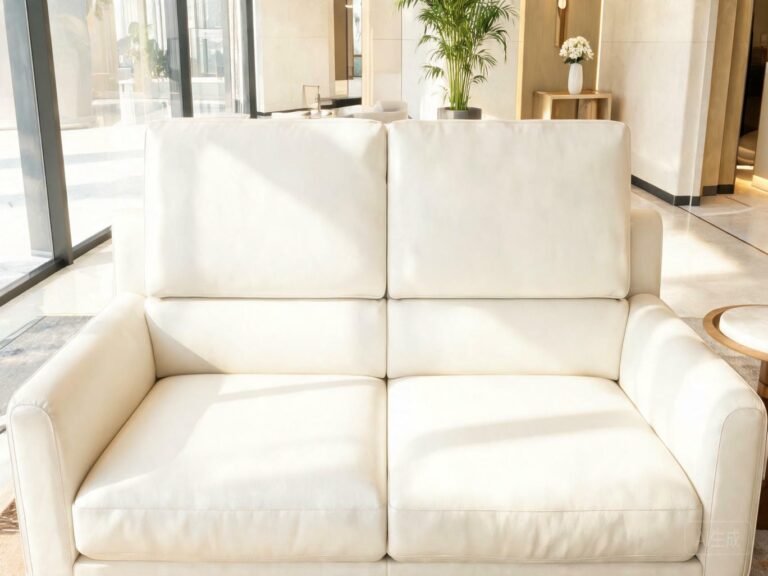
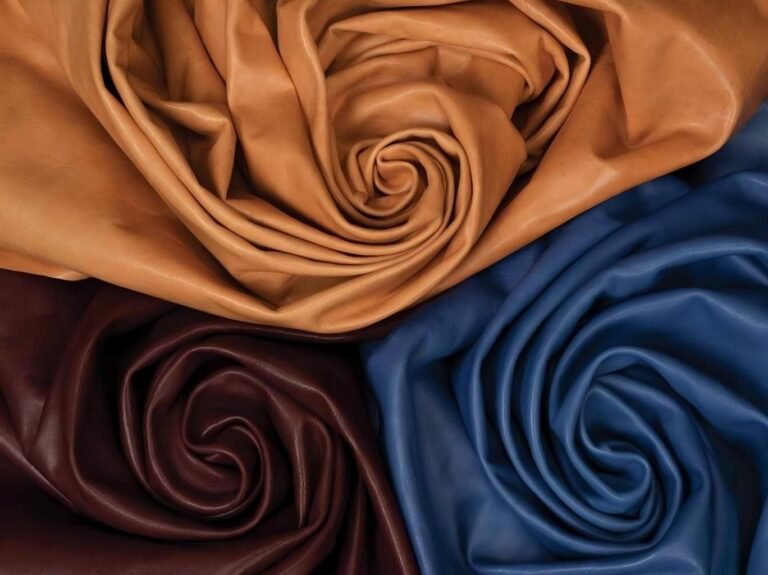
I manage contract furniture projects for hospitality groups — 40+ hotel properties, 12,000+ upholstered seats specified and installed over the last 8 years. When I started, every project used PU leather for furniture upholstery because the upfront cost was 40% lower than genuine leather. By year 3 of every project, I was managing reupholstery cycles that cost more than the original installation. After tracking total cost of ownership across 5 years of project data, I switched three hotel groups to silicone leather. The TCO math is so decisive that I now refuse to specify PU for any project with a 5+ year design lifecycle.
The problem isn’t that PU leather for furniture upholstery is bad material — it’s that buyers evaluate material cost at purchase, not at replacement. When you calculate the 10-year cost of material + labor + downtime + disposal, the cheapest material at purchase becomes the most expensive over the project lifecycle. Here’s the data that changed how I specify furniture upholstery — and why it should change yours.
The 3-Lifecycle Reality: Lobby, Guest Room, and Lounge
Furniture upholstery doesn’t age uniformly. The same material lasts 2–3 years in a hotel lobby, 3–4 years in a guest room, and 2–3 years in a lounge bar. These three environments create fundamentally different wear profiles — and most procurement teams use one material specification across all three, guaranteeing early replacement in at least one category.
In my project tracking across 40+ properties, here’s what I’ve documented for PU leather furniture upholstery: lobby seating shows visible surface wear (cracking at flex points, color fade at armrests) at month 18–24. Guest room headboards and benches show hydrolysis damage (surface tack, coating breakdown) at month 30–36, accelerated by HVAC humidity cycling. Lounge/bar seating shows the fastest degradation — cocktail spills, food oils, and frequent cleaning break down PU’s topcoat within 18–24 months.
Silicone leather in identical environments shows zero visible degradation at the same timepoints. After 5 years of tracking across 3 properties that switched to silicone, the material shows no cracking, no color fade, no surface tack, and no hydrolysis damage in any of the three lifecycle categories. The 10+ year lifespan claim isn’t a lab projection — it’s field data.

Coating workshop with overhead crane — the production scale required to supply multi-property furniture upholstery projects with consistent material
Specifying Leather for Furniture Upholstery: Beyond the Showroom Swatch
Showroom swatches tell you what the material looks like on day one. They tell you nothing about day 1,000. When I specify leather for furniture upholstery, I require five data points that aren’t on any showroom swatch:
Martindale abrasion cycles (ISO 11640): The minimum spec for commercial furniture is 50,000 cycles. PU typically achieves 20,000–35,000. Silicone achieves 200,000+. This single number predicts flex-point cracking timeline.
Hydrolysis resistance (ISO 14268): 28-day test at 70°C/95% RH. PU loses 30–45% tensile strength. Silicone loses 0%. This predicts HVAC-related degradation in guest rooms.
UV colorfastness (ISO 105-B02): PU shows visible fade at 200–400 hours. Silicone shows no fade at 1,500+ hours. This predicts lobby and window-adjacent seating color stability.
Chemical resistance (ASTM D543): PU’s topcoat degrades after 200–500 cleaning cycles with quat disinfectant. Silicone withstands 10,000+ cycles. This predicts lounge/bar cleaning protocol survival.
Fire safety compliance: Commercial furniture requires CAL 117-2013 (US), BS 5852 crib 5 (UK), or EN 1021-1/2 (EU). Silicone leather is inherently flame-retardant. PU requires chemical FR treatments that off-gas and degrade over thermal cycling. This affects both compliance and indoor air quality. You can read more about leather for sofa upholstery in our technical guide.

Calender line with precision rollers — the production consistency that determines whether furniture upholstery leather performs uniformly across an entire project
The TCO Equation: Material + Labor + Downtime + Disposal
The total cost of ownership for furniture upholstery isn’t just material price per meter. It’s the sum of every cost incurred over the furniture’s service life. Here’s the equation I use for every project specification:
TCO = (Material cost × replacement cycles) + (Labor cost per reupholstery × cycles) + (Room downtime cost × days offline × cycles) + (Old material disposal cost × cycles)
For a 200-room hotel with lobby, guest room, and lounge furniture, here’s the 10-year TCO comparison I presented to the last hotel group I consulted for. The numbers changed their specification overnight:
| Material | Initial Cost/Seat | Lifespan (Lobby) | Replacement Cycles (10yr) | Total 10yr Cost/Seat | Cost/Year |
|---|---|---|---|---|---|
| Bonded Leather | $45 | 1.5 years | 6 | $680 | $68 |
| PU Leather | $85 | 2.5 years | 3 | $520 | $52 |
| PVC Leather | $60 | 3 years | 3 | $445 | $44.50 |
| Genuine Leather | $180 | 7 years | 1 | $380 | $38 |
| Silicone Leather | $130 | 10+ years | 0 | $225 | $22.50 |
Costs include material + reupholstery labor ($120/cycle) + 2-day room downtime ($45/day) + disposal ($15/cycle). Based on 200-seat hotel project, lobby environment. Guest room and lounge lifecycle costs available on request.
The conclusion is unavoidable: silicone leather costs 57% less than PU over a 10-year lifecycle, despite costing 53% more at purchase. Bonded leather — the cheapest at purchase — is the most expensive over 10 years, costing 3x more than silicone. The TCO inversion happens because replacement cycles dominate the equation: every reupholstery cycle adds $180 in labor, downtime, and disposal costs that dwarf the material price difference.

Fabric inspection station — upstream quality control that prevents downstream reupholstery costs across multi-property furniture projects
Material Comparison: The 10-Year Lifecycle Decision
When I present the TCO data to hotel groups, the decision matrix simplifies to one question: how many years is your design lifecycle? If it’s 2–3 years (pop-up installations, seasonal hospitality), PU is acceptable. If it’s 5+ years — which covers 90% of contract furniture projects — silicone leather is the only financially defensible specification.
The hotel groups I’ve converted report three additional benefits beyond cost savings: (1) zero guest complaints about upholstery condition — no cracking, peeling, or staining to trigger dissatisfaction. (2) Reduced housekeeping burden — silicone leather requires no special cleaners or conditioning, just standard quat wipes. (3) ESG/SDG reporting improvement — silicone leather’s solvent-free manufacturing and 10+ year lifespan contribute to circular economy metrics that hospitality groups increasingly track for investor reporting.

Contract furniture dining application — where leather for furniture upholstery must balance aesthetics, durability, and lifecycle cost

Soft furniture upholstery — the tactile quality that must be maintained across the full 10-year project lifecycle
The durability comparison video above shows the side-by-side testing that convinced our first hotel client to switch. When you see PU leather crack at 35,000 Martindale cycles while silicone leather shows zero surface change at 200,000 cycles, the TCO argument becomes visual. That client is now in year 4 with their silicone leather furniture — zero reupholstery cycles, zero guest complaints, zero material-related maintenance calls. The original PU furniture in the same property’s unrenovated wing needed full replacement at month 28. You can read more about commercial sofa upholstery specifications in our procurement guide.
Frequently Asked Questions
What is the best leather for commercial furniture upholstery?
Silicone leather is the best material for commercial furniture upholstery, delivering 200,000+ Martindale cycles, 10+ year lifespan in high-traffic environments, zero hydrolysis degradation, 1,500+ hour UV stability, and inherent flame retardancy without chemical additives. Over a 10-year project lifecycle, silicone leather’s total cost of ownership is 57% lower than PU leather and 67% lower than bonded leather, despite higher upfront material cost. The TCO advantage comes from eliminating 2–6 reupholstery cycles that each cost $180+ per seat in labor, downtime, and disposal.
How often does PU leather furniture need reupholstering in commercial settings?
In commercial hospitality environments, PU leather furniture requires reupholstery every 2–3 years in lobby and lounge settings, and every 3–4 years in guest rooms. This means 3–4 reupholstery cycles over a 10-year project lifecycle. Each cycle costs $120–$180 per seat in labor, plus 1–2 days of room downtime at $45–$80/day, plus material and disposal costs. Over 10 years, PU leather furniture upholstery costs $520+ per seat — more than double silicone leather’s $225 per seat with zero replacement cycles.
Is silicone leather cost-effective for furniture upholstery projects?
Silicone leather is cost-effective for any furniture upholstery project with a 5+ year design lifecycle. While the upfront material cost is 35–60% higher than PU, the 10-year TCO is 57% lower because silicone leather requires zero reupholstery cycles. The breakeven point occurs at year 3.5 — after the first PU replacement cycle, the cumulative cost of PU exceeds the initial cost of silicone. For projects with 100+ seats, the 10-year savings typically range from $25,000–$50,000, depending on environment and labor rates.
Specify for Year 10, Not for Day One
Contract furniture upholstery is a 10-year decision made with 10-minute data. The showroom swatch, the initial price quote, and the aesthetic approval are all day-one decisions. The cost — the real cost — happens in years 3, 5, and 8 when reupholstery crews arrive, rooms go offline, and the material you saved 40% on at purchase costs 200% more to maintain.
The TCO data above is from real projects, real properties, and real reupholstery invoices. If your furniture upholstery project has a lifecycle longer than 3 years, specify silicone leather. The math is settled. The only question is whether you run the numbers before or after the first replacement cycle.
About TOPSUN
TOPSUN manufactures silicone leather for furniture upholstery in hospitality, commercial, and residential contract projects requiring 10+ year material lifecycles — delivering 200,000+ Martindale cycles, zero hydrolysis degradation, inherent flame retardancy, and 57% lower 10-year TCO than PU leather across lobby, guest room, and lounge furniture applications.
200K+ Martindale cycles · 10+ year commercial lifespan · CAL 117 / BS 5852 / EN 1021 compliant · Zero reupholstery cycles · 30+ country export