Why do two sofas built with faux leather material for upholstery age so differently? One survives a decade of family life. The other starts flaking on the seat by year three. I have opened both kinds of returned furniture on the same inspection bench, in the same month, more than once.
The answer is never the label. The category name on the order sheet does not predict lifespan. The structure under the surface and the test data behind it do. Below is the comparison I run for furniture buyers: four materials, how each one fails, and the tests that sort keepers from returns.
The Failure You See Starts at the Bond Line
Peeling looks like a surface problem. It rarely is. In PU-coated material, moisture works its way into the ester bonds of the polymer chain and breaks them, a process called hydrolysis. Heat, humidity, sweat, and skin oils all speed it up. Cheaper upholstery runs thinner protective coatings, which is why budget pieces go first. Once the coating loses flexibility, the first visible signs show up where the material flexes most: the seat edge, the headrest, the entry side of the cushion.
On our bench, the failed samples tell the same story. We peel back the surface layer with a fingernail at the flex point and find the backing underneath still strong. The coating separated from it. That is a bond line failure, not a fabric failure. It matters because bond line failure is predictable. It can be tested for years before it happens, which is exactly what the next section covers.
The teardown also explains why repairs disappoint. Once the coating separates, nothing bonds it back reliably. Recoloring compounds hide the damage for a season. They do not restore the bond. On a high-value piece, a full re-upholstery makes sense. On a budget sofa, the honest answer is replacement, which is why choosing the right material the first time matters more than any repair kit.

Seat edges and flex points fail first, whatever the label says.
Four Materials, Four Bench Reports
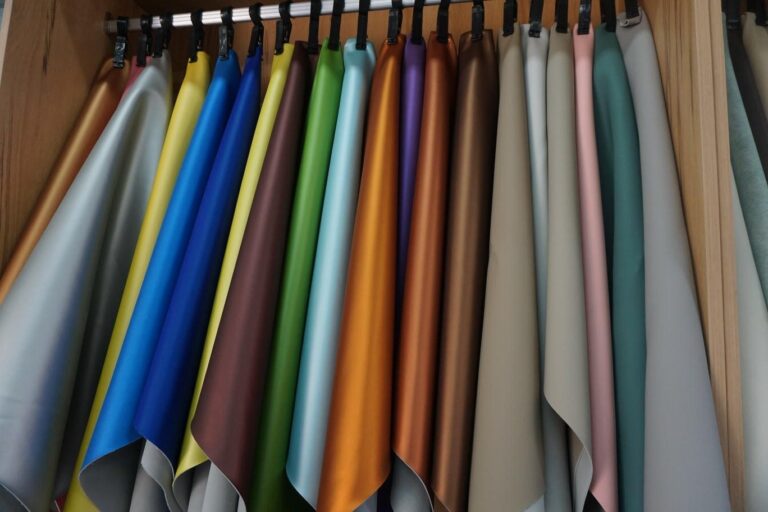
Not all faux leather material for upholstery is built the same way. PU coats a fabric base with polyurethane. PVC embeds plasticizers in a vinyl layer. Microfiber PU upgrades the base to a dense microfiber textile. Silicone-coated material replaces the organic coating entirely with a silicone elastomer.
Category labels hide this spread. Two rolls marked PU can differ by 4 to 1 in abrasion cycles because one uses a dense microfiber base and a thick topcoat while the other uses a thin knit and a skim coat. That is why I ask for the structure, not the category. Coating thickness, base textile, and the specific chemistry decide the bench result before the first rub cycle runs. The numbers below reflect that spread, and they come from published specifier comparisons plus our own bench records.
The industry reference numbers make the gap obvious: silicone faux leather is typically rated at 130,000+ Martindale rubs, better PU grades run 40,000 to 100,000, and bonded leather sits down at 20,000 to 50,000.
| Material | Martindale (typical) | How It Fails | Realistic Window |
|---|---|---|---|
| Standard PU | 10,000-100,000 by grade | Ester bonds hydrolyze; coating peels | 4-6 years |
| PVC | Wide range by plasticizer load | Plasticizer migration stiffens, then cracks | 5-8 years |
| Microfiber PU | 50,000-100,000 | Stronger base; PU coat still hydrolyzes | 6-10 years |
| Silicone-coated | 130,000+ | Surface abrasion only; no ester to break | 10-15 years |

The calendar line decides coating uniformity before any test runs.
Read the table by failure mode, not by price. PVC avoids hydrolysis because it carries no ester bonds, but its plasticizers slowly migrate out and the sheet stiffens. Microfiber PU buys real abrasion headroom, yet the PU coating on top still ages chemically. Silicone is the only structure where the main failure mode disappears instead of slowing down. If you want the chemistry head to head, our silicone vs PU comparison lays out both structures.
Sample approval is where most programs go wrong. Buyers test a lab sample, approve it, and then receive production that ran on a different line, weeks later, with a new base fabric lot. Close that gap in writing. Demand first-article samples from your actual production run, re-run the same three tests on them, and lock the spec sheet with signatures from both sides. A spec that lives only in an email chain protects nobody when the containers arrive. Keep the signed sheet with the retained samples, and both documents become your warranty language.
The Tests That Separate Keepers From Returns
Three tests do most of the predicting. Abrasion resistance is measured with the Martindale method under ISO 12947, where a circular sample rubs against a standard abrasive under controlled pressure until visible wear appears. For leather-specific work, ISO 17076-2 applies the same ball-plate principle to coated leather. As a working threshold, residential upholstery should clear 25,000 cycles, and contract furniture should clear 40,000 or more.
Hydrolysis resistance needs accelerated aging, because room-temperature failure takes years. We condition samples at 85°C and 85% relative humidity for 14 weeks. PU showpieces from the same order have come out of that chamber tacky and pale. Silicone-coated samples from the same run come out unchanged in color, flexibility, and surface finish. That single chamber test has saved our clients more rework than any other check we run.
The third check costs nothing: flex the sample by hand twenty times over a mandrel edge, then look at the fold. Cracking at the fold on day one means the coating is already brittle. Also ask which coating thickness you are buying, because a thinner topcoat passes a spec sheet and still fails the chair.
Treat supplier data as a starting point, not a verdict. Any number printed without a standard reference and a batch number is a claim. For orders above container volume, we advise buyers to pull production samples and send them to a third-party lab such as SGS or Intertek for retest. Keep retained samples from the same batch in your own warehouse. If a dispute shows up two years later, that retained sample is the only honest witness either side has.

Fourteen weeks in this chamber predicts years on the sofa.
Cleaning, Sunlight, and the Everyday Speeders
Lab failure rates assume average care. Real sofas live with spill kits under the sink. Solvent cleaners, ammonia sprays, and alcohol wipes strip the surface finish a little at a time. Each pass looks harmless. Over two years of weekend cleaning, the topcoat thins right where hands rest and heads lean. We have received returns where the coating wore through in a hand-shaped patch while the rest of the seat looked new.
Sunlight and humidity set the background clock. A sofa across from a large window bakes on one side, and UV fades and powders most organic coatings there first. In tropical humidity, hydrolysis runs so fast that peeling in two to three years is normal for standard PU. The same material in a dry inland apartment often doubles that. Match the material to the room, then write the care instructions into the warranty so cleaning stays inside what the chemistry tolerates.
Frequently Asked Questions
Is PVC or PU faux leather better for sofas? Neither wins outright. PU feels softer and drapes better but hydrolyzes from the inside. PVC resists hydrolysis but stiffens as plasticizers migrate. For daily-use sofas, microfiber PU or a silicone-coated sheet beats both on combined abrasion and aging.
How many Martindale cycles should upholstery material have? Treat 25,000 cycles as the residential floor and 40,000 as the contract baseline. Premium silicone-coated grades are specified at 130,000 and above. Ask for the report, not the claim, and check which standard the number was tested under.
Can peeling faux leather be repaired? Not structurally. Recoloring compounds cover the damage for a while, but the bond line is already gone. Budget a re-cover for valuable frames and plan replacement for the rest. The reliable fix is upstream: pick a material whose failure mode your climate cannot trigger.
The Verdict: Match the Material to the Furniture
Run your project through this table and the choice narrows fast.
| If You Are Covering | Choose | Because |
|---|---|---|
| Everyday family sofas | Microfiber PU or silicone-coated | Abrasion headroom without PVC stiffness |
| Humid homes or sunrooms | Silicone-coated sheet | No ester bonds, so hydrolysis mode is gone |
| Budget pieces on short cycles | Standard PU | Lowest cost; accept the 4-6 year window |
| Lobbies, clinics, and theaters | Contract-grade silicone-coated | 130,000+ rub class and disinfectable surface |
Whatever you order, ask the supplier for three documents before the deposit: the Martindale report with its standard number, an accelerated aging record, and the coating thickness spec. Our furniture and sofa applications page shows how these choices play out across real seating programs. A faux leather material for upholstery earns its place on data, not on the swatch that survived the showroom.
Request Test-Backed Upholstery Samples
Watch the bench tests behind these ratings, run end to end.
References
- 1. https://www.goodrichglobal.com/singapore/articl… — Silicone faux leather 130,000+ Martindale rubs vs 40,000-100,000 for PU and 20,000-50,000 for bonded
- 2. https://sinocomfort.com/blog/martindale-test-up… — ISO 12947 and EN ISO 12947 define the Martindale abrasion method used for upholstery ratings
- 3. https://leatheradvice.com/faux-leather-chair-re… — PU hydrolysis accelerated by heat, humidity, friction, sweat, and skin oils; thin coatings fail first