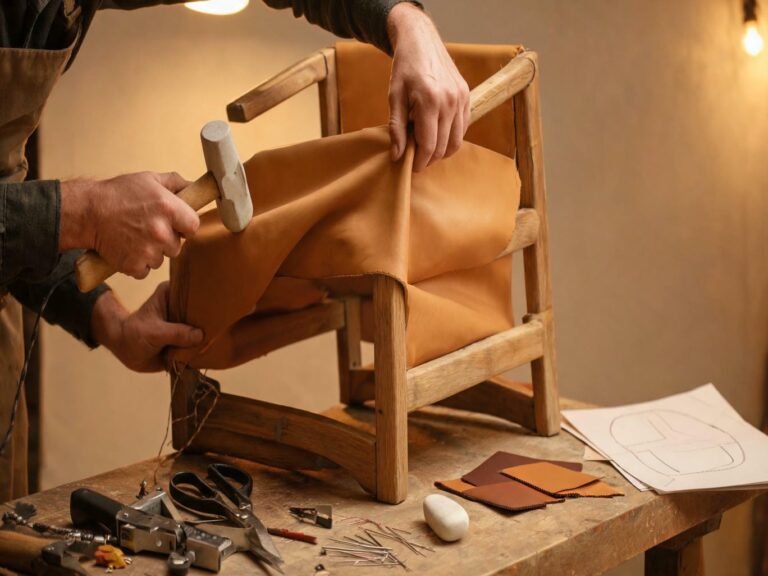
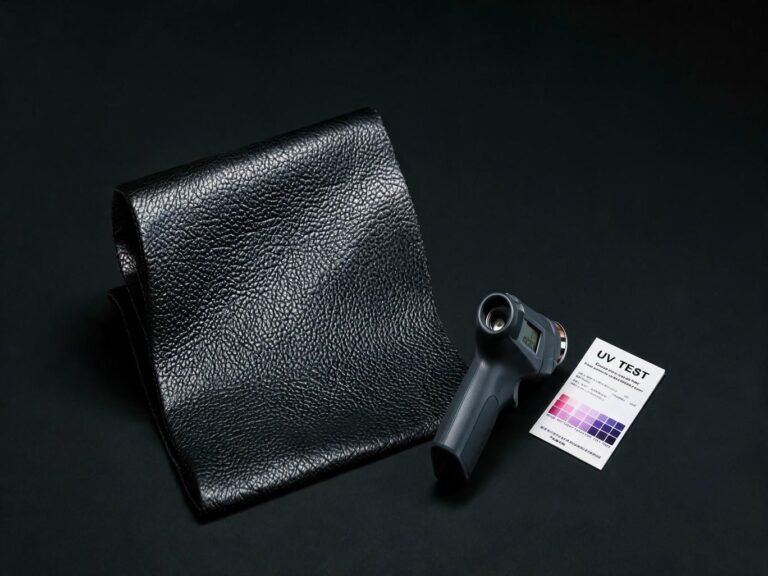
A procurement team specs “genuine leather” for 200 executive chairs. Eighteen months later, 40% show peeling, cracking, or color transfer. The problem isn’t the leather — it’s the spec sheet that never named a single test standard. When leather chair upholstery fails in contract settings, the root cause is almost always a specification gap: the buyer wrote “genuine leather” when they should have written “Martindale 40,000+ cycles, breaking force 444N minimum, cold crack resistance at -15°C.”
Why Leather Chair Upholstery Specs Fail in Contract Use
Most specification failures share a common pattern. The buyer describes the material by grade — “top-grain,” “genuine,” “PU” — without naming a single performance threshold. The supplier delivers something that technically matches the description but falls apart under daily contract use. By the time the first chairs start peeling, the spec sheet offers zero leverage for a warranty claim.
This isn’t a material problem. It’s a contract furniture leather specification problem. A properly written spec doesn’t say “genuine leather” — it says “genuine leather meeting Martindale 30,000+ cycles, breaking force 100 lb minimum per ASTM D5034, cold crack at -15°C per ISO 17233.” The difference between those two approaches is the difference between a 10-year lifespan and an 18-month warranty nightmare.
Here’s what makes this worse: many buyers assume that specifying a higher grade automatically means better performance. It doesn’t. Top-grain leather from one tannery might outlast another tannery’s full-grain. The only way to compare apples to apples is through standardized test data — which brings us to the six thresholds that actually matter. For a broader comparison of how different material chemistries perform, see our silicone vs PU material analysis.
The 6 Test Standards Every Spec Sheet Must Include
If your spec sheet doesn’t name these six tests with specific thresholds, you’re leaving warranty protection on the table. Each standard targets a distinct failure mode that shows up months or years after installation.
- Martindale abrasion resistance (EN ISO 12947): 40,000+ cycles for general contract use, 100,000+ for high-traffic environments. This is the single most predictive test for surface wear lifespan.
- Breaking force / tensile strength (ASTM D5034 or EN ISO 3377): 100 lb (444N) minimum per the GSA federal spec. Below this, seams tear under repeated stress concentration.
- Cold crack resistance (ISO 17233): -15°C minimum. Without this, leather shipped to cold-climate projects cracks during transport or in unheated storage.
- Color fastness to rubbing (EN ISO 116-X): Grade 4+ dry, grade 3+ wet. Prevents the “denim transfer” problem where dark clothing stains light leather.
- Fire safety (EN 1021-1/-2 or Crib 5): Required for all commercial interiors. Crib 5 is the UK contract standard; EN 1021 is the European equivalent.
- Finish adhesion (EN ISO 11644): Grade 3+ minimum. This is the test that catches delamination before it shows up as peeling on your chairs.

Martindale abrasion tester — the machine that predicts whether your upholstery survives 40,000+ rubbing cycles.
The U.S. General Services Administration has been writing leather chair upholstery Martindale rating requirements into federal procurement specs for decades. Their threshold: 2-3 oz leather thickness, 100 lb breaking force, and specific stitch-tear minimums. These numbers exist because vague specs cost the government millions in premature furniture replacement. The same principle applies to private procurement — if the GSA needs these thresholds, so do you. The full GSA specification document is available at the GSA federal procurement standard for executive office chairs.

Tensile strength testing confirms the leather won’t tear at seam stress points under daily load.
Leather Chair Upholstery: Breaking Down Failure Modes by Material
Different leather types don’t just age differently — they fail differently. Knowing the failure mode is critical because it determines which spec thresholds actually protect you. A Martindale rating means nothing if the real failure is hydrolysis-driven delamination.
| Material | Typical Lifespan | Primary Failure Mode | Martindale Cycles | Cold Crack |
|---|---|---|---|---|
| Bonded leather | 1-3 years | Cracking & stickiness | <10,000 | Fails below 0°C |
| PU coated (synthetic) | 3-5 years | Delamination / peeling | 15,000-25,000 | Marginal at -10°C |
| Top-grain (genuine) | 10-20+ years | Patina (not failure) | 30,000+ | Pass at -15°C |
| Silicone leather | 15+ years | None observed in testing | 100,000+ | Pass at -30°C |
In our testing lab, we’ve run Martindale abrasion on over 500 leather samples across these four material types. The pattern is consistent: PU and bonded leather fail at the coating-substrate interface, not at the surface. That’s why a Martindale test alone can overestimate PU lifespan — the surface might survive 25,000 cycles while the bond layer is already separating. The most comprehensive leather chair upholstery durability test protocol combines Martindale with finish adhesion (ISO 11644) to catch this exact scenario.

PU leather furniture in commercial use — the coating looks intact, but delamination often starts at the bond layer beneath.
Silicone leather avoids this failure mode entirely because the silicone polymer is chemically bonded to the substrate — there’s no separate coating layer to delaminate. For environments where humidity and cleaning chemicals accelerate hydrolysis in PU coatings, our hydrolysis-resistant silicone leather maintains structural integrity where PU fails within 2-3 years.
Writing a Spec That Survives 5 Years of Contract Use
A specification that actually protects you needs three components: test thresholds, failure mode definitions, and replacement triggers. The test thresholds come from the six standards above. The failure mode definitions tell the supplier what constitutes a reject — “delamination visible at 30cm” or “color transfer to white cotton after 10 rubs.” The replacement trigger defines when a warranty claim activates: “Any chair showing surface cracking within 5 years of installation qualifies for full material replacement.”
For commercial grade leather chair upholstery programs, we recommend including a fourth element: a maintenance protocol. Specify cleaning agents (pH 6-8, no solvents), cleaning frequency (monthly for high-traffic, quarterly for executive), and condition monitoring checkpoints. A well-defined maintenance protocol prevents the supplier from attributing premature failure to “improper care” — a common warranty defense.

Scratch resistance testing — critical for chair armrests and high-contact surfaces in contract furniture.
When you’re sourcing for furniture programs that span multiple product categories, it helps to understand the full range of furniture and sofa applications where silicone leather outperforms traditional materials.
For a deeper look at how material selection affects total cost across the full furniture lifecycle, our upholstery furniture TCO guide breaks down year-by-year costs across material types.
If your project specifically involves office seating, the technical thresholds discussed in our office chair upholstery material guide provide application-specific guidance for ergonomic and task seating programs.
See silicone leather applied to office chair upholstery — flexibility, surface integrity, and wear resistance in one frame.
Specification rule of thumb: If your spec sheet doesn’t contain at least three numbered test standards with specific pass/fail thresholds, it’s not a spec — it’s a wish list.
Frequently Asked Questions
What Martindale rating should contract-grade leather chair upholstery meet?
For general contract use (office, hospitality), 40,000 cycles is the baseline. For high-traffic environments like airports, public transit, and cinema seating, specify 100,000+ cycles. The GSA federal spec for executive office chairs requires breaking force of 100 lb minimum alongside abrasion thresholds — always pair Martindale with a tensile or breaking force requirement, not as a standalone metric.
Can silicone leather pass Crib 5 fire safety standards for commercial chairs?
Yes. TOPSUN’s silicone leather has been tested to EN 1021-1 and EN 1021-2 (European furniture fire safety standards) and meets Crib 5 requirements for UK contract interiors. Silicone’s inherent flame resistance comes from the polymer chemistry itself — it doesn’t rely on topical flame retardants that can wear off. Third-party fire test reports are available for spec verification.
The Spec Sheet Is Your Warranty
The difference between leather chair upholstery that lasts 18 months and leather that lasts 10 years often comes down to six numbers on a spec sheet. Martindale cycles, breaking force, cold crack temperature, color fastness grades, fire safety class, and finish adhesion rating — these are the thresholds that separate a warranty claim from a warranty defense. Write them into your spec, require third-party test reports from your supplier, and define failure modes before the first chair ships.
About TOPSUN
TOPSUN manufactures silicone leather upholstery for contract furniture programs where specification compliance is non-negotiable — from executive office chairs to hotel lobby seating and cinema auditoriums.
Every roll ships with third-party test reports for Martindale abrasion (100K+ cycles), breaking force (444N+), cold crack flexibility (-30°C), and EN 1021 fire safety — so your spec sheet isn’t aspirational, it’s verifiable.