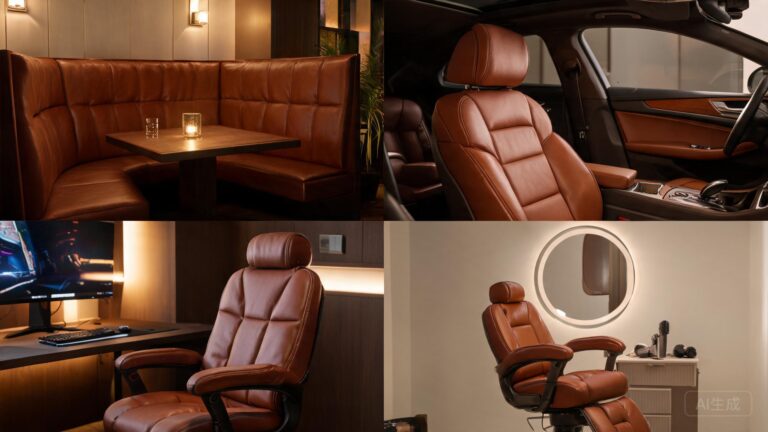
The question arrives on every refurbishment call: all leather or all fabric? For a 140-seat bistro my team re-seated last spring, the honest answer was neither — it was a map. Window rows, bar edge, banquettes, and the private room each took a different material call, because leather and fabric chairs fail on different schedules, clean under different protocols, and get written off in different units. Treating the choice as either-or is how venues end up with fabric chairs they cannot afford to keep clean, or leather chairs sweating through every summer service. This guide is the map we drew — zone by zone, with the maintenance ledger attached.
Why Leather and Fabric Chairs Age on Different Schedules
The two materials do not merely look different — they run on different clocks. Fabric chairs wear by accumulation: every sit is a rub cycle, every spill soaks into the pile, and the failure arrives as frayed armrests, pilled seats, and a permanent grey undertone that no cleaning lifts. Leather chairs wear by events: a scratch here, a drying crack there, a faded patch where the sunlight landed. Neither clock is faster in the abstract — which one bites first depends entirely on where the chair sits and what lands on it.
That location dependence is exactly why the either-or question fails. The same fabric that frays at a bar’s high-traffic edge can serve a decade in a private dining room; the same leather that wipes clean at the café counter can craze under a window’s UV load in two summers. And the two materials exit differently: a stained fabric chair is a re-upholstery ticket, while a cracked leather chair is a panel swap or a write-off. Three divergence lines — wear mechanism, cleaning protocol, replacement economics — and a zone map resolves all three at once.

The spill test that decides the bar-edge zone: water beading on a wipe-clean surface instead of soaking into a pile.
The Zone Map for Leather and Fabric Chairs
The map starts with one question per zone: what does this seat actually endure between cleanings? Fabric selection then runs on contract-grade numbers — the industry’s contract minimum sits around 30,000 Martindale cycles, with heavy-duty grades from 50,000 up, and the American Wyzenbeek double-rub scale looks similar but is not directly comparable. What no rub count prices is spill exposure and sunlight — which is where the leather calls come from.
| Seating zone | What the seats endure | The material call | Why it wins there |
|---|---|---|---|
| Bar & café edge | Spills between every service, daily wipe-downs | Wipe-clean leather family (PVC-free) | A spill is a 30-second wipe, not a stain ticket to the cleaning contractor |
| Window & display rows | Direct UV through glass, photo-backdrop duty | UV-stable leather | Fabric fades unevenly behind glass; certified UV-stable surfaces hold color for years |
| Task & conference seating | Eight-hour daily abrasion, constant adjustments | Breathable fabric on the back, leather on contact faces | Long sits need breathability; arms and seat pans take the wear |
| Private dining & VIP | Lighter duty, brand showcase | Full grain-look leather or a premium weave | Impression outranks wipe-speed where the duty cycle is gentle |
| Back-of-house & staff | Hard use, zero glamour | Heavy-duty contract fabric (30,000+ Martindale) | The cheapest material per year where looks do not bill |

A seated room is a set of zones, not one spec line — each row answers to different spills, sunlight, and duty.
None of these calls is exotic — every material named exists in contract grades. The map’s value is refusing to let one spec line stand in for 140 seats, and its biggest single cell is usually the banquettes, where spill exposure and long dwell times pile onto the same surface — the zone-by-zone logic for restaurant booth seating breaks that zone down further.
The Maintenance Ledger Nobody Quotes You
Run the two ledgers side by side on a 120-seat venue. Commercially used upholstered furniture wants professional cleaning two to three times a year per upholstery-care guidance, and extraction contractors typically charge $30–50 per chair per visit. Sixty fabric chairs therefore carry $3,600–$9,000 a year in cleaning alone, before the weekly vacuuming and spot-cleaning labor between visits. Wipe-clean leather chairs trade that ledger for a thirty-second cloth pass after each service and a conditioning pass a few times a year.
The ledger never appears on a chair quote, which is why it decides more refurbishments than the unit price does. A $180 fabric chair that costs $75 a year to keep presentable is the more expensive chair next to a $240 wipe-clean one costing $5 a year — and over a five-year cycle the gap compounds into a full replacement round. Ask every supplier for the cleaning protocol and the per-visit cost of the exact material quoted. The ones who cannot answer are telling you something.
When One Chair Should Wear Both: Hybrid Leather and Fabric Chairs
Some seats should not pick a side at all. Conference and task chairs increasingly split the job: breathable fabric on the backrest, where skin contact runs long and air matters, and leather-family material on the seat pan, armrests, and headrest, where spills, skin oils, and abrasion concentrate. The split follows the body — the back breathes, the contact points endure — and the same logic drives office chair upholstery choices at fleet scale.
Hybrids also solve the budget problem. A venue that cannot fund full leather can still put it on the twenty seats guests photograph and contract fabric on the hundred they do not. When specifying hybrids, the datasheet must speak both languages — abrasion and pilling data for the fabric face, cleanability and coating data for the leather face — because contract spec sheets are built to carry exactly those paired performance columns, and a one-language sheet lets the other face fail unclaimed.

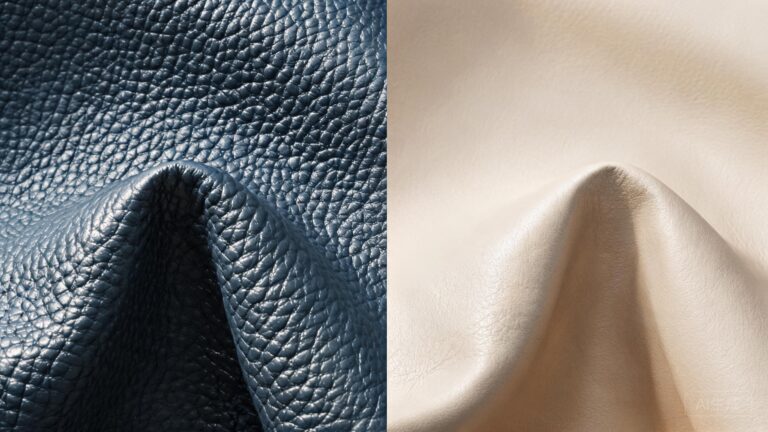
One roll family, two jobs — the material library a hybrid seating spec draws both faces from.
The Wipe-Clean Middle Path
The map’s hardest cell is the one that wants leather’s wipe-clean economics without leather’s maintenance personality, or fabric’s comfort without fabric’s cleaning ledger. Silicone leather was engineered into exactly that cell: a coated roll good that survives 200,000+ Martindale cycles, holds its color through 1,000+ hours of UV exposure — the window-row cell — and cleans with the same thirty-second cloth pass as any wipe-down surface, with the alcohol and bleach tolerance food-service duty demands. It is what we coat at TOPSUN, and it is why our clients’ zone maps usually end up with three materials rather than two: fabric where comfort and budget rule, traditional leather where patina is the brand, and silicone where the spill, the sunlight, and the cleaning contractor all land on the same seat. For the sofa-side version of the same question, where deeper seats and slower turnover change the math, our leather and fabric sofa analysis runs the numbers.
Task and conference seating — where hybrid faces and wipe-clean economics meet in a single chair.
Frequently Asked Questions
Are leather or fabric chairs better for a restaurant?
Neither, universally. The bar edge wants a wipe-clean leather-family surface, window rows want UV stability, private rooms can carry premium fabric, and staff areas want the cheapest heavy-duty contract weave. Zone first, then material — not the other way around.
How often do commercial fabric chairs need professional cleaning?
Upholstery-care guidance for commercially used furniture puts professional cleaning at two to three times a year, with weekly vacuuming and spot-cleaning between visits. Budget $30–50 per chair per extraction visit when you run the ledger.
Can leather and fabric chairs mix in one space?
Yes — mixing leather and fabric chairs is standard practice in layered commercial design, and it reads as intent rather than indecision when each zone keeps one dominant material. Match the undertones, keep the frames consistent, and let the zone map — not the catalogue — decide which seats get which face.
Get a Mixed-Fleet Material Quote
About TOPSUN
TOPSUN builds silicone leather for seating programs that need wipe-clean economics at contract durability — 200,000+ Martindale cycles, 1,000+ hours of UV stability, and bleach-and-alcohol tolerance — coating from plants in Dongguan, Yichang, and Xiangyang.
Every construction carries its own test file — biocompatibility under ISO 10993-5, flame retardancy to EN 13773 Class 4, FDA food-contact compliance — issued in our name, with free swatch pairs for spill-testing against the fabric side of any zone map.