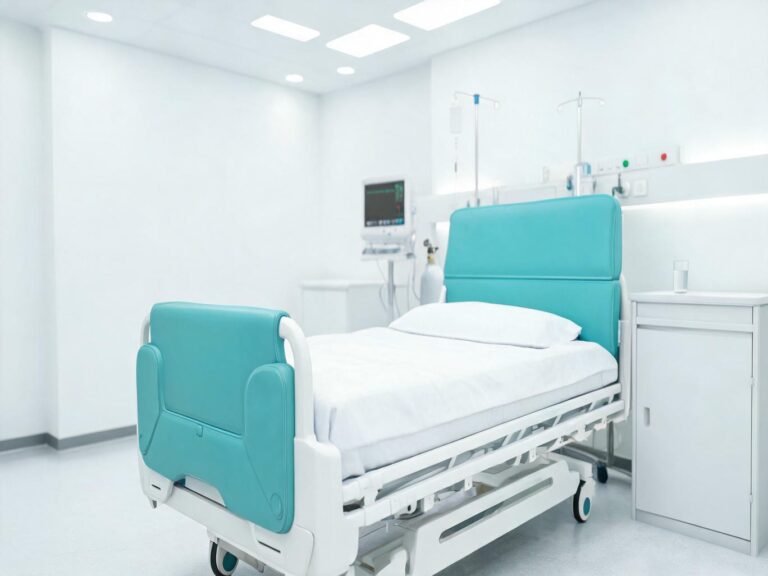
Immobility creates a cascade of risks: pressure injury, moisture-related skin breakdown, and infection from fluid intrusion into the mattress core. Hospital bed mattress material must provide a continuous biocompatible barrier, allow vapor transport, and withstand terminal cleaning between patients. The wrong encasement can turn a therapeutic mattress into a reservoir for pathogens. This guide explains how to specify hospital bed cover materials and where silicone leather supports infection prevention.
Download Material Specifications
Hospital mattress surfaces face days or weeks of continuous skin contact, incontinence events, wound drainage, and terminal disinfection between patients. The cover must maintain biocompatibility throughout, provide a reliable fluid barrier without trapping moisture against skin, and resist hardening or cracking from cleaning agents. Seam failure in a mattress encasement is not a cosmetic issue; it is an infection pathway directly into the foam core.
Immobility multiplies risk. The International PU/PI Guideline identifies immobile patients as the highest-priority group for pressure injury prevention. Hospital bed mattress material selection should support skin microclimate management alongside pressure redistribution. A cover that blocks vapor transport or releases volatile compounds during long contact can contribute to skin maceration and breakdown, undermining the therapeutic value of the mattress system.
Care setting shapes specification. ICU mattresses for ventilated patients need superior fluid management under incontinence. Bariatric beds need reinforced seams and higher tear resistance. Long-term care mattresses need vapor permeability for residents who sleep on them for months. Acute turnover beds need rapid-dry surfaces between patients. Describing care environment, patient population, and cleaning protocol in the specification helps suppliers match material properties to clinical reality.

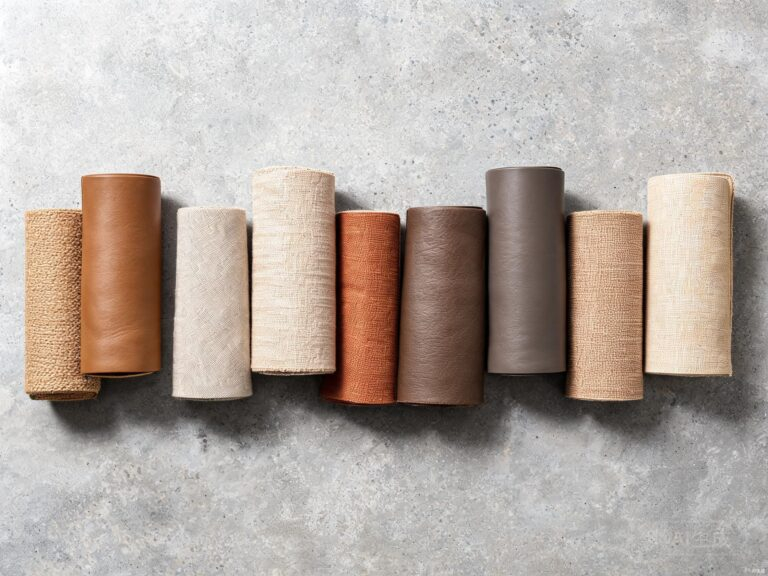
Color fastness testing — hospital bed materials must maintain appearance after repeated cleaning.
Hospital mattress surfaces face days or weeks of continuous skin contact, incontinence events, wound drainage, and terminal disinfection between patients. The cover must maintain biocompatibility throughout, provide a reliable fluid barrier without trapping moisture against skin, and resist hardening or cracking from cleaning agents. Seam failure in a mattress encasement is not a cosmetic issue; it is an infection pathway directly into the foam core.
Immobility multiplies risk. The International PU/PI Guideline identifies immobile patients as the highest-priority group for pressure injury prevention. Hospital bed mattress material selection should support skin microclimate management alongside pressure redistribution. A cover that blocks vapor transport or releases volatile compounds during long contact can contribute to skin maceration and breakdown, undermining the therapeutic value of the mattress system.
Care setting shapes specification. ICU mattresses for ventilated patients need superior fluid management under incontinence. Bariatric beds need reinforced seams and higher tear resistance. Long-term care mattresses need vapor permeability for residents who sleep on them for months. Acute turnover beds need rapid-dry surfaces between patients. Describing care environment, patient population, and cleaning protocol in the specification helps suppliers match material properties to clinical reality.
| Decision Area | What to Specify | Best Fit |
|---|---|---|
| Biocompatibility | Skin-safe for continuous contact over days or weeks | ICU and long-term care mattresses |
| Fluid encasement | Prevents fluid penetration while allowing vapor transfer | Incontinence management and wound care beds |
| Disinfection durability | Maintains properties after repeated terminal cleaning | High-turnover acute care wards |
| Vapor permeability | Allows moisture escape to reduce skin maceration | Pressure-prevention mattress systems |
How TOPSUN Builds Mattress-Grade Silicone Leather
TOPSUN engineers silicone leather for long-stay patient support surfaces, including hospital bed mattress covers and pressure-prevention bedding systems. The formulation prioritizes skin-contact biocompatibility, multi-week continuous-use validation, vapor-permeable constructions for skin health, and mattress encasement-grade seam durability. Backing options can be adjusted for compatibility with foam, air cell, and gel mattress cores. See our medical and healthcare silicone leather applications for typical healthcare applications.
For mattress OEM projects, we usually start by understanding the care setting: ICU with high fluid exposure, long-term care with month-long use, or acute care with rapid turnover. Then we tune color, grain, thickness, and backing to match the clinical demands. Related references include our medical-grade silicone leather guide and hospital bed upholstery material.

Infection-control medical seating material.
Medical healthcare material overview — silicone leather solutions for hospital and clinical environments.
Specifying Hospital Bed Mattress Material for OEM Production
A good RFQ for hospital bed mattresses should include target thickness, backing type, expected length of patient stay, fluid exposure level, seam sealing method, biocompatibility requirements, color tolerance, and sample test expectations. Do not specify only price per meter. For mattress products, a cover with proven biocompatibility and vapor permeability can reduce pressure injury incidents and support infection control audits over the product life. TOPSUN can support custom color, embossing, and backing trials before bulk production.
Before approving mass production, request swatches from the same construction that will be used in the order. Test them after simulated long-term skin contact, repeated wiping with your specified disinfectants, and fluid exposure at seams. This simple step catches many problems early: vapor permeability loss after coating degradation, seam leakage under fluid pressure, color shift after chemical exposure, or backing that does not bond well to the chosen mattress core.
Frequently Asked Questions
Is silicone leather safe for weeks of continuous skin contact?
Yes, when formulated with biocompatibility in mind. TOPSUN silicone leather references ISO 10993-1 biological evaluation and is designed for low-VOC, skin-safe contact over extended periods. Buyers should request biocompatibility documentation for their specific care setting.
How does vapor permeability affect pressure injury prevention?
Vapor permeability allows moisture from perspiration to escape rather than trapping it against skin. This reduces maceration risk and supports skin integrity during long immobilization. Buyers should ask for vapor transmission data and verify it remains effective after repeated disinfection.
Next Step for Buyers
Hospital mattress encasement material protects the therapeutic core while managing skin microclimate and infection prevention. TOPSUN supplies silicone leather surfaces with validated fluid barriers, vapor permeability data, and biocompatibility references for acute and long-term care. Custom sizing, seam reinforcement, and color matching are available for mattress OEM programs.
Request Mattress Cover Samples
About TOPSUN
TOPSUN develops silicone leather for hospital mattress encasement, ICU bed surfaces, and long-term care bedding systems.
Relevant capabilities include fluid barrier validation, vapor permeability testing, biocompatibility documentation, and custom sizing for mattress OEM programs.