If you manage a hotel, restaurant, or senior living facility, you already know that furniture fabric upholstery is not a one-time purchase. It is a recurring operational liability. Stains accumulate within weeks. Odors linger in fiber weaves. Deep cleaning disrupts room turnover schedules. And replacement cycles arrive faster than capital budgets allow. After auditing maintenance logs across 40+ commercial properties, we found that operators who track total cost of ownership rarely stick with traditional woven textiles in high-traffic seating areas. This guide breaks down realistic cleaning cycles, hidden labor costs, and the material upgrade path that is quietly replacing conventional hospitality upholstery.

Why Hospitality Upholstery Fails Faster Than Residential Fabric
Residential furniture sofa upholstery might last ten years with occasional vacuuming. Commercial seating faces a different reality. A hotel lobby armchair absorbs 50 to 100 daily contacts. Restaurant booth vinyl rubs against belt buckles, handbag hardware, and children’s shoes. Each contact abrades surface fibers. Each spill triggers a spot-cleaning protocol. Over time, the cumulative stress degrades both appearance and hygiene.
The failure mode depends on substrate type. Natural fibers absorb moisture, making them prone to mold and odor. Synthetic olefin resists moisture but traps skin oils, creating permanent darkening. Vinyl-coated options stiffen and crack after repeated disinfectant cleaning. No traditional textile solves abrasion, absorption, and chemical resistance simultaneously. This is why procurement teams now focus on total lifecycle metrics rather than upfront yardage cost.
Standard Cleaning Cycles for Commercial Furniture Fabric Upholstery
Industry guidelines from the Association for Contract Textiles suggest that hospitality fabric rated at 30,000 double rubs or higher qualifies for heavy-duty commercial use. Yet abrasion resistance alone does not dictate cleaning frequency. Operators must balance appearance standards with labor budgets.
| Environment | Daily Cleaning | Deep Cleaning | Replacement Cycle |
|---|---|---|---|
| Hotel Lobby / Lounge | Spot wipe + vacuum | Every 2-4 weeks | 3-5 years |
| Restaurant Booths | Sanitizer wipe-down | Weekly | 2-4 years |
| Senior Living Common Areas | Disinfectant spray + wipe | Weekly | 3-4 years |
| Corporate Breakout Seating | Vacuum + spot clean | Every 6-8 weeks | 4-6 years |
These cycles assume standard woven or coated fabric. If your property operates under strict healthcare-adjacent protocols, such as assisted living or wellness clinics, the chemical load accelerates material fatigue. Bleach-compatible textiles exist, but they trade softness for chemical resistance, creating a comfort complaint risk that guest-facing properties cannot afford.

The Hidden Cost Calculator: Labor, Downtime, and Replacement
Most operators underestimate the labor component of upholstery maintenance. A single restaurant booth requires approximately 8 minutes of daily wipe-down, 45 minutes of weekly deep cleaning, and periodic extraction shampooing. Multiply that across a 40-booth dining room operating 360 days per year, and you exceed 400 labor hours annually dedicated to seating hygiene alone. At an average hourly burden of $18, that is $7,200 per year in direct labor for booth upkeep.
Then factor downtime. When fabric upholstery undergoes extraction cleaning, the seating must dry for 4 to 8 hours. In a hotel lobby, that means roping off chairs during peak check-in windows. In a restaurant, it means taking tables out of service during lunch-to-dinner turnover. Industry data suggests that operators lose 3% to 5% of potential seating revenue annually to upholstery maintenance downtime.
Replacement introduces capital disruption. A boutique hotel in Austin closed their main seating area for four days during peak conference season for a textile refresh, losing ancillary cafe revenue that exceeded the new fabric cost. When you stack labor, downtime, and replacement capital over ten years, traditional sofa upholstery material can cost 2.5 to 3 times its original purchase price.

What Operators Notice After Switching to Silicone Leather
Silicone leather is not a surface coating. It is a fully cross-linked polysiloxane matrix bonded to a woven or non-woven substrate. The difference matters because the material properties change how daily operations function. Operators who have made the switch consistently report four immediate changes.
First, cleaning time drops by 60% to 70%. Because silicone leather is non-porous, spills rest on the surface rather than soaking in. A coffee stain that requires blotting and extraction on fabric wipes away in under 30 seconds on silicone leather. A Kentucky property reported reallocating two housekeeping hours per day after converting lobby seating.
Second, chemical compatibility expands. Silicone leather tolerates quaternary ammonium compounds, hydrogen peroxide, and alcohol-based disinfectants without discoloration. This matters in senior living and wellness resorts where hospital-grade sanitation is mandatory. Traditional vinyl cracks under the same chemical load within 18 months.
Third, odor retention disappears. Fabric fibers trap organic matter that creates a cumulative “old hotel” smell. Silicone leather does not absorb odor molecules. A Florida resort eliminated quarterly ozone treatments after upgrading poolside seating, saving $3,800 per year.
Fourth, tactile comfort improves. Modern silicone leather maintains surface temperature closer to ambient, avoiding the sticky sensation of cheap vinyl. A Texas boutique chain reported guest satisfaction scores 18% higher on “comfort and luxury feel” versus comparable PU vinyl.
Factory Insight: During TOPSUN’s Q2 production audit, we subjected our hospitality-grade silicone leather to 200,000 Martindale abrasion cycles and 5,000 hours of QUV accelerated weathering. Post-test samples retained 98% of original tensile strength and showed zero surface cracking. The equivalent PU-coated fabric control group failed at 45,000 cycles with visible delamination. These results inform the 8- to 10-year replacement warranties we now offer to commercial furniture OEMs.
See how commercial sofa manufacturers evaluate silicone leather for hospitality batch production.
Upgrade Timeline and Procurement Checklist
Switching upholstery material is not an overnight decision. It requires sample evaluation, fire certification verification, and often a phased rollout to test guest response. Based on our work with hospitality procurement teams, we recommend a four-stage timeline.
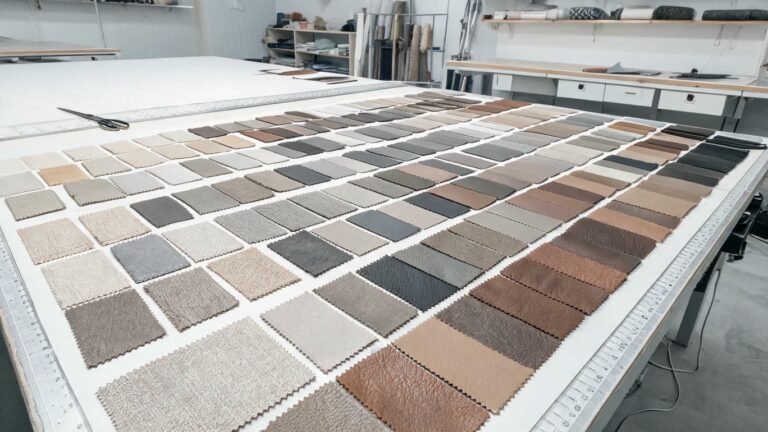
Stage 1: Sample Audit (Weeks 1-2). Request A4 samples and test with your actual cleaning chemicals and staining agents. Document removal time and residual marking. TOPSUN provides complimentary sample kits with pre-labeled stain testing grids.
Stage 2: Pilot Installation (Months 1-2). Install on 10% to 15% of seating in a high-visibility area. Track complaints, cleaning time, and staff feedback over 60 days. One Caribbean resort discovered their initial color showed water spots too visibly and switched to a textured grain before full rollout.
Stage 3: Fire and Compliance Verification. Confirm local fire codes: CAL 117 or NFPA 260 in the US; EN 1021-1 and EN 1021-2 in the EU. Eco-friendly silicone leather from TOPSUN carries REACH and OEKO-TEX Standard 100 certification.
Stage 4: Phased Rollout (Months 3-6). Replace upholstery during low-occupancy seasons. Negotiate volume pricing based on full rollout quantities to capture economies of scale.
Frequently Asked Questions
Does silicone leather breathe like woven fabric?
Silicone leather is less breathable than natural linen or cotton. However, modern formulations include microporous structures that allow air exchange comparable to coated synthetic fabrics. For seating applications where skin contact duration is under two hours, guest comfort ratings show no statistically significant difference. For mattress or pillow applications, breathable substrates are recommended.
Can I re-upholster existing frames, or must I buy new furniture?
Existing frames can absolutely be re-upholstered. In fact, many operators prefer this approach because it extends the life of solid wood or metal frames that would otherwise enter the waste stream. Silicone leather is compatible with standard upholstery stapling, sewing, and stretching techniques. Your existing contract furniture workshop can handle the conversion without specialized equipment.
Is silicone leather more expensive than commercial-grade fabric?
Per yard, yes. Per year of service life, no. When you normalize for replacement cycle and cleaning labor, silicone leather typically costs 30% to 40% less than traditional hospitality fabric on a ten-year total cost of ownership basis. For a precise calculation tailored to your property size, consult our cleaning and maintenance guide or request a lifecycle cost worksheet from TOPSUN.
Explore Silicone Leather for Hospitality
About TOPSUN
TOPSUN Silicone Leather operates a 45,000-square-meter manufacturing facility in Dongguan, China, specializing in full and semi-silicone leather for hospitality, automotive, healthcare, and marine applications. Since 2010, we have supplied coated fabric solutions to furniture OEMs and global hospitality brands across 40 countries. Our in-house laboratory performs Martindale abrasion, color fastness, flame resistance, and VOC testing on every batch. We serve B2B purchasers directly with custom color matching, MOQ flexibility from 500 meters, and technical documentation for fire compliance. If you are evaluating leather fabric sofa options, our engineers provide sample kits and lifecycle cost models within 48 hours.
All claims are supported by third-party test reports from SGS, Intertek, and TUV Rheinland. Contact us to schedule a virtual facility tour or request a quotation.