A furniture brand specifies “full-grain leather” for a premium sofa line. The procurement team discovers that “full-grain” encompasses hides ranging from $15 to $50 per square foot. Two hides from the same tannery, same animal breed, same tanning process — and they age differently. One develops a rich patina. The other cracks at stress points within three years. This is the grain leather problem: the term describes a category, not a quality standard. Natural variation in animal hides means every piece of grain leather is unique — which is aesthetically appealing and a specification nightmare. For B2B buyers who need consistency across 10,000 units, natural variation isn’t a feature. It’s a defect. For a broader grain leather guide, the grading system matters more than the label.
Grain Leather Types: The 3 Tiers Every Specifier Must Know
Grain leather is categorized by how much of the natural hide surface remains intact. The classification determines durability, appearance, maintenance requirements, and price. But it doesn’t determine consistency — and that’s where B2B specification gets complicated.
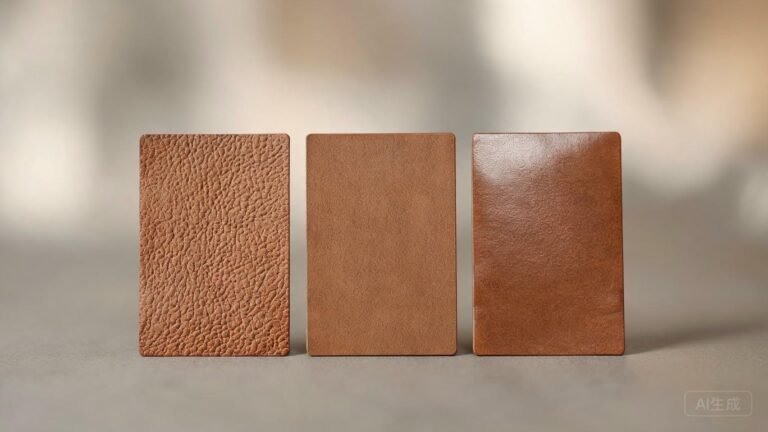
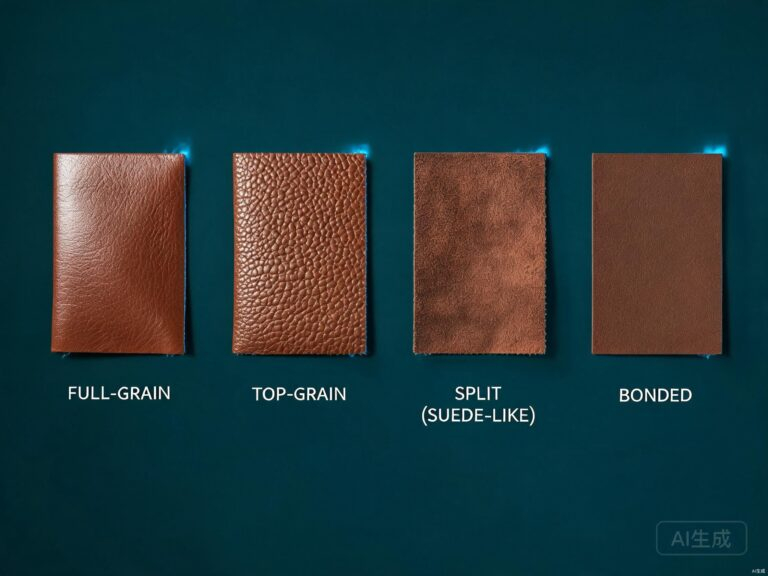
- Full-Grain Leather — The topmost layer of the hide with the natural grain surface completely intact. No sanding, no buffing, no correction. Retains natural markings, scars, and insect bites. Highest quality, highest price ($15-50/ft²). Develops a patina that deepens with age. Service life: 10-20 years with proper maintenance. But: natural variation means no two hides look identical.
- Top-Grain Leather — The topmost layer sanded to remove imperfections, then refinished with a pigment coating. More uniform appearance than full-grain. Second tier in quality ($8-20/ft²). The sanding removes some of the natural grain density, making it slightly less durable than full-grain but more consistent in appearance. Service life: 8-15 years with maintenance.
- Corrected-Grain Leather — Lower-quality hides with significant imperfections that are sanded away, then embossed with an artificial grain pattern and coated with pigment. The “grain” you see is stamped, not natural. Most uniform in appearance but least durable of the grain types ($3-8/ft²). Service life: 3-5 years before the coating begins to crack.
For a complete breakdown including split leather and bonded leather, see our types of leather guide.
Grain Leather Performance Data: The Numbers Behind the Labels
The performance difference between grain leather types — and between grain leather and silicone grain-pattern alternatives — comes down to measurable data. Here’s what the testing shows. For a deeper comparison with genuine leather applications, see our natural grain leather guide.
| Grain Leather Type | Source | Surface Treatment | Martindale | Consistency | Service Life |
|---|---|---|---|---|---|
| Full-Grain | Natural hide, top layer | None (natural surface) | 30,000-50,000 cycles | Low (natural variation) | 10-20 years (with care) |
| Top-Grain | Natural hide, sanded | Pigment refinish | 25,000-40,000 cycles | Moderate | 8-15 years (with care) |
| Corrected-Grain | Lower-quality hide | Sanded + embossed | 15,000-25,000 cycles | High (artificial) | 3-5 years |
| Silicone (Grain Pattern) | Silicone polymer | Embossed grain | 200,000+ cycles | 100% consistent | 10+ years (no care) |
Full-grain leather’s Martindale rating (30,000-50,000 cycles) is lower than silicone leather’s (200,000+) — despite full-grain being the “highest quality” leather. The difference: natural hide fibers are strong but irregular; silicone polymer is engineered for consistent abrasion resistance across every square meter.

Embossed lychee grain pattern in silicone leather — consistent texture, no natural variation, no maintenance required.
The Consistency Problem: Why Natural Variation Is a B2B Risk
Grain leather’s aesthetic appeal — natural variation, unique markings, individual character — becomes a specification risk at production scale. A furniture manufacturer producing 5,000 sofas needs each unit to look identical. With full-grain leather, no two hides are the same: color varies by tanning batch, grain density varies by animal and body location, and natural markings appear randomly across the surface.
The industry response is sorting and matching — selecting hides with similar appearance and allocating them to the same production batch. This process adds cost (15-30% of hide price) and reduces yield (20-30% of hides rejected for variation). For top grain leather applications, the pigment coating partially masks variation, but color matching between batches remains a persistent challenge.
Silicone leather with embossed grain patterns eliminates this problem entirely. The grain texture is applied through custom embossing rollers, producing identical patterns across every meter. Color is Pantone-matched with Delta E ≤ 1.0 accuracy, ensuring batch-to-batch consistency. For a comprehensive texture comparison, see our leather textures buyer guide.
Maintenance Reality: Grain Leather Demands Ongoing Care
Full-grain and top-grain leather require regular maintenance to achieve their advertised service life. Conditioning every 6-12 months to prevent drying and cracking. Protection from direct sunlight to prevent fading. Immediate cleaning of spills to prevent staining. Climate control to prevent excessive humidity (which causes mold) or dryness (which causes cracking).
In commercial applications — hospitality furniture, automotive interiors, restaurant seating — this maintenance schedule is rarely followed. The result: full-grain leather that should last 15 years fails in 5-7 because the maintenance wasn’t performed. Per ISO 12947-2 testing, maintained full-grain achieves 30,000-50,000 Martindale cycles. Unmaintained full-grain often shows surface cracking within 2-3 years of commercial use.
Silicone leather requires zero maintenance. The non-porous surface repels liquids, resists stains, and doesn’t absorb oils. No conditioning needed — the polymer doesn’t dry out. UV stability means no fading in sunlight. Hydrolysis resistance means no mold in humidity. The material performs identically in year 10 as it does on day one, with or without maintenance. See our genuine top grain guide for the full maintenance comparison.
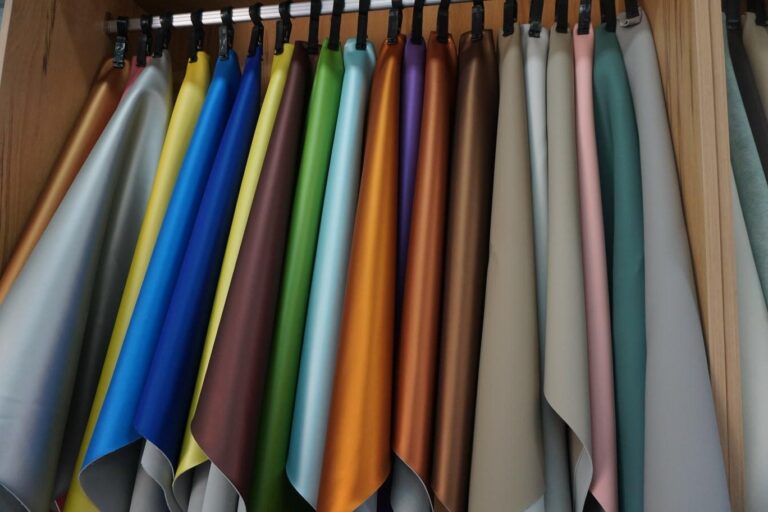
Silicone leather texture variety — cowhide, pigskin, sheepskin, and custom grain patterns with 100% consistency.
About TOPSUN
TOPSUN manufactures silicone leather with 100+ embossed grain patterns — cowhide, pigskin, sheepskin, and custom designs — delivering the aesthetic of full-grain leather with 200,000+ Martindale abrasion resistance, zero maintenance, and 100% batch-to-batch consistency.
Custom embossing rollers in 7-10 days. Pantone-matched colors with Delta E ≤ 1.0. 500,000+ meters monthly capacity. Free A4 swatches shipped worldwide via DHL/FedEx.
Frequently Asked Questions
Can silicone leather replicate the look of full-grain leather?
Yes. Silicone leather is embossed with grain patterns that replicate the visual texture of full-grain, top-grain, and corrected-grain leather. The embossing rollers create authentic cowhide, pigskin, and sheepskin grain patterns with precise detail. The difference is consistency: natural full-grain leather has random variation between hides, while embossed silicone grain is identical across every meter. For applications where visual consistency matters more than “natural uniqueness,” silicone grain patterns deliver the aesthetic without the variation.
Does grain leather outperform silicone leather in durability?
In Martindale abrasion testing, no. Full-grain leather tests at 30,000-50,000 cycles; silicone tests at 200,000+. In real-world conditions, the gap is wider because grain leather requires maintenance (conditioning, UV protection, spill prevention) to achieve its rated service life. Silicone requires zero maintenance. The one area where grain leather outperforms is tensile strength — natural collagen fibers are stronger than silicone polymer under direct pulling force. But for upholstery applications where abrasion, UV, and hydrolysis are the primary failure modes, silicone’s engineered consistency outperforms natural variation.
The Grain That’s Better Than Natural
Grain leather’s appeal is its natural character — the unique markings, the patina development, the story each hide tells. But natural character becomes a specification liability at production scale. Variation between hides means quality variation between products. Maintenance requirements mean the rated lifespan depends on care that commercial applications rarely provide.
Silicone leather with embossed grain patterns delivers the visual aesthetic of grain leather without the natural variation, maintenance burden, or ethical concerns. The grain is consistent. The color is matched. The durability is engineered. For B2B buyers, that’s not a compromise — it’s an upgrade.