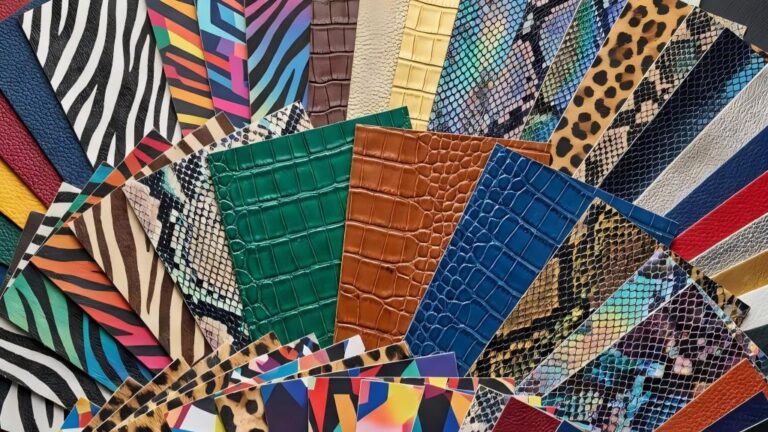
A pallet of “genuine leather” upholstery reaches your receiving dock at 8:40 in the morning. The packing list says genuine. The swing tag says genuine. The invoice prices it like hide, not like coated fabric. Can you confirm any of that before the driver closes his doors?
You can, in under two minutes, with no lab and no special tools. This guide walks six dock tests: grain, hand, smell, water, back, and flame. Our inspection team runs them on every disputed pallet. Each test has a genuine signal, a faux signal, and a trap, and the traps are where claims go to die.

The water clock: hide drinks within a minute, coated fabric holds the bead.
Why the Eye Fails and the Label Lies
Your eye fails first. Modern embossing plates press pore patterns into coated fabric so convincingly that a three-second glance proves nothing, and showroom lighting flattens both surfaces into the same sheen. The difference hides in randomness. Hide grain is organic chaos; an embossed repeat is a stamped motif that loops if you follow it far enough.
The label fails second. In the trade, genuine leather is a grade, not a promise: the bottom tier of solid hide, below full-grain and top-grain. A tag that reads genuine leather with no grade details confirms the material came from a hide. It says nothing about how much hide, which layer, or whether the panels beside it are coated fabric. Trust the tag for origin. Test the material for what it is.
The Six Tests: What to Measure, What It Means
The sequence below takes 60 to 90 seconds on a finished good and needs nothing but water, a lighter, and a loupe if you keep one in the drawer. Two tests minimum, every time. Single tests mislead. Pairs of tests convict.
| Dock test | Genuine signal | Faux signal | The trap |
|---|---|---|---|
| 1. Grain, sight | Irregular pores in a random layout | Identical pore repeat across the panel | Heavy finish can flatten real grain |
| 2. Hand, bend and press | Warms under the palm; bends into fine random creases | Stays cool; folds stiff and uniform | Thin coated splits feel soft too |
| 3. Smell | Earthy, animal, faintly rich | Plastic, chemical, solvent-adjacent | Fresh packaging masks both; air first |
| 4. Water drop | Soaks in within 30–60 seconds, dark patch dries out | Bead sits, no absorption | Coated genuine can bead; run a second test |
| 5. Edge and back | Haphazard fibers, suede-like flesh side | Even cross-section over woven or nonwoven base | Bonded hides show both worlds at once |
| 6. Flame, scrap only | Smoulders; burnt-hair smell; gritty crumbly ash | Melts; black smoke; hard sticky bead | Destructive; cut-offs only, never sellable goods |
Run the tests in order and stop when two of them agree. The pairs that settle most pallets are water plus back: one reads the surface, the other reads the structure. That fifth row is where the market gets slippery. Bonded leather, the material shoppers file under pretend leather, shows both worlds at once: real hide fiber inside, polyurethane binder and film on top. When the back and the tag disagree, the tag loses.

Two seconds on a two-centimeter cut-off: ash that crumbles means hide, a melted bead means coating.
Reading the Back, the Edge, and the Flame
The back is the most honest witness on the dock. Fold a swatch or turn a panel over and read the hidden edge. Genuine shows a tangle of irregular fibers, like pressed suede, running into the grain side. Faux shows a clean, even cross-section over its true skeleton: a woven or nonwoven textile base. Inspection guides rank this the most reliable non-destructive check, and the reason is structural. Nobody coats the underside of a hide to fake fibers that buyers rarely see.
The flame test has rules. It runs on cut-offs and hidden strips only, never on sellable goods, and it settles arguments the eye cannot. Genuine hide smoulders slowly, smells like burnt hair, and leaves a gritty ash that crumbles between fingers. Faux melts, pulls black smoke, gives off a chemical smell, and cools into a hard bead. Two seconds of flame on a two-centimeter scrap is enough. If a supplier refuses the scrap test on a disputed batch, treat that refusal as data too.
A 10x loupe is the fastest confirm tool on the floor. Under magnification, grain randomness reads as three-dimensional chaos; an emboss reads as a flat, repeating pattern. Reach for it when tests disagree, the classic false-negative case being a heavily finished genuine hide that beads water and looks too uniform. When the surface lies, the back and the burn break the tie, and the supplier’s content declaration settles the paperwork.

What the loupe confirms: organic randomness no stamping die can loop.
Can a genuine leather tag be wrong?
It can be incomplete, which is worse. Genuine names the bottom solid-hide grade and says nothing about layers, coatings, or neighboring panels. On mixed furniture, seats can be hide while sides and backs are coated fabric. Test the panel, not the tag, and file the tag photo with the result.
Do we have to burn-test every batch?
No. The flame test is destructive and reserved for cut-offs. Run it when non-destructive tests disagree, when a new supplier onboards, or when a claim needs the strongest evidence. Two agreeing non-destructive tests clear routine pallets.
The Two-Minute Roll Audit
Here is the sequence as it runs at our dock, written so your receiving team can copy it onto a clipboard card.
One: photograph the tag and the content line before touching the material. Two: run grain, bend, and water on the main panel, three tests in 60 seconds. Three: fold a hidden edge and read the backing, fibers or textile. Four: burn a cut-off only when the first three disagree or a new supplier ships its first batch. Five: log the verdict with the tag photo, two agreeing tests clear the pallet.
If the verdict is faux, the next question is which faux, because coating chemistry decides how the roll ages. The silicone versus PU comparison walks that split in test data. Identification tells you what arrived today. The faux leather life expectancy notes in this series tell you what happens next: the years each family gives, and what the gap costs at claim time. Two documents, one honest dock.
Talk to Our Inspection Desk
Request Reference Sample Sets
References
1. https://popsewing.com/blogs/news/how-to-tell-re… — Six-test framework for beginners: sight, touch, smell, water, edge, and burn signals separating real from faux leather
2. https://grainmarkleather.com/blogs/news/how-to-… — 60–90 second no-tool checklist; back and edge as the most reliable non-destructive check; water absorption window; false-negative warning on heavily finished hide