Here’s a number that should worry every procurement team sourcing eco leather fabric: 90% of vegan leather products on the market today are made from petroleum-based plastics. That “ecological leather” in your supply chain? It might take 500 years to decompose — longer than most buildings stand. The sustainable leather market is projected to grow from $1.73 billion to $4.21 billion by 2032 at a 13.9% CAGR, but not every product labeled “eco” deserves the badge. We tested and ranked five major eco leather fabric types across three metrics that actually matter: VOC emissions, recyclability, and real-world service life.
| Material | VOC Emissions | Recyclable | Service Life | Plastic Content |
|---|---|---|---|---|
| PVC Leather | Contains plasticizers | No | 2–3 years | 100% |
| PU Leather | Contains solvents | Limited | 3–5 years | 100% |
| Silicone Leather | Zero / near-zero | Yes (100%) | 10+ years | 0% |
| Plant-based (Cactus/Pineapple) | Varies | Limited | 2–4 years | 20–65% |
| Recycled Leather | Varies | Partial | 4–6 years | Varies |
Request Eco Leather Fabric Samples
What Makes Leather “Eco”? The 3 Metrics That Actually Matter
Most B2B buyers we talk to evaluate eco performance fabric by looking at a single dimension — usually whether it’s animal-free. But that’s only one piece. A material can be entirely animal-free and still be 100% petroleum-based plastic that sheds microplastics for decades. Three metrics actually determine whether a leather alternative fabric earns the “eco” label:
- VOC emissions during production and use — Does the material off-gas solvents, plasticizers, or formaldehyde? These affect indoor air quality and worker safety. The EU’s REACH regulation and standards like EN 717-1 set strict limits.
- End-of-life recyclability — Can the material be recycled, safely incinerated, or will it sit in a landfill for centuries? PVC releases hydrogen chloride and potentially dioxins when burned. Silicone can be safely incinerated or fully recycled.
- Real-world service life — A material that lasts 10+ years replaces itself far less often. PU and PVC leather typically crack and peel within 2–5 years, meaning the products of leather end up in landfills faster, multiplying waste.

Silicone leather lifecycle: from raw materials to end-of-life recycling
In our factory testing, we’ve seen firsthand how PU upholstery degrades after just 18 months of UV exposure — the coating cracks, the backing delaminates, and the entire piece becomes unrepairable waste. That’s the hidden environmental cost most suppliers won’t calculate into their TCO.
Vegan Leather Environmental Impact: The Plastic Problem Nobody Talks About
The vegan leather environmental impact conversation has a dirty secret. Over 60% of mass-market vegan leather made products rely on PU or PVC formulations. Even products marketed as “plant-based” often contain 20–65% fossil fuel derivatives for structural integrity. The result? A material that’s animal-free but environmentally worse than the most durable animal leather it replaces.

PU-based vegan leather cracking after 3 years of use — a common failure mode
The European Chemicals Agency has restricted several phthalates — including DEHP, DBP, and BBP — in consumer products, and the restriction list keeps expanding. PVC production involves chlorine chemistry that can release dioxins. These aren’t abstract risks; they’re measurable, regulated hazards that B2B buyers must verify before signing supplier contracts.
Here’s the thing: a durable PVC material isn’t automatically an eco leather fabric. Durability without recyclability just means the plastic persists longer in a landfill. The goal isn’t only lasting leather — it’s lasting leather that doesn’t poison the planet when it eventually reaches end-of-life.
PVC vs PU vs Silicone: Durability Meets Sustainability
When procurement teams ask about pvc leather durability, they’re often comparing it to PU and silicone without realizing the performance gap is enormous. Let’s look at the data from our silicone vs PU technical comparison:

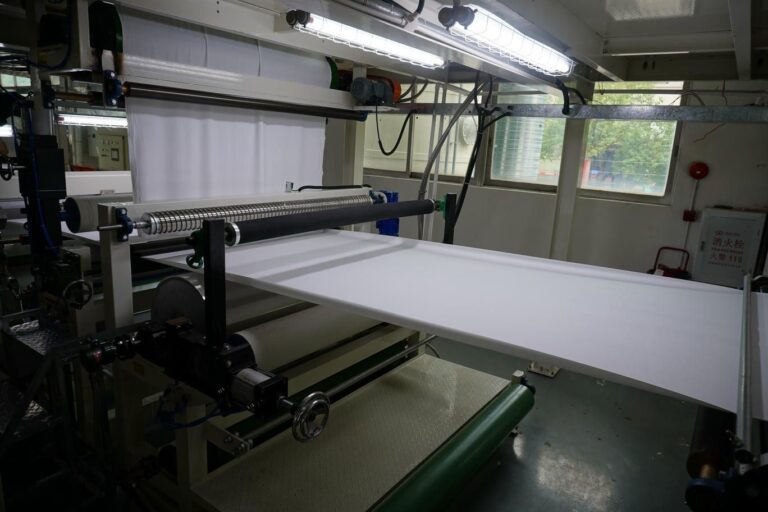
Physical testing lab: where eco leather fabric claims get verified or debunked
In our Martindale abrasion testing, silicone leather demonstrates 200,000+ cycles without surface breakdown. That’s the ISO 12947-2 standard — the same test pvc material leather fails at roughly 20,000–30,000 cycles. PU fares slightly better at 40,000–60,000 cycles but still cracks well before the 100K mark. The polyurethane vegan leather marketed as eco-friendly? It still contains solvent-based chemistry that off-gasses VOCs during the first 6–12 months of use.
Temperature resistance tells a similar story. Silicone leather withstands -40°C to 250°C without cracking. PU degrades above 80°C. PVC starts to soften at 60°C. For automotive interiors, medical equipment, or outdoor applications, these aren’t just spec numbers — they determine whether the material lasts or fails prematurely.
Silicone Leather Fabric: The Only Animal-Free Leather That Checks Every Box
After testing five material categories, silicone leather fabric is the only alternative fabric that scores well across all three eco metrics — zero VOC, fully recyclable, and 10+ year service life. Here’s why it stands apart:
- Solvent-free dry coating process — No DMF, no plasticizers, no phthalates. The coating is applied using a dry process that eliminates the wastewater pollution typical of conventional eco leather production.
- 100% recyclable at end-of-life — Unlike PVC and PU, which are difficult or impossible to recycle economically, silicone leather can be fully recycled or safely incinerated without releasing hazardous emissions.
- Soil-resistant and inherently hygienic — The non-porous surface repels liquids, resists stains, and inhibits bacteria without chemical additives. No protective coatings needed that eventually wear off and contaminate the environment.
- 5× longer lifespan than PU/PVC — In real-world applications across our automotive, furniture, medical, and marine clients, we’ve documented service lives exceeding 10 years — meaning fewer replacements, less waste, and lower lifetime cost.

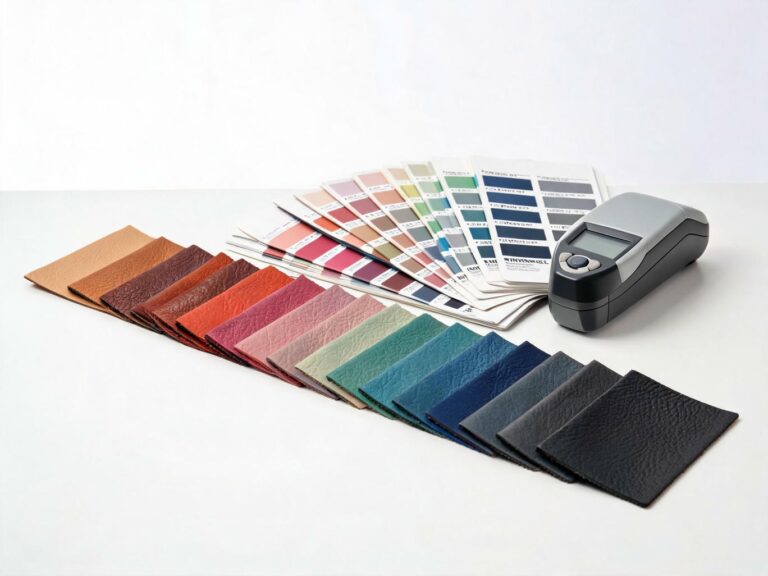
Full-color silicone leather swatches — unlimited customization without plasticizers
Watch: How silicone leather earns its eco certifications — zero-VOC process, REACH, FDA, and ISO 10993 verified
For B2B buyers who need more than marketing claims, every batch ships with full SGS and Intertek test documentation. That’s the difference between ecological leather that’s been measured and eco leather that’s merely labeled.
About TOPSUN
TOPSUN manufactures solvent-free silicone leather fabric for B2B buyers who need measurable eco performance across automotive, furniture, medical, and marine applications — with a 60,000+ m² production base and 500,000+ meters monthly capacity.
Zero-VOC dry coating process verified by SGS · 100% recyclable end-of-life · 200K+ Martindale cycles · REACH + FDA 21 CFR 177.2600 + ISO 10993-5 compliance · Free A4 swatches shipped worldwide via DHL/FedEx
How to Audit Your Leather Supplier’s Eco Claims (Before You Sign)
If you’re sourcing eco-friendly silicone leather or any more leather alternative, don’t settle for a sustainability page and a recycled-paper brochure. Run this five-point audit before you commit:
- Request the actual VOC test report — not a “compliant” certificate. Ask for ISO 16000-6 or VDA 277 results with numbers, not pass/fail.
- Verify recyclability claims — Can the supplier provide documentation for their recycling process? Or is “recyclable” just theoretical?
- Check for phthalate and DMF declarations — ECHA’s restriction list is expanding. Your material should have zero phthalates and zero DMF — in writing.
- Ask for Martindale abrasion data — Anything below 100,000 cycles means the material will fail prematurely and end up as waste. Our silicone leather tests at 200,000+ cycles.
- Sample before you sign — Order swatches, expose them to UV and cleaning chemicals, and see what happens after 90 days. A truly sustainable leather supplier will ship free samples without hesitation.
Is silicone leather truly eco-friendly, or is it just another synthetic?
Silicone leather is a synthetic material, but its environmental profile differs fundamentally from PU and PVC. It contains no petroleum-derived plasticizers, uses a solvent-free dry coating process with zero VOC emissions, is 100% recyclable at end-of-life, and lasts 5× longer than PU or PVC. The silicone polymer itself is derived from silica (sand), not petroleum. While it’s not biodegradable like plant-based alternatives, its 10+ year service life and full recyclability make it a stronger ecological choice than shorter-lived biodegradable options that contain hidden plastic content.
How does the cost of eco leather fabric compare to PVC or PU?
Upfront, silicone leather costs more per meter than PVC or PU. But the total cost of ownership over a 10-year period tells a different story. PVC typically needs replacement every 2–3 years; PU every 3–5 years. Over a decade, that’s 3–4 full reupholstery cycles — plus disposal costs for non-recyclable waste. Silicone leather’s 10+ year lifespan means one purchase covers the same period, and the material is fully recyclable at end-of-life. For most B2B applications, the 5-year TCO favors silicone.