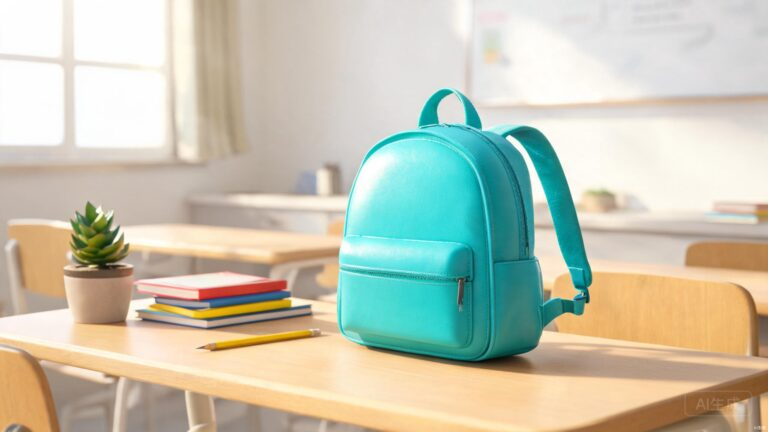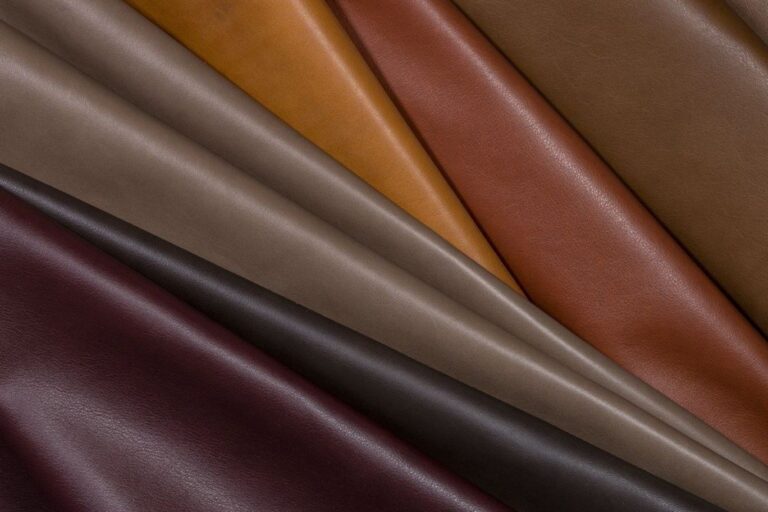
An outdoor gear brand in Denver launched a “genuine leather” backpack line at $280 retail. The packs hit 4.2 pounds empty — nearly double the 2.1-pound synthetic equivalent. Hikers complained about shoulder fatigue. Rain soaked the hide, adding another pound of water weight and leaving water stains that never faded. Within 14 months, the leather at the shoulder strap attachment points cracked under load stress. The brand discontinued the line after one season and lost $112,000 in inventory write-offs. Genuine hide was the wrong backpack leather fabric for an application that demands lightweight, waterproof, and flex-durable material — and PU wasn’t any better, as the brand’s subsequent PU replacement cracked at the same stress points within 10 months.
TOPSUN manufactures silicone leather fabric for backpacks and outdoor gear with a density of 1.0-1.3 g/cm³ (40-50% lighter than genuine hide), AATCC 127 water resistance certification, 50,000-100,000+ flex cycles, and 200,000+ Martindale abrasion cycles. Our material is engineered for load-bearing applications where weight, water exposure, and mechanical stress converge.
Request Free Backpack Material Samples
Why Genuine Hide Fails as Backpack Leather Fabric
Backpacks are a material stress case that furniture and automotive leather never encounters. A backpack carries 15-30 pounds of load, flexes at every seam and strap attachment point, gets rained on, dropped on concrete, and strapped to a human body generating heat and sweat. Genuine leather — specifically full-grain cowhide at 1.4-2.0mm thickness — fails on three counts that matter most for this application.
Weight. Full-grain cowhide has a density of 0.6-0.9 g/cm³ but is typically specified at 1.4-2.0mm thickness for durability — producing a finished fabric weight of 500-800 g/m². A standard 17-liter backpack requires approximately 1.2 m² of fabric, translating to 600-960g of leather alone. Silicone leather at 0.8-1.2mm thickness and 1.0-1.3 g/cm³ density produces 200-400 g/m² — cutting the fabric weight by 40-60% while maintaining equivalent or superior mechanical performance.
Water absorption. Genuine hide is porous by nature — the collagen fiber matrix absorbs moisture through capillary action. In a rainstorm, a leather backpack gains 300-500g of water weight, dries slowly, and develops water stains that penetrate the grain permanently. The school backpack material guide documents how water absorption also leads to mold growth in humid storage conditions — a common warranty claim for leather backpacks in tropical markets.

Finished leather fabric rolls — uniform width and weight consistency across rolls enables precision cutting for backpack panel patterns with minimal waste
Flex failure at stress points. Backpack shoulder straps, bottom panels, and zipper tapes experience concentrated mechanical stress. A loaded backpack flexes the strap attachment point 1,000+ times during a single day-hike. Genuine leather’s collagen fibers can handle this indefinitely — but the surface finish (dye, topcoat, or PU sealant applied during finishing) cannot. The finish cracks at stress concentrations, exposing the raw hide beneath to moisture and staining.
Why PU Leather Fabric Also Fails in Backpacks
PU leather fabric solves the weight problem — at 0.8-1.2mm thickness and 250-400 g/m², it’s lighter than genuine hide. It’s also water-resistant on the surface. But PU introduces its own failure modes that are equally damaging for backpacks.
PU fabric cracks at flex points. The polyurethane coating is a rigid polymer film — each flex creates micro-stress fractures that propagate until the surface splits. For backpacks, the failure point is the shoulder strap attachment, where the fabric bends sharply around hardware and webbing. The sports bag material guide documents PU flex failure at 15,000-25,000 ISO 5402 cycles — translating to 10-18 months of daily use before visible cracking appears at stress points.
PU also suffers from hydrolysis in backpacks stored in humid environments — garages, car trunks, tents. The moisture breaks down the PU coating from the inside, and the fabric delaminates. A backpack that looks fine after a summer of use can fail in storage over winter. The faux leather for sports guide covers the broader failure pattern across athletic bag applications.

Coating line unwinder — base fabric is fed through precision rollers where silicone elastomer is applied in a solvent-free dry coating process
Material Comparison: Backpack-Specific Performance
| Property | Genuine Hide | PU Fabric | PVC Fabric | Silicone Fabric |
|---|---|---|---|---|
| Weight (g/m² at 1.0mm) | 500-800 | 250-400 | 300-500 | 200-400 |
| Water absorption | High — porous | Low surface, moderate seams | Low surface | Zero — non-porous |
| Flex cycles (ISO 5402) | 50,000+ | 15,000-25,000 | 10,000-20,000 | 50,000-100,000+ |
| Martindale abrasion | 25,000-40,000 | 25,000-50,000 | 15,000-25,000 | 200,000+ |
| Tear strength (N) | 15-20 | 10-15 | 8-12 | 15-20+ |
| Temperature range | -10 to 60°C | -20 to 80°C | -10 to 60°C | -40 to 250°C |
| Hydrolysis resistance | Mold susceptible | Degrades 3-5 years | Moderate | 10+ weeks ISO 11507 |
| Real-world lifespan (daily use) | 5-8 years (surface fails first) | 10-18 months | 8-14 months | 10+ years |
How Silicone Leather Fabric Solves the Backpack Trifecta
Silicone leather fabric addresses all three backpack failure vectors simultaneously. The Si-O-Si molecular backbone is inherently flexible — siloxane bonds rotate freely at room temperature, distributing flex stress across the chain rather than concentrating it at a single point. This is why silicone leather passes 50,000-100,000+ flex cycles with zero cracking, even at the sharp bend radiuses found at strap attachment points.

Release film roller — the solvent-free coating process uses release paper to create surface texture without chemical etching, producing consistent grain patterns across full roll lengths
The non-porous silicone surface repels water at the molecular level — AATCC 127 certified. A silicone leather backpack caught in rain sheds water completely, adds zero water weight, and dries in minutes. No water stains, no mold risk, no dimensional change from moisture exposure. The material also resists the sweat and body oil exposure that degrades genuine hide at contact points — the back panel and shoulder strap padding areas where body heat and perspiration are constant.
For backpack manufacturers, TOPSUN offers the Ultra Thin Collection at 0.23-0.8mm thickness for lightweight daypacks and the High Performance Collection at 0.8-2.0mm for load-bearing expedition packs. Both collections are available in 100+ embossed textures and unlimited Pantone-matched colors, with custom embossing rollers produced in 7-10 days.
Frequently Asked Questions
What is the best leather fabric for backpacks?
Silicone leather fabric is the best material for backpacks because it combines the lightweight profile of synthetic fabric (200-400 g/m²) with the flex durability of genuine hide (50,000-100,000+ flex cycles) and adds complete waterproof performance that neither genuine nor synthetic leather can match. Genuine hide is too heavy and water-absorbent for backpack use, while PU and PVC crack at shoulder strap stress points within 10-18 months.
How much does backpack leather fabric weigh per square meter?
Genuine full-grain leather specified at 1.4-2.0mm for backpacks weighs 500-800 g/m². PU leather fabric at 0.8-1.2mm weighs 250-400 g/m². Silicone leather fabric at 0.8-1.2mm weighs 200-400 g/m² — making it 40-60% lighter than genuine hide while maintaining equal or superior tear strength (15-20+ N) and dramatically higher abrasion resistance (200,000+ Martindale cycles vs. 25,000-40,000 for genuine hide).
The backpack market doesn’t have to choose between weight, waterproofing, and durability. Silicone leather fabric delivers all three at a B2B cost of $3.50-6.00 per meter — competitive with mid-grade PU and a fraction of full-grain hide pricing. TOPSUN provides free A4 swatch samples, ISO test certificates, and custom texture development via DHL worldwide. Request your backpack material evaluation kit today.