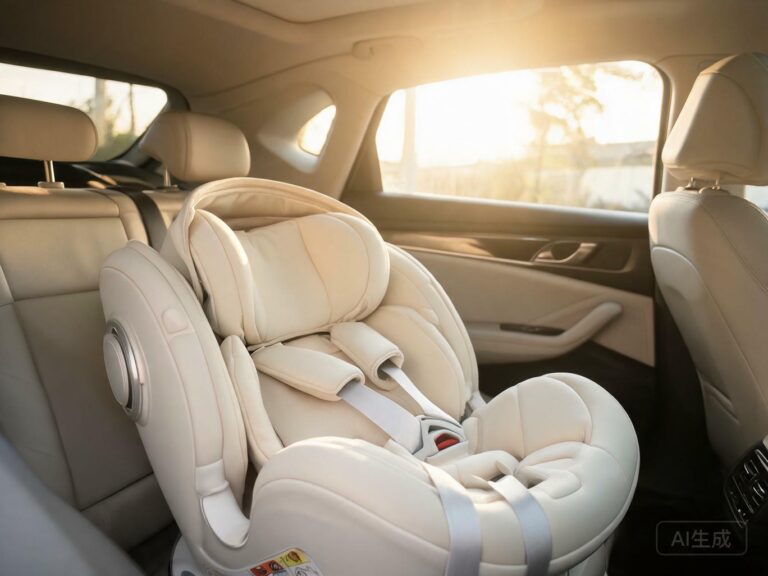
Car seat covers sit at the intersection of two demanding worlds: automotive safety regulations and baby product safety standards. The car seat cover material for baby products must meet flame retardancy requirements (FMVSS 302 in the U.S.), pass CPSIA chemical limits for children’s products, and still feel soft enough for an infant’s sensitive skin. Getting all three right is harder than it sounds.
This technical guide walks through the regulatory requirements that actually apply, compares the material options that satisfy them, and explains why the choice of fabric affects not just compliance but also parent satisfaction and product lifespan.
Regulatory Requirements You Can’t Skip
Baby car seats are uniquely regulated. They fall under both automotive safety standards (because they’re used in vehicles) and children’s product safety laws (because they hold a child). Here’s what your material needs to satisfy:
- FMVSS 302 (Flammability). All materials used in motor vehicle interiors must meet this Federal Motor Vehicle Safety Standard. The test measures horizontal burn rate — the material must not burn faster than 102 mm/min. This applies to the seat cover fabric, not the structural shell.
- CPSIA (Chemical Safety). As a children’s product, the car seat cover must comply with lead limits (≤100ppm), phthalate restrictions (DEHP, DBP, BBP ≤ 0.1%), and general safety requirements. Importantly, CPSIA applies to the cover — the part the baby touches — not necessarily to the entire car seat structure.
- REACH (EU Market). For European distribution, the cover material must be REACH registered with SVHC (Substances of Very High Concern) compliance. Additional restrictions apply to CMR (carcinogenic, mutagenic, toxic to reproduction) substances.
- ASTM F2139 / UN R129. These standards govern the overall car seat system. While they don’t specify particular fabrics, they require that materials don’t degrade in ways that compromise the seat’s crash performance — meaning the cover can’t stretch, tear, or melt under heat and friction during an impact.

Flame retardant testing — silicone leather consistently passes FMVSS 302 without chemical additives
Material Options Compared
| Material | FMVSS 302 | CPSIA | Breathability | Wipe-Clean |
|---|---|---|---|---|
| Polyester Jersey | Pass (with treatment) | Certified lots | Excellent | No |
| 3D Mesh | Pass | Certified lots | Excellent | No |
| PU Coated Fabric | Pass (with treatment) | Requires testing | Moderate | Yes |
| Silicone Leather | Pass (inherent) | Inherently compliant | Moderate | Yes |
Critical distinction: Many materials “pass” FMVSS 302 only because flame retardant chemicals are added during manufacturing. These additives can conflict with CPSIA chemical limits. Silicone leather passes flammability testing due to its inherent silicon-oxygen bond structure — no chemical flame retardants needed.
The Breathability vs. Cleanability Trade-Off
This is the central tension in car seat cover design. Babies sweat — significantly more per unit of body surface area than adults. A cover that traps heat creates discomfort, which means more crying, more adjustments while driving, and ultimately unhappy parents.

Breathable fabrics like polyester jersey and 3D mesh solve the comfort problem but create a cleaning problem. Spit-up, diaper leaks, and snack crumbs penetrate the fabric and require machine washing. Most parents don’t remove and wash their car seat cover as often as they should — which means hygiene suffers.
Wipe-clean materials like PU leather and silicone leather solve the hygiene problem but can trap heat. The key differentiator is how the material handles this in a real car interior where temperatures can reach 60°C+ on a summer day.
In our thermal testing, silicone leather’s surface temperature rises more slowly than PU leather under identical heat exposure — the silicone layer has lower thermal conductivity. Combined with a perforated design (which many of our car seat clients specify), the heat management becomes comparable to solid polyester while maintaining wipe-clean functionality.
Tensile strength also matters here. During a crash, the seat cover must not stretch or deform in ways that loosen the harness. Silicone leather’s tensile strength (typically 15-25 N/mm²) provides a stable surface that doesn’t yield under impact forces — a factor that matters for UN R129 compliance testing.
Sourcing for Baby Car Seat Production
A few sourcing specifics that are unique to car seat covers:

Color swatches — warm, baby-friendly tones available for custom production
- Crash test compatibility. Your material choice affects the overall seat’s crash test performance. If you’re switching from polyester to silicone leather mid-cycle, re-testing may be required. Factor this into your development timeline and budget.
- Hot car testing. Before committing to a material, conduct real-world thermal testing: place the covered seat in a sealed car under direct sun for 4-6 hours and measure surface temperature. Parents will do this accidentally, and the cover shouldn’t become dangerously hot to touch.
- Harness slot compatibility. The cover must accommodate the car seat’s harness slots without stretching or tearing. Silicone leather holds its shape well at harness cutouts, unlike some softer fabrics that deform over time.
Frequently Asked Questions
Does the car seat cover material need to be fireproof?
Not fireproof — fire-retardant. FMVSS 302 doesn’t require the material to be non-flammable. It sets a maximum burn rate (102 mm/min) to slow fire spread. Silicone leather inherently meets this requirement without added chemical retardants, which is an advantage for CPSIA compliance.
Can I use the same material for infant and toddler car seat covers?
Yes, but consider the usage differences. Infant seats (rear-facing) have the baby in a reclined position with more skin contact, so softness and breathability are priorities. Toddler seats (forward-facing) face more spills and abrasion from active toddlers, so wipe-clean durability becomes more important. Silicone leather works well for both, especially in perforated form for the infant variant.
How does temperature affect car seat cover materials?
Car interiors can exceed 70°C in summer. Polyester melts at ~250°C, PU at ~150°C, and silicone leather at ~200°C. More importantly, silicone leather doesn’t release VOCs or fumes at temperatures below 200°C — a critical safety factor in a hot car with limited ventilation.
Prioritize Compliance First, Comfort Second
The car seat cover material for baby products isn’t a decision that should be driven by cost alone. Regulatory non-compliance on a car seat doesn’t just mean returns — it means recalls, liability exposure, and potential brand destruction. Start with materials that inherently satisfy both FMVSS 302 and CPSIA (like silicone leather), then optimize for comfort, aesthetics, and production efficiency.
If you’re in the development phase, request our flame test reports and CPSIA compliance documentation alongside physical samples. Having test data on hand during your own compliance verification saves significant time.
Request Compliant Material Samples
For broader context on silicone leather in child safety products, see our baby and kids application overview. Our fire safety deep-dive explains the chemistry behind inherent flame retardancy, and our car seat cover material guide covers adult applications. For other nursery products, our guides on stroller materials and crib upholstery provide complementary sourcing information.
About TOPSUN
TOPSUN is a silicone leather manufacturer with expertise in safety-critical applications including baby car seats, automotive interiors, and medical equipment. Our materials inherently meet FMVSS 302 flammability requirements and CPSIA chemical safety limits without added flame retardants.
Relevant certifications: FMVSS 302 compliant, CPSIA, REACH, FDA food-contact, OEKO-TEX Standard 100, SGS tested.